Saturday, June 27th 2026

Micron Predicts DRAM Crisis Until At Least 2028
It's no secret that the DRAM crisis is predicted to go on for a while, with everyone from Korean news outlets to, more recently, OEMs like Lenovo, predicting that massive price hikes are slated to be the norm in PC hardware for the foreseeable future, thanks to AI data center demand. Following the recent Micron Q3 financial report, in which the DRAM maker revealed record results for the quarter, Micron's CEO, Sanjay Mehrotra, commented on the current DRAM situation, stating to investors that "Our customers are recognizing that supply shortages in memory and storage will take considerable time to improve."
He continued, saying that "Even as we expect industry supply to improve gradually in 2028, we currently do not have a line of sight as to when memory supply will be able to catch up with increasing demand." Earlier in 2027, Micron announced a number of new initiatives to increase DRAM supply to meet current demand, including a new megafab in New York, which it expects to complete by early 2029, and intentions to buy a fab from PSMC in a $1.8 billion deal that would see meaningful DRAM output by late 2027. While the shortage is expected to ease somewhat, it's entirely likely that prices will remain elevated for a while to come, which will likely affect the upcoming Xbox Helix console, PS6 and PS6 Portable, and the already announced Steam Machine—which Valve expects will continue to be overpriced—for a while.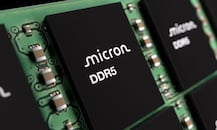
Source:
Micron
He continued, saying that "Even as we expect industry supply to improve gradually in 2028, we currently do not have a line of sight as to when memory supply will be able to catch up with increasing demand." Earlier in 2027, Micron announced a number of new initiatives to increase DRAM supply to meet current demand, including a new megafab in New York, which it expects to complete by early 2029, and intentions to buy a fab from PSMC in a $1.8 billion deal that would see meaningful DRAM output by late 2027. While the shortage is expected to ease somewhat, it's entirely likely that prices will remain elevated for a while to come, which will likely affect the upcoming Xbox Helix console, PS6 and PS6 Portable, and the already announced Steam Machine—which Valve expects will continue to be overpriced—for a while.

132 Comments on Micron Predicts DRAM Crisis Until At Least 2028
Every company that can do this, is doing it, and they would be sued to oblivion if they didn't, they have to look after what is best for the company
that said, the solution is pretty simple, pretty much all the AI companies are not making $, and they got lots of IOUs, and if Micron (or...) was smart, they shouldn't accept this, and then the AI companies couldn't actually "buy" things
Right now, it's just a big shell game, using stock to "buy" things, and that is such a huge risk, it isn't funny
Micron can say "we can ramp up production to X units by year Y", but there's no telling where the supply will be by that time. If LLMs continue to gobble up more and more RAM there will still be pressure. On the other hand, if the LLM bubble bursts, or someone comes up with a clever idea to make LLMs use significantly less RAM, the crisis may be over much sooner.
This is actually why the industry is typically conservative in their projections: while you want to rake in as much profit as possible, it still takes years and billions to build a new fab. You need to be reasonably sure you're not going to get peanut money at the end.
Micron's CEO is predicting "gradual improvements" in 2028 and then suggesting "no line of sight as to when memory supply will be able to catch up with increasing demand".
Sounds great for AI and DC demand but for the general consumer it doesn't sound promising at all. We could be well beyond 2030 before the dust settles and when it finally does I wouldn't be surprised if OEMs are calling the shots, leaving the PC DIY crowd paying a proper hefty premium just to keep the hobby alive.
I think we're too focused on the hopes of a bubble burst. This isn’t only OpenAI, Anthropic, chatbots, image generators, the next fancy model, etc. You’ve got hyperscalers, governments, massive sovereign funds, defence, finance, robotics, cloud providers, national AI infrastructure plans (etc) all piling in. That makes it look more like a strategic scale up than a normal consumer tech hype cycle. The capex and memory signals suggest this goes a bit beyond pub economics.
Also when this bubble blows up, everyone should remember how Micron screwed consumer segment by just canceling it all in chase for more profits in the enterprise segment. Remember that when you'll be buying SSD or RAM after the bubble burst. Yeah, I'm this fucking petty and everyone else should be too. We can't do much for Micron's chips being on 3rd party products but if their consumer ever emerges again, fuck them. Crucial used to stand for reliability and something you can trust and depend on, now it stands for betrayal and greed.
Things will get better eventually. Chill and enjoy what you have folks. speaking of which, I have been emulating some PS2 games lately, with 8x scaling and OLED its a blast and looks great. 10/10 nostalgia
Nothing is going to change for us mere mortals. After all, you, me, and anyone else, when we find cheap memory, we don't just buy the minimum amount we think we'll need for the next 1–2 years; we buy double or triple that, just to have it. The exact same logic applies to those building AI factories, and also to the likes of AMD, Nvidia, Intel, and others. If they see cheap memory, they will rush to pre-purchase it even if they aren't sure they will need it—either out of fear that prices will go up, or simply to set up racks with more memory just in case they need to run larger models requiring more memory in the future. In the case of the companies I mentioned, they do it to put it into their products and either sell them with a higher profit margin or to stay ahead of the competition. We are at the bottom of the totem pole (the lowest priority), and for us to see cheap memory, the big corporations will first have to stop buying up everything that is produced before it's even manufactured.
It will help sure, but I'm not betting on it being a fixall in any capacity.
So, even if we put a price tag of $49 on that DDR4, you still have to pay $400 for a 5800X3D and a mobo that will be probably based on 550 chipset or something mid range anyway.
In 2026, this is a pretty bad deal. If things where normal, the price would have been $299, with the CPU being the $170 of the total price, the mobo around $90 and the RAM $40. If the mobo is a low price microATX, the deal is even worst.
AMD seen the problem in the market, see the opportunity in the market and brought back 5800X3D as an overpriced option. 5800X3D shouldn't be costing more than a 9600X, or a 7700X at worst. But because of market conditions they priced it as if it was a new Zen 4, not Zen 3, but Zen 4 X3D model. Now if the mobo is a $70 good enough, limited expansion options, just to do your job model, it's still like $70-$90 for those 16GBs. I would NOT use the word "cheap" here. I payed less than $50 for 16GB of DDR4 6 years ago. They should be giving a free 8GB DDR4 RAM stick with every order of 4 souvlaki and a beer today, not charge almost double.
It might look like a bargain in a year from now, if prices keep going up, but it will not be cheap. "Cheap" was 2 years ago.
Maybe it will be... in about 6 months, maybe that DDR will be $200 for 16gb. So, eh
The 32 GB Kit is now 659 € on Mindfactory and the 64 GB one is at 888 €!
INSANE!
This so called RAM crysis is paving way for Chinese RAM chips, which are getting more popular. It'd be funny to watch Micron's managers faces, if China quickly overtook RAM industry.
This is nothing else but greed coming from cartel decisions. They enjoyed nice profits from overpriced RAMs during previous crysis.
They are paying back in this very way. If I was an American citizen, I'd be furious how taxpayers money is being spent, without any value for an average citizen who buys tech products.
The manufacturers are being careful to avoid this (source):
I also care(d) because I bought 4 MB or RAM in 1993 for my Am386 and some again in 1995 for my Pentium 90. I very well remember the horrible prices in 1993 (but forgot about 1995).
That was a different situation, when a single-point-of-failure in the shape of a Sumitomo epoxy factory had a fire in July 1993, but comparison with today is still meaningful. What happened to DRAM makers? This is what happened:
Are they acting very conservatively? Yes, I would too.
"Hfdggf hfggff hfgjj ddfgg."
It makes just as much sense, it has as much resemblance to reality, and is about as informative.
Maybe a misplaced relic from a museum is "discovered" on site