Monday, July 20th 2026

DRAM Shortage Will Last Another 10 Years, Warns ADATA Chairman
DRAM is currently one of the few "commodities" in the computing world that is so supply-constrained it might take another 10 years for the supply chain to stabilize. According to ADATA Chairman Chen Li-bai, the AI bubble is far from bursting, as the demand for DRAM is outpacing supply so significantly that even with new manufacturing capacity expansions from memory makers worldwide, DRAM will remain in dire shortage for another decade. Chen Li-bai's statement was prompted by a recent decline in TSMC's stock, which fell despite posting record earnings. While some suggested this might indicate a burst in the AI hype, the ADATA chairman issued a contrary statement, suggesting we are another decade away from seeing the bubble pop.
According to Chen Li-bai, the industry can only begin discussing the potential burst of the AI bubble after 2030. After that, preliminary estimations could be made about whether the demand for more DRAM, more NAND Flash, and more computing power will be sustained until 2040 or 2050. The current demand growth is causing the entire vertical of memory, storage, computing, power infrastructure, and other areas to grow exponentially. The overall trend suggests that demand will continue to outpace supply for years to come.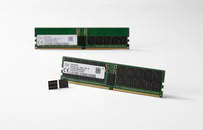 Another point to consider is that the current expansion projects at SK hynix, Samsung, Micron, and even CXMT are not enough to satisfy demand. These companies are being cautious not to add too much supply and remain reserved, understanding that significantly increasing DRAM manufacturing capacity could potentially hurt their business and profit margins.
Source:
Commercial Times
According to Chen Li-bai, the industry can only begin discussing the potential burst of the AI bubble after 2030. After that, preliminary estimations could be made about whether the demand for more DRAM, more NAND Flash, and more computing power will be sustained until 2040 or 2050. The current demand growth is causing the entire vertical of memory, storage, computing, power infrastructure, and other areas to grow exponentially. The overall trend suggests that demand will continue to outpace supply for years to come.

55 Comments on DRAM Shortage Will Last Another 10 Years, Warns ADATA Chairman
DDRAM Cartel does not give a damn about consumer market anyways - so why should consumer give a damn about the Cartel? However if the consumer proves to be really
on the consuming end only- then it can be a century, its not that any goverment regulation is doing anything, who cares b2c and little people if you can squeeze the enterprise
and little people through it anyways.
It doesn't work like that. Even Chinese companies, combined to share their progress, with support from University research had a very hard time catching up, despite the enormous push and investment from the government - the level that they're at is still just the level Western companies are allowed to sell the semiconductor chip production machines to them.I think this might be because there isn't increased demand for the consumer products.
During the cryptomining crises miners were buying end products - gaming GPUs and using them to calculate imaginary money (of course just for the value to crash before they cashed in their earnings and completely missing on their ROI, for most of them).
But right now the "shortage" isn't because somebody's buying all the consumer products at any price, trying to use back channels to ship them by the pallets. Enterprise, server, AI isn't buying consumer products - they are ordering enterprise products that have had much higher margins even before the AI craze, and surge in orders means memory, storage making companies are allocating their fab capacities to enterprise products and cutting consumer products.
Of course fabrication prices have increased because enterprise is prepared to pay the absurdly inflated prices without problem - because everything is still being planned as if some miracle will occur and money will start to pour from the sky.
But I think prices we see now in consumer sector are just end sellers planning the demand in consumer sector by rising prices in order to not run out of limited number products, and to maximise the revenue from the stuff they received before the RAMmageddon, or the small amount that is still trickling.
Of course small companies that exist purely in consumer sector can't live off this limited sales with a higher margins. That's why we suddenly see everybody and their grandma trying to enter the enterprise, server, AI market - where the sales are actually being made - and it's a bit pathetic for a companies that make stuff that enterprise actually doesn't want or need. The companies that will fail to jump on that train will simply vanish in longer run, despite the annalists calculating "just 6% lower sales in consumer sector".
DRAM was suffering an oversupply flu like two years ago, don't kid yourself. When the private credit defaults and the stock market takes a storm trooper-esque spill down the reality check stairs, demand will be SLIGHTLY higher than pre-shortage, optimistically speaking, and chances are there'll a lot of spare inventory that suddenly doesn't have a reservation on it.
I think they just want to follow the biggest Cartel in the world , which is the Oil Cartel, with the state players as members. This is a perfect example of human greed and vanity.
Countries like Emirates or the other big oil producers are literally selling the crude cheaper than water, while the state Cartel regulations make the artificial price we see today.
Welcome RAM, DRAM and NAND Flash storage to the club.
that this situation (usually with inflated prices - speculators rubbing their dirty hands) will continue for a very long time.
trusta.adata.com/en/
I think a collusion lawsuit or others will enter the market before we hit 10 years...........
The reality is that AI is unprofitable and the investment cannot continue at the rate of the last 12 months
OpenAI delayed the IPO, SpaceXAI is selling their over capacity, Microsoft is interested in open chinese AI models that are cheaper to run
The memory companies will always say that it's going to be a long time, so you don't wait and buy now
However, I foresee some prices going down due to the fabs expansions, and new players entering the NAND and DRAM market from China, Japan and European Union .