Tuesday, September 1st 2026

NVIDIA's "Rubin CPX" GPU Reborn with HBM4 Memory, No More GDDR7

NVIDIA has reportedly revived its "Rubin CPX" AI accelerator project, which had previously been put on hold. Today, well-known supply chain analyst Ming Chi Kuo reported that NVIDIA is reintroducing the "Rubin CPX," now featuring HBM4 memory instead of the previously planned GDDR7. Late last year, NVIDIA announced its plans to develop a specialized accelerator derived from the "Rubin" GPU family, designed for large-scale agentic AI workloads. After the announcement, the project was reportedly paused, but NVIDIA has now redesigned the memory architecture. Previously, the "Rubin CPX" was slated to have 128 GB of GDDR7 memory, but it will now include 168 GB of HBM4 memory. This GPU SKU is housed in a separate rack with configurations ranging from 64 to 256 standalone CPX GPUs per rack.

This GPU is dedicated to prefill workloads, powering racks that manage input context for LLMs and KV cache processing. Essentially, NVIDIA is separating prefill from decode tasks, with CPX GPUs handling prefill and regular "Rubin" GPUs managing decode. A rack tray with eight CPX GPUs can handle 1.34 TB of long-context prefill and the associated KV cache, all utilizing HBM4 memory for faster processing and increased bandwidth. Since the previous design did not require HBM4 integration, NVIDIA has redesigned the package, likely using TSMC's CoWoS-S or CoWoS-L for packaging.
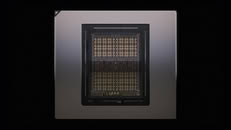
The chip delivers 30 PetaFLOPS of NVFP4 compute performance on a monolithic die. It includes four integrated NVENC and four NVDEC video encoders directly on-chip, enabling streamlined multimedia workflows without the need for external processing. For LLMs now containing trillions of parameters, having dedicated racks for prefill while others handle decode allows for much faster token delivery. NVIDIA also recommends maintaining a 1:1 ratio of CPX GPUs to regular GPUs in the decode rack.
Source: Ming Chi Kuo
Add your own comment

9 Comments on NVIDIA's "Rubin CPX" GPU Reborn with HBM4 Memory, No More GDDR7

#1
RejZoR
They want to free up the enterprise demand for GDDR7 and replace it with HBM so they can put it on consumer products and milk us all with RTX 6060's that have MSRP of 299€ but actually sell for 899€ because MSRP means Madeup Shitty Random Price...
Posted on Reply
#2
810Cat
RejZoRThey want to free up the enterprise demand for GDDR7 and replace it with HBM so they can put it on consumer products and milk us all with RTX 6060's that have MSRP of 299€ but actually sell for 899€ because MSRP means Madeup Shitty Random Price...
You are very incorrect,
Not quite. Enterprise already uses HBM for AI accelerators because of its 2048-bit bus and massive bandwidth. it isn't hogging GDDR7. GDDR7 is designed specifically for consumer GPUs because HBM is way too expensive and complex (requiring silicon interposers) to put on budget cards like an RTX 6060. Plus, GDDR7 actually has lower raw latency (~12-15 ns vs HBM's 15-20 ns), which gaming workloads care about far more than ultra-wide AI memory buses
Posted on Reply
#3
Chaitanya
RejZoRThey want to free up the enterprise demand for GDDR7 and replace it with HBM so they can put it on consumer products and milk us all with RTX 6060's that have MSRP of 299€ but actually sell for 899€ because MSRP means Madeup Shitty Random Price...
You mean 6050 thats masquerading as 6060Ti.
Posted on Reply
#4
Bigshrimp
RejZoRThey want to free up the enterprise demand for GDDR7 and replace it with HBM so they can put it on consumer products and milk us all with RTX 6060's that have MSRP of 299€ but actually sell for 899€ because MSRP means Madeup Shitty Random Price...
I am not expecting an RTX 6000 series launch for a good while and I wouldn't buy any of them if I wanted to. They might re-release some older stuff though, but will still charge you at least an arm for that re-released stuff. I agree about the MSRP, it's just the cost the scalpers pay so they can charge you the real price.
Posted on Reply
#5
Patriot
810CatYou are very incorrect,
Not quite. Enterprise already uses HBM for AI accelerators because of its 2048-bit bus and massive bandwidth. it isn't hogging GDDR7. GDDR7 is designed specifically for consumer GPUs because HBM is way too expensive and complex (requiring silicon interposers) to put on budget cards like an RTX 6060. Plus, GDDR7 actually has lower raw latency (~12-15 ns vs HBM's 15-20 ns), which gaming workloads care about far more than ultra-wide AI memory buses
www.nvidia.com/en-us/data-center/rtx-pro-6000-blackwell-server-edition/
You seem to have some gaps in your knowledge that you should fill before correcting others...
Posted on Reply
#7
igormp
810CatCould u inform me of those gaps? I'm not aware that anything i said was wrong
They linked a GPU that is used a lot by enterprises (mostly for inference, but also training in smaller scales), and it uses GDDR7 and not HBM.
GDDR7 is being used in lots of enterprise-focused products, not only consumer ones.
Posted on Reply
#8
konataVT
AleksandarKNVIDIA has reportedly revived its "Rubin CPX" AI accelerator project, which had previously been put on hold. Today, well-known supply chain analyst Ming Chi Kuo reported that NVIDIA is reintroducing the "Rubin CPX," now featuring HBM4 memory instead of the previously planned GDDR7. Late last year, NVIDIA announced its plans to develop a specialized accelerator derived from the "Rubin" GPU family, designed for large-scale agentic AI workloads. After the announcement, the project was reportedly paused, but NVIDIA has now redesigned the memory architecture. Previously, the "Rubin CPX" was slated to have 128 GB of GDDR7 memory, but it will now include 168 GB of HBM4 memory. This GPU SKU is housed in a separate rack with configurations ranging from 64 to 256 standalone CPX GPUs per rack.

This GPU is dedicated to prefill workloads, powering racks that manage input context for LLMs and KV cache processing. Essentially, NVIDIA is separating prefill from decode tasks, with CPX GPUs handling prefill and regular "Rubin" GPUs managing decode. A rack tray with eight CPX GPUs can handle 1.34 TB of long-context prefill and the associated KV cache, all utilizing HBM4 memory for faster processing and increased bandwidth. Since the previous design did not require HBM4 integration, NVIDIA has redesigned the package, likely using TSMC's CoWoS-S or CoWoS-L for packaging.

The chip delivers 30 PetaFLOPS of NVFP4 compute performance on a monolithic die. It includes four integrated NVENC and four NVDEC video encoders directly on-chip, enabling streamlined multimedia workflows without the need for external processing. For LLMs now containing trillions of parameters, having dedicated racks for prefill while others handle decode allows for much faster token delivery. NVIDIA also recommends maintaining a 1:1 ratio of CPX GPUs to regular GPUs in the decode rack.
just hope HBM doesnt come to consumer graphics, otherwise the 6050 will cost a clean 1000 at this rate.
Posted on Reply
#9
Prima.Vera
On the way to the 10 Trillion$ value....
Posted on Reply
Nov 12th, 2026 04:39 CST change timezone

New Forum Posts

Popular Reviews

TPU on YouTube

Controversial News Posts