News Posts matching #DDR5

Return to Keyword Browsing

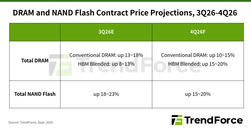
AI Server Demand Sustains Memory Contract Price Increases in 4Q26, While Consumer-Side Pressure Persists

TrendForce's latest memory industry research reveals that DRAM suppliers continue to prioritize advanced-process capacity for high-performance server products in 4Q26, keeping the overall market undersupplied. However, the pace of contract price increases is expected to moderate, with conventional DRAM prices projected to rise 10-15% QoQ.

Meanwhile, the NAND Flash market is seeing a divergence between accelerating AI demand and weak consumer demand, although prices are still rising across segments. Overall NAND Flash contract prices are projected to increase 15-20% QoQ.
Minisforum AtomMan G1 Pro-89A6 Mini PC Launches With RX 9060 XT Joining RTX 5060 SKU

Minisforum launched an NVIDIA GeForce RTX 5070-powered AtomMan G7 Pro mini PC in January 2026, and the brand has just announced the latest iteration in the AtomMan line-up, the AtomMan G1 Pro-89A6, which is now available with the AMD Radeon RX 9060 XT GPU with 16 GB of VRAM. The G1 Pro-89A6 is built on AMD's Ryzen 9 8945HX, a mobile CPU with 16 cores and 32 threads and a maximum boost clock of 5.4 GHz. Pricing on the RX 9060 XT mini PC starts at $1,759 during the launch promotion, with the MSRP jumping to $2,199 after that ends. The only configuration available has 32 GB of DDR5-5200 memory, which is upgradeable via SODIMM slots, and a 1 TB M.2 PCIe SSD.

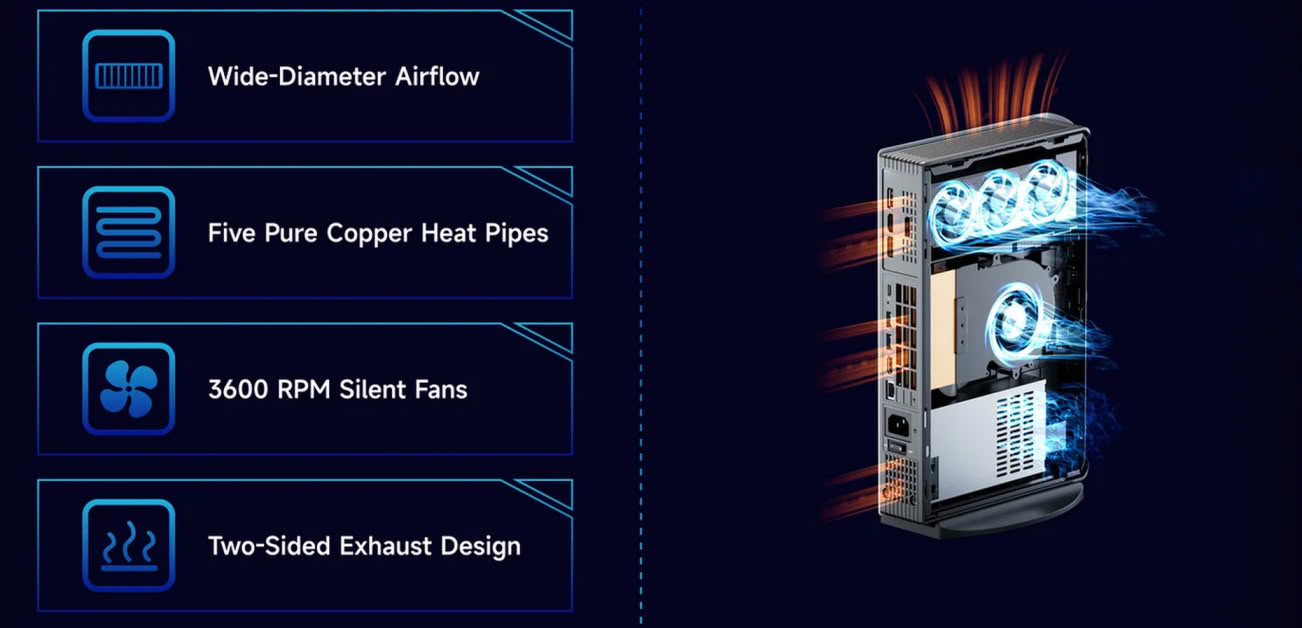
The chassis of the new AtomMan G1 Pro-89A6 measures in at just 3.8 L, which is made all the more impressive by the 140 W TGP of its dGPU and its built-in 350 W PSU—which means no external power brick cluttering up whatever space the mini PC ends up in. The CPU and GPU are cooled by what appear to be two separate cooling solutions, with five copper heat pipes between them and each with its own exhaust vents. The CPU is cooled by a single-fan blower-style cooler, and the GPU is cooled by a triple-fan setup. The PSU also has its own compartmentalized cooling system. Although Minisforum hasn't specified what fans it's using, it claims to be using silent fans that spin at up to 3,600 RPM.

Montage Technology Announces Mass-Production of DDR5-9200 Clock Driver (CKD)

Montage Technology announced the mass-production of its DDR5 Clock Driver Plus (CK01P), designed to deliver stable and reliable clocking for next-generation client memory modules.

Compliant with the JEDEC DDR5CKD01 clock driver specification, the CK01P primarily targets next-generation client memory modules, including DDR5 CUDIMM, CSODIMM, CQDIMM, and CAMM and supports data rates of up to 9200 MT/s. The CK01P supports three clock operating modes—single PLL, dual PLL, and PLL bypass—to accommodate a wide range of system requirements. Featuring a zero-phase-delay clock architecture, the device supports programmable per-channel delay and allows output characteristics to be configured through control registers, enabling flexible adaptation to different DIMM network topologies. In addition, unused clock outputs can be disabled to further reduce power consumption.

Innodisk Launches DDR5 8000 RDIMM for Edge AI and High-Performance Computing

Innodisk, a leading global AI solution provider, today announced the launch of its new industrial-grade DDR5-8000 RDIMM, expanding its DDR5 portfolio for compute-intensive applications such as edge AI and enterprise servers. Delivering industry-leading data transfer speeds of 8000 MT/s, 11.1% higher than the previous generation, the module addresses growing memory bandwidth requirements while enhancing signal integrity and transmission reliability, enabling system developers to achieve higher performance and stability in next-generation designs.

As AI models grow in scale and complexity, the efficient movement of massive datasets becomes increasingly critical to system performance. The DDR5 8000 RDIMM raises data transfer speeds to 8000 MT/s and offers capacities ranging from 16 GB to 64 GB, supporting applications such as large language models (LLMs), generative AI, digital twins, and telehealth. Additionally, it improves data throughput for demanding workloads, while its registered ECC architecture enhances signal quality and error correction for more reliable AI processing.

Framework Desktop with Ryzen AI Max+ Pro 495 Gets Official Pre-Order Date

After teasing the AMD Ryzen AI Max+ Pro 495 upgrade to the Framework Destkop mini PC, Framework has officially announced that pre-orders for the SFF desktop will start on Wednesday, 30 September. The announcement came in a post on the OEM's official X account, where it also confirmed that, as is typical with its Framework Laptop upgrades, the rest of the motherboard and case will remain the same, for backwards compatibility purposes.

Currently, it is unclear how much the new AMD Ryzen AI Max+ Pro 495-powered mini PC will cost, but it'd be a safe bet to assume it will be more expensive than the current-generation Ryzen AI Max+ 395 model, especially on the high-end version, topping out at 192 GB of LPDDR5X-8533 memory where the 395 version tops out at 128 GB.

Kingston Retains No. 1 Position in Global DRAM Module Market

Kingston Technology Company, Inc., a world leader in memory products and technology solutions, today announced it has been ranked the top third-party DRAM module supplier in the world, according to the latest rankings by revenue from analyst firm TrendForce. Kingston retains its number 1 position with an estimated 62% market share.

TrendForce reported that the global DRAM module market generated approximately $21.2 billion in revenue in 2025, representing a 59% YoY increase and a significant acceleration from the 7% growth recorded in 2024. The market's expansion was driven by rising DRAM prices and stronger shipment volumes during the second half of the year. According to the report, Kingston's revenue grew 48% YoY in 2025, reinforcing its leadership position in a market where the top five DRAM module suppliers accounted for 77% of total revenue. Kingston alone represented nearly two-thirds of the market.

Montage Technology Announces Mass Production of Gen 5 DDR5 Register Clock Driver

Montage Technology today announced the mass production of its Gen 5 DDR5 Register Clock Driver (RCD05). Designed for high-performance DDR5 RDIMM memory modules, the RCD05 addresses the growing demand from data centers, AI servers, and other applications for memory systems with higher bandwidth and greater reliability.

Compliant with the JEDEC DDR5RCD05 specification, the RCD05 supports data rates of up to 8000 MT/s, an approximately 11% increase over the previous-generation RCD04, providing greater memory bandwidth for next-generation server platforms. The RCD05 integrates a high-performance, low-jitter PLL clock driver circuit and supports key features including continuous-time linear equalization (CTLE) and ZQ calibration, helping improve signal integrity and stability for high-speed signal transmission.

XMG Adjusts Laptop Prices as RAMpocalypse Hits Supply Chain

XMG has announced on Reddit another round of laptop price increases, with most affected models going up €100 to €150. The new prices took effect on September 18 through the company's bestware store. Memory remains the biggest factor as DDR5 SO-DIMM prices for laptops have risen nearly sixfold compared to mid-2025. Also, desktop DDR5 modules and SSDs prices have followed a similar trajectory. XMG says that now it's no longer just the memory. GPU chips, GDDR7 video memory, Intel and AMD laptop CPUs, and PCBs are all costing more. Due to the conflict in the Middle East and rising fuel prices, air freight costs are higher, while sea freight through the Red Sea and Suez Canal now comes with higher insurance costs.

The XMG APEX 16, CORE 15, CORE 16, FUSION 16, NEO 16, and several PRO models are up €100. The APEX 16 MAX, APEX 17, FOCUS 17, and FUSION 15 went up €150. The SCHENKER KEY 18 Pro saw the largest single adjustment at €300. The RTX 5090 Laptop GPU upgrade is now €120 more expensive across the NEO 16 and SCHENKER KEY 18 Pro. A couple of RTX 5070 upgrade prices were trimmed slightly, though XMG notes the overall system cost is still higher than before. XMG EVO, SCHENKER CONNECT, ELEMENT, and SCHENKER WORK models are not affected this round. The company says the price adjustments are a direct result of rising costs, not a margin expansion, and commits to lowering prices again if component costs drop.

CyberPowerPC Launches RTX Founders Edition Pre-Built PCs Starting at $1,549

NVIDIA's Founders Edition graphics cards are generally restricted to its own retail channels, but it seems as though CyberPowerPC has a limited run of RTX 50-series GPUs available in its pre-built gaming PCs for a GeForce Week event, which is slated to run until September 27. The CyberPowerPCs are currently available at Walmart with an NVIDIA GeForce RTX 5070 Founders Edition, RTX 5080 Founders Edition, or RTX 5090 Founders Edition, with CPU configs including both AMD and Intel variants.

There are two versions of the RTX 5070-powered gaming PCs at Walmart. Both feature 32 GB of DDR5-6000 RAM, 1 TB of PCIe 4.0 SSD storage, 360 mm closed-loop liquid coolers, and the aforementioned NVIDIA RTX 5070 Founders Edition GPUs inside a CyberPowerPC MA-01 case. The only difference between them is that the $1,599 variant comes with an AMD Ryzen 7 7800X3D, while the version featuring an Intel Core i7-14700KF comes in at $1,549.

The ASUS ROG G1000 Gaming Desktop Brings Top-Tier Performance

Republic of Gamers (ROG) today announced that the ROG G1000, a flagship gaming desktop engineered to redefine the boundaries of performance, is now available for purchase and order. Powered by up to an AMD Ryzen 7 9800X3D CPU and our ROG Astral GeForce RTX 5080 GPU, the G1000 introduces the ROG Thermal Atrium—a specialized compartment decoupled from the main chassis to provide its 420 mm AIO radiator with unrestricted access to cool ambient air. Combined with the groundbreaking AniMe Holo platform, the G1000 offers a whisper-quiet, high-performance experience housed in a commanding ultra tower built exclusively with premium ASUS and ROG components.

AniMe Holo: A New Era of Personalization
Beyond its raw power, the ROG G1000 is a visual masterpiece featuring the all-new AniMe Holo technology. This system utilizes full-color holographic projectors, allowing gamers to personalize their desktop like never before. The side panel showcases a massive 380 mm holographic fan with 720 LEDs, complemented by dual 215 mm fans on the front panel.

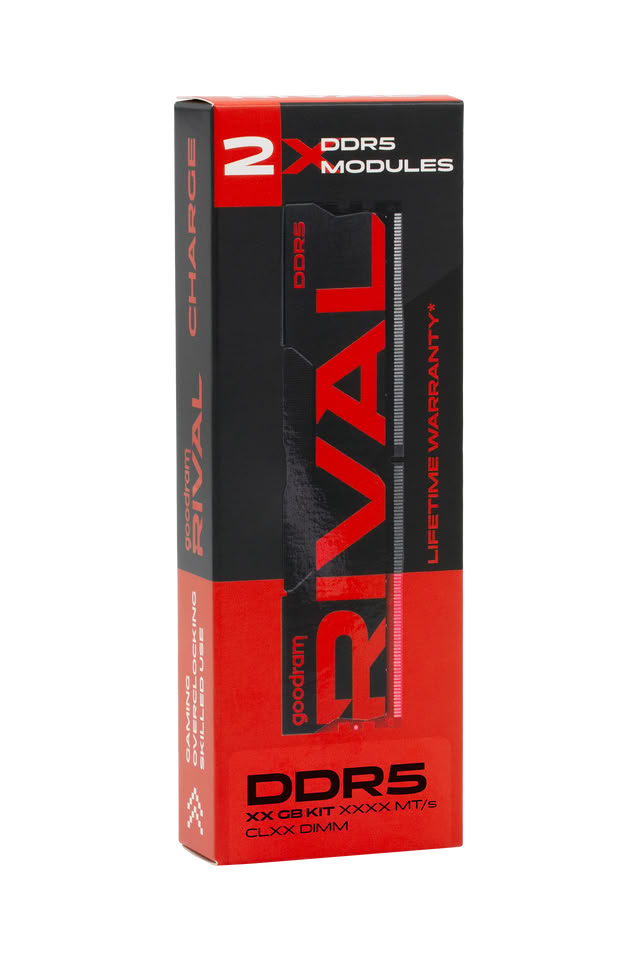
Goodram Expands Its Gaming-Focused RIVAL Series With RIVAL Charge DDR5 Memory

Goodram is expanding its gaming-focused RIVAL series with RIVAL Charge DDR5 memory. The new DIMM modules are designed for computers based on DDR5 platforms, including both new systems and upgraded configurations. The series includes variants with speeds of up to 6800 MT/s and latencies starting from CL30, as well as kits with a total capacity of up to 64 GB.

Gaming today is about more than just the game
A game, Discord, a browser with multiple tabs, gameplay recording, streaming and system monitoring—in a modern gaming configuration, RAM rarely serves just one application.

DRAM Module Revenue Surged 59% YoY in 2025 as Crowding-Out Effect Constrained Chip Supply and Drove Prices Higher

According to TrendForce statistics, the global DRAM module market generated $21.2 billion in revenue in 2025, up a strong 59% YoY. Rising prices and concentrated shipments from DRAM module makers in the second half of the year helped drive growth. This marked a significant acceleration from the 7% growth recorded in 2024.

DRAM market conditions changed dramatically between the first and second halves of 2025. In early 2025, some module makers increased their inventories of DDR4 chips in Q2, spurred by tariffs and the end-of-life (EOL) plans of DRAM suppliers for DDR4. They also supplied PC OEMs and other consumer electronics customers that had pulled forward procurement in response to tariffs.

Acer Expects PC Prices to Rise by Up to 20% in Q4, Peak Around Mid-2027

Acer Chairman and CEO Jason Chen says PC prices could rise by another 5% to 20% in the fourth quarter of 2026, according to Taiwan's Economic Daily News. Chen reportedly said that DDR4 and DDR5 memory are no longer in short supply and that CPU supply is mostly fine, with only some low-end and mid-range chips still tight. Prices haven't followed this change, though. Memory and SSD costs are still high, so systems with more RAM or storage will probably see bigger increases. Chen expects the average selling price of PCs to peak around mid-2027, with a possible drop in the second half of that year.

Even if component costs fall earlier, it takes several months for cheaper parts to reach finished PCs. Chen also reportedly said suppliers keep pushing through price increases, some of which he considers hard to justify. He also pointed to expanding Chinese memory production, and by the sound of it, he doesn't think the shortage can run until 2030, as many in the industry have claimed. That capacity is still ramping up, though. Chinese giant CXMT is reportedly preparing to enter the NAND flash market with an R&D line, and YMTC is expanding with new fabs.

Chinese DRAM Maker CXMT Is Reportedly Preparing to Enter the NAND Flash Market

CXMT, China's largest DRAM maker, is reportedly getting ready to enter the NAND flash market. According to a Reuters report citing people familiar with the matter, the company plans to set up a NAND R&D production line at its new plant in Beijing. CXMT has also set up a research institute in the capital, and NAND development is apparently among its projects there. That would put it up against Samsung and other global players, and against domestic rival YMTC, which already ranks third in NAND shipments. One of the sources says CXMT has already discussed its plans with customers, including a newly established startup that wants to buy the chips for AI and supercomputer storage products.

We also don't know when the R&D line will start running, or whether CXMT intends to go past R&D and trial production into large-scale manufacturing. CXMT and YMTC are often called the "twin stars" of China's memory industry, and they have mostly stayed in separate lanes. That seems to be changing, since Reuters reported in April that YMTC had sent low-power DRAM samples to customers. Both still trail the bigger foreign rivals, but the shortage has given them some pricing power, and CXMT was reportedly charging more than Samsung for 64 GB DDR5 server modules in July. TrendForce expects NAND supply tightness to ease only in the second half of next year, and I doubt one R&D line would change that.

Intel Reportedly Preparing 8P+8E ''Raptor Lake Next" Chip to Replace Core i5-14600K

Intel is reportedly preparing to retire the Core i5-14600K in favor of a new "Raptor Lake Next" chip with eight P-cores and eight E-cores. According to leaker Jaykihn on X (spotted by VideoCardz), the successor will have two more Performance cores than the current 14600K, putting it on par with the Core i7-14700K in P-core count, though not necessarily in cache or clocks. Raptor Lake Next is the codename for Intel's plan to extend the LGA 1700 platform with fresh silicon based on the original Raptor Lake design rather than the newer Raptor Lake Refresh. The chips are expected to launch alongside new LGA 1700 motherboards from Intel's partners in early 2027.

Intel seems to be using the lineup to fill gaps in the 14th Gen stack instead of replacing it outright, and it's reportedly also working on more 125W and 65W desktop SKUs alongside mobile variants. DDR4 support is apparently part of the pitch, which would help buyers sidestep today's DDR5 pricing crisis. More P-cores should help in games that lean on core count, and it looks like this could put the chip ahead of the Core Ultra 5 250K Plus, since the current 14600K already trades blows with Arrow Lake Refresh in several titles. That said, this is a single-source claim for now, so treat the exact configuration and timing as rumor until Intel or its partners confirm anything.

AAEON Launches MIX-PTLWV1 Panther Lake Mini-ITX Motherboard

a leading producer of industrial motherboards, has announced the release of the MIX-PTLWV1, its first Mini-ITX motherboard featuring Intel Core Ultra Series 3 processors (formerly Panther Lake). The MIX-PTLWV1 is available with a number of processors from across the series, ranging from 15 W to 25 W, and provides support for up to 128 GB of DDR5 (6400 MHz) via two C/SO-DIMM slots. With the hybrid AI acceleration offered by the Panther Lake series' integrated Intel Arc GPU, Intel AI Boost NPU, and disaggregated CPU architecture, AAEON has indicated that the MIX-PTLWV1 is positioned for use in edge AI applications across machine vision, robotic automation, and industrial inspection.

The board's I/O provides two rear I/O 2.5GbE LAN ports (Intel Ethernet Controller I226 series) by default. However, AAEON states that the board comes with the option of an additional two 10GbE LAN ports (Intel Ethernet Controller E610-XAT2) on top of this, although this configuration is SKU-dependent. Alongside these, the board hosts four USB 3.2 Gen 1 ports (5 Gbps), and four display ports, each offering 4K resolution at 60 Hz.

ADATA TRUSTA Showcases AI Scaler Extended Memory, TD7P51 ECO Gen 5 SSD and R-DIMM at AI Infra Summit 2026

TRUSTA, the enterprise storage and memory brand of memory leader ADATA, is showcasing its latest AI Scaler Extended Memory solution at AI Infra Summit 2026, one of North America's leading AI infrastructure events, bringing together approximately 8,000 professionals and 250 industry partners across the AI infrastructure ecosystem.

As increasingly complex AI models place greater demands on GPU memory and drive up infrastructure costs, TRUSTA is highlighting its award-winning AI Scaler Extended Memory Solution under the theme "Scale AI Beyond GPU Limits." The integrated hardware-software architecture enables enterprises to deploy on-premises AI with greater scalability and cost efficiency. TRUSTA is also presenting its TD7P51 ECO PCIe Gen 5 enterprise SSD and DDR5 R-DIMM, demonstrating a comprehensive portfolio built for next-generation AI infrastructure.

Google Confirms Googlebook Pre-Orders Start September 21

Google will open pre-orders for its first Googlebook laptops on September 21 at 9 AM ET. The company confirmed the date in an email to people who signed up for updates, and the same date now appears on Google's official Googlebook website. That's the first firm date tied to the product since Google teased a fall launch back in May. Acer, ASUS, Dell, HP, and Lenovo are all lined up as first-wave Googlebook manufacturers, and several of their machines have already leaked ahead of launch.

The Lenovo Googlebook 15 is probably the most exposed so far, reportedly pairing an Intel Core Ultra 5 325 "Panther Lake" chip with up to 32 GB of LPDDR5X memory, a 15.3-inch 120 Hz OLED touchscreen, and Google's colorful Glowbar light strip. That same Core Ultra 5 325 keeps showing up across leaked Acer and ASUS models too, which is a change from how Chromebooks have typically launched with entry-level Intel silicon. Google still hasn't said which models will actually be available on September 21, and it hasn't shared a shipping date either, only that units will arrive this fall.

Micron Develops 512 GB DDR5 RDIMM Server Memory Reaching 9200 MT/s

Micron Technology, Inc. (Nasdaq: MU), today announced a major milestone in memory innovation with the successful demonstration of the world's first 512 GB DDR5 module on multiple server platforms. The achievement reinforces Micron's leadership in high-performance, high-capacity server memory and provides enterprise data center and cloud customers with a path to support large and demanding AI, analytics, in-memory database and simulation-heavy workloads with greater efficiency. Leading semiconductor enablers, AMD and Intel, are both actively validating the module, which will deliver speeds up to 9,200 MT/s.

The module's high capacity is possible due to Micron's advanced vertical interconnect packaging innovations. This product vertically stacks DRAM dies interconnected by through-silicon vias (TSVs) to maximize density within individual DRAM packages while preserving the performance modern data center architectures demand. The module enables up to 12 TB of DDR5 DRAM in a single 24-slot dual-socket server.

Patriot Launches Viper Steel 5 Infinite ROG Edition Memory With Speeds Up to 7,600 MT/s

Patriot Memory today announced the release of the Patriot Viper Steel 5 Infinite RGB DDR5 ROG Edition. Born from an official certified collaboration with ASUS Republic of Gamers (ROG), this high-performance kit combines extreme DDR5 speeds with a patent-pending 3D Infinite Mirror optical structure. Built with tested XMP 3.0 base profiles reaching up to 7,000 MT/s, the series features an exclusive ROG Certified BIOS integration that unlocks hidden performance profiles up to 7,600 MT/s on compatible ASUS ROG motherboards.

Designed to complement the ASUS ROG hardware ecosystem, the Viper Steel 5 Infinite ROG Edition is housed in a custom matte carbon-black aluminium heat spreader. The chassis is styled with an official ROG Certified red label, slashed dot-matrix typography, and a diamond-cut Viper logo. Atop the module, a solid-media optical light-bar projects a multidimensional 3D light tunnel within standard memory slot dimensions, syncing seamlessly across ASUS Aura Sync, SignalRGB, and major motherboard RGB software.

Steam Frame Pricing Reflects Rising Component Costs, Confirm Valve Engineers

Valve has opened reservations for the Steam Frame, its standalone VR headset, with pricing starting at $1,059 for the 256 GB model and going up to $1,299 for the 1 TB version. We had already reported back in July that Qualcomm's own chip price hikes were pushing Steam Frame costs upward well before today's reveal. In an interview with Tom's Hardware, Valve engineer Pierre-Loup Griffais walked through why the final price landed where it did. Here's what he said:
"I think as far as memory prices and those kinds of conditions, we're really in it like everyone else. It's an unfortunate situation all around. We wish that gaming hardware was cheaper, but we're definitely trying to be on the cheapest side that we can get despite all those conditions. Even just things like motherboards, copper, anything, even shipping anything worldwide right now is way more expensive than it was last year and two years ago. So every part of the sticker price is affected there."

Transcend Launches 64 GB DDR5-6400 CUDIMM and CSODIMM Embedded DRAM Modules

Transcend Information, Inc. (Transcend), a leading global manufacturer of memory and storage solutions, has introduced its DDR5-6400 CUDIMM and CSODIMM embedded DRAM modules, offering capacities of up to 64 GB per module to meet the computing demands of edge AI, smart manufacturing, industrial automation, and high-performance embedded systems. Featuring DDR5's dual-channel architecture and a low operating voltage of 1.1 V, the modules incorporate a Client Clock Driver (CKD) to minimize signal interference caused by noise and jitter during high-speed operation, thereby enhancing signal stability. An integrated power management IC (PMIC) further improves power efficiency and voltage regulation. The SPD chip features a built-in temperature sensor for real-time memory temperature monitoring, while a transient voltage suppressor (TVS) helps protect components from damage caused by voltage fluctuations. In addition, On-Die ECC built into the DDR5 DRAM chips enhances data integrity and long-term operational reliability. Together, these features provide next-generation industrial computing platforms with a high-capacity, high-performance, and dependable memory solution.

Up to 64 GB per Module for Demanding Industrial Applications
Transcend's DDR5-6400 CUDIMM and CSODIMM modules offer capacities of up to 64 GB per module, meeting the intensive computing requirements of industrial computers, edge computing devices, and embedded systems. DDR5's dual-channel architecture improves data access efficiency and overall transfer performance, while DDR5-6400 speeds accelerate large-scale data exchanges and real-time processing. The modules provide the capacity and bandwidth required for high-performance industrial applications.

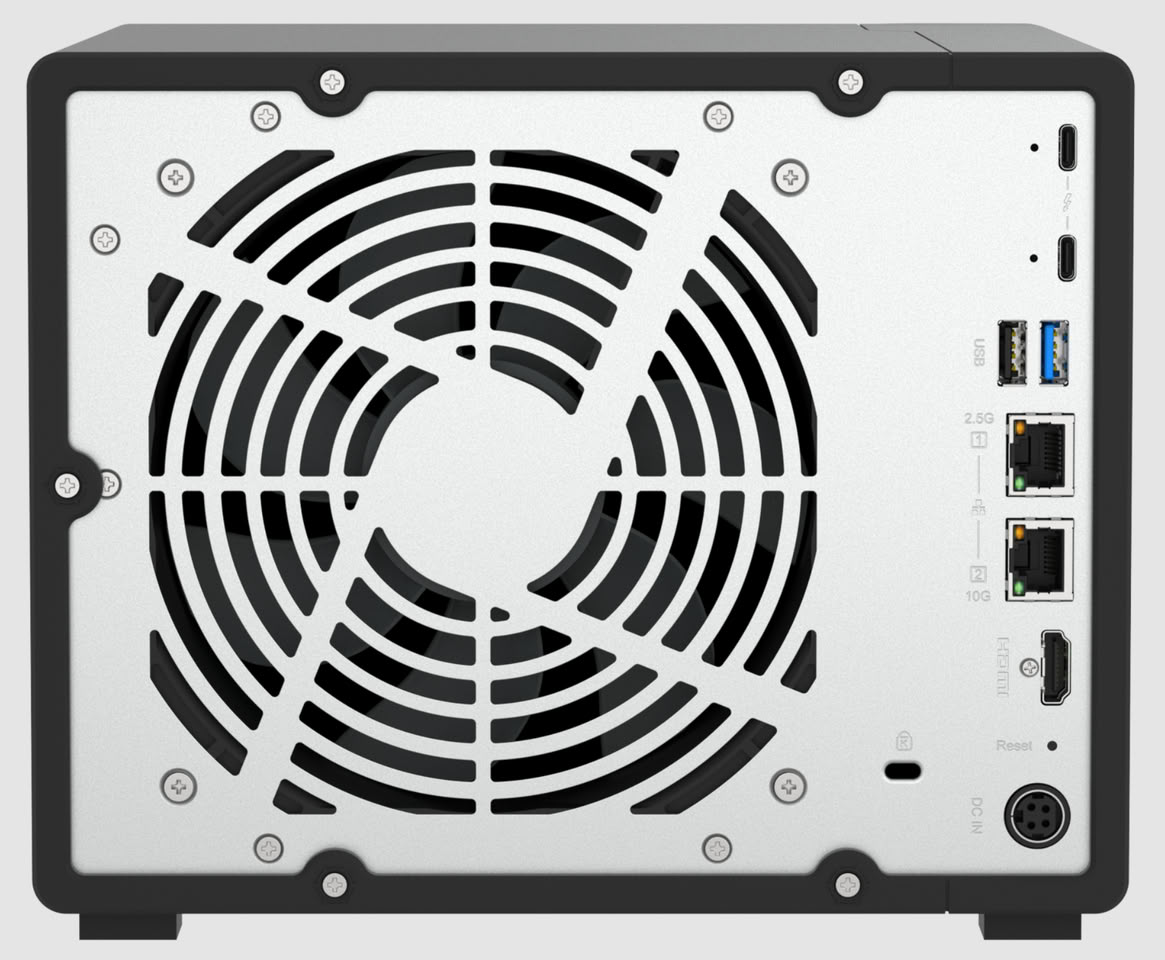
QNAP Releases the TS-h966TX Thunderbolt 4 & 10GbE NAS

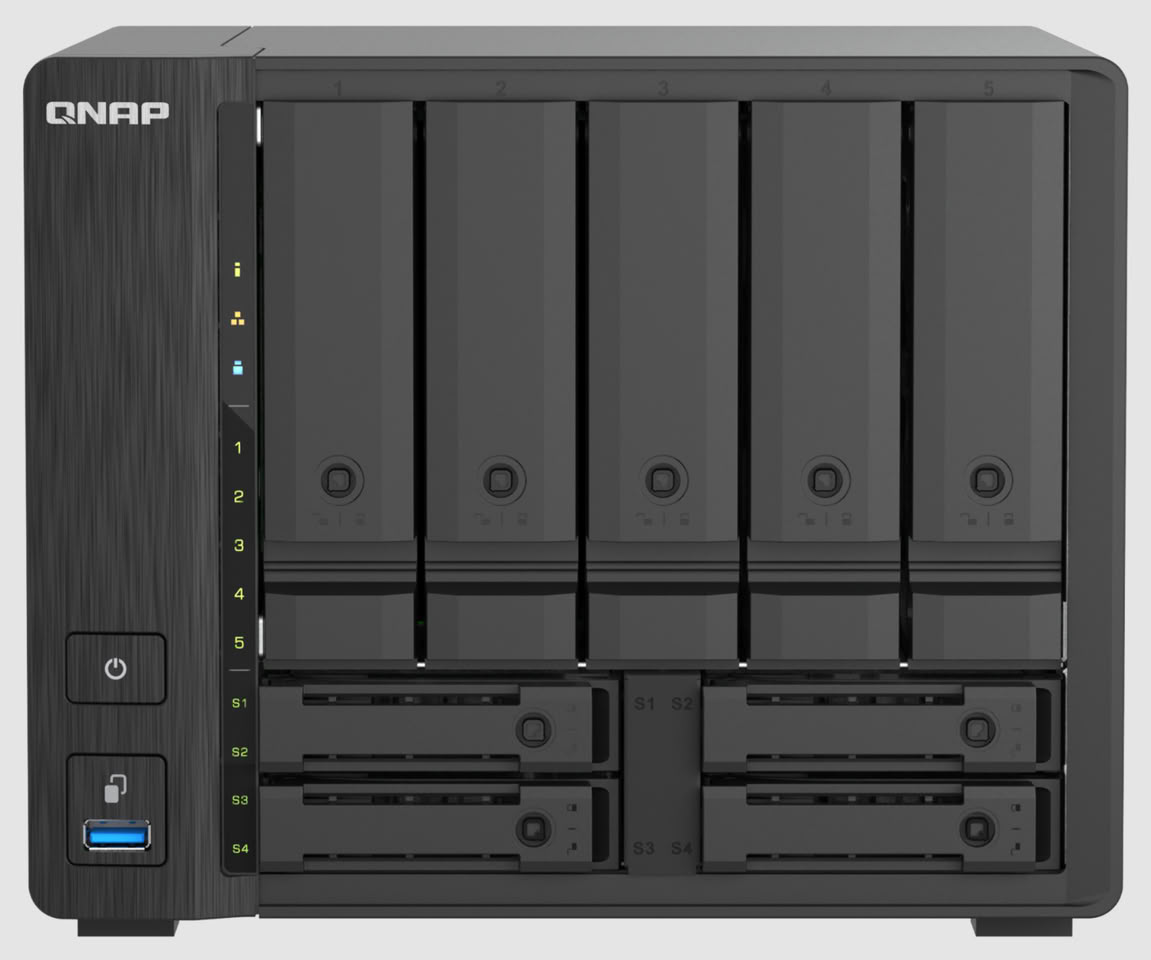
QNAP Systems, Inc., a leading innovator in storage, networking, and computing solutions, today announced the TS-h966TX, a compact and reliable 9-bay hybrid Thunderbolt 4 10GbE NAS designed to accelerate modern content creation workflows. Featuring a unique 5+4 hybrid drive design, the 9-bay TS-h966TX combines large-capacity SATA HDD storage with high-performance U.2 NVMe SSD acceleration—helping creators and small studios achieve both cost efficiency and fast project turnaround.

Compared to QNAP's previous HDD-based 6-bay Thunderbolt 4 NAS models, the TS-h966TX is physically 36% smaller, enabling more efficient workspace deployment without compromising performance. With four dedicated U.2 NVMe SSD bays (which support installing M.2 NVMe SSDs via the QDA-UMP4A adapter), users can build ultra-fast storage pools or enable SSD cache to boost IOPS for demanding editing, VFX, and multi-user production environments.

Mobile Intel 12 Xe "Nova Lake" May Support Upgradeable DDR5-8000 Memory

Intel's next-generation Nova Lake mobile chips with 12 Xe-core graphics may support DDR5-8000 memory through CSODIMM modules, according to leaker Golden Pig Upgrade Pack on Weibo. If that pans out, it would be the first mobile Nova Lake variant to officially support DDR5, a notable departure from the soldered LPDDR memory that dominates thin-and-light laptops right now. Current Panther Lake systems with 12 Xe cores, like the Core Ultra X7 358H, don't officially list DDR5 support, though ASRock Industrial already ships mini PCs with two DDR5 SO-DIMM slots running at DDR5-7200 on that platform, and Intel itself includes this configuration among its Core Ultra Series 3 developer systems.

Nova Lake-S, the desktop version, has already been tied to DDR5-8000 through leaked B960 chipset details and platform documents, so Intel appears to be pushing that same memory ceiling down into at least part of the mobile lineup too. Unlike soldered LPDDR5X, CSODIMM support would let OEMs offer upgradable RAM again in these systems, an option that's grown rare in slimmer laptop designs built around battery life and board space. Despite the leaker's solid track record, this is still a single leak rather than anything Intel has confirmed, so I'd hold off treating the exact speeds as final. If it checks out, it suggests Intel is willing to give at least some mobile Nova Lake configurations more memory flexibility, even as most of the market keeps drifting toward soldered memory for efficiency.

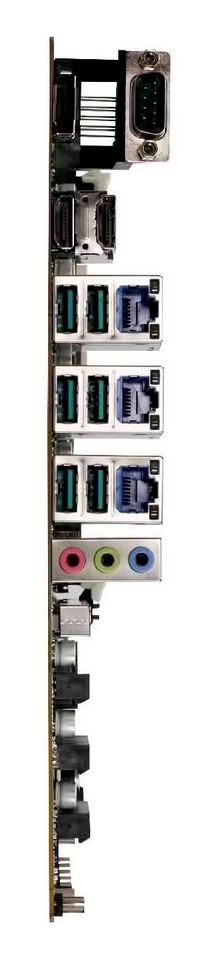
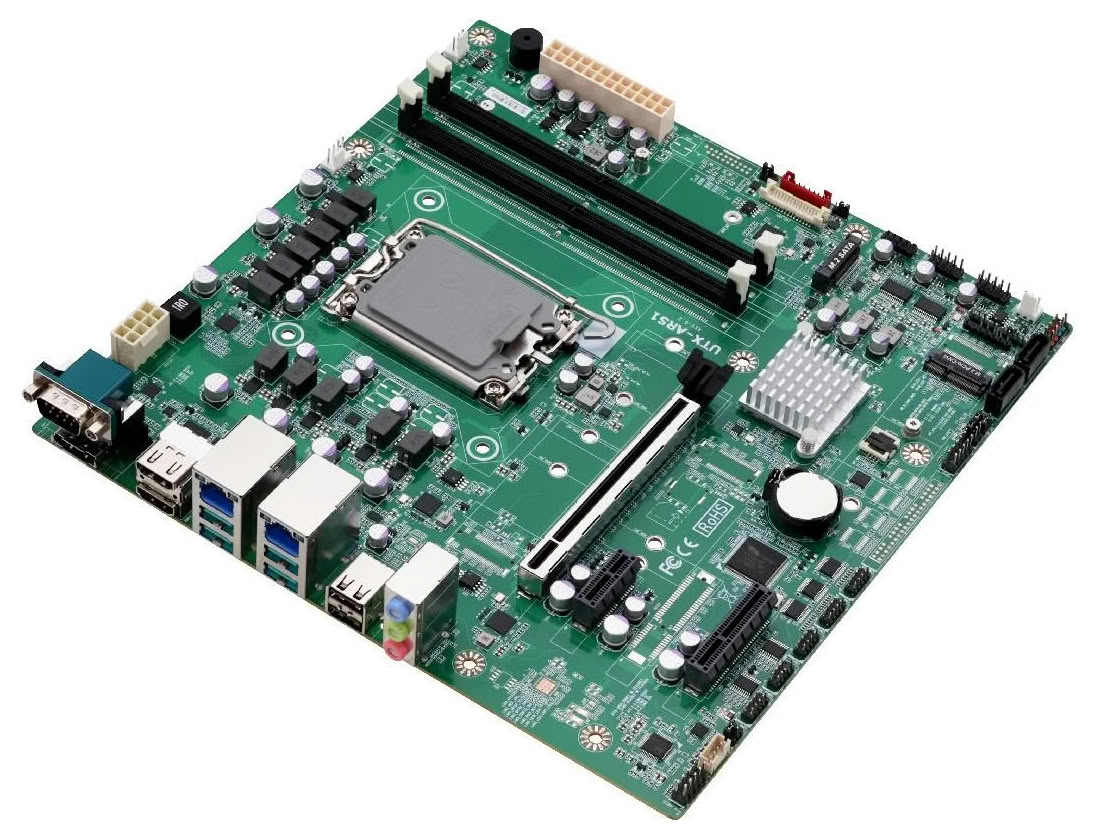
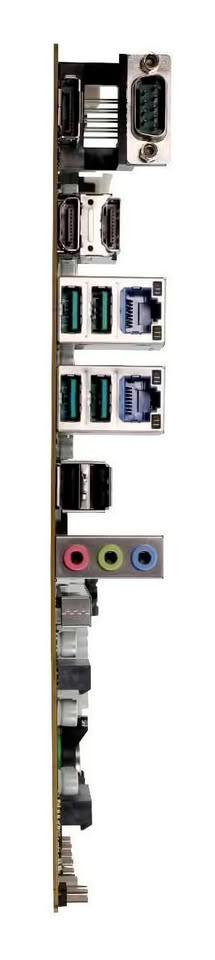
AAEON Releases MAX-Q870A and MAX-H810A microATX Industrial Motherboards

AAEON (Stock Code: 6579), today announced the release of two new microATX industrial motherboards featuring Intel Core Ultra 200S Series Processors (formerly Arrow Lake-S), the MAX-Q870A and MAX-H810A.

The two boards are compatible with a range of Arrow Lake-S CPUs, with the MAX-Q870A supporting up to 125W SKUs and the MAX-H810A supporting up to 65 W SKUs. This difference reflects the market positioning of the two boards, with the former marketed for advanced AI and machine vision use and the latter for more cost-efficient industrial automation and HMI applications.
Return to Keyword Browsing
Nov 12th, 2026 21:11 PST change timezone

New Forum Posts

Popular Reviews

TPU on YouTube

Controversial News Posts