
News Posts matching #Gaming

Return to Keyword Browsing

Valve Dev Launches DIY "Inkterface" Steam Machine E-Ink Front Panel

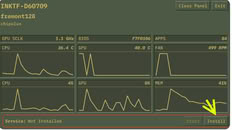
One of the details that got gamers excited around the time Valve announced the Steam Machine was the inclusion of an e-ink panel that was shown off in the console's announcement video, which we later discovered would not be commercially available. Following the e-ink panel hype and the official launch of the Steam Machine, NaKyle Write, a Valve contractor, has officially published a GitLab page detailing a DIY Inkterface panel, which gives gamers the ability to build the e-ink panel as long as they have access to parts and a soldering iron, and the ability to combine the two. The GitLab post lists all the necessary parts, but it requires some knowledge of the Linux AppImage packaging format and building and flashing firmware for the e-ink panel.

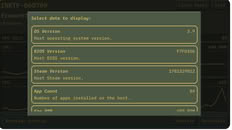
Valve says that it has In total, the BOM cost comes out to around $88.15 using the sources Valve lists in the GitLab instructions, although it's likely that the parts or 1:1 alternatives could be acquired more affordably on sites like AliExpress. The most expensive component is the 5.83-inch e-ink display, at $49.95. The Steam Machine Inkterface panel is technically an independent peripheral in that it does not need the Steam Machine to display an image. As such, it connects to the Steam Machine with a BLE connection, and it is controlled by the Steam Machine using an app, which currently needs to be compiled as an AppImage but will later be shipped on Steam. The Inkterface panel can display a number of system stats or custom layouts and images created in Lunacy, an open-source Figma alternative.

This Week in Gaming (Week 28)

After a couple of slower weeks, we're now back to a more normal week of new game releases and this week's big release comes courtesy of Bandai Namco for all of the JRPG fans here. As for the rest of this week's releases, we start with a sports management game of sorts, followed by a peculiar mix of vampires and farming, a "Choose your own adventure" game, a remake of a 2013 pirate game and we round the week off with a new take on old school action RTS games.

Echoes of Aincrad / This week's major release / Friday 10 July
Step into the floating castle of Aincrad, a world of breathtaking beauty and danger where every battle could be your last. Enter a mysterious, vibrant world and shape your fate. Create your hero, choose your gear, and master combat through your special skills and reflexes. Build synergy with the partner of your choice, level up, and unlock powerful abilities as your horizon expands with every victory. Will you rise and claim your destiny or fall to foes stronger than you imagined? Steam link

Epomaker Launches NEX Pro Gaming Mouse and HE65 V2 TMR Keyboard

After teasing the HE65 V2 in early June, Epomaker has finally released the compact 65% TMR gaming keyboard, making it available in black or white for $99.99 on the Epomaker online shop or at Amazon. The HE65 V2 TMR, as the name suggests, is a 65% TMR keyboard with an 8 kHz polling rate, wireless connectivity, an ABS plastic case. The keyboard features a gasket mount and an FR4 plate, and it has four layers of sound damping (latex switch foam, an IXPE switch pad, EPDM case foam, and a silicone case pad). The HE65 V2 TMR uses TMR sensors to make it compatible with N-pole magnetic switches—it ships with Epomaker's Creamy Jade Hall Effect switches by default—but it is also compatible with three- and five-pin MX-style mechanical switches, allowing buyers to choose between the classic mechanical sound and feel or the performance and adjustability benefits of analogue input. The keycaps on both versions of the HE6 V2 TMR are matte translucent polycarbonate Cherry profile keycaps with silk-screened lettering. Despite the compact design, there is a three-key navigation column and a modular, customizable knob on the right edge of the keyboard. Wireless connectivity on the HE65 V2 TMR is powered by a 4,000 mAh battery, but Epomaker makes no claims of battery life.

The Epomaker NEX Pro is the peripheral maker's latest lightweight wireless gaming mouse, and it packs the flagship-tier PixArt PAW3950 sensor and the ever-popular Nordic 54L15 MCU, which enables 8 kHz polling, up to 42,000 DPI, 750 IPS tracking, and up to 50 G acceleration. The NEX Pro has a right-handed, mild ergonomic design with two extra programmable side buttons and an extra button on the top behind the scroll wheel. Epomaker says that the NEX Pro is designed for medium-to-large hands, with dimensions of 122 × 65 × 42 mm (L × W × H) and a claimed weight of 65 g, which isn't particularly heavy but is also by no means "ultra-lightweight," as Epomaker claims. The brand has not revealed what microswitches the NEX Pro uses, but it does specify that the switches have a lifetime of 100 million clicks. The Epomaker NEX Pro features both 2.4 GHz and Bluetooth wireless connectivity, and it has a 500 mAh battery that should deliver a claimed 50 hours of use at 8 kHz. The NEX Pro also comes with a color-matched magnetic charging dock with customizable RGB underglow. The NEX Pro launched at $79.99, and it's available on Epomaker's online shop or on AliExpress.

Intel Readies Two 22-Core "Nova Lake-S" SKUs with 108 MB bLLC Cache for Gaming

According to well-known Intel leaker Jaykihn, Intel is preparing two "Nova Lake-S" CPU models with a 22-core configuration, enhanced by the big Last Level Cache (bLLC). These processors are part of the Core Ultra 5 400S family, and Intel is developing two mid-range configurations, each with 22 cores. Both models will feature 6 "Coyote Cove" P-Cores, 12 "Arctic Wolf" E-Cores, and 4 LPE-Cores. This design includes a single compute die aimed at mid-range gaming rigs. Alongside the 22 cores, Intel plans to add an extra 108 MB of bLLC cache to boost gaming performance, similar to AMD's approach with its Ryzen X3D gaming CPUs, which currently lead in gaming performance. Intel aims to match raw CPU compute power with newer CPU cores and use bLLC to improve latency-sensitive tasks like gaming. The only difference between the two new models is that one is an unlocked 125 W TDP version, part of the "K" overclockable family, while the other is a 65 W base TDP model.

Recently, it has been observed that Intel's upcoming Z9x0 platform for "Nova Lake-S" will support up to 52 cores in a single LGA-1954 socket. Some early rumors suggest a PL2 power draw of 474 W, which is a significant increase over previous designs. This is understandable, considering that the design brings workstation-like core counts into the consumer sector for the first time. Regarding the socket, Intel's LGA-1954 has been pictured with a 2-lever independent loading mechanism (ILM), similar to what Intel's HEDT sector uses. This is typically reserved for larger CPU packages, and with the pin count now nearing 2,000 socket pins, it is a necessary choice for Intel. Importantly, the first "Nova Lake-S" CPU SKUs are scheduled for release in just a few months, likely leading to more rumors as we approach the final launch.

Razer Announces Wuthering Waves Gaming Peripherals Collection

Razer, the leading global lifestyle brand for gamers, today announced the Razer | Wuthering Waves Collection, created in collaboration with Kuro Games. Inspired by the game's newest Resonator, Denia, the collection marks the first official lineup of Wuthering Waves gaming peripherals.

In a world forever altered by the Lament, only the unwavering carve their legacy. Drawing from Denia's strength and steadfast resolve, the collection reimagines Razer's iconic gear with Denia's distinct identity, blending resonant design with high-performance engineering to deliver a setup that feels controlled, responsive, and powerful.

Assassin's Creed Black Flag Resynced Gets Steam Deck Verified Ahead of Launch

As was the case with Assassin's Creed Shadows, Ubisoft has just announced that Assassin's Creed Black Flag Resynced has been Steam Deck Verified ahead of its July 9 launch, and that it will also support Steam Achievements on day one, again following the recent trend of doing the same with older Assassin's Creed games. In the announcement of day-one Steam Deck support, Ubisoft claims that Black Flag Resynced has been optimized for and looks great on the Steam Deck, despite its low-powered APU. Of course, given the relaxed Steam Machine Verified requirements, this means Black Flag Resynced will also work on the new mini PC, too.

Ubisoft also claims that the Black Flag Resynced will "look and run great on the Steam Deck," and that "developers have worked hard on features like ray tracing across all platforms, dynamic weather that looks and feels fantastic, and a Caribbean remade from the ground up." Assassin's Creed Shadows, for its part, mostly runs at 30 FPS on the Steam Deck with a built-in graphics preset, which locks down a number of graphics options, and upscaling tech is doing a lot of heavy lifting to keep the game running smoothly. Given that Assassin's Creed Black Flag Resynced is being built on the modern Ubisoft Anvil engine with support for many of the same visual settings and graphical fidelity options as Shadows, we can likely expect similar performance. More good news is that more powerful gaming handhelds, like the new Intel Arc G3-powered versions or the ASUS ROG Xbox Ally X (read TechPowerUp's review here) will run Assassin's Creed Black Flag Resynced even more smoothly.

Edifier Unveils the G5 MAX Wireless Gaming Headset

Edifier International, the award-winning audio electronics designer, announces the launch of its latest innovation the G5 MAX wireless gaming headset, redefining immersive gaming audio with professional-grade acoustic performance, ultra-low latency connectivity, and industry-leading battery life. Designed for gamers, streamers, and audio enthusiasts, the G5 MAX combines advanced acoustic engineering with cutting-edge wireless and immersive audio technologies to deliver reference-quality sound, crystal-clear communication, and uncompromising all-day performance.

The HECATE G5 MAX sets a new benchmark in wireless gaming audio with powerful 53 mm titanium-coated drivers, triple Hi-Res Audio certifications, AI-enhanced voice capture, and immersive THX Spatial Audio+ with 7.1.4 virtual surround sound for enhanced positional accuracy and a realistic 360-degree soundstage. Combined with an industry-leading 305 hours of battery life, the G5 MAX is engineered for gamers and creators who demand precision, immersion, and all-day comfort in a premium next-generation wireless audio experience.

Xbox To Shutter At Least 5 Studios and Cancel Upcoming "Blade" Game

When it was reported that Xbox Game Studios was planning on restructuring in the face of plummeting revenue, which would predictably lead to mass layoffs and studio closures, it seemed as though a handful of studios were at risk of closure. Now, according to an insider source speaking to The Verge, that number has jumped to at least five game studios, including Arkane Studios, the game studio behind Dishonored and the upcoming Marvel's Blade. Allegedly, even before the rumored studio closures and layoffs, Xbox was unhappy with how slowly Blade was being developed and was weighing its options for the future of the game and its studio.

Microsoft is supposedly using up the time leading up to the planned layoff announcement to seek potential buyers for certain studios, including Arkane Studios, although sources say that Marvel's Blade, currently in development at Arkane, would be cancelled with the studio's closure. As many as 1,000 workers will potentially lose their jobs in the upcoming wave of layoffs at Microsoft's Xbox Gaming. Currently, it seems as though the layoffs will take place on July 6, but Microsoft has yet to confirm anything regarding the layoffs.

SteamOS Beta Update Adds dGPU VRAM Management Patch

In April 2026, Natalie Vock, a software engineer famous for contributions to Valve's Linux gaming stack, published a series of patches to improve VRAM usage on Linux, largely directed at devices with dGPUs with limited VRAM, and now that patch has seemingly also been adopted by Valve itself in the latest SteamOS Beta update 3.8.20. The update notes denote this as "Greatly improved VRAM management, improving performance and stability in cases where VRAM is limited," which should help improve performance for Valve's Steam Machine at higher resolutions. Of course, this update should also improve performance for DIY Steam Machines and other dGPU gaming machines running Valve's SteamOS. It should be noted that there may be little to no performance improvements for iGPUs, since they share system memory and VRAM already, and overflowing to system memory was what was causing performance issues.

In Vock's testing and subsequent testing of an implementation of the dmemcg-booster and the patches on CachyOS, performance on low-VRAM GPUs was nearly doubled in some cases, making games that were previously unplayable just barely smooth enough to play on the aging hardware. The SteamOS 3.8.20 Beta update also updates the Mesa graphics driver to a new major release, specifically Mesa version 26.1.2, which adds support for a number of ray tracing features and improves support for new Intel GPU hardware and stability for both frame rates and shader compilation under OpenGL and Vulkan. It also includes fixes for bugs with the Legion Go S SD card reader, issues with streaming in desktop mode, and graphics driver issues preventing Sniper Elite 5 from rendering correctly.

Unionized Xbox Workers To Fight Imminent Mass Layoffs

It was recently revealed that Microsoft is planning a massive round of layoffs at its Xbox Gaming division, with several studios allegedly already on the brink of closure shortly after the news of layoffs broke. Now, according to Wccftech, who attended a virtual press conference by the Communications Workers of America (CWA), over 3,500 unionized Xbox employees are preparing to fight back against the rumored layoffs. Right off the bat, Frank Arce, vice president of CWA District 9, kicked things off by declaring that workers at Xbox, unionized or not, "will not be treated as disposable," with developers and former developers from ZeniMax Online, Activision-Blizzard, and Arkane Austin contributing their experiences and hardships in the gaming industry, with everyone in agreement that Xbox employees needed protections against layoffs, including advanced notice, hiring freezes to allow former employees an opportunity of internal transfers, and strong severance packages where layoffs are necessary.

The union will wait until Microsoft announces the Xbox layoffs before calling Microsoft to the negotiations table—although there have apparently already been hushed internal discussions about the future of the aforementioned studios facing closure. Members who spoke at the meeting were adamant that Xbox workers needed certainty, with Blizzard editor, Alison Veneto, saying that "Everyone at Xbox deserves long-term certainty on where they stand should layoffs happen," and others emphasizing the importance of knowing that, in the event that layoffs are necessary, every other avenue has already been exhausted. CWA higher-ups spoke on the discrepancy between Microsoft's announced intentions and its actions, such as lamenting recent AI-inflicted RAM price hikes when announcing the Xbox Series X|S price increases while simultaneously pouring money into AI investment.

Sony Spurs $1,000 PlayStation 6 Rumors

Rumors of sky-high next-gen consoles have been floating around for about as long as the next-gen consoles have been confirmed as in development, but it seems as though Sony CEO, Hideaki Nishino has all but confirmed $900+ pricing for the PS6 in a recent Q&A session following an official Gaming & Network Services meeting. When asked about the sales strategy for the upcoming console generation, which would be the PS6, Nishino replied that, despite recent price increases on PlayStation hardware, "sales are proceeding as planned, and we do not believe that this has led to a decline in customer demand. As a principle, we do not intend to sell hardware at significant losses. At the same time, we are carefully monitoring the market and continuing to evaluate our approach." This suggests that the PS6, and its upcoming portable companion, will likely be priced as low as possible without eating into Sony's bottom line. Instead of chasing a specific price point and using subsidized pricing to reach the lower price, Sony appears to be pricing the PS6 according to what will be competitive and accepted by the consumers at launch.

He went on to say that "it is important for us to make every effort to ensure that customers fully understand the value we provide in relation to pricing," and explaining that "the value of [PlayStation hardware] lies in the experience, not the hardware itself. As a dedicated gaming device, it provides seamless, immediate access to content—unlike general-purpose devices, which involve multiple layers before gameplay." Taken together, especially given the recent news about the return of PlayStation exclusives, the launch pricing of the Steam Machine, and the recent price increases and expected price of the Xbox Helix at Microsoft, it seems as though $1,000 as a starting price for the PS6 is becoming more and more likely. Micron recently announced that, while it has projects in place to try and meet demand for DRAM, it does not see the DRAM crisis ending or significantly easing before 2028. An increased BOM cost for consoles with an increased subsidy from Sony may also accelerate the increase of game prices, since consoles are usually sold as loss-leaders, at least initially, with profits being recouped via games sold for the platform.

Vanguard Anti-Cheat Adds On-Demand Mode

Following report surfaced that Riot's Vanguard anti-cheat was apparently soft-bricking certain hardware often used for cheating, Riot has updated Vanguard with a new on-demand mode that allows users to disable the anti-cheat mode from launching on boot. According to a blog post about the update, on-demand mode will only launch Vanguard when it's needed by a game like League of Legends or Valorant. This should theoretically allow for faster boot times and slightly reduced system resource usage on Windows PCs with Vanguard installed. However, Vanguard on-demand mode is only possible in cases wherein player hardware meets a set of security standards that Riot calls a Vanguard Pre-Check.

The Pre-Check, and thus Vanguard On-Demand mode, requires that players are running Windows 11 version 25H2 or newer and enable Secure Boot, TPM 2.0. IOMMU, VBS, and Hypervisor-Protected Code Integrity. All of these security measures basically allow Riot to ensure that no kernel-level cheats have been enabled between when the system booted and when Vanguard was launched. Riot says that around 35% of Vanguard user systems are already in a "secured-core state," meaning they meet all the requirements and will be able to enable On-Demand mode with the next Vanguard update, however, those who have one or more of the aforementioned UEFI settings disabled will have to go through the Pre-Check before being able to enable On-Demand.

This Week in Gaming (Week 27)

As we're about to pass the half year mark of this year and enter the month of July, we have an even slower week for new game releases than last week. This week's major release isn't very major, but it's at least from a space opera franchise that everyone will be familiar with, combined with a board game that everyone should also be familiar with. As for the rest of this week's new releases we have a game that involves maths and science, an old school text-based detective game, an early fourth of July game for our US readers, a classic top-down arcade shooter and finally a pixel art RPG with a twist.

Monopoly: Star Wars Heroes vs. Villains / This week's major release / Tuesday 30 June
Assemble your team, build your roster of iconic Star Wars characters, and battle with your friends and family for control of the galaxy as you move across storied planets and locations. Choose from a wide array of Star Wars heroes and villains, each with their own unique abilities. Whether you're teaming up with Luke Skywalker or unleashing Darth Vader, every match is packed with team strategy, surprises, and classic Star Wars moments. Steam link

Capcom Has No Plans for Resident Evil 5 and 6 Remakes

Following the launch and overwhelming success of Resident Evil: Requiem, it was revealed that Capcom may be planning to launch a remake of Resident Evil 1 after it releases a Resident Evil Code Veronica remake sometime in 2027. This has obviously led to fans asking questions about what other potential Resident Evil games might receive the modernization treatment. According to notable Resident Evil leaker, Dusk Golem on the ResetEra forums, Resident Evil 5 and Resident Evil 6 remakes are not on the cards.

The leak comes in response to another rumor that claims Capcom will remake the entire Resident Evil franchise, eventually culminating in the current status quo as of Resident Evil Requiem—and seemingly retconning certain aspects of the franchise in the process—as part of some overarching plan. According to Dusk Golem, this is not the case, and Capcom currently has no plans to remake Resident Evil 5 and 6, although the leaker does not rule out the possibility of eventual remakes for the games if Capcom decides to one day acknowledge fan demand for those remakes, with an eventual remake all the more likely if Resident Evil 1 and Code Veronica perform well commercially. It bears pointing out that Resident Evil 4, the most recent RE remake, originally launched in 2005, while Resident Evil 5 and 6 launched in 2009 and 2012, respectively, so it makes sense that they wouldn't necessarily be high on the list of priorities for Capcom to remake just yet. Most recently,

Ubisoft Barcelona To Strike Over Layoffs

Ubisoft has been undergoing a controversial restructuring, having previously laid off hundreds of staff across multiple studios. In the latest round of layoffs, announced earlier in June, the gaming giant laid off 51 employees—28% of its staff at the location—at its Barcelona studio, resulting in the announcement of a strike at the branch. According to Insider Gaming, employees at Ubisoft Barcelona will strike every Tuesday and Thursday afternoon between June 30 and July 16.

The striking workers are demanding: a continuity mandate and binding negotiations that would ensure the positions of the 51 affected staff; protections against future dismissals for a minimum of five years; compliance with internal promotions procedures that had not been adhered to; an unconditional return to work from home agreement that would allow 60% monthly remote work; and a career development pact that would see the salary improvement plans and social benefits packages reviewed. Previously, the French Video Game Workers' Union also responded to a round of layoffs at Ubisoft with a two-week strike that had similar demands.

Airship Syndicate Announces "DUST: Origins" Sci-Fi Game on Kickstarter

Airship Syndicate, the indie game studio behind Wayfinder, Darksiders: Genesis, and Battlechasers, has officially announced its next project, a sci-fi game called Dust: Origins (stylized as "DUST: Origins"), with a Kickstarter crowdfunding campaign to fund the game slated to start on July 28. Not much has been revealed about the upcoming game aside from a brief teaser and the tidbits on the game's Kickstarter page. The game is set on an orbital prison station in a state of disrepair, and players will take the role of a character recently freed from cryo-prison and have to "fight their way through a murderer's row of violent criminals and horrifying monsters before the station tears itself apart."

The game is touted as a "handcrafted sci-fi action game," while the catchphrase "there are no saints—only survivors," teases that choices matter and suggests that there will be a morality system that will affect how players experience the game's story. Some of the other hints of the game's content on the Kickstarter page include that it will be a "dark and immersive isometric action title." Its visuals and atmosphere appear to be largely inspired by Dead Space, which means we're likely to see some horror elements and claustrophobic fights. The official Dust: Origins teaser follows.

PlayStation Renews Live Service Games Push and PS6 Handheld Hype

When news broke about PlayStation's return to console exclusives, it was accompanied by a caveat that live service multiplayer games would continue to launch on multiple platforms, with Sony's Hedeaki Nishino stating that games would release on platforms that would enhance the gameplay experience. The executive has since conducted another interview with Famitsu, in which he both doubles down on this commitment and expands on Sony's plans for live service games. Despite the recent Destiny 2 debacle—which has resulted in layoffs of around 300 employees at Bungie—and lukewarm Marathon launch, Nishino says he believes that live service games attract users on a global level, and Sony will "continue to revitalize the market through first-party and third-party content." He continued, saying that PlayStation is looking to experiment within the live-service genre in the medium to long-term, and that the genre is still new and growing.

Nishino also spoke on the future of the gaming console, saying that Sony still sees a future in the console as a gaming format, and that you will continue to need a console to play some games. However, he mentioned that console hardware would need to adapt to the gamer's lifestyle, teasing that Sony is moving out of the living room, with future speakers and monitors planned for other use cases. He then went on to mention the PlayStation Portal as one of the ways Sony has attempted to address the changing lifestyle demands of a gamer, and said that he would like to continue to push that frontier to better match diversifying lifestyles. We've known for a while that Sony has been planning to launch a standalone PS6 Portable, with recent rumors claiming that the gaming handheld would launch with as much as 24 GB of GDDR7 VRAM as shared system and graphics memory.

AMD's FSR 4.1 Performance on RDNA 3 Notably Slower than FSR 3.1

AMD recently released FSR 4.1 for its RDNA 3 GPUs, which demonstrated a handy performance increase over native rendering on RDNA 3, but a recent comparison by German outlet, ComputerBase, has revealed that there are noticeable performance regressions when comparing FSR 4.1 to FSR 3.1 on RDNA 3 GPUs. The publication tested FSR 4.1 and FSR 3.1 on the AMD Radeon RX 7900 XTX, RX 7800 XT, and RX 7600, and FSR 4.1 on the Radeon RX 9070 XT. In geometric mean results of nine tested games, the 9070 XT scores an identical frame rate to the RX 7900 XTX in 4K native resolution, but the RDNA 3 flagship scores 52.6 FPS when using FSR 4.1 Quality settings, compared to 56.5 FPS on the 9070 XT—a 7% performance penalty. Looking at FSR 4.1 Performance, the gap grows, with the 7900 XTX serving 65.2 FPS in the test, while the 9070 XT scores 71.9 FPS, making the 7900 XTX 9% slower than the 9070 XT at FSR 4.1 compute.

The comparison between FSR 4.1 and FSR 3.1 on RDNA 3 is where it becomes even more interesting, with the geometric mean reflecting an 11% performance penalty for FSR 4.1 in Quality mode and a 14.5% regression in Performance mode. AMD previously explained in an interview with TechPowerUp that there were notable differences between the implementation of FSR 4.1 on RDNA 4 and RDNA 3, specifically that the older hardware uses 8-bit integer (INT8) data, while the RDNA 4 implementation uses the built-in FP8 support in the 2nd-generation AI accelerators in RDNA 4 GPUs. Despite this, AMD claims that it aimed for quality parity across different RDNA generations, which may partially explain the bigger performance penalty on RDNA 3 GPUs. FSR 4.1 support has yet to make it to RDNA 2 GPUs, with official support for the RX 6000-series graphics cards planned for early 2027, so we have yet to see what sort of performance penalty will be incurred there, however, AMD also commented that supporting that older hardware is even more complex, since there are no dedicated AI accelerators. This means RX 6000 GPUs will need to rely on Stream Processors to compute FSR 4.1 upscaling.

Gigabyte's 32-inch 240Hz QD-OLED 4K Gaming Monitor MO32U24 Now Available

Gigabyte, the world's leading computer brand, announces the availability of the MO32U24. This 32-inch 240 Hz 4K gaming monitor is built to deliver ultra-smooth visual performance, featuring a QD-OLED panel with Advanced ObsidianShield film that deepens perceived blacks and contrast while keeping colors vivid during use. MO32U24 is further backed by Gigabyte's exclusive picture-quality tuning for both HDR and SDR content to bring out the perfected performance of OLED, and inherits proprietary Tactical Features for responsive in-game control.

The MO32U24 delivers top-tier OLED performance by leveraging Advanced ObsidianShield film to increase perceived black levels by up to 40% while preserving deep blacks and vivid colors even under strong ambient light. In addition, the upgraded 3H surface hardness improves everyday durability with 2.5x greater scratch resistance. Certified with VESA ClearMR 13000 and an outstanding 0.03 ms GTG response time, it eliminates motion blur for absolute clarity. Visuals are further refined by VESA DisplayHDR True Black 500 and 99% DCI-P3 color gamut, ensuring lifelike color reproduction.

Epic Games's Tim Sweeney Bets on Interconnected Game Economies

Given Fortnite's recent slew of collaborations, it should not be surprising to learn that Tim Sweeney, the CEO of Epic Games, is betting on interconnected game universes and cosmetics economies. In a recent interview with IGN, Sweeney commented on the current state of the gaming industry, stating that "the only way that we can hope for new games coming into the market to be able to succeed when there's so much Metcalfe's Law at play and so many captive audiences in the really big games...it's got to be that those games get momentum by connecting to the economies in other games." What the executive is effectively suggesting is that gamers should be introduced to new games via in-game cosmetics or other items that can be used in other games.

It's also no surprise to hear the CEO espousing the idea that interconnected game economies and transferrable in-game items are the future, since expanded support for smart assets and interoperability between games is one of the headline features of the upcoming Unreal Engine 6. Sweeney goes on to talk about the benefits of social ecosystems and multiplatform games for their developers, stating that "I think every platform would have a lot more engagement, and every game acting through the system would have a lot more engagement if we connected things, literally. Not just Epic, but name all of the top game developers, I think Xbox, Epic, Roblox, Riot, Tencent, EA, all the different studios within Microsoft - we'd all be better off if we connected our stuff." Ironically, his commentary comes at a time when both Xbox and PlayStation are returning to more closed-off ecosystems, with a return to the console exclusive era in full swing.

OneXPlayer 3 Gaming Handheld Emerges With Intel Arc G3 Extreme, $1,400 Starting Price

Following the launch of the Intel Arc G3 series CPUs designed for next-gen gaming handhelds, OneXPlayer has officially revealed its first handheld gaming PC based on the new Arc G3 CPU. OneXPlayer has pitched the OneXPlayer 3 as a 3-in-1 productivity and gaming handheld, bundling the new handheld with a magnetic keyboard and detachable controllers, and allowing it to work as both a mini laptop, a standalone tablet, or a gaming tablet, like the Lenovo Legion Go. The OneXPlayer 3 and many of its core specs have been unveiled on Indiegogo. The OneXPlayer 3 will feature a built-in 85 Wh battery, an 8.8-inch, 144 Hz native landscape display with VRR and HDR support, and Hall-effect joysticks. The OneXPlayer 3 will also have a built-in kickstand and come with a controller connector with what seems to be a built-in trackpad for gaming when seated. Exact specs for the ports are also elusive, but the images on Indiegogo indicate that the OneXPlayer 3 will feature two USB Type-C ports and a single USB Type-A port along the top edge alongside a 3.5 mm audio jack.

Update Jun 23rd: OneXPlayer has officially revealed pricing for the OneXPlayer 3 gaming handheld. There will be two SKUs at launch, both with the Intel Arc G3 Extreme CPU and different RAM and storage configurations. At the time of writing, the 32 GB RAM and 1 TB storage variant costs HK$13,320 ($1,698.98) with an MSRP of HK$15,672 ($1,9998.99), while the version with 24 GB of RAM and a 1 TB SSD costs HK$11,752 ($1,498.98) with a HK$14,104 ($1,798.99) MSRP, and the handheld with 24 GB of RAM and a 512 GB SSD comes in at HK$10,968 ($1,398.98) with a HK$13,320 ($1,698.98) MSRP. All three versions will include a hard-shell carry case, a soft screen protector, and a OneXPlayer backpack with early bird orders. It should also be noted that the 32 GB RAM version has faster LPDDR5X-8533 memory, while the 24 GB version comes with LPDDR5X-7467 memory.

Games Made With Gen AI Suffer Up To 53% Worse Sales on Steam

It's no secret that large game studios are leaning into generative AI in search of greater productivity and efficiency, but there is a growing resentment in the gaming and game dev community towards games created with generative AI. In a recent analysis published on Game Oracle, data analyst, Ross Burton, presents evidence that the use of generative AI may be negatively affecting game sales significantly. The exact numbers are hard to pin down, since AI usage isn't accurately reported, and Steam does not publicly disclose sales figures, however, Burton analyzed game performance based on how many reviews a game received instead. He found that, on average, and after accounting for other factors (like luck and developer experience and skill), games that used AI—or at least those that disclosed their use of AI—received around 53% fewer reviews on Steam, indicating that they potentially sold as much as 53% fewer units.

What's more, of the games in the analysis, those with AI-generated content consistently received lower player ratings. The data indicates that for games with AI-generated content, the median review rating was 84.6% positive, while games that did not use AI had a median of 88.3% positive reviews. Digging further into it, the analyst found that AI had a stronger negative correlation when the games in question were made by large studios and publishers. Higher profile games also seemed to be more impacted by AI use than low-quality games, leading the analyst to call the effect a stigma, since the negative response appears to be linked to AI use. Anecdotally, this is also backed up by the backlash related to accusations and confirmations of AI use in games like Clair Obscur: Expedition 33, Crimson Desert and The Alters.

Ceva Launches Microsoft-Certified Spatial Audio Software for PC Gaming Headsets

Ceva, Inc. (NASDAQ: CEVA), the leading licensor of silicon and software IP for the Smart Edge, today announced RealSpace Elevate for Windows, a Microsoft-certified, licensable Windows Audio Processing Object (APO) that enables gaming headset and PC OEMs to deliver fully customizable spatial audio experiences for gaming and entertainment content. RealSpace Elevate expands Ceva's Sense portfolio of audio and sensing technologies, enabling OEMs to deliver richer user experiences across consumer devices.

As spatial audio becomes a standard feature in PC gaming, OEMs are facing increasing challenges balancing performance, differentiation, cost, and integration complexity. Existing approaches, ranging from built-in OS or game engine solutions to third-party branded applications, often limit customization, increase cost, or result in fragmented user experiences not optimized for individual OEM headset product lines.

This Week in Gaming (Week 26)

As we've just passed the summer solstice and are heading towards darker times (at least in the northern hemisphere), we should soon be back to the time of the year when there are some bigger game releases. However, this week isn't one of those weeks, but we do at least have one bigger release this week which is the return of a fighting game franchise. The rest of this week's releases includes running an animal hotel, adventuring with a deer, some 6v6 PvP action in a futuristic setting, a spooky walking simulator and a rather bizarre fishing game.

Dead or Alive 6 Last Round / This week's major release / Thursday 25 June
Fan-favorite 3D fighting game Dead or Alive 6 is back with stylish moves, striking animations, and a cast of colorful characters to go head-to-head in the fighting game world's most extreme battles! Place, pose, and take picture-perfect screenshots of your favorite characters in the new Photo Mode. Steam link

Steam Controllers Available To Order "By September" At the Earliest

The overwhelming demand for the Steam Controller led Valve earlier this year to set up a reservation system by which buyers could sign up and get priority access when the new gaming peripheral was available to purchase. Reservations opened on May 8, and while it promised availability the week following the announcement, Valve didn't provide an estimated date for following batches of the Steam Controller.

Now, the gaming giant has updated its reservation system based on current demand and production capabilities, giving players an estimate for when the Steam Controller will be available for shipping based on when a reservation was made. At the time of writing, Valve is providing three estimated order windows, letting players know that they will be able to order by September 2026, December 2026, or at some point in 2027. Buyers who already have a Steam Controller reservation will already have an estimated order window assigned to their Steam account when they log in and navigate to the Steam Controller page. The 72-hour order window remains in place, and Valve has advised in the notice that current reservations "indicate a 2027 date for shipping."
Return to Keyword Browsing
Nov 13th, 2026 21:57 CST change timezone

New Forum Posts

Popular Reviews

TPU on YouTube

Controversial News Posts