Wednesday, April 15th 2026

Gamers Will Cut RAM Before Settling for SSDs Smaller Than 512 GB, Lexar Says
During a media tour at Lexar HQ in China, Digital Foundry spoke with Lexar's Europe General Manager, Grace Su, who explained what gamers are buying and where they are willing to compromise. Interestingly, Lexar found that, despite the pricing of DRAM and NAND Flash, users could purchase lower-capacity RAM kits without issues, while SSDs with capacities lower than 512 GB weren't selling well. Although this is not a direct comparison, when building a new PC system, you need both a RAM kit and an SSD. Based on their budget, enthusiasts often have to decide between a larger SSD or a bigger RAM kit. However, Lexar reports that users are so committed to having larger SSD space that they are even willing to revert to HDDs rather than buy an SSD smaller than 512 GB. This is understandable, considering that modern games can take up hundreds of gigabytes of space.
Currently, high RAM prices are driving PC gamers to invest considerably more in their gaming rigs to play smoothly. As 16 GB is somewhat considered the minimum for a Windows 11 system, some games and tasks are so demanding that PC DIY enthusiasts need to invest in 32 GB kits at prices that were unimaginable just a year ago. For example, we reported on the DDR4 spot market pricing, which saw the cost of a single 16 Gb module increase by about 2,200% over the past year, with only a minor 5% correction in March. We can only hope for more corrections soon so that PC gamers can finally see signs of relief, but with AI demand projected to continue rising, that seems far from reality.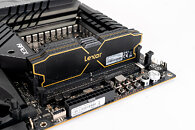
Source:
Digital Foundry
Currently, high RAM prices are driving PC gamers to invest considerably more in their gaming rigs to play smoothly. As 16 GB is somewhat considered the minimum for a Windows 11 system, some games and tasks are so demanding that PC DIY enthusiasts need to invest in 32 GB kits at prices that were unimaginable just a year ago. For example, we reported on the DDR4 spot market pricing, which saw the cost of a single 16 Gb module increase by about 2,200% over the past year, with only a minor 5% correction in March. We can only hope for more corrections soon so that PC gamers can finally see signs of relief, but with AI demand projected to continue rising, that seems far from reality.

39 Comments on Gamers Will Cut RAM Before Settling for SSDs Smaller Than 512 GB, Lexar Says
What the hell happened to progress?
i see it on my refurbished lenovo 4650u notebook with 256gb nvme - storage is an issue.
microsoft does everything to sell bigger storage
I'm not seeing much if any games where this is a deal breaker, unless you also want to have a dozen browser tabs and several other applications open alongside your game. And even then, not all of it needs to be hyper responsive.
The cure for high prices is high prices and then crashing sales.
I think we don't even have the clear picture of how bad the situation really is. I think every statistics that now pretends to show how the stratospheric price increases haven't had that much influence on sales numbers has been doctored - by simply including the sales of previously consumer products that are now sold in professional, server space. Just like Nvidia doesn't have the "Gaming" section any more, it's "Gaming and AI PC", and they can include in those numbers just what they feel.
Of course it's a different question why would gamers now rush to buy year old gaming cards that aren't even refreshed, and the answer is of course "What gamers?".
And Download more RAM usually isn't a realistic option.
Actually 256GB aren't that bad. As recently as 3 years ago, I was using a 256GB NVMe M.2 drive with Windows 11 installed and managed to fit 2 to 3 modern triple AAA games on it. I just don't get to install new games until I finished what's already installed on the drive. It is sub-optimal but doable, just got to watch over your disk space like a hawk.
My other two 1TB SSD's are separate for gaming purpose only and that is somewhat manageable with a few bigger games on them that I keep around permanently and the rest is deleted after I'm finished with them. I did want to buy a 2TB SSD in 2025 since I still have an empty NVMe slot but I was late with that idea and the prices were already going too high for my taste so I've ditched that idea.
My 4TB HDD is pretty much only for hoarding old stuff from my previous systems or old games that run just fine on a HDD.
But yea this situation sucks and I'm glad that I don't have to build a new system right now.. 'Hopefully non of my drives will die on me while this crap is still ongoing..'
j/k !
But seriously, if I can do CAD, database, and imaging work on a 32GB ram/1TB ssd rig, then I'm pretty sure that would be plenty for all those gamz, the ones that I don't play.......
128GB, 256GB and 512GB lack the necessary parallelism due to only one or two NAND chips and many product series dont even have the lower capacity model as an option. You cant buy what doesn't exist, even if you wanted to.
According to Geizhals i see that there is only a single 512GB M.2 PCIe 5.0 drive. And it has only four offers and high price.
For PCIe 4.0 there are 70 models and only 1/3rd of then even reach 6000 MB/s speeds and only a single one reaches 6000 write speed.
Each successive PCIe generation has had fewer and fewer sub 1TB models going from 113 in 3.0 to 70 in 4.0 and a single one on 5.0.
At this point <1TB M.2 2280 PCIe might well be extinct.
With an average SATA SSD you already do away with most of the latency you have in a normal hard drive, like read access/spin up times, you also don't have to care anymore about fragmentation, and the read speed is two to three times higher than that of even premium hard drives even in optimal conditions for hard drives. Once you jump from a hard drive to any average SATA SSD, that's the only big speed jump you get. Jumping from a SATA SSD to an NVME one is "nice" but it's not mind blowing like it is from HDD to SATA SSD.
I agree with availability tho. Ultra fast SSDs are nice and all but if I can't buy them because no stock or because they're priced out of reach unless I get a bank loan or put them on a credit card in something ridiculous like 12 monthly payments, then they might as well have never happened or existed.
Something funny though is that PC's are still really cheap compared to back in the day, it is just that they aren't as cheap as they was a few years ago. So there is that, plus with the amount of great games to chose from, one can actually be gaming very happily on a 5-10 year old system as it just means missing out on the latest.
So really if you feel it is to expensive to upgrade, then consider instead taking advantage of games that are 1-2 or maybe more years old are A. really cheap to buy and B. those that are highly rated are actually great instead of maybe just hyped and so so.
And if you don't have a system, then consider buying a 2nd hand one for cheap. It will run older games just fine as long as you buy something with an actual GPU or a newer APU, so the cheap games thing also applies here.
Low capacity HDD's have been undesirable for a while and high capacity HDD's are starting to get priced out of the range of regular consumer as HDD manufacturing is pivoting to enterprise clients instead. Also most people dont hold enough data locally for HDD's to even make sense.