News Posts matching #Intel

Return to Keyword Browsing

ASUS Announces New ExpertBook B5 G2 Laptop

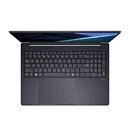
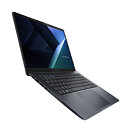
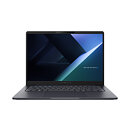
ASUS today announced ASUS ExpertBook B5 G2, a compact yet powerful Copilot+ PC designed to elevate business productivity with AI-driven intelligence, enterprise-grade security, and premium professional design. Powered by the latest up to Intel Core Ultra 7 Series 3 processor and weighing just 1.38kgi with an aluminium build and a 180° lay-flat hinge, ASUS ExpertBook B5 G2 is engineered for mobility, durability, and seamless collaboration.

Superb AI performance
ASUS ExpertBook B5 G2 delivers exceptional productivity with the latest Intel Core Ultra 7 Series 3 processor, up to 50 TOPS NPU, and Intel graphics. Designed for professionals, it handles demanding multitasking, data-intensive applications, and AI-driven workflows with ease. Coupled with up to 19 hours of battery life, this business laptop supports all-day efficiency, making it a reliable companion for modern challenges.


Report: AMD Breaks 40% Server Revenue Share for the First Time

It is official: AMD is now capturing 40% of the entire server CPU market revenue share, according to data from Mercury Research. In the final quarter of 2025, AMD EPYC server CPUs managed to capture 41.3% of the revenue in the server/data center market that hyperscalers are spending on. This is a 1.8% increase from Q3 2025 and an impressive 4.9% year-over-year growth in a multi-billion USD data center market. For unit share shipment, AMD now stands at 28.8%, meaning the company is actually selling more SKUs at a higher average selling price. Intel, on the other hand, now holds 71.2% of the unit share while capturing 58.7% of the revenue share, indicating that Intel Xeon processors are now selling for a lower ASP with more units needed to reach this revenue.

The situation in the desktop segment looks interesting as well, with AMD's revenue share in the desktop CPU market now at 42.6%, while the unit share is at 36.4%. Again, this means that AMD's Ryzen processors sell at a higher ASP, nearly capturing half of the desktop CPU revenue with a bit more than a third of the unit sales. This sector also grew 1.6% sequentially, while Ryzen CPUs won the hearts of 14.6% more gamers for a yearly revenue share increase.

HP Does an NZXT With $49.99-129.99/month Omen Gaming Laptop Subscription

With the increasing price of gaming memory and silicon in general, it was only a matter of time before we saw gaming laptop manufacturers lean into hardware rentals as a business model, for better or worse. HP seems to be leading the pack with a newly announced hardware subscription service, called the Omen Gaming Subscription, that offers gamers rentals of HP Omen gaming laptops and even gaming accessories, like monitors, headphones, microphones, USB hubs, and HyperX gaming mice. The subscription is charged monthly, but HP locks you into a 12-month minimum contract term, with cancellation fees between $549.99 and $1,429.99 after two months of use with a device return. If you want to keep the device, you'll need to pay a flat rate of $1,199 for the Victus 15 and $3,299 for the Omen Max 16, seemingly regardless of how long you've been subscribed to the service.

The subscription starts at $49.99 with the "Everyday Gaming with Great Performance" HP Victus 15 with an AMD Ryzen 7 8845HS, 16 GB of DDR5-5600, and an NVIDIA GeForce RTX 4050 Laptop GPU; the $79.99 "Immersive Gaming Experiences" plan gets you an Omen 17 laptop with a Ryzen AI 7 350, RTX 5060 8 GB Laptop GPU, 32 GB of DDR5-5600 memory, and 1 TB of PCIe storage; and the $129.99 "High-End Gaming with no Compromises" plan comes with an Omen Max 16 with an Intel Core Ultra 9 275HX CPU, NVIDIA RTX 5080 16 GB Laptop GPU, 32 GB of DDR5-5600, and 1 TB of PCIe storage. Subscription requires a soft credit check, and the service renews annually, with new hardware available with each renewal. HP also offers a 30-day trial and an ongoing warranty, all of which is very reminiscent of HP's infamous All-In printer subscription, which starts at $7.99 per month for 20 pages of printing with a two-year commitment. Needless to say, the whole hardware subscription model has largely been met with criticism in online spaces like r/pcmasterrace, with some users calling it a scam and others recalling the time when NZXT was ripped to shreds online for a similar business model.

NVIDIA App Hotfix 11.0.6.386 Fixes Optimus MUX Switching Issues

NVIDIA released a hotfix version 11.0.6.386 for its app that addresses a serious issue where users were unable to access advanced Optimus MUX switch options. These options were reportedly grayed out during random MUX switch scenarios. As a reminder, NVIDIA Optimus technology is designed to switch between integrated and dedicated graphics within the system to conserve power. This feature is not used on desktop systems but on laptop PCs that have an iGPU from an Intel or AMD processor and a dedicated NVIDIA GeForce GPU. During light workloads, such as basic image display, the iGPU is used, which saves laptop battery due to its low power consumption. However, when demanding graphics tasks are running, NVIDIA uses a MUX switch to activate its dedicated GPU for heavier workloads. In the previous NVIDIA app version, users reported that some advanced Optimus MUX switch options were "grayed out" during random MUX switch scenarios. The issue has now been isolated, and users can either update the NVIDIA app from the software itself or download it from the link below, which is a direct link to NVIDIA's .exe file.

DOWNLOAD: NVIDIA App Hotfix 11.0.6.386

Intel "Nova Lake" Compute Tile Die-sizes Surface

Intel is preparing to launch its next generation Core Ultra Series 4 "Nova Lake" processors in the second half of 2026. We have some hint on what the sizes of the Compute tiles of these chips could measure. "Nova Lake" remains a tile-based disaggregated chip, just like the current "Arrow Lake," with the most advanced foundry node being allocated only to the components that can benefit the most from it, the CPU cores. The CPU complex of the processor is located in the Compute tile, while low-power island E-cores are located on the SoC tile that's built on a slightly older foundry node.

Intel is building the Compute tile of "Nova Lake" on the TSMC N2 (2 nm nanosheet) foundry node. There will be different types of Compute tiles based on the CPU core count and cache sizes. The two most popular ones for the desktop platform will be the mainstream tile with 8P+16E core configuration and a standard L3 cache size shared among the eight P-cores and four E-core clusters. The second, more premium Compute tile type will be 8P+16E with bLLC, or big last-level cache. bLLC is an enlarged L3 cache that's estimated to be 3-4 times the size of the regular L3 cache. This is Intel's answer to AMD's 3D V-Cache. Estimates put the regular Compute tile to measure around 110 mm², while the premium variant with bLLC is estimated to measure over 150 mm². This 36% increase in die-area is entirely from the enlarged last-level cache.

Intel and Google Strengthen Intel Trust Domain Extensions in Joint Security Review

Intel and Google published the results of a significant joint security review of Intel Trust Domain Extensions (Intel TDX). The five-month engagement between Intel's INT31 research team and Google Cloud Security focused on hardening Intel TDX Module 1.5, the core software responsible for managing confidential virtual machines. The review identified five vulnerabilities and 35 other weaknesses or areas for improvement. According to Intel, all five vulnerabilities were patched in the latest code version released to partners.

Intel TDX represents a shift in data center security. Unlike traditional virtualization, where the hypervisor has full access to guest data, TDX creates "Trust Domains" (TDs), or hardware-isolated virtual machines. These are cryptographically isolated from the hosting infrastructure using Intel's Secure Arbitration Mode (SEAM). The system relies on the Intel TDX Module, a digitally signed software shim running in SEAM. It enforces security policies that hardware alone cannot handle. Because a compromise of this module could theoretically bypass the system's isolation guarantees, it is a critical verification target.

Intel Core Ultra 400 "Nova Lake-S" NPU Churns Out 74 TOPS Throughput

Intel's upcoming Core Ultra Series 4 "Nova Lake-S" could be the company's first desktop processor series to offer Microsoft Copilot+ native acceleration capability. The NPU of "Nova Lake" offers throughput of 74 TOPS, far exceeding the 40 TOPS required by Copilot+. Intel already met this with its "Lunar Lake" mobile processors, but its current "Arrow Lake-S" and upcoming "Arrow Lake-S Refresh" processors only do 13 TOPS as they implement an older generation NPU carried over from "Meteor Lake."

This is not to say that all desktop processor models of "Nova Lake-S" offer 74 TOPS, some could offer lower throughput, but there's plenty of product segmentation room for Intel to ensure that even its cheapest retail model offers at least 40 TOPS to meet Copilot+ requirements. AMD might end up beating Intel to the title of first socketed desktop processor with a Copilot+ capable NPU. The company could launch its Ryzen AI 400 series "Gorgon Point" Socket AM5 APUs sooner than Intel's rumored late-2026 debut of the Core Ultra Series 4 desktop processors.

Amkor to Significantly Boost Arizona Packaging Capacity for Intel and TSMC

Amkor is preparing to greatly expand its Arizona-based operations, and the company will boost its spending not by a few percent, but by several multiples. The company is planning to triple its capital expenditures next year, with a dramatic increase from roughly $900 million in 2025 to as much as $3 billion in 2026, betting on massive demand from Intel and TSMC packaging technologies. This includes working with Intel and TSMC to enable their most advanced technologies like EMIB and CoWoS, all of which come in various form factors. We previously reported that Intel partnered with its long-time OSAT partner Amkor to take additional EMIB capacity that Intel's customers are interested in, in Incheon, South Korea.

However, as Amkor expands its facilities in Arizona, Intel will also collaborate with Amkor to deliver advanced EMIB packaging types on United States soil. While TSMC has been a primary choice for many high-density assemblies, growing interest in Intel's EMIB and Foveros options has led partners like MediaTek, Google, Qualcomm, and Tesla to consider alternatives. Interestingly, Amkor will also offload some of the CoWoS packaging work from TSMC by creating CoWoS packages on U.S. soil, instead of sending these chips back to TSMC's Taiwan fabs to finish production. Both CoWoS and EMIB/Foveros offer a list of benefits, making them highly sought-after packaging technologies for companies seeking to extract maximum performance from their chips. Amkor plans to be at the center of that supply chain and help Intel and TSMC handle more customers.

AppControl Launches New PC Monitoring Utility

AppControl, a user-friendly Windows system monitoring utility, today unveiled its industry-first application designed to make understanding your PC simple, visual, and stress-free. Built for everyday Windows users, AppControl shows exactly how your computer behaves so you can finally understand what's slowing it down, heating it up, or running in the background without your knowledge. AppControl is a certified member of the Intel Partner Alliance; the AppControl app requires no registration and is available as a free download directly from the AppControl website or via Softpedia.

Unlike traditional system tools that only show what's happening in the moment, AppControl delivers an easy-to-navigate historical timeline of CPU, GPU, memory, disk usage, and temperature. Users can scroll back in time to see what apps were running, what changed, when it changed, and why their PC behaved the way it did, turning confusing performance issues into clear, explainable events. AppControl also provides insights into privacy-relevant behavior, such as apps accessing the webcam, the microphone, or the user's location.

Top Intel "Nova Lake" Chip Can Pull up to 700 W at Max Load with Power Limits Disabled

The top Intel Core Ultra Series 4 "Nova Lake-S" desktop processor model, which comes with a total core-count of 52 and implements a big last-level cache (bLLC), could pull an astonishing 700 W in maxed out loads with power limits removed, kopite7kimi reports. The chip has a core-configuration of 16 P-cores, 32 E-cores, and 4 low-power island E-cores. For reference, a current Core Ultra 9 285K with Extreme power profile can pull up to 490 W PL4 in short bursts.

In related news, leaks by Jaykihn shed light on the way clock speeds of the various CPU core types are handled. The base frequency affects the clock speeds of P-cores and E-cores located in the Compute complex, but not those of the low-power island E-cores. "Nova Lake-S" will be Intel's first desktop processors to implement low-power islands, allowing the processor to clock-gate almost the entire compute complex when the PC is idling.

Intel Could Lift Core Ultra 200 Plus "Arrow Lake-S Refresh" Review Embargo on March 23

Intel's oft-leaked Core Ultra 200 Plus "Arrow Lake Refresh" processor series is expected to launch in March or April, according to rumors floated just after the conclusion of CES 2026. This past weekend, HXL/9550pro weighed in with a more focused timeframe—they propose that Team Blue will lift an important review embargo on March 23, at a very specific 6 a.m. (PST) morning slot. Evaluations of incoming Core Ultra 7 270K Plus, Ultra 5 250K, and Ultra 5 250KF desktop models are reportedly due for publication on that Monday. Oddly, the latest leak does not allude to an imminent embargo lift affecting "-HX" variants for the laptop/notebook market. Many Intel enthusiasts were looking forward to a major "Arrow Lake Refresh" unveiling at last month's CES trade show, but company leadership decided to go all-in with the introduction of "Panther Lake-H" mobile chips.

Throughout early 2026, Team Blue has kept quiet about forthcoming "Arrow Lake-S Refresh" desktop processors, but an official mid-January announcement—courtesy of the ASUS social media account—indicated a readying of BIOS support updates, in advance of an eventual retail launch. Up until recently, the Core Ultra 5 250K Plus model has been the most mysterious of Intel's "ARL-S Refresh" parts—a sudden increase in pre-release benchmarking activity and premature e-tail listings has occurred in parallel with whispers of a non-arrival of its flagship sibling. Late last week, two anonymous sources—in correspondence with VideoCardz—posited that Intel had removed the 24-core Ultra 9 290K Plus SKU from its near future "Arrow Lake-S Refresh" launch lineup. This past weekend Tom's Hardware (via momomo_us) spotted prematurely published pricing information, regarding the remaining Core Ultra 7 270K Plus, Ultra 5 250K, and Ultra 5 250KF models. An unspecified webstore listed price tags of $357.12, $245.92, and $227.38 (respectively).

Intel Core Ultra "Arrow Lake Refresh" Chips Focus on E-core Count and L3 Cache Uplifts

Intel's upcoming Core Ultra Series 2 "Arrow Lake Refresh" desktop processors are confirmed to bring CPU E-core count and L3 cache uplifts at their given price-points, recent benchmark leaks confirm. The series was originally rumored to consist of three SKUs, the Core Ultra 5 250K Plus, the Core Ultra 7 270K Plus, and the Core Ultra 9 290K Plus. The company was later reported to have cancelled the 290K Plus, and will proceed to launch the 250K Plus and 270K Plus very soon (details in our upcoming article).

The Core Ultra 5 250K Plus is significantly spruced up from the current Core Ultra 5 245K. The company has given this chip a 6P+12E core configuration, up from 6P+8E of the 245K. With three "Skymont" E-core clusters at its disposal, the chip also gets an increase in L3 cache, now increased to 30 MB, from the 24 MB of the 245K. There's also a nominal increase in frequency, with the P-cores boosting up to 5.30 GHz, a 100 MHz increase over the 245K. The Core Ultra 7 270K Plus is essentially a downclocked Core Ultra 9 285K. It maxes out the "Arrow Lake-S" silicon, enabling all 8 P-cores, all 16 E-cores, and the entire 36 MB L3 cache present, but has clock speeds resembling the Core Ultra 7 265K, with a maximum P-core boost frequency of 5.50 GHz, compared to 5.70 GHz of the 285K. The 270K Plus could also lack Thermal Velocity Boost available in the 285K. The 270K could come at an attractive price-point below that of the 285K.

Intel Core Ultra 5 250K Plus Spotted in Geekbench with 18 Cores, 5.3 GHz

Intel's upcoming Core Ultra 5 250K Plus desktop processor has appeared in the Geekbench database, according to a post by Benchleaks on X. The CPU is part of Intel's Core Ultra 200S Plus "Arrow Lake Refresh" lineup, which is expected to launch next month. The Core Ultra 5 250K Plus features an 18-core configuration with 6 Performance cores and 12 Efficiency cores, up four E-Cores from the Core Ultra 5 245K 6P+8E layout. The processor runs at a 4.2 GHz base clock and 5.3 GHz boost. Cache specifications include 6 MB of L2 cache and 30 MB of L3 cache. Compared with the 245K, the Core Ultra 5 250K Plus keeps the same power ratings with a 125 W base power and a 159 W maximum turbo power, despite the higher core count and slightly increased boost clocks. P-core turbo frequencies are up by 100 MHz compared to the 245K, while E-core clocks reportedly remain unchanged at up to 4.7 GHz.

The test system used an ASUS PRIME Z890-P WIFI motherboard with 32 GB of memory. The processor scored 3,113 points in the single-core test and 15,251 points in the multicore test. As with most early database entries, performance may improve with final firmware and retail silicon. Intel is expected to position the Core Ultra 5 250K Plus in the sub-$300 segment, offering a modest upgrade over the Core Ultra 5 245K, which currently sells for around $200-215. The processor will be compatible with LGA 1851 motherboards and is part of what is expected to be the final CPU family for the socket, ahead of Intel's transition to LGA 1954 with the upcoming Nova Lake architecture later this year.

Intel 900-series Desktop Motherboard Chipset Specs Leak

Toward the end of 2026, Intel will debut its next generation Core Ultra Series 4 "Nova Lake-S" desktop processors, introducing new CPU core IP and a significant uplift in CPU core counts, besides special SKUs with large L3 caches to take the fight to AMD's X3D processors with 3D V-Cache. Much has been reported on the processors, but not much about the platform and chipsets, until Jaykihn dropped a new leak. We are now hearing that Intel could take a similar approach to AMD in differentiating its desktop chipsets, with two enthusiast-segment chipset models, and a mainstream model, besides the usual chipset models for commercial desktop and workstation segments.

This approach would see the introduction of the new Z970 chipset positioned a notch below the flagship Z990 chipset that succeeds the current Z890. There will not be an "H970," as Intel has seen consistently low demand for such a chipset, and there's no "H870" in the current generation. The Intel 900-series "Nova Point" chipset family will begin with the B960 mainstream chipset succeeding the current B860. Positioned above this will be the new Z970, offering enthusiast features such as multiplier-unlocked CPU overclocking when paired with K-series processor models. Above this, is the flagship Z990 with significantly more platform I/O features. The Q970 will be the commercial desktop chipset from this generation, while W980 will cater to workstation platforms powering Xeon W-series processors based on "Nova Lake-S."

Intel Kills Pay-to-Use "Software Defined Silicon" Initiative

Intel has quietly deprecated its Software Defined Silicon initiative (SDSi), known as "Intel On Demand," according to a report from Phoronix. The company has archived the official GitHub repository for SDSi for Xeon, an effort intended to enable optional features on Intel's server processors that could be unlocked for an extra fee. Intel had hoped enterprises would pay to enable these features, but the initiative never gained mass traction and was only sporadically maintained. Because hyperscalers operate at massive scale, paying an additional fee to enable a feature on silicon they had already purchased made little sense, contributing to Intel's decision to abandon the project. Subscription services are similar in concept, but they generally apply to software on a monthly basis rather than one-time hardware activations.

Originally, Intel planned to make Quick Assist, Dynamic Load Balancer, and Data Streaming Accelerator available as On Demand features, alongside Software Guard Extensions and the In-Memory Analytics Accelerator. These were described on the Intel On Demand website as a "one-time activation of select CPU accelerators and security features." The Intel On Demand site has since been reworked to remove most information, leaving only a few documents and paragraphs. Thankfully, the idea of putting hardware features behind a paywall has not gained traction for now, leaving the paywall model to traditional software. At one point enthusiasts wondered whether Intel On Demand would trickle down to consumer CPUs, but with the project apparently dead, that possibility seems unlikely in the near term. Intel Upgrade Service existed in a similar format back in early 2010s, but was also short-lived.

Intel Readies Z990 and Z970 Chipsets for Core "Nova Lake-S" Processors

Intel is preparing to give its next-generation Core Ultra Series 4 "Nova Lake-S" desktop processors not one, but two enthusiast-segment desktop motherboard chipsets, the Z990 and Z970. The new processors introduce Socket LGA1954, which will require a motherboard upgrade. The idea behind segmenting Z990 and Z970 to succeed the current Z890 is to probably bring enthusiast features such as CPU overclocking to a wider market segment.

There is no word on how the Z990 and Z970 are differentiated, but VideoCardz reports that the Z970 is based on a physically smaller chip resembling the mid-tier B960 chipset that succeeds the current B860. The difference between the two could hence be I/O. The Z990 could feature a larger number of platform PCIe lanes, and have a wider 8-lane DMI chipset bus, whereas the Z970 could have fewer PCIe lanes, and a 4-lane DMI bus, just like the B960, but with the added CPU overclocking capability. This chipset would hence be suitable for those who want enthusiast features but don't need an elaborate I/O. We still don't know the exact PCIe lane counts of Intel's 900-series chipset, so we can't tabulate them.

Noctua Has Shipped Half a Million CPU Cooler Mounting Upgrade Kits

Noctua has earned itself a reputation in the enthusiast space not only for its highly efficient air coolers, but also for its free mounting upgrade kit policy, which allows buyers of Noctua coolers to request a new mounting kit when a new motherboard socket from AMD or Intel launches, even years after they've purchased their original cooler. The company recently announced that it has shipped 500,000 of these free mounting upgrade kits since the project started way back in 2006 with the AMD AM2 socket. Noctua also promises that "as new sockets and architectures appear, we will continue to provide free mounting or upgrade kits where technically feasible."

Noctua explains that the ethos behind the program is to "ensure that a quality product remains useful for many years," and, in the blog post celebrating the achievement, it explains that change in approach meant rethinking the design of its coolers. New coolers designed by Noctua from 2006 onwards would need to be modular and standardized to maintain support across different platforms and generations. Noctua elaborated that part of the justification for the past and ongoing commitment to the free upgrade program is as much about the environment as it is about customer service and technical compatibility. Theoretically, 500,000 mounting kit upgrades means that up to 500,000 perfectly functional CPU coolers were kept out of the e-waste pile, conserving raw materials and cutting down on waste.

Intel Arc B390 Panther Lake iGPU Impresses in Linux Performance Tests

Intel's Arc graphics solutions initially had a rough start to life on the Linux side of things, but it seems as though the tide is changing. Phoronix recently tested the new Panther Lake Intel Arc B390 iGPU in the Intel Core Ultra X7 358H, comparing the new iGPU to the venerable Radeon 890M in the AMD Ryzen AI 9 HX 370, and Intel's iGPU consistently outpaces the Radeon iGPU, which isn't a surprise if you've been keeping track of early benchmarks on Windows. The publication tested the new Xe3 integrated graphics in an MSI Prestige 14 running the latest Mesa 26.0 drivers on Linux Kernel version 6.19 on Ubuntu 26.04.

When it comes to gaming, the only games in which the Xe3 iGPU was bested by the AMD competition were Counterstrike 2, running at 1920×1200, and Quake II RTX. In every other game, the Intel Arc B390 beat both the AMD competition and the Intel Core Ultra 7 155H and Core Ultra 7 258V significantly. Depending on the game and in-game settings, the Arc B390 was anywhere between 15% and upwards of 50%. Hitman 3 was a particularly impressive outlier, with the B390 managing to get over 50% more FPS than the nearest competitor and 64% more FPS than the Radeon 890M at 1920×1200 and low settings, with similar gains at medium quality settings, and a slightly less impressive performance improvement when bumping up to ultra settings.

Report: Intel Cancels Flagship Core Ultra 9 290K Plus "Arrow Lake Refresh," But Keeps Other SKUs

Intel's "Arrow Lake Refresh" has not even been released, but the company has already canceled its flagship SKU planned for this refresh cycle, according to a report from VideoCardz. Two sources close to the media note that Intel's flagship Core Ultra 9 290K Plus might not roll out at all, despite the massive hype and leaked benchmarks indicating that Intel is releasing this CPU SKU as part of the "Arrow Lake Refresh" generation expected to arrive in March or April. Reportedly, Intel will instead focus on delivering value with its Core Ultra 7 270K Plus SKU, which carries 8 P-Cores and 16 E-Cores and a 5.5 GHz maximum turbo boost. For individual boosting frequency, P-Cores top out at 5.4 GHz, while the base runs at 3.7 GHz. For E-Cores, the boost frequency is set to a maximum of 4.7 GHz, while the base is set at 3.2 GHz.

As for a possible reason why Intel would cancel this SKU, the sources close to VideoCardz note that product overlap is the main issue, as the flagship Core Ultra 9 290K Plus would have the same core configuration as the Core Ultra 7 270K Plus, just with slightly higher clock speeds. Additionally, Intel already maintains a Core Ultra 9 285K SKU from the regular "Arrow Lake" family, meaning that the company would have three similar SKUs at the very top of the stack. This way, it would only have to maintain two products, which would simplify manufacturing and supply chain logistics, allowing Intel to spend more time preparing for the next-generation "Nova Lake" launch later this year.

Intel and AMD Warn of Server CPU Shortages in China, Prices Rise Over 10%

Intel and AMD have reportedly warned customers in China about tightening server CPU supplies, with delivery times stretching significantly and prices already moving higher. According to Reuters, average prices for Intel server processors in China have increased by more than 10%, depending on contract terms, while delivery times for some Xeon models have extended to as much as six months. The situation appears most severe for Intel's fourth and fifth-generation Xeon processors, where backlogs are reportedly building fast. AMD is facing similar, though less extreme constraints, with some server CPU orders now quoted at eight to ten weeks for delivery. China remains a major market for both companies, accounting for over 20% of Intel's total revenue, and includes customers such as large server OEMs and cloud operators like Alibaba and Tencent. The supply crunch is being driven by a mix of factors, including surging demand tied to AI infrastructure and so-called "agentic AI" systems, which significantly increase CPU requirements alongside GPUs.

Manufacturing limits are also having a negative effect with Intel admitting supply issues linked to manufacturing and yield problems, while AMD relies on TSMC, which now gives priority to high-profit AI chips. Rising memory costs in China have put more pressure on the market, with buyers rushing to buy CPUs to avoid paying more for complete systems later. Both companies say they are working to improve supply. Intel told Reuters its inventory hit a low point in Q1 but expects gradual improvement through 2026, while AMD stated it remains confident in its ability to meet demand based on supplier agreements and its partnership with TSMC. For now, however, customers may still be facing higher prices and longer waits for server CPUs.

ASUS IoT Introduces PE1000U Rugged Fanless DIN-Rail Industrial PC

ASUS IoT, a global leader in AIoT solutions, today announced PE1000U, a compact DIN-rail-mountable edge computer powered by an Intel Core Ultra Series 2 processor. Measuring just 63 x 110 x 160 mm, PE1000U features extensive I/O connectivity to address the growing demand for real-time intelligence at the edge. Housed in a fanless, rugged IP40-rated chassis that's been subjected to US MIL-STD-810H testing for 5Grms vibration, PE1000U is able to operate in environments with temperatures ranging between -25°C to 70°C. It accepts a wide 9-36 V DC power input and includes built-in ignition control, making it suitable for on-vehicle deployment. PE1000U is also ideal for collaborative robots, AMR, industrial vision equipment, and other space-constrained deployments where reliability is paramount.

Performance and connectivity in a palm-sized package
PE1000U is powered by either an Intel Core Ultra 265U or 235U processor paired with hybrid cutting-edge CPU, GPU, and NPU acceleration for high single-thread responsiveness for motion control while simultaneously accelerating AI inference and graphics workloads. Front-access I/O connectors include four USB ports, up to four COM ports, and up to four Ethernet ports (two 2.5G by default) to simplify sensor, camera, and network integration. Onboard dual CAN Bus and an isolated DIO module enhance deterministic control, while DisplayPort and HDMI outputs support up to two 4K displays for HMI or machine-vision monitoring.

No NVIDIA GeForce RTX 50 "SUPER" GPUs This Year, RTX 60-Series Also Pushed Back

Artificial Intelligence may be eating the world of software now, but gamers are suffering. According to The Information, NVIDIA has reportedly entirely postponed the launch of its GeForce RTX 50 "SUPER" refresh, as the company's executives are prioritizing AI accelerators over the gaming sector, which consumes precious cutting edge GDDR7 memory. The GeForce RTX 50 "SUPER" refresh was originally scheduled for an announcement at CES 2026, with shipping in Q1 or Q2 of 2026. However, the GDDR7 memory used in the SUPER lineup was a high-capacity 3 GB version, which NVIDIA managers in December deemed too important for gamers, postponing the refresh entirely.

The "SUPER" series was planned with denser GDDR7 memory modules, offering 3 GB of capacity per chip, increasing the memory configuration of the standard GeForce RTX 5070, RTX 5070 Ti, and RTX 5080. Initially, the RTX 5070 SUPER was planned with an upgrade to offer 18 GB, while the RTX 5070 Ti SUPER and RTX 5080 SUPER would each provide 24 GB of GDDR7 memory. As NVIDIA's AI GPU portfolio also uses the high-density GDDR7 memory, like the RTX PRO 6000 "Blackwell" and "Rubin CPX" the company has decided to instead prioritize this high-margin business, leaving gamers with inflated prices of the regular GeForce RTX 50-series.

Intel Confirms "Nova Lake-P" Features Xe3P-LPG Graphics

In the latest set of enablement patches, Intel has confirmed that the upcoming "Nova Lake-P" processors will utilize Xe3P-LPG to power their integrated graphics. In addition, "Nova Lake-P" processors will include multiple new IPs like the Xe3P-LPM for media processing, which includes decoding and encoding, and the Xe3P-LPD for display output processing. These new IPs will work in tandem to deliver the next generation of Intel graphics, which will be separated into two categories within the "Nova Lake" generation. Interestingly, we learned a while back that not every "Nova Lake" SKU will ship with the same GPU configuration. "Nova Lake-H" mobile variants are expected to support ray tracing with the Xe3P-LPG graphics, while "Nova Lake-S," "Nova Lake-HX," and "Nova Lake-UL" may not.

The company seems to be selectively enabling advanced GPU features across these SKUs rather than providing a uniform feature set, as Xe3P-boosted "Nova Lake-H" notebook chips will be succeeding "Panther Lake-H" with its Xe3 GPU IP, so the new P variant will bring more power to mobile gaming setups and be a true successor in late 2026 or early 2027. This type of segmentation is a common strategy to differentiate products using the same silicon, which will influence purchasing decisions for gamers, creators, and laptop buyers of the future "Nova Lake" systems. Additionally, bundling next-generation GPU graphics IP like the Xe3P-LPG will be of massive significance only to those users relying on integrated GPUs, while those purchasing systems with discrete GPUs will focus primarily on the CPU and display/media output side.

Intel CPUs Record First Period of Growth on Steam Survey After Months of Decline

As February has just started, Valve finished processing data for the January edition of the Steam Hardware and Software Survey. One of the few interesting takeaways is that for the first time in months, Intel's share of consumer CPU usage has seen an uptick, instead of the slow decline it has been experiencing. According to the January update, Intel's CPU share among Steam platform users has grown to 56.64%, representing a small but pleasant increase of 0.25% over the December data. On the other hand, AMD recorded a slight decrease of 0.19%, now standing at 43.34% of the market. This means that Intel's market share has increased for the first time in months, as data from September reported a market share of 58.61%, then October showed 57.82%, 57.30% in November, and 56.39% in December. The chain of declining share has finally stopped, suggesting that Intel could have a chance to rebound in the consumer market section.

On the contrary, AMD's CPU market share has been rising for months, moving up from 41.31% in September to 43.53% in December, with a small correction now standing at 43.34%. This indicates that many new CPU purchasing decisions were made in favor of AMD, driven by the massive popularity of its Ryzen 9000X3D series, which has been well-received by PC enthusiasts. In contrast, Intel's latest "Arrow Lake" launch has faced some initial challenges with less-than-expected gaming performance, but besides discounts and firmware updates improving the situation, the community is now anticipating the launch of the "Arrow Lake Refresh" scheduled for March or April, which is expected to address these issues by shipping with higher out-of-the-box frequencies and additional tuning.

Intel and SoftBank Subsidiary Saimemory Partner on Next-Gen Z-Angle Memory

Intel and SoftBank subsidiary Saimemory have signed an agreement to work together on developing and selling Z-Angle Memory (ZAM) technology aimed at AI and high-performance computing tasks. ZAM is described as a stacked DRAM architecture designed to go beyond current high-bandwidth memory (HBM) solutions. The goal is higher memory capacity and bandwidth at lower power. The name refers to vertical (Z-axis) stacking, according to reports from EE Times Japan. The project builds on Intel Next Generation DRAM Bonding (NGDB) work, developed under the U.S. government-backed Advanced Memory Technology (AMT) program in collaboration with Sandia, Lawrence Livermore, and Los Alamos national laboratories. Recent NGDB prototypes featuring eight vertically stacked DRAM layers have demonstrated full functionality using this new vertical stacking and bonding approach, as disclosed by Sandia in January.

According to reports from Nikkei and Wallstreet.cn, Saimemory is targeting two to three times the capacity of today's HBM, with 40-50% lower power consumption, while keeping costs competitive. Saimemory plans to have prototypes ready by early 2028, with commercial products following in 2029. SoftBank is said to be investing around ¥3 billion through the prototype phase. For Intel, the partnership marks a return to advanced memory technologies after exiting the DRAM market decades ago.
Return to Keyword Browsing
Nov 17th, 2026 14:09 CST change timezone

New Forum Posts

Popular Reviews

TPU on YouTube

Controversial News Posts