News Posts matching #Intel

Return to Keyword Browsing

AMD CEO Lisa Su Says Server CPU Demand "Far Exceeded" Expectations, Supply Now Tightening

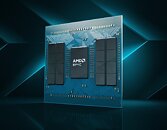
AMD is seeing server CPU demand it didn't fully anticipate, with CEO Lisa Su describing it as having "far exceeded" her expectations. Speaking at the Morgan Stanley Technology, Media & Telecom Conference earlier today, Su outlined how the landscape has shifted as agentic AI applications have taken off, pushing CPUs back into the spotlight alongside accelerators. The CPU-to-GPU ratio in AI compute workloads has evolved dramatically over the past few months, and top customers reportedly told Su that CPU demand sitting alongside AI was "under-forecasted." Supply is tightening as a result. The sudden spike in customer commitments left little time for the supply chain to adjust, though AMD says it's working closely with partners to ease existing bottlenecks and expects capacity to expand over the coming year. Su expressed confidence that AMD's product lineup is well positioned to address training, inference, and agentic workloads going forward. We've also seen this play out at the customer level, with hyperscalers like Meta signing CPU agreements with AMD and NVIDIA, a sign that compute is diversifying away from a pure GPU focus.

Back in late January, Intel disclosed it had to reallocate wafer capacity from its PC division to Xeon production after hyperscalers started ordering larger quantities than anticipated, triggering a temporary shortage. Then, in early February, both Intel and AMD warned customers in China about tightening supplies, with Intel Xeon delivery times stretching to as long as six months and prices up more than 10%. AMD's situation is somewhat less difficult, but lead times have still pushed out to eight to ten weeks for some orders. On the consumer side, AMD's next-gen Ryzen 'Olympic Ridge' desktop processors based on Zen 6 are rumored to have slipped to 2027, possibly another sign that AMD is prioritizing Zen 6 chiplets for EPYC server processors.


Intel Arc Pro B70 Pro-Viz GPU Tested with BMG-G31 Die

Intel has confirmed the existence of its larger Arc Pro B70 "Battlemage" graphics card, designed for professional visualization and AI workloads, through its LLM Scaler software with a small performance testing done in non-ideal scenario. The company plans to release this GPU within the current quarter, which means we could see the official launch and availability in about a month. The upcoming Arc Pro B70 and Arc Pro B65 GPUs are part of this release, utilizing the long-rumored BMG-G31 GPU die intended for higher-end models.

Starting with the more advanced Arc Pro B70, Intel plans a BMG-G31 configuration featuring 32 Xe2 cores and 32 GB of GDDR6 memory on a 256-bit bus. This setup translates to approximately 4,096 FP32 cores in its full configuration, doubling the core count and memory capacity of the current Arc Pro B60, within a single-GPU version. For the smaller Arc Pro B65, Intel has scaled down the BMG-G31 die to support 2,560 FP32 cores, with a total of 20 Xe2 cores. While this matches the core configuration of the Arc Pro B60, the B65 comes with 32 GB of GDDR6 memory, which is 8 GB more than the Arc Pro B60. As dual-GPU configurations were common with the Arc Pro B60, we might also see dual-GPU PCBs with the Arc Pro B70 if Intel's partners like Maxsun follow suit with their Arc Pro B60 Dual-GPU card.

Microsoft Shader Execution Reordering Brings 90% Performance Increase on Intel Arc B-Series, 80% on NVIDIA "Blackwell" GPUs

Microsoft recently updated its Agility SDK to version 1.619, bringing DirectX Shader Model 6.9 alongside some new DirectX 12 improvements. However, Microsoft's latest product demo about Shader Execution Reordering (SER) now confirms a massive performance uplift across several GPUs, with up to a 90% improvement on Intel Arc B-Series and more than 80% from independent sources' benchmarks on NVIDIA "Blackwell." With SER, the API gives applications the ability to dynamically sort rays for highly optimized parallel execution, improving performance by a large margin. In Microsoft's own testing, Intel's Arc B-Series GPUs, which include "Battlemage" discrete GPUs and Xe3-based integrated GPUs in "Panther Lake," managed to achieve a 90% framerate increase in the technology demonstration, suggesting that ray tracing performance still has some tricks up its sleeve for optimization.

Meanwhile, the company also tested the NVIDIA GeForce RTX 4090 with SER, scoring a 40% improvement over the default ray sorting in the previous execution model. Independent testing from Osvaldo Pinali Doederlein on X showed that the GeForce RTX 5080 "Blackwell" GPU scored about an 80% improvement running this demo, which gives confidence that games implementing this technology will provide gamers with a massive performance boost once implemented. Microsoft has built this D3D12RaytracingHelloShaderExecutionReordering demo with a minimum demonstration of the SER technology, so anyone can test their own hardware and the performance improvement.

Lenovo Unveils New Business Notebooks and More at MWC 2026

At MWC 2026, Lenovo builds on the momentum from CES and Tech World to highlight its latest portfolio of AI-powered business devices, intelligent form factors, and enterprise-ready platforms, designed to help organizations scale AI with confidence. From modular AI PC concepts and rugged frontline tablets to the trusted ThinkPad portfolio and human-centric AI companions, Lenovo's MWC showcase highlights how innovation, reliability, and repairability come together to support modern work.

The new announcements reflect a continued focus on delivering democratized AI that is productive, adaptable, and protected, addressing the real-world needs of professionals, IT leaders, and enterprises operating across increasingly distributed environments. By combining AI-ready devices with strong repairability, platform choice across leading silicon partners, and enterprise-grade security and services, Lenovo is enabling businesses to adopt AI-powered computing without added complexity.

Intel to Unveil Core Ultra 5 250K Plus and Core Ultra 7 270K Plus on March 11

We've known for a while now, that Intel's early-2026 refresh of its Core Ultra series-2 "Arrow Lake" desktop processor lineup could see a refresh with the Core Ultra 5 250K Plus and Core Ultra 7 270K Plus, with reviews tentatively going live on March 23. VideoCardz reports that the company could unveil these chips close to two weeks earlier than that, on March 11. This would probably be when the company announces the two chips and reveals some of their specs. Reviews could remain on track for March 23, with retail availability of the chips shortly after. There's no confirmation yet on whether the two chips have "KF" variants lacking integrated graphics, but that's fairly likely.

Both SKUs see increases in CPU core counts and L3 cache sizes compared to current SKUs leading the Core Ultra 5 and Core Ultra 7 brand extensions. The Core Ultra 5 250K Plus is a 6P+12E chip, with a generous 30 MB of shared L3 cache; while the Core Ultra 7 270K Plus maxes out the "Arrow Lake-S" silicon, enabling all 8 P-cores, and all 16 E-cores, with all 36 MB of shared L3 cache available; albeit with slightly lower clock-speeds than the flagship Core Ultra 9 285K. Intel reportedly dropped plans to launch the fabled "Core Ultra 9 290K Plus," which would have been a supercharged variant of the 285K with even higher clock speeds.

Lenovo Unveils Adaptive AI PCs, Modular Concepts, and Lenovo Qira Rollout at MWC 2026

At MWC 2026, Lenovo introduces a new generation of adaptive AI devices and forward-looking concepts designed for business professionals, creators, students, and gamers. Headlined by new modular PC architecture, a glasses-free 3D laptop concept, a foldable gaming handheld device, and the initial rollout of Lenovo Qira, Lenovo's showcase reflects a broader shift in personal computing toward systems that adapt intelligently to people and their environments. Across its portfolio, Lenovo continues to focus on delivering technology that is more personalized, proactive, and protected, while building a unified AI ecosystem that works naturally across devices.

"The AI era will not be defined by a single device or application, but by intelligent systems that work seamlessly across everything we use," said Luca Rossi, President, Intelligent Devices Group, Lenovo. "We are demonstrating how Lenovo and Motorola are bringing that vision to life, combining adaptive hardware innovation with a single, unified system-level AI integration that works naturally across PCs, smartphones, tablets, wearables, and beyond. From premium mobile devices and transformative form factors, to the rollout of Lenovo Qira, we are building the widest AI portfolio that delivers more connected, more intuitive personal computing experiences designed around people."

Lenovo Starts LPCAMM2 Rollout With Chinese ThinkBook 14+ and 16+ Launch

Lenovo has officially launched the ThinkBook 16+ in China, officially kicking off its LPCAMM2 rollout to mainstream laptop after it launched the ThinkPad P1 Gen 7 with the new RAM standard as far back as 2024. LPCAMM2 is a new memory standard that allows all of the performance of LPDDR5X with the upgradeability of a regular SODIMM. The ThinkBook 16+ appears to be Lenovo's first consumer device to feature LPCAMM2, launching with up to 32 GB of LPDDR5X-8533 memory backing up an Intel Core Ultra X7 385H and its Arc B390 iGPU.

Specs for the ThinkBook 14+ are not completely listed on Lenovo China, but the rest of the ThinkBook 16+'s specs impress, featuring Wi-Fi 7, 165 Hz display with 100% DCI-P3 coverage and support for VRR, and a 99.9 Wh battery. The laptop also features 2× Thunderbolt 4 ports, 2× USB 3.2 Gen 1 Type-A ports, and 1× USB 2.0 Type-B port, a 3.5 mm audio combo jack, and a 4-in-1 SD card reader for SD, SDHC, SDXC, and CMMC cards. Lenovo has also equipped the ThinkBook 16+ with a Windows Hello-compatible 1080p webcam with a physical shutter as well as support for Lenovo's Magic Bay accessory ecosystem, which has started expanding to more laptops in 2026. The new ThinkBook series also features Lenovo's pressure-sensitive Forcepad, which also integrates haptic feedback and multitouch support. In China, the ThinkBook 16+ 2026 comes in at RMB 8499 ($1,240) while the ThinkBook 14+ 2026 starts at RMB 8299 ($1,210) with all of the same internal specifications. At the time of writing, though, there is no indication that these laptops will launch outside of China, although another laptop series will likely take their place in international markets.

Intel Publishes "Granite Rapids-WS" Xeon 600 Turbo Frequencies, AVX-512 and AMX Slash Boost Speeds

In early February, Intel finally updated its HEDT sector with the latest "Granite Rapids-WS" Xeon 600 Series processors for workstations. The company has now published a detailed table of turbo frequencies that provides specifics on each core's boost frequency in workloads like SSE, AVX2, AVX-512, and AMX, showing how much these workloads allow the CPU cores to boost. This means that during a continuous workload like AMX, these CPUs can only run at a sustained frequency defined in the tables below. At the very top of the new "Granite Rapids-WS" stack is the Xeon 698X, featuring 86 cores and 172 threads, backed by 336 MB of L3 cache. The chip runs at a 2.0 GHz base clock, boosting up to 4.8 GHz with Turbo Boost Max 3.0, or 4.6 GHz under Turbo Boost 2.0. This CPU is fully unlocked, allowing overclocking, which is still relatively rare in the Xeon workstation space.

In non-AVX workloads, this CPU can boost up to 4.8 GHz, while its lowest-performing core, numbered 86, sits at 3.0 GHz. However, AVX2 turbo frequencies cause a significant frequency downgrade, as the base frequency drops to 1.7 GHz, and the slowest core drops to 2.9 GHz when boosting across its 86-core design. Following this are the AVX-512 turbo frequencies, which see this flagship SKU running at a base clock speed of only 1.3 GHz and only 2.5 GHz across its 86 cores. Perhaps the most demanding turbo frequency testing occurs when AMX is enabled, resulting in a base frequency of only 1.1 GHz and only 2.0 GHz across all cores at once. This significant reduction comes from the demanding scenarios of these vector and matrix instruction processing, which are very heavy on the CPU.
More information about other SKUs and details in AVX2, AVX-512, and AMX turbo frequencies follow.

Intel "Bartlett Lake-S" Flagship Appears, Won't Boot on Consumer Motherboards

Intel's flagship "Bartlett Lake-S" processor—Core 9 273 PQE—has reached enthusiasts who are testing whether any consumer motherboard can boot the CPU and utilize its 12 P-Core gaming performance. According to Overclock.net user "Talon2016," who managed to obtain a sample of the LGA-1700 flagship CPU SKU, the processor won't boot using a consumer ASUS ROG Maximus Z790 Apex motherboard. These CPUs are designed for edge and embedded deployments with specialized platforms that lie outside the consumer sector. This high-TDP PQE variant has a base power of 125 W, powering a 12 P-Core variant with 24 threads and a base frequency of 3.4 GHz. This model can boost all 12 cores to 5.3 GHz, while a single thread can reach up to 5.9 GHz independently for tasks requiring intensive single-threaded performance. It is equipped with 36 MB of L3 cache and an integrated GPU with 32 EUs of Xe-LP graphics.

Unfortunately, regardless of the SKU or consumer motherboard choice, the platform will not work, and the CPU will not boot, as Intel has restricted "Bartlett Lake-S" to keep it away from consumers. Companies like ASRock have confirmed that the "Bartlett Lake-S" Core 200E will not be available for consumer motherboards and will only be used in the embedded and edge computer sector. This means you can technically buy and use this CPU for any Windows or Linux task, including gaming, but you will have to go through a process of acquiring an industrial-grade motherboard or a mini-PC that suits this platform. This means gaming support will be limited, as Intel explicitly will not bring any optimizations like APO/IPO to the platform for gaming. Instead, it will be treated as a generic x86-64 Intel CPU, just like any other processor. Extracting the maximum gaming performance could also be problematic, as there could be compatibility issues, given that Intel has envisioned other applications for this platform.

Intel Foundry Manager Kevin O'Buckley Departs for Qualcomm

The head of Intel Foundry, Kevin O'Buckley, is leaving the company to join Qualcomm. He will take on the role of Executive Vice President of Global Operations and Supply Chain at Qualcomm, effective March 2, 2026. At Qualcomm, O'Buckley will oversee global semiconductor operations, including manufacturing engineering, foundry and supplier partnerships, supply chain, and procurement. He joins after less than two years leading Intel Foundry, where he served as Senior Vice President and General Manager of Intel Foundry Services. Previous to joining Intel, O'Buckley was working at IBM, GlobalFoundries, and Marvell. At Qualcomm, he will be responsible for scaling manufacturing partnerships and overseeing how the chip designs transition into volume production.

Intel Foundry will now be led by Naga Chandrasekaran, who steps into an expanded role overseeing both technology development and manufacturing operations. As Chief Technology and Operations Officer and head of Intel Foundry, Chandrasekaran will supervise next-generation process node development, advanced packaging, test technologies, and day-to-day execution across Intel's global fabrication and assembly network. Chandrasekaran previously led front-end process technology development and manufacturing, already overseeing both the Technology Development (TD) organization and the Foundry Manufacturing and Supply Chain (FMSC) group since mid-2024. Navid Shahriari will continue to manage packaging development and operations within Intel Foundry.

Intel Arc GPU Graphics Drivers 101.8531 Beta Released

Intel has released its latest 101.8531 Non-WHQL Arc GPU graphics drivers, offering day-one game support for titles like Marathon, Resident Evil Requiem, and the World of Warcraft: Midnight DLC expansion pack. Intel notes that with this driver version, users of Intel Arc "Battlemage" and Arc "Alchemist" integrated and discrete GPUs will experience support and some performance improvements across other games, which are now being further optimized. For example, for "Panther Lake," this beta driver delivers a 35% FPS increase in Witcher 3 at 1080p with high settings, while Arc "Alchemist" sees a Resident Evil Requiem FPS boost of up to 40% on average at 1080p with ultra settings. Interestingly, Intel is optimizing new games for its older products, which is a promising sign for anyone considering purchasing the newer "Panther Lake" chips for gaming. With Intel planning to launch Core Ultra G3 SoCs for handhelds in a few months, consistent driver optimization is quite noteworthy.

DOWNLOAD: Intel Arc Graphics Driver 101.8531 Beta.

HWiNFO v8.42 Update Brings Better Intel "Nova Lake" Processor Support

The popular hardware diagnostics utility HWiNFO launched its latest v8.42 version on February 24th. Interestingly, one of the main features of this release is the improved support for Intel "Nova Lake" processors, despite this CPU generation being months away from commercial launch. This means that the tool can now distinguish between different Intel processors and even run diagnostics on engineering samples of "Nova Lake-S," despite the processor not being commercially available for another few quarters. It is possible that the utility is now raising a flag when detecting "Nova Lake," which has its own unique processor ID, and this could be found in some early compiler patches for GCC and LLVM that are enabling these processors before launch. With the launch of v8.42, the tool also gains NPU stress testing, but only in the Pro version.
Below is the complete changelog.

Death Stranding 2: On the Beach PC Minimum Specifications Revealed Alongside Graphics Enhancements

Death Stranding 2: On the Beach is slated to launch on March 19 for PC after almost nine months as a PS5 exclusive, and Nixxes and Kojima Productions just revealed the minimum PC hardware requirements, as well as the supported upscaling and graphical enhancement options, in a PlayStation Blog post. According to the blog post, the absolute minimum spec, which gets you 30 FPS as 1080p with low settings, requires an AMD Ryzen 3 3100 or Intel Core i3-10100, 16 GB of RAM, and an NVIDIA GeForce GTX 1660 or AMD Radeon RX 5500 XT 8 GB. Medium, or 1080p with medium settings, requires an RTX 3060 12 GB or Radeon RX 6600, and an AMD Ryzen 5 5600 or Intel Core i5-11400. Stepping it up to High (or recommended specs), which gets you 1440p at 60 FPS with high settings, requires an AMD Radeon RX 6800 or NVIDIA GeForce RTX 3070 and an AMD Ryzen 7 5700X or Intel Core i7-11700. Very High, or 4K resolution at 60 FPS with very high settings, calls for an upgrade to an NVIDIA GeForce RTX 4080 or Radeon RX 9070 XT, while the CPU and memory specs remain the same as for the High tier. All spec tiers require 16 GB of memory, Windows 11 or Windows 10 1909 or up, and at least a 150 GB SSD.

Death Stranding 2: On the Beach will also offer PC players support for both 21:9 and 32:9 ultrawide aspect ratios, and players with 16:9 displays can simulate a cinematic experience by opting for a 21:9 aspect ratio with black bars on the top and bottom of the display—this option will also be introduced for PS5 at the same time as the PC release. PC players will also get support for upscaling tech from all three GPU manufacturers: NVIDIA DLSS 4, AMD FSR 4, and Intel XeSS 2, with both frame generation and upscaling options available. These upscaling options can be used in conjunction with Dynamic Resolution Scaling, and players will be able to adjust upscaling quality. The game will also see the debut of Pico—Progressive Image Compositor—on PC. This is the upscaling technology used by Death Stranding 2 on PS5 and developed by Guerrilla Games for the Decima engine, and it can also be used alongside all available frame generation options and on all available graphics card manufacturers. The game will also offer native AA options for those not interested in upscaling.

SambaNova Unveils SN50 AI Chip, Collaborates with Intel

SambaNova today introduced their SN50 AI chip, which boasts a max speed that's 5X faster than competitive chips. The company also announced a planned collaboration with Intel to deliver high-performance, cost-efficient AI inference solutions, and more than $350M in investment from new and existing investors.

Positioned as the most efficient chip for agentic AI, the SN50 chip offers enterprises a 3X lower total cost of ownership - a powerful foundation to scale fast inference and bring autonomous AI agents into full production. The SN50 will be shipping to customers later this year.

ASML Boosts EUV Power to 1,000W for Better Yields and Lower Chip Costs

ASML says it has boosted the light source power in its EUV lithography systems to 1,000 watts, up from roughly 600 W today. According to a Reuters report, the company claims the increase could enable up to 50% more chip output by the end of the decade. More source power translates directly into higher throughput. ASML says customers could process around 330 wafers per hour by 2030, compared to about 220 wafers per hour today, lowering the cost per chip. EUV light at a 13.5 nm wavelength is generated by firing a CO₂ laser at microscopic droplets of molten tin, creating plasma that emits EUV radiation. The light is then collected and directed through precision optics supplied by Carl Zeiss AG. To reach 1,000 W, ASML doubled the droplet rate to roughly 100,000 per second and shifted to a two-pulse laser shaping approach instead of a single pulse. The company says there is a path toward 1,500 W and potentially even 2,000 W over time.

ASML is the only supplier of commercial EUV scanners, used by major chipmakers including TSMC, SK Hynix, and Intel. The tools are considered critical to advanced node production and have been subject to export restrictions to China. The move is aimed at maintaining ASML's lead as U.S. companies, such as Pat Gelsinger's xLight EUV startup and Chinese efforts to develop competing lithography systems continue to ramp. Chinese companies have reportedly been sourcing parts from older ASML machines through secondary markets. Huawei is leading the charge, working to build a homegrown AI supply chain as a way around foreign tech restrictions. The company set up a large semiconductor manufacturing facility in Guanlan focused on 7 nm chips for its own processors. The Chinese government had initially aimed to have a working prototype from this effort by 2028.

Intel Plans Return to Unified Core Design, No More Performance and Efficiency Core Split

According to the latest job listings, we learn that Intel is planning the return of a unified core architecture, something we haven't been accustomed to in the last few years. Starting with the 12th Generation "Alder Lake" processors, Intel began selling hybrid core processors that combine "Golden Cove" performance cores and "Gracemont" efficient cores. These became commonly known as P and E-Cores, which are now being used across Intel products in hybrid designs or P/E-core-only Xeon processors, of course, with the latest designs and iterations. However, as the new job listings suggest, Intel is assembling a team of engineers for its "Unified Core" design group that will deliver the new microarchitecture to power the next generation of processors.

Separating the core design into P-Cores and E-Cores has yielded Intel the desired results that the company hoped for. This includes product separation and many goals across platforms. For example, in the consumer sector, E-Cores run a lot of side and background tasks in the operating system, while P-Cores power main applications like games. To extract maximum performance, Intel has a dedicated Thread Director that makes the entire process work and dictates just what application goes to which core, in tandem with the operating system. Intel also provides P-Core-only and E-Core-only Xeon server processors that serve either performance sectors like HPC and AI or the cloud sector that needs many cores with somewhat lower performance, but in a dense 100-core+ package.

ASRock Industrial Lists NUCs Powered by Core Ultra Series 3 "Panther Lake" Processors

ASRock listed one of the first branded mobile-on-desktop platforms based on the latest Intel Core Ultra Series 3 "Panther Lake" processors, barely two months into the launch of the new processor generation. The new NUC Box-358H, NUCS BOX-358H, NUCS BOX-325, and NUC BOX-325 are powered by "Panther Lake-H" (mainstream laptop) variants of the chip, and are marketed by the Industrial sub-brand of ASRock that deals with IPCs and IIoT products. All four models are TAA-compliant. The NUC Box-358H and NUCS BOX-325 come with a thicker chassis measuring 117.5 mm x 110 mm x 49 mm (WxDxH), while the NUCS BOX-358H and NUC BOX-325 come in a slimmer chassis measuring 117.5 x 110 mm x 38 mm. All four feature active fan-based cooling for the SoC, and are barebones that exclude memory and storage.

For memory, all four models offer two DDR5 SO-DIMM slots, and support the latest CSODIMMs besides regular SO-DIMMs. For storage, all four offer two M.2-2280 slots, one of which is Gen 5. Intel BE200 Wi-Fi 7 WLAN adapters are standard. The thicker models come with two Intel 2.5 GbE wired Ethernet interfaces, while the thinner ones come with just the one. All four offer quad display outputs, including two HDMI 2.1, one DisplayPort 2.1 passed through a 40 Gbps USB4/Thunderbolt 4 port, and a second DisplayPort 1.4a passed through a USB 3.2 Gen 2x2 type-C port (alternate mode). All four come with 19 V, 120 W power bricks.

Intel "Nova Lake-S" Coming in 2027, CES Launch Alongside AMD "Olympic Ridge" Likely

It was revealed in a recent leak that the next-gen AMD Zen 6 Ryzen CPUs would be delayed until 2027, and it has now emerged, that the upcoming Intel "Nova Lake-S" Core Ultra Series 4 CPUs may be joining AMD for an early 2027 launch, when previous reports placed the launch in late 2026. The news comes by way of ubiquitous leakers, HXL on X and Golden Pig Upgrade on Weibo, who say that a CES 2027 launch seems likely for both new CPU generations.

Previously, we got a taste of what to expect from Nova Lake-S in a series of leaks and rumors, which pointed to increased NPU performance as well as core counts that range from 12 on the low-end (4 P-cores, 4 E-cores, 4 LP-cores) to 52 on the high-end (16 P-cores, 32 E-cores, 4 LP-cores). Obviously, these are early leaks, and the official launch is still a way out, so dates may still change, but it seems as though the current silicon and DRAM shortages may result in the lengthening of product launch cycles across the PC industry in general—an outcome that was previously predicted.

Intel's "Bartlett Lake-S" Core 200E Family Leaks: Up to 12 P-Cores and 5.9 GHz ST Boost

Thanks to a new table specification matrix published by a known leaker Jaykihn on X, we are seeing the final specifications of Intel's long-rumored "Bartlett Lake-S" Core 200E family of CPUs with P-Cores only. This platform is designed to fit inside Intel's LGA-1700 socket, but from a consumer standpoint represents a non-existent product that will not reach their hands, as Intel has abandoned the plan to launch this highly anticipated gamer CPU. Instead, Intel will only offer it for its edge and embedded products. At the top of the stack is the Core 9 273 PQE SKU, which is a 12 P-Core variant with 24 threads and a base frequency of 3.4 GHz. This model can boost all of its 12 cores to 5.3 GHz, while a single thread can go up to 5.9 GHz independently for tasks that require intensive single-threaded performance. It is equipped with 36 MB of L3 cache and an integrated GPU with 32 EUs of Xe-LP graphics.

Interestingly, the entire lineup is separated into three categories. One is a high-TDP PQE with a base power of 125 W, while the middle PE models are 65 W designs with lower clocks. The weakest models are the PTE SKUs that have a TDP of 45 W, which are more ideal for edge deployments where power/efficiency is the most important factor. Across the lineup, there are versions with 8, 10, and 12 cores, all with Hyper-Threading for 16, 20, and 24 threads. Some SKUs from the PE and PTE lineups do not enjoy Intel vPro and ECC memory support, while the PQE high-power SKUs are all equipped with vPro and ECC memory support. You can check out the complete table comparison and product segmentation below for more specific information on different models.

Samsung Opens Up Galaxy Book6 Series Pre-orders in Europe, Starting at £949 MSRP

Samsung Electronics Co., Ltd. has announced the European launch of its latest premium PC lineup, Galaxy Book6 Ultra, Galaxy Book6 Pro and Galaxy Book6; delivering Samsung's most advanced Galaxy Book performance yet in a refined, perfectly balanced slim design. The latest lineup reflects Samsung's continued focus on delivering premium PCs that balance power, portability and intelligent productivity features for modern work and everyday use.

Performance Designed for Modern WorkFlows
Built with the newest Intel Core Ultra Series 3 processors, the Galaxy Book6 series is designed to handle demanding multitasking, creative workloads and AI-enhanced applications with ease. The upgraded processing platform enables significantly faster responsiveness, helping users work more efficiently whether they are editing content, collaborating online or managing complex tasks. Galaxy Book6 Ultra has an NVIDIA GeForce RTX graphics card to further enhance performance, enabling smoother visual experiences and supporting advanced creative tools powered by AI. Samsung also introduced an improved internal cooling structure across the lineup, allowing the devices to maintain stable performance even during intensive usage.

Intel Predicts Half of PCs Shipped This Year Will Be AI-Enabled

Intel's Japan president, Makoto Ohno, made interesting remarks that this year will be a make-or-break year for AI PCs. He also mentioned that by 2026, AI PCs will account for roughly half of the unit shipments for the year. This means that out of the total unit shipments, which IDC estimates at around 260 million, about 130 million are expected to be AI PCs. This loosely defined term means that the PC comes with an NPU or other AI processing unit, allowing the system to perform some local AI processing with enough power to meet basic user needs. However, Makoto Ohno also admits that the primary reason for purchasing an AI PC may not be its AI capabilities, but rather the better battery life due to newer and more optimized silicon.
Intel Makoto OhnoIt is also predicted that by 2026, this will exceed half, with one in two computers being an AI PC. However, given the current situation, reasons for choosing an AI PC include its high performance and the long battery life provided by the use of an NPU. In other words, it is important to reflect on the fact that people are not currently purchasing an AI PC in order to use its AI-related functions.

Intel Core Ultra 5 338H Engineering Sample's Arc B370 iGPU Performance Near B390 Levels

Since the introduction of Intel's brand-new "Panther Lake-H" mobile processor series, the flagship Arc B390 integrated graphics solution has received the lion's share of media attention. The impressive 12 Xe3-core iGPU is reserved for Core Ultra 300 series X9 and X7 models—likely a sore point for budget-conscious prospective buyers. When considering Team Blue's (roughly) "20% upcharge for a generational leap," customers seek current-gen solace elsewhere (AMD Radeon 890M). Fortunately, the step-down Arc B370 model seems to be relatively performant. The (presumably) much cheaper in-house alternative has been test driven by Notebookcheck. A preview report, published on February 13, provides an initial look at the 10 Xe3-core contender, that was onboard a Core Ultra 5 338H engineering sample. The German publication noted that the 12-core (4P + 8E) processor test subject ran with a "steady power limit of 35 watts." When comparing the Arc B370 to its more capable sibling, Notebookcheck outlined key points of interest: "the maximum GPU clock is also slightly lower at 2.4 vs. 2.5 GHz. Just like models (armed with) the Arc B390 GPU, the Core Ultra 5 338H is only available with soldered RAM (up to 8533 MHz)."

A disappointing Furmark score leaked out late last year, but it is reassuring to see the B370 performing admirably a few months later. Notebookcheck's tester observed this model being: "beaten by the Arc B390 in the synthetic benchmarks, but the power limits also play a role here...The results of the Arc B370 are very promising in general and there is a big advantage over previous iGPUs from Intel (Arc Graphics 140V/140T) as well as AMD (Radeon 890M)." Their 3DMark/Time Spy graphics chart shows the Core Ultra 5 338H engineering sample's Arc B370 iGPU scoring 5933 points. The B390 managed 6679 points, when evaluated on an ASUS ExpertBook Ultra B9406CAA test platform. When analyzing performance at lower TDP values, Notebookcheck noticed that the Arc B370's performance being "virtually identical to the Arc B390 at 20 Watts, while the deficit is just 6 % at 35 Watts." Further comprehensive tests are expected in the coming weeks, as Intel's Core Ultra 5 338H heads to retail in finalized form.

Intel Arc GPU Graphics Drivers 101.8509 WHQL Released

Intel has released its latest 32.0.101.8509 WHQL driver package, bringing support for XeSS 3 across multiple graphics generations and finally ending the launch exclusivity of "Panther Lake" integrated graphics. Now, Intel supports XeSS 3 multi-frame generation across Arc B-series "Battlemage" and A-series "Alchemist" discrete GPUs. For other integrated GPUs, only the Intel Arc GPU family is receiving official support, with "Meteor Lake," "Lunar Lake," and laptop "Arrow Lake-H" chips now offering full XeSS 3 support for 4x the frame output with AI-based frame generation. As Intel recently launched "Panther Lake," some game issues occurred, but thankfully they have been resolved. This includes color corruption in Ghost of Tsushima using DirectX 12 and game crashes in Mount & Blade II: Bannerlord using DirectX 11. However, some "Panther Lake" issues persist, with certain titles crashing and experiencing in-game corruption, which is expected to receive an official fix in upcoming driver releases.

DOWNLOAD: Intel Arc GPU Graphics Drivers 101.8509 WHQL

Intel Confirms Data Center GPU IP After Xe3P with "Xe Next"

Intel has once again confirmed its product roadmap for the next generation of graphics IP, despite rumors that there might not be anything new after the launch of the Xe3P. According to a new presentation from Intel's Anil Nanduri, Vice President of GTM & Product Management AI Accelerators, responsible for data center AI accelerators, Intel will have a dedicated graphics portfolio after the recently introduced "Crescent Island." Labeled as "Xe Next," the next generation of GPU IP is still under development and currently without an official name. It is expected to follow the rollout of the Xe3P-based "Crescent Island" inference-focused GPUs. With "Xe Next," the data center lineup is seemingly expanding into two production lines: inference-focused "Crescent Island" GPUs and the long-awaited "Jaguar Shores" GPU for AI training and HPC workloads.

For AI training and HPC workloads, Intel's "Jaguar Shores" design is reportedly being finalized and will be completed by the middle of this year, with production starting shortly after. Assuming a perfect design, we could see Intel's "Jaguar Shores" GPU late this year or early 2027. It will likely involve a mix of Intel's internal production in collaboration with TSMC or Intel's pure 18A design, assuming yields are manageable. We have already seen that Intel confirmed HBM4 memory will be used in these accelerators, and SK hynix appears to be the main partner supplying Intel with this memory. As a rack-scale design, Intel will compete with NVIDIA and AMD in the highest-margin business.

Congatec Reveals Core Ultra Series 3-powered COM-HPC & COM Express Modules

Back in January, Congatec briefly outlined a "launch of five new modules featuring the new Intel Core Ultra Series 3" processor series. Over a month later, their "Panther Lake-H"-powered range has appeared online in COM-HPC and COM Express module forms. An introductory YouTube video, with a publication date of January 5, advertises a significant new generation leap for embedded computing and accelerated edge AI workloads. The best of these modules can deliver up to 180 TOPS of AI performance, presumably enabled by Team Blue's flagship Core Ultra X9 388H APU. The credit card-sized (55 x 84 mm/COM Express Type 10) MC1000 model can be configured with a maximum of 32 GB LPDDR5X (up to) 8533 MT/s "soldered down" system memory. A soldered LPDDR5X arrangement is detailed in the HPC/mPTL's spec sheet, up to 96 GB/8533 MT/s, on a SWaP-C optimized framework (95 x 70 mm/COM-HPC mini).

The ruggedized TC1000 and TC1000r models share the same overall dimensions (95 x 95 mm), that conforms to Congatec's COM Express compact format. The TC1000 board design sports dual SODIMM sockets, that can accept up to 64 GB DDR5/7200 MT/s memory modules, with total system capacity reaching 128 GB. The TC1000r's dram spec is described as: "96 GB LPCAMM2 memory based on LPDDR5x with up to 8533 MT/s" transfer rates. The largest "Panther Lake"-based option—HPC/cPTL (95 x 120 mm/COM-HPC Client Size A)—features an LPCAMM2 socket that accepts up to 96 GB of LPDDR5X memory, with max. transfer rates of 7466 MT/s. At the time of writing, Congatec's PR department has not issued a comprehensive PR piece. In the meantime, curious customers can peruse the manufacturer's detailed product pages, select various memory configs, and request quotes.
Return to Keyword Browsing
Nov 17th, 2026 14:17 CST change timezone

New Forum Posts

Popular Reviews

TPU on YouTube

Controversial News Posts