News Posts matching #Mod

Return to Keyword Browsing

Xbox Series X Gets Experimental PS5 Emulator Port, Quake II Already Running

A developer has apparently gotten an experimental PS5 emulator running on the Xbox Series X. Devran Cosmo Uenal, who posted about the project on YouTube on September 8, calls it a research project that ports the open-source KytyPS5 emulator to Microsoft's console through Developer Mode. Uenal shows GEX Trilogy, Hellboy: Web of Wyrd, Marvel Cosmic Invasion, and Quake II in his game library and claims they all work with controller input, with sound working in some of them. He also says AI tools were used, but it's unclear how much of the code they wrote. Compatibility is very limited, and Uenal says a lot of work is left.

According to him, the Xbox environment doesn't support Vulkan, which KytyPS5 uses for rendering, so the graphics side has to be adapted to DirectX. That likely means progress on the PC version won't carry over automatically. We haven't seen performance benchmarks either, but the video shows Quake II running somewhere between 25 FPS and 45 FPS. The game also dips below 20 FPS in some scenes, especially when it first boots up. There is also a marked jump in input latency that can be observed, but no numbers back it up yet.



NVIDIA DLSS 5 Neural Rendering Now Runs in a Web Browser Via WebGPU

A developer going by MAAN has demonstrated NVIDIA DLSS 5 Neural Rendering running inside a web browser using WebGPU, and according to their post on X, it works on macOS too. A live demo is up now, and MAAN says people can try it with their own models as well. This is odd because NVIDIA doesn't officially support DLSS through WebGL or WebGPU at all. DLSS normally runs through NVIDIA's NGX interface or the Streamline SDK, which sits between a game and DirectX or Vulkan and needs motion vectors, depth data, and the rendered frame handed over directly. None of that maps cleanly onto a browser's pipeline, so it's not clear which approach the developer has used to get it running on a web browser.

The developer hasn't shared technical details either, but they have confirmed that the source code will be shared on GitHub soon. Performance is another question mark. VideoCardz says loading the Neural Rendering model alone took a second or two on an RTX 4090, and running on Apple Silicon apparently works but isn't fast. That probably rules out real-time gaming for now, though the concept could still be useful for 3D model previews, where a slower response time matters less. It's an early proof of concept more than anything, but getting DLSS 5 working outside NVIDIA's own supported paths entirely is still a neat trick.

Modder Finally Cracks PS2's MechaCon Security Chip After Four Years of Reverse Engineering

The PlayStation 2's last big hardware secret has finally been cracked open after 26 years. Canadian retro hardware enthusiast DiscoStarslayer has successfully reverse-engineered the CXP102064 MechaCon chip, the security chip inside the original PS2 that governs the console's optical drive and its anti-piracy protections. It took four years of chemical decapping, optical dumping, and reading silicon circuitry under a microscope before an exploit turned up that finally let the chip's data be pulled out through software. DiscoStarslayer shared the milestone on X, crediting a collaborator named Libby with finding the actual exploit that unlocked the chip's contents.

The MechaCon also shows up in a handful of PS2-based arcade boards, including Namco's System 246 and System 256 and Konami's Python 1, so the reverse-engineering work could matter well beyond the console itself. With the chip's inner workings now documented, PS2 emulation projects and homebrew development should get noticeably easier going forward. Moreover, there's a decent chance this eventually enables a proper optical drive emulator (ODE) for the console, something fans have wanted for years.

Mod Pushes NVIDIA RTX 5090 Laptop GPU to 225 W

Gaming laptop GPUs are generally power limited, which often results in significant performance losses compared to their desktop contemporaries, especially for higher-powered GPUs. However, a new mod called NvpwrControl aims to increase performance of NVIDIA's latest RTX 50-series gaming laptops by increasing their power targets using baked-in power policies not available to consumers.

The developer, who found the workaround by reverse-engineering NVIDIA's power management path, says that the mod supports the RTX 5070 Ti, 5080, and 5090 GPUs, with 140 W TGP 5070 Ti GPUs getting power targets all the way to 180 W. The 5070 Ti is the GPU with the most robust support so far, with the developer explicitly stating that RTX 5080 and 5090 support is experimental. Purportedly, the RTX 5080 and 5090 should be able to reach as high as 225 W with NvpwrControl, although that doesn't come without risks and caveats.

Sony Axes The Last Of Us Part 2 Multiplayer Mod Right Before Its Release

A fan-made multiplayer mod for The Last of Us Part 2 has been shut down just weeks before its planned release, after Sony Interactive Entertainment sent the project's creator a letter asking it not to go public. Modder Speclizer had been building the unofficial PC mod since January, and it was reportedly close to finished, with matchmaking, a loadout system, perks, and multiple maps already in place. Speclizer confirmed the news on X, saying the mod was expected to release this month and calling it "extremely sad" that it never got to come out. A 25-minute gameplay demo went up back in June, and the modder had been posting regular progress clips throughout the year, with the most recent one published on August 22.

It's not clear exactly what legal grounds Sony cited, but the mod reportedly had a Patreon component attached, which may have made it harder to look past than a mod with no funding tied to it. The mod aimed to recreate the spirit of Factions, the multiplayer mode from the original Last of Us that never made it into Part 2. It's also the second Last of Us multiplayer project to die without reaching players. Naughty Dog's own The Last of Us Online, reportedly around 80% finished, was canceled back in 2023 so the studio could stay focused on single-player games. Between that and this mod, TLOU fans hoping for a proper multiplayer mode are still out of luck.

Modified GeForce RTX 5090 with 96 GB Memory Shows Up on Alibaba for Nearly $4,000

A Chinese manufacturer is now selling a modified GeForce RTX 5090 with 96 GB of memory, three times the 32 GB on the retail card. Shenzhen Suqiao Intelligent Technology, an OEM/ODM with over a decade of experience building graphics cards, motherboards, and servers, listed the card on Alibaba for $3,888. That's roughly 35% less than a standard RTX 5090 currently costs in the US, and a fraction of what NVIDIA charges for its RTX PRO 6000 Blackwell. The latter uses the same GB202 die and now starts at a whopping $16,000.

Suqiao likely built this with a custom PCB running clamshell memory, packing GDDR7 modules on both sides of the board to double capacity, the same approach NVIDIA itself uses on the Pro 6000. The GPU die may come from harvested RTX 5090 units, reballed onto the new board and running on leaked or modified firmware, a method Chinese workshops already used to push the RTX 4090 to 48 GB VRAM. The listing does raise some doubts, though, since it mentions GDDR6X memory at 14 Gbps, which doesn't line up with a genuine 96 GB Blackwell build.

Modders Get RTX 5090 Running on 8-Pin Connectors, Ditching NVIDIA's Melting 16-Pin Design

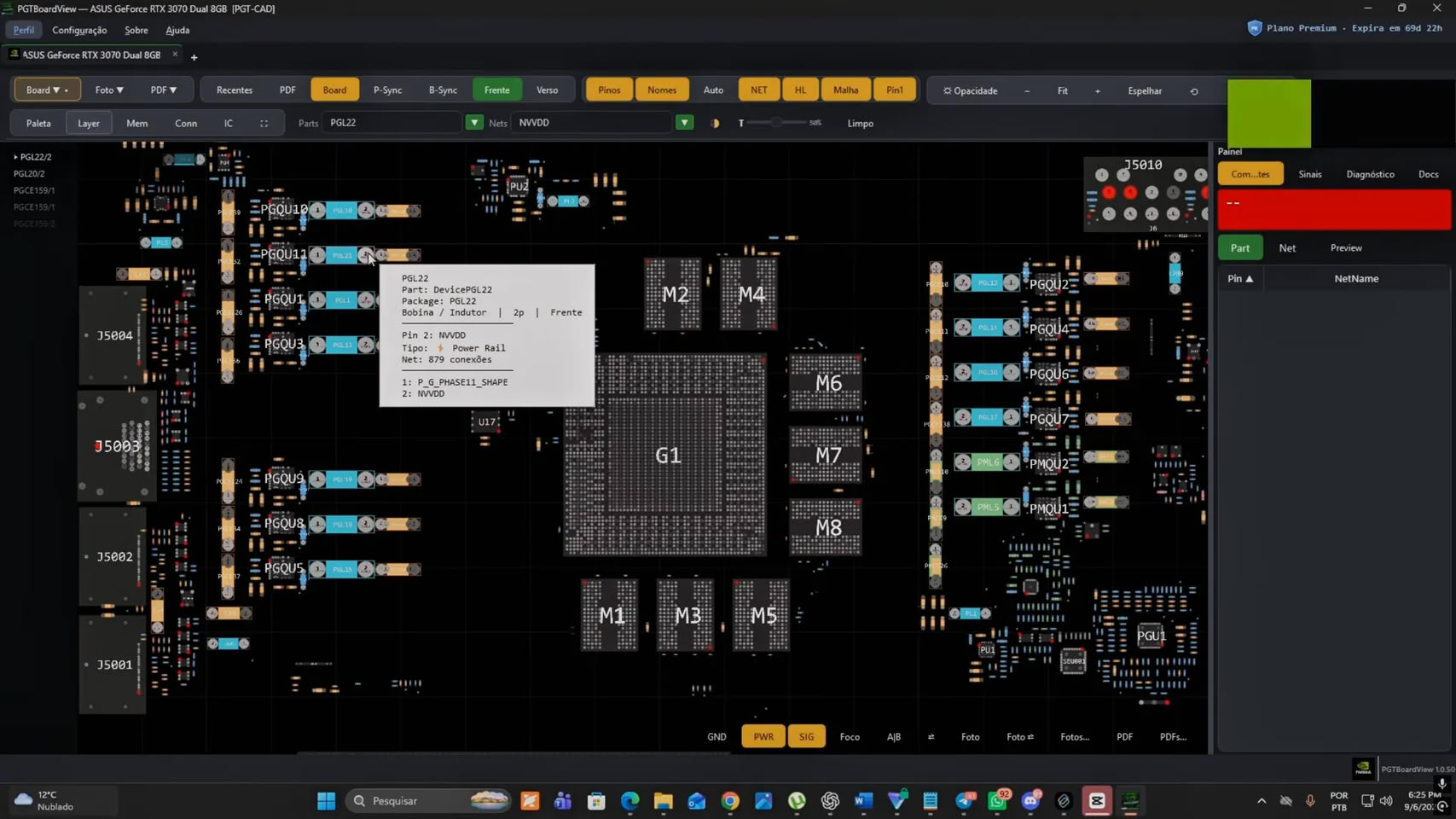
Modders at the Brazilian YouTube channel TecLab have an RTX 5090 running on three standard 8-pin PCIe connectors instead of the 16-pin design that keeps melting on high-end NVIDIA cards. The team stripped a Galax GeForce RTX 5090D HOF OC LAB XOC down to the bare PCB, removed both native 16-pin inputs, and soldered three 8-pin connectors straight to the power regulators. Sense pins were rewired so the card would still request full power, with liquid cooling keeping temperatures in check.

During a livestream, the modders ramped the card from 400 W to 900 W across the three cables, pulling over 120 A while holding a 3,400 MHz clock. Two connectors still delivered 66 A at 3,200 MHz, and even a single 8-pin managed 65 A at 3,100 MHz. The mod stayed entirely at the hardware level, with no BIOS or software tweaks involved. Throughout the test, the modified RTX 5090 stayed within its power and thermal limits, and passed all tests with flying colors.

Modder Behind GTA 5's Switch Port Is Now Bringing It to Android

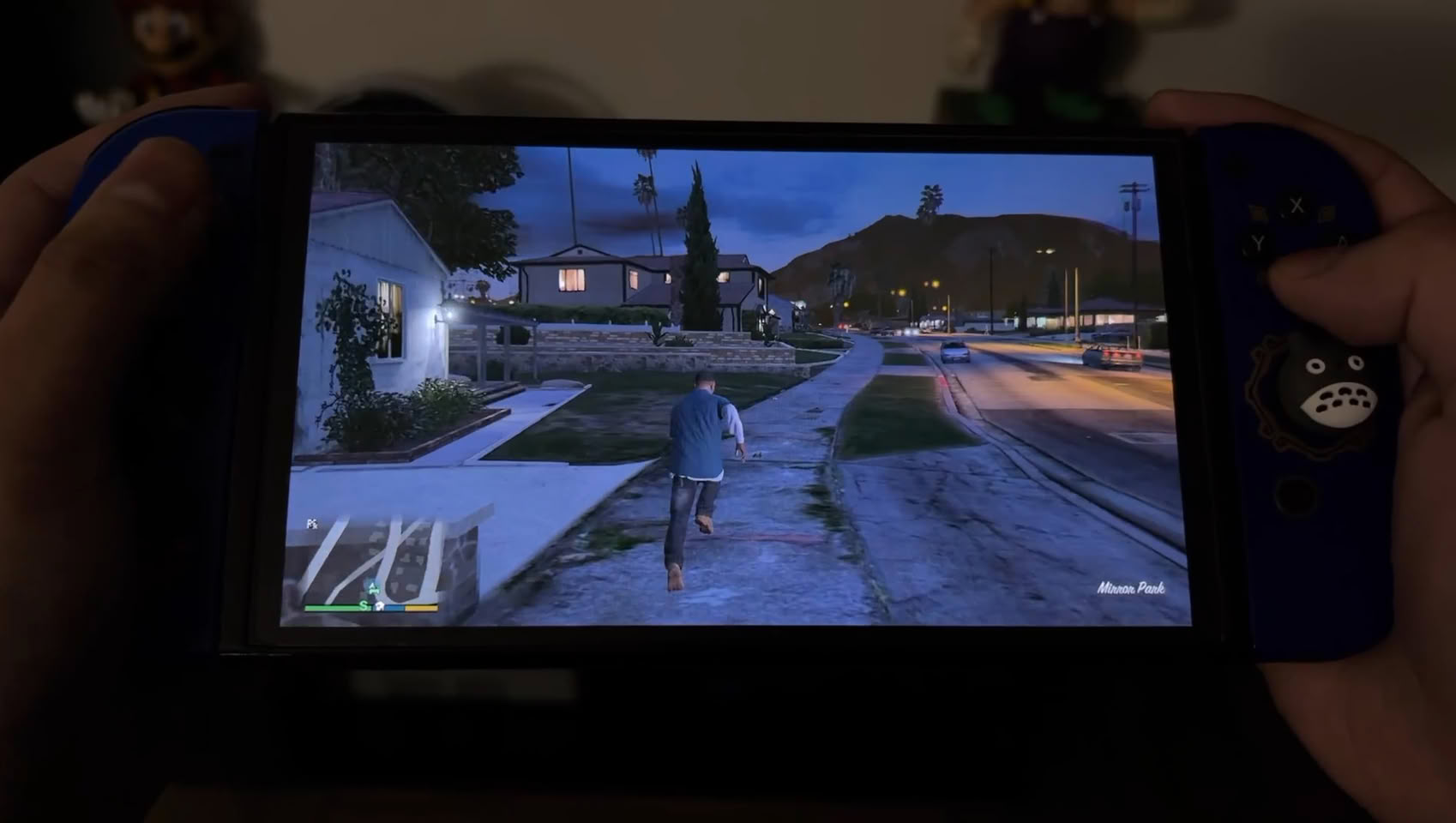
An unofficial, native Android port of Grand Theft Auto 5 is reportedly in development, though it looks like only a small portion of phones will actually be able to run it at launch. The project comes from M0jso of Paralympics Productions, the same developer behind the unofficial GTA 5 port for the original Nintendo Switch that we recently covered. Unlike solutions that run the Windows version through compatibility layers like Winlator, this port is being built to run GTA 5 natively on Arm. It reportedly uses the same base as the Switch port, which itself was built on GTA 5 Legacy 1.0.2699 and the leaked 2023 source code.

Minimum requirements are said to be a Snapdragon 865, 8 GB of RAM, and 65 GB of storage, with support extending up through recent Snapdragon 7 and 8 series chips. The first public build is Snapdragon-only, so Exynos chips (including the 1480, 1580, 2200, 2400, and 2600), Pixel Tensor with PowerVR graphics, and MediaTek Helio chips are apparently left out for now, at least until Mali GPU support gets added later. There's no word on an actual release date yet, and it's still worth treating this as an early and unofficial project until we see it running. However, it is confirmation that GTA 5 will be coming to Android phones pretty soon, if the Nintendo Switch port timeline is anything to go by.

NVIDIA RTX 20-Series "Turing" GPUs Can Now Run DLSS Frame Generation Through Mods

Shortly after modders enabled DLSS 5 on previous NVIDIA generations, the focus has shifted to Frame Generation. A modder has reportedly gotten NVIDIA's own DLSS Frame Generation running on a GeForce RTX 20-series GPU, something the company has never officially supported. The mod was tested on an RTX 2060 Max-Q in The Witcher 3's next-gen update using DirectX 12, where the in-game Frame Generation toggle could be switched on, and the improved framerate was observed. NVIDIA officially only supports DLSS Multi Frame Generation (MFG) on RTX 50-series GPUs, with simple Frame Generation limited to RTX 40-series and above.

This mod builds on earlier work that brought DLSS Frame Generation to RTX 30-series GPUs. That project has now been adapted to support yet another generation, targeting Turing's SM75 architecture. Unlike previous RTX 20 and RTX 30 mods, which rerouted DLSS Frame Generation calls through AMD's FSR 3 pipeline, this one runs NVIDIA's actual nvngx_dlssg 310.1 runtime. It swaps out the original GPU kernels for versions compiled for SM75 and tweaks architecture checks so the runtime reads the Turing GPU as Ada Lovelace, letting it initialize.

Modders Unlock DLSS Multi Frame Generation For RTX 30-Series "Ampere" GPUs

After porting DLSS 5 to every recent NVIDIA generation, the modding community now seems to be turning its focus to Frame Generation. A new mod called DLSSG SM86 lets GeForce RTX 30-series owners run DLSS Multi Frame Generation in 2X and 4X modes, a feature NVIDIA officially reserves for RTX 50-series "Blackwell" GPUs. Unlike earlier workarounds that swap in AMD's FSR Frame Generation, this project keeps NVIDIA's own DLSS models intact. It works by creating a proxy backend for the RTX 30-series' SM86 architecture that runs alongside the game and redirects frame generation calls to a bundled DLSSG 310.1 runtime, without touching the game's own files.

The developer's documentation lists the RTX 3080 Ti as the tested card, running driver 591.86 under Windows with D3D12. Reported gains include Black Myth: Wukong climbing from 50 FPS to 150 FPS at 4X Frame Gen, and Cyberpunk 2077 with path tracing going from 35 FPS to 100 FPS. That said, the developer is upfront that formal frametime, latency, and long-duration stability testing hasn't been done yet, so real-world smoothness don't fully match those raw numbers. A YouTube video by fogoticus also shows the feature being tested on an RTX 3080, with Cyberpunk 2077 jumping from around 42 FPS to 74 FPS in 2X mode, then to 120 FPS in 4X mode.

Modder Brings NVIDIA's Canceled 16GB RTX 3070 Ti Back to Life

A Brazilian modder going by fmklab has built a working RTX 3070 Ti with 16 GB of memory, a configuration NVIDIA reportedly planned years ago but never brought to market. Instead of bolting bigger memory chips onto a retail 3070 Ti board, Fabio, aka fmklab, started with an ASUS TUF RTX 3070 PCB, which already runs on regular GDDR6 rather than the GDDR6X found on the real 3070 Ti. The RTX 3070 GPU was pulled and replaced with an actual 3070 Ti chip, and the original Samsung HC14 (8 Gb) memory modules were swapped for HC16 (16 Gb) units to double capacity. GPU-Z still reported 8 GB after the swap, so fmklab used NVIDIA's BIOS Reader tool to work out which memory straps needed rewiring. A few tweaks later, the full 16 GB buffer was showing up.

Once that was sorted, MATS testing came back clean, and the card ran a local LLM using nearly the full 16 GB pool. Moreover, Call of Duty: Warzone paired with a Ryzen 7 9800X3D was pulling over 13 GB with no signs of instability. NVIDIA had reportedly explored a 16 GB RTX 3070 Ti as far back as 2020, and the idea resurfaced through leaked engineering samples before NVIDIA reportedly shelved it. Fabio's Superposition score landed a bit below typical retail 3070 Ti runs, likely because GDDR6 is slower than GDDR6X, a fair tradeoff for doubling the memory this way. The base RTX 3070 has seen similar VRAM mods before, but this looks like the first working recreation of this specific 16 GB 3070 Ti variant.

Modders Rework DLSS 5's Rendering Pipeline For a Big Performance Boost

Modders have found a way to cut the huge performance cost of NVIDIA's DLSS 5 Neural Rendering. The fix involves reworking the DLSS 5 rendering order so that neural rendering runs before upscaling. The mod, called Neural Upstream and built by matiasLombo, now works through DLSS5-Autopilot, a community tool similar to DLSS 5 Swapper, that runs Neural Rendering in games NVIDIA never officially supported. A Redditor tested this fix on an RTX 4080 in Assassin's Creed Shadows at 4K with DLSS Performance. Switching from NVIDIA's standard pipeline to Neural Upstream reportedly pushed frame rates from 31 FPS up to around 50 FPS, compared to 63 FPS with the effect off entirely.

The trick comes down to where NVIDIA placed Neural Rendering in the pipeline. It normally runs last, on the fully upscaled 4K frame, which is why the cost balloons at higher resolutions. This is an issue the modders already ran into when they first got Neural Rendering working on RTX 40-series cards. Neural Upstream instead applies it to the lower-resolution frame before DLSS Super Resolution scales it up, similar to how Performance and Quality presets already work for regular upscaling. It looks like NVIDIA leaned toward image fidelity in the standard application, so the trade-off is a further hit to visual quality on top of DLSS 5's existing "uncanny valley" issues.

Mod Revives Multi-GPU Gaming With Dedicated DLSS 5 GPU for Impressive FPS Gain

If you were around during what many consider the golden age of PC gaming, back when SLI was still possible, and, going back even further, when gamers put dedicated PhysX cards into their PCs, the latest trick shown off by modder, Marcelo Guibout, on YouTube. Guibot showed off a gaming setup using two NVIDIA RTX 5060 Ti 16 GB GPUs in tandem to split the rendering and Neural Rendering workloads.

[Editor's note: Our in-depth analysis of the DLSS 5 model leaked in the NBA2K27 and in use here is now live]

Similarly to the example of PhysX cards, the idea is to split the workloads between two GPUs, theoretically allowing for improved performance on the GPU doing the primary rendering, since it will be able to use resources on raster or ray tracing rendering that might otherwise be used for DLSS 5 Neural Rendering. With the Neural Coprocessor enabled using the multi-GPU processing setup, frame rates improved anywhere from 59% to 125% compared to running DLSS 5 on the same GPU—performance was still down compared to DLSS 5 off, however.

Modders Get DLSS 5 Working on AMD Graphics Cards, Though Performance is Rough

A modder has ported DLSS 5 Neural Rendering onto an AMD GPU for the first time, less than a week after the tech started spreading to older NVIDIA cards. Developer danielblnc released a tool called DLSS-NR for AMD, which allows AMD's RDNA 4 GPUs to run NVIDIA's neural rendering model in supported games. The setup works by dropping a small installer and NVIDIA's own nvngx_dlssnr.dll file into a game's bin folder, then toggling neural rendering through an FSR 3 or FSR 4 profile. It has been tested on Cyberpunk 2077 and GTA V: Enhanced so far, with older AMD GPUs reportedly not supported. Anti-cheat games will block the DLL entirely, so this is single-player territory only for now.

According to tests by YouTuber Ancient Gameplays, performance is still the bottleneck. Early builds tanked Cyberpunk 2077 from over 80 FPS down to around 11-12 FPS at 1080p on the Radeon RX 9070 XT. The modder's latest Alpha v0.2.7 update has clawed back roughly 12%, pushing it to about 30 FPS, still a steep cost for a card that handles native rendering well. The reason this works at all is quite straightforward. DLSS 5 runs on FP8 math, and AMD's RDNA 4 architecture, which powers the RX 9000 series, has native FP8 support, just like NVIDIA's RTX 50-series and 40-series cards.

Modders Get GTA 5 Running Natively on the Original Nintendo Switch

A modding group called Paralympics Productions has gotten Grand Theft Auto 5 running natively on the original Nintendo Switch, using a homebrew port built from the game's 2023 leaked source code. Rockstar never released GTA 5 on Switch hardware, despite the game shipping all the way back in 2013 on PS3 and Xbox 360, so this fills a gap the studio didn't choose to fill. Reverse-engineering the leaked "Legacy" source let the team recompile the game's logic for Arm and run it directly on the Switch's Tegra X1 chip, with no Android layer or emulation involved. You do need a jailbroken and overclocked Switch to get anything resembling a playable framerate, though.

At stock clocks, the game reportedly limps along at 10-25 FPS, and only settles into a steadier 30 FPS once the CPU, GPU, and memory are pushed past their limits through tools like sys-clk. Given the Tegra X1 is over a decade old and thermally constrained even in its own console, that's a fairly reasonable outcome for a 2013 game running its actual PC-tier logic on hardware never meant to touch it. The full install reportedly weighs in around 49GB, and Paralympics Productions has already shipped a few patches, with an Android port apparently in the works too. Of course, this doesn't automatically mean GTA 6 is coming to Switch 2 anytime soon, since this only works because of the leaked source code.

RPCS3 Team Won't Touch Leaked DLSS 5, Calls the Output "Slop"

The RPCS3 developers have made their stance on DLSS 5 pretty clear after fans started poking around with a leaked version of the tool on the PS3 emulator. Responding to questions about whether official support was coming, the team posted on X that some users are already testing a leaked DLSS 5 DLL on the renderer, but that they've seen what it produces and want no part of it. Modders are already testing DLSS 5 on emulators such as PCSX2, but the RPCS3 team apparently wants its emulator to avoid it completely. Here's what they posted:
"Whilst the gaming industry pushes more upscalers and frame generation to hallucinate games and hide their lack of optimization, we do not ship any of that slop."

Nexus Mods Acquires SteamDB, Features to Remain Free for Now

In a turn of events the gaming community didn't quite expect, the popular game modding website Nexus Mods has acquired SteamDB, one of the largest Steam tracking databases. According to the announcement, SteamDB has been run solely by developer Pavel "xPaw" Djundik, who founded the website and has been its sole operator for the last 13 years since it started back in 2013. Interestingly, the founder has reportedly been looking for a new owner, as the burden of maintaining the website has depended on constant donations from the community, which has been generous enough to let the project survive for more than a decade.

Nexus Mods is mainly viewing the SteamDB acquisition as a source of high-quality data, which will help the company gather information about popular game versions, common PC configurations, and which game releases are trending at any given time, ensuring the modding community stays ready. According to the announcement, everything currently existing within SteamDB will remain free, with no added monetization. There will also be no ads on the website, similar to the current setup. However, Nexus Mods confirmed that they will introduce additional features that will require payments to use on the newly acquired website.

Modder Merges Borderlands: The Pre-Sequel into Borderlands 2

Since the launch of Borderlands 2, the game's modding scene has been very active, adding a bunch of quality of life improvements and fun tweaks to the genre-defining looter-shooter. One such modder, who goes by Enderkiller124 on X, has been working on implementing some features and characters from Borderlands: The Pre-Sequel in Borderlands 2, since both games take place roughly around the same time, and The Pre-Sequel was built on much of the same underlying tech and engine as Borderlands 2.

The mod, known as Project Moonshot, started out as a way to play The Pre-Sequel characters and laser weapons in Borderlands 2, which has already shown promise, per clips shown off on the modder's X account, but it has since morphed into a full-scale port of The Pre-Sequel into Borderlands 2. Conceivably, this would allow players to play The Pre-Sequel's quests as Borderlands 2 characters and with Borderlands 2 weapons, and vice versa. The mod is not yet complete, but you can follow the development progress on the developer's X account. The modder has already shown off several The Pre-Sequel areas with Borderlands 2 characters and in-game features, like the Grinder crafter in Concordia, The Pre-Sequel weapons working on Pandora, and the full Concordia model and materials rendered in Borderlands 2.

Modders Bypass RTX 5090's Melting Connector Issue by Soldering Wires Directly to the PCB

Brazilian YouTube group TecLab has bypassed the RTX 5090's notorious melting problem in the most direct way possible. The group removed the 16-pin connector from the equation entirely and soldered power wires straight onto the PCB. The demonstration used a Galax RTX 5090D HOF OC LAB XOC, an extreme-overclocking variant with two 16-pin inputs and a custom BIOS rated for up to 2,000W, far above the 575W TDP of a standard RTX 5090. TecLab framed the mod as a sarcastic jab at NVIDIA, saying that enthusiasts are tired of hearing about connectors melting and that they wanted to show how it should have been done from the start.

The team stripped the card's stock cooler entirely, running the bare GPU under an industrial liquid chiller with two loosely mounted fans for extra airflow. Two adapters converted standard 16-pin PSU cables into bare wires, which were then soldered directly onto the connector traces on the board. No temperature readings were shared, but a roughly 50A draw on the 12V rail put the card at around 600W during testing, and it booted and ran benchmarks without issue.

Leaked DLSS 5 Reaches RTX 30 Series "Ampere" GPUs, But Performance Falls Apart

DLSS 5 leaked through an early-access build of NBA 2K27 last week, and since then, the modding community has been hard at work patching it into all sorts of different games. Modders on the RenoDX Discord have now pushed it into RTX 30-series "Ampere" GPUs, despite this generation having no official support for DLSS 5. The results, however, are less than stellar. On the RenoDX Discord, a user with an RTX 3070 laptop GPU running Kingdom Come: Deliverance II saw render latency jump from roughly 29 ms to over 3,300 ms with Neural Rendering enabled, resulting in well under 1 FPS.

Over on X, user @Flourek got it running on an RTX 3080, and it fared little better. It too, however, dropped from around 130 FPS to just 4 FPS in Deep Rock Galactic, while RTX 3050 and RTX 3060 Ti cards reportedly hovered near 1 FPS across Control, FiveM, and Kingdom Come: Deliverance II. Just a couple of days ago, modders got DLSS 5 running on RTX 40-series "Ada Lovelace" cards, and performance held up noticeably better. As we noted in our DLSS-NR deep dive, Ampere lacks native FP8 support, which the leaked DLSS 5 model apparently relies on, so the steep drop isn't surprising. Officially, DLSS 5 only supports RTX 50-series "Blackwell" GPUs, and there's no word about whether NVIDIA even plans to add support for RTX 40-series cards, let alone older ones.

DLSS 5 Gets Modded Into Skyrim With Dramatic Changes to Lighting and Character Faces

NVIDIA announced DLSS 5 back in March to a decidedly mixed reaction, as many gamers did not particularly like the modifications it made to character faces. While it is not officially out yet, an early-access build of NBA 2K27 was found to contain a DLSS Neural Rendering DLL, believed to be a precursor to DLSS 5. As expected, modders have been quick to start implementing that Neural Rendering technique in games, and what better game to add a new mod to than The Elder Scrolls V: Skyrim.

YouTuber PureDark implemented the DLSS-NR mod into Skyrim and recorded the results. Skyrim, now 15 years old, has some pretty outdated character models, but this early DLSS 5 implementation really brought those faces into 2026. In these side-by-side shots, a dramatic difference is evident between the two sets of character faces, with superior detailing, lighting, shadows, and even facial structure. The overall lighting behavior of the game is vastly improved too, and it almost looks path-traced in some scenes.

Resonance: A Plague Tale Legacy Cracked Ahead of Launch-Pirates Warn Against Malware

Despite the official launch being weeks away, it appears as though Resonance: A Plague Tale Legacy has already leaked and been cracked, with playable builds available online—much like the recent Forza Horizon 6 leak that saw pirates gain access to the game ahead of buyers of the $120 Deluxe Edition. This game leak comes a full week ahead of the game's full launch on Thursday, August 27, and is corroborated by pirates on the r/PiratedGames subreddit.

Modders say that the game runs fine, although there are reports that the currently available pirated packages may contain malware, since the repacker responsible for the pre-release pirated version of the game allegedly has a history of packaging Hypervisor scripts in some of their downloads. Aside from the screenshots from the leaked version of the game, the prequel game's install size was reported to be around 75 GB. It's unclear how the game repackers got hold of a pre-release version of Resonance, and neither Focus Entertainment nor Asobo Studios have responded to the leak.

LACT Brings More NVIDIA OC Controls and GPU Sensors to Linux

Linux GPU overclocking and monitoring tool, LACT, has officially launched v0.10.0, adding a host of new overclocking and sensor options for NVIDIA GPUs. The update notes mention PowerMizer mode, which allows users to force the NVIDIA GPUs into the highest p-state. The update also adds "Voltage boost," a new slider that allows the GPU to draw more voltage—as opposed to a more traditional voltage offset slider. The developers note that this slider merely adds more headroom for certain overclocks.

The update also adds new sensor read-outs for both NVIDIA and AMD GPUs. NVIDIA users on Blackwell GPUs now have access to hotspot sensors and per-memory-chip temperature sensors for both GDDR6x and GDDR7. On the AMD side of things, there is now support for graphical GTT memory display—GPU-accessible system memory—which is noted to be particularly helpful for iGPUs in high-memory-load applications and games, but may also be helpful when using older, low-VRAM GPUs, since those may also require spilling over into system memory more often. Check out the full update notes for more.

Modder Turns Steam Deck into Modern Game Boy

The modern gaming handheld boom has given rise to everything from the Steam Deck to quirky little Android-powered emulation machines that are more limited, but more affordable and portable. However, one modder, who goes by u/PhyFawkes on Reddit, has done some serious modding to turn his Steam Deck LCD into a compact gaming handheld that aims to be the best of both worlds.

The SteamBoy, as it is called by the modder, uses the original Steam Deck LCD motherboard, daughter boards, controller boards, and original battery stacked together very carefully in a vertical sandwich. The resulting SteamBoy features stock ABXY face buttons as well as a single trackpad and thumb stick. The new form factor also requires a new display, which turned out to be one of the biggest challenges, as the modder opted for a 1200×1080p AMOLED panel originally designed for VR headsets, which is still a work in progress.

Nexus Mods Plans To Simplify Game Modding: "Spotify-Easy" and "GitHub Powerful"

A little over a year ago, Nexus Mods changed hands, with the new owner and lead developer promising to keep the ship running without changing the core philosophy of Nexus Mods. Now, in a year-one update blog, the new owner, Victor Folmann, has detailed his plans for the mod platform going forward.

One of the major points Folmann brought up in his update was the future of Nexus Mods, with planned changes including a wholesale redesign of the Nexus Mods infrastructure. According to Folmann, Nexus Mods "has been modeling mods as files," and he goes on to explain that "Mods are not files. Mods are systems." In order to address this, Folmann says that Nexus Mods will be redesigned to treat mods as systems.
Return to Keyword Browsing
Nov 11th, 2026 04:19 CST change timezone

New Forum Posts

Popular Reviews

TPU on YouTube

Controversial News Posts