News Posts matching #RAM

Return to Keyword Browsing

AMD Plans 10% Price Hike Across GPUs, Chipsets, and Possibly CPUs

AMD is preparing for a series of price hikes in response to rising costs of acquiring silicon from its supply chain. According to ChannelGate, AMD is working on a 10% price increase across its products due to the upstream supply chain squeeze. Since most of AMD's silicon is manufactured by Taiwanese semiconductor giant TSMC, any change in wafer pricing forces AMD to pass these costs onto customers. Reportedly, TSMC is increasing the pricing of its silicon wafers, and as a result, AMD must raise its product costs to maintain margins and keep the business afloat. The price increases will affect almost every product AMD offers, including GPUs, possibly CPUs, and even motherboard chipsets.

For CPUs and GPUs, AMD has already implemented price hikes in the past, driven by a combination of demand and high DRAM pricing. However, this is one of the first instances where AMD is increasing the pricing of its motherboard chipsets, which will require motherboard makers to adjust their pricing accordingly. If TSMC implements a 10% price hike across its nodes, from 2 nm N2 to some older mature nodes, AMD will have to pass these costs onto partners and consumers, who will ultimately bear the difference. As a fabless chip designer, AMD cannot dictate or negotiate for lower rates for wafers from TSMC.

Intel and SK hynix Could Start DRAM Production in United States

According to anonymous sources close to Reuters, Intel and SK hynix are in talks to start DRAM production lines in the United States for the first time. This means that Intel might either collaborate with SK hynix to acquire memory IP technology in a joint venture or SK hynix could lease part of Intel's facility in Ohio. In the first scenario, a joint venture between Intel and SK hynix would significantly alleviate supply chain pressures, as hyperscalers, fabless chip designers, and others are in urgent need of more DRAM. Since these firms would likely consume all the DRAM produced in the coming years, both Intel and SK hynix would have a substantial financial interest in the joint venture.

On the other hand, if SK hynix decides to lease Intel's facilities in Ohio, the South Korean memory giant would pay premiums for leasing the facility while retaining all production for itself. Reuters couldn't determine which specific technology would be the focus of the facility, but the primary goal is to produce regular planar DRAM, HBM, and some storage solutions with NAND Flash. Intel declined to comment on the rumor but noted that the Ohio investments are continuing regardless. SK hynix stated that the company has not finalized its decision or any cooperation but did not explicitly rule out the possibility of future collaboration. Therefore, an official decision should be announced soon.

ADATA TRUSTA Showcases AI Scaler Extended Memory, TD7P51 ECO Gen 5 SSD and R-DIMM at AI Infra Summit 2026

TRUSTA, the enterprise storage and memory brand of memory leader ADATA, is showcasing its latest AI Scaler Extended Memory solution at AI Infra Summit 2026, one of North America's leading AI infrastructure events, bringing together approximately 8,000 professionals and 250 industry partners across the AI infrastructure ecosystem.

As increasingly complex AI models place greater demands on GPU memory and drive up infrastructure costs, TRUSTA is highlighting its award-winning AI Scaler Extended Memory Solution under the theme "Scale AI Beyond GPU Limits." The integrated hardware-software architecture enables enterprises to deploy on-premises AI with greater scalability and cost efficiency. TRUSTA is also presenting its TD7P51 ECO PCIe Gen 5 enterprise SSD and DDR5 R-DIMM, demonstrating a comprehensive portfolio built for next-generation AI infrastructure.

Micron Develops 512 GB DDR5 RDIMM Server Memory Reaching 9200 MT/s

Micron Technology, Inc. (Nasdaq: MU), today announced a major milestone in memory innovation with the successful demonstration of the world's first 512 GB DDR5 module on multiple server platforms. The achievement reinforces Micron's leadership in high-performance, high-capacity server memory and provides enterprise data center and cloud customers with a path to support large and demanding AI, analytics, in-memory database and simulation-heavy workloads with greater efficiency. Leading semiconductor enablers, AMD and Intel, are both actively validating the module, which will deliver speeds up to 9,200 MT/s.

The module's high capacity is possible due to Micron's advanced vertical interconnect packaging innovations. This product vertically stacks DRAM dies interconnected by through-silicon vias (TSVs) to maximize density within individual DRAM packages while preserving the performance modern data center architectures demand. The module enables up to 12 TB of DDR5 DRAM in a single 24-slot dual-socket server.

Steam Deck 2 Plans Haven't Changed Despite RAM Crisis, Claims Valve

Valve has confirmed that the ongoing DRAM shortage hasn't changed anything about its plans for a Steam Deck 2, even though the crisis has driven up prices on the company's other hardware. Speaking with IGN's Jacqueline Thomas, Valve developer Pierre-Loup Griffais was asked directly whether the memory shortage had affected the next handheld's development. Here's what he told IGN:
"We've talked before about how we want to make sure there's a very delineated performance improvement for something like a future Steam Deck, and I think we're still looking at it in the same way. It's just a matter of looking at the current conditions and seeing how and when we can deliver something like that. But from what we're working on, as far as the user experience goes and what the product that we're trying to build goes, it's very similar goals."

Steam Frame Pricing Reflects Rising Component Costs, Confirm Valve Engineers

Valve has opened reservations for the Steam Frame, its standalone VR headset, with pricing starting at $1,059 for the 256 GB model and going up to $1,299 for the 1 TB version. We had already reported back in July that Qualcomm's own chip price hikes were pushing Steam Frame costs upward well before today's reveal. In an interview with Tom's Hardware, Valve engineer Pierre-Loup Griffais walked through why the final price landed where it did. Here's what he said:
"I think as far as memory prices and those kinds of conditions, we're really in it like everyone else. It's an unfortunate situation all around. We wish that gaming hardware was cheaper, but we're definitely trying to be on the cheapest side that we can get despite all those conditions. Even just things like motherboards, copper, anything, even shipping anything worldwide right now is way more expensive than it was last year and two years ago. So every part of the sticker price is affected there."

OpenRGB 1.0 Launches for Open-Source RGB Customization on Windows, Linux, and macOS

RGB control software has long been a pain point of gamers, with background apps and clunky UIs frequently coming up in discussions about gaming mice, keyboards, speakers, monitors, among many more. OpenRGB is a project that hopes to cut through some of that noise and provide a cross-platform support for RGB on gaming peripherals and components. OpenRGB just released version 1.0 after months testing release candidates. With the update, the utility expands support to a number of new brands and components and lays the groundwork for more Logitech device support.

For starters, the latest version of OpenRGB adds support for QMK and VialRGB, including Keychron's forks of those protocols, as well as more Gigabyte and MSI motherboards laptops, and motherboard, Clevo laptop keyboards and light bars, various GPUs across a number of controllers, including PNY Epic-X ARGB and PowerColor GPUs, and more.

Transcend Launches 64 GB DDR5-6400 CUDIMM and CSODIMM Embedded DRAM Modules

Transcend Information, Inc. (Transcend), a leading global manufacturer of memory and storage solutions, has introduced its DDR5-6400 CUDIMM and CSODIMM embedded DRAM modules, offering capacities of up to 64 GB per module to meet the computing demands of edge AI, smart manufacturing, industrial automation, and high-performance embedded systems. Featuring DDR5's dual-channel architecture and a low operating voltage of 1.1 V, the modules incorporate a Client Clock Driver (CKD) to minimize signal interference caused by noise and jitter during high-speed operation, thereby enhancing signal stability. An integrated power management IC (PMIC) further improves power efficiency and voltage regulation. The SPD chip features a built-in temperature sensor for real-time memory temperature monitoring, while a transient voltage suppressor (TVS) helps protect components from damage caused by voltage fluctuations. In addition, On-Die ECC built into the DDR5 DRAM chips enhances data integrity and long-term operational reliability. Together, these features provide next-generation industrial computing platforms with a high-capacity, high-performance, and dependable memory solution.

Up to 64 GB per Module for Demanding Industrial Applications
Transcend's DDR5-6400 CUDIMM and CSODIMM modules offer capacities of up to 64 GB per module, meeting the intensive computing requirements of industrial computers, edge computing devices, and embedded systems. DDR5's dual-channel architecture improves data access efficiency and overall transfer performance, while DDR5-6400 speeds accelerate large-scale data exchanges and real-time processing. The modules provide the capacity and bandwidth required for high-performance industrial applications.

Global Semiconductor Revenue Surges 31% to Record $425bn in 2Q26

Global semiconductor revenue surpassed $425bn in 2Q26 reaching another all-time high as the market grew a record 31.4% quarter-over-quarter (QoQ), according to new research from Omdia. AI demand and strong memory prices continued to be the leading market dynamics, taking total semiconductor revenue for the first half of 2026 to $752 billion. The 31.4% QoQ increase surpassed the previous sequential growth record of 29.2% in 1Q26. Since Omdia began tracking the semiconductor market in 1Q02, only 10 out of 97 quarters have recorded sequential revenue growth above 10%. The last four quarters beginning in 3Q25, have all recorded double-digit sequential growth, with 3Q26 expected to follow the same trend.

Memory continues to be the primary driver of growth, while other semiconductor components are growing above seasonal patterns and contributing to the robust market.

Modder Behind GTA 5's Switch Port Is Now Bringing It to Android

An unofficial, native Android port of Grand Theft Auto 5 is reportedly in development, though it looks like only a small portion of phones will actually be able to run it at launch. The project comes from M0jso of Paralympics Productions, the same developer behind the unofficial GTA 5 port for the original Nintendo Switch that we recently covered. Unlike solutions that run the Windows version through compatibility layers like Winlator, this port is being built to run GTA 5 natively on Arm. It reportedly uses the same base as the Switch port, which itself was built on GTA 5 Legacy 1.0.2699 and the leaked 2023 source code.

Minimum requirements are said to be a Snapdragon 865, 8 GB of RAM, and 65 GB of storage, with support extending up through recent Snapdragon 7 and 8 series chips. The first public build is Snapdragon-only, so Exynos chips (including the 1480, 1580, 2200, 2400, and 2600), Pixel Tensor with PowerVR graphics, and MediaTek Helio chips are apparently left out for now, at least until Mali GPU support gets added later. There's no word on an actual release date yet, and it's still worth treating this as an early and unofficial project until we see it running. However, it is confirmation that GTA 5 will be coming to Android phones pretty soon, if the Nintendo Switch port timeline is anything to go by.

NVIDIA's Statistics Overlay Finally Shows CPU Temperature and Power Draw

NVIDIA App version 11.0.9 has added CPU temperature, clock speed, and power consumption to its built-in Statistics overlay. GeForce owners previously had to run a separate tool like HWiNFO or MSI Afterburner just to check processor thermals mid-game, so this brings one of the more requested features straight into NVIDIA's own software. To turn it on, open the NVIDIA app, press Alt+Z, head into the Statistics section, switch to Custom view, then enable the overlay with Alt+R. From there, pick which metrics show up, tweak the font size and color, and choose between a compact horizontal layout or a vertical stack if there's a lot on screen at once.

It works alongside DLSS override tracking too, so users can confirm which preset is actually running in a given game while keeping an eye on CPU numbers. That said, it's not a full replacement for dedicated monitoring software. VRAM and system RAM usage are still missing, and CPU utilization is reported as one overall number rather than broken out per core. Anyone who wants that level of granularity will still want RTSS running alongside it. For most GeForce users, though, this closes one of the more obvious gaps in the overlay, and it's nice not needing a third app open just to check the CPU temperature.

Majority of TPU Users Don't See Microsoft's Promised Windows 11 Improvements

A few months ago, Microsoft promised its Windows enthusiast community that the company would implement a major overhaul to improve performance and stability in the Windows 11 operating system. We conducted a poll and received nearly 33,000 responses from the community to answer one question: Are you experiencing the promised improvements in Windows 11? However, the findings are quite polarized, as the majority of the enthusiast community doesn't actually notice any difference before and after the promise was made. Among all respondents, 43.4% voted that there are no noticeable improvements. This represents thousands of Windows 11 users worldwide who are not seeing any enhancement in their day-to-day operations with Microsoft's latest operating system.

What is perhaps more alarming is that many enthusiasts report a worse experience following Microsoft's promises. About 38.1% of the voters indicated they are experiencing actual degradation in day-to-day operations, as Microsoft continues to push updates that negatively impact everyday use and introduce more bugs. Notably, a recent example is the Windows 11 August update, which reset custom cursors to an oversized default one. In some cases, the color and size settings don't stick, no matter how many times they are changed. This update has also caused gameplay issues, such as forced crashes, random freezing, errors, and unexpected device restarts due to RGB peripherals.

Apple Raises Prices Across the iPhone Lineup as DRAM Costs Catch Up

As was rumored for months, Apple's iPhone 18 Pro launch on September 9 brought price hikes across almost every iPhone in its lineup, not just the new models. The iPhone 18 Pro and iPhone 18 Pro Max now start at $1,199 and $1,299, a $100 jump over the iPhone 17 Pro pair, both of which have been discontinued. Apple also raised prices by $100 across the board on the phones it kept around. The iPhone 16 now starts at $799, the iPhone 17e at $699, the iPhone 17 at $899, and the iPhone Air at $1,099. None of these older models got any hardware changes to justify the bump.

The timing of these price hikes aligns with what's become an industry-wide DRAM shortage, driven largely by AI data center demand soaking up memory supply. Apple CEO Tim Cook has previously compared the situation to a "hundred-year flood," and said the company can no longer absorb rising memory and storage costs like before. This mirrors what's already played out across the PC space, where DRAM and SSD price hikes have been hitting system builders and OEMs for months. It looks like Apple, despite its scale and negotiating leverage, isn't immune to the same memory price pressure squeezing the rest of the industry.

Intel-Backed "Hypertune" PC Overlocking Tool Reportedly Boosts FPS by Up to 60%

A new tool called Hypertune has emerged after being in early testing with 60,000 PC DIY enthusiasts. According to exclusive launch coverage from GamesBeat, a Miami-based gaming company announced a new automated overclocking platform named Gaming Performance Engineering, which is said to deliver a significant FPS performance boost of up to 60%. While that figure sounds impressive, it is not expected to become the norm, as most systems will see only a few percentage points of improvement. The company states that Hypertune is based on Intel's Extreme Tuning Utility (XTU) software development kit (SDK) and was developed in partnership with Intel, which supported the project with engineering resources.

The tool itself includes automated overclocking for your CPU and GPU and optimizes RAM settings for improved latency, frequency, and overall performance. Once downloaded, the tool analyzes hardware configuration, drivers, Windows settings, and other elements. The company refers to this as a Smart Optimization Engine, which first monitors and observes your system's configuration to deliver an optimization preset. After applying this preset, users should notice immediate differences. For example, Hypertune demonstrated two systems: one featuring an Intel Core Ultra 9 285K and an NVIDIA GeForce RTX 5090 GPU, and the other with a Core i7-14700K and an RTX 3080 GPU. The first system showed performance gains ranging from 18.9% to 28.2%, while the second saw a boost in frames per second ranging from 4.3% to 9.8%.

Mobile Intel 12 Xe "Nova Lake" May Support Upgradeable DDR5-8000 Memory

Intel's next-generation Nova Lake mobile chips with 12 Xe-core graphics may support DDR5-8000 memory through CSODIMM modules, according to leaker Golden Pig Upgrade Pack on Weibo. If that pans out, it would be the first mobile Nova Lake variant to officially support DDR5, a notable departure from the soldered LPDDR memory that dominates thin-and-light laptops right now. Current Panther Lake systems with 12 Xe cores, like the Core Ultra X7 358H, don't officially list DDR5 support, though ASRock Industrial already ships mini PCs with two DDR5 SO-DIMM slots running at DDR5-7200 on that platform, and Intel itself includes this configuration among its Core Ultra Series 3 developer systems.

Nova Lake-S, the desktop version, has already been tied to DDR5-8000 through leaked B960 chipset details and platform documents, so Intel appears to be pushing that same memory ceiling down into at least part of the mobile lineup too. Unlike soldered LPDDR5X, CSODIMM support would let OEMs offer upgradable RAM again in these systems, an option that's grown rare in slimmer laptop designs built around battery life and board space. Despite the leaker's solid track record, this is still a single leak rather than anything Intel has confirmed, so I'd hold off treating the exact speeds as final. If it checks out, it suggests Intel is willing to give at least some mobile Nova Lake configurations more memory flexibility, even as most of the market keeps drifting toward soldered memory for efficiency.

Modder Brings NVIDIA's Canceled 16GB RTX 3070 Ti Back to Life

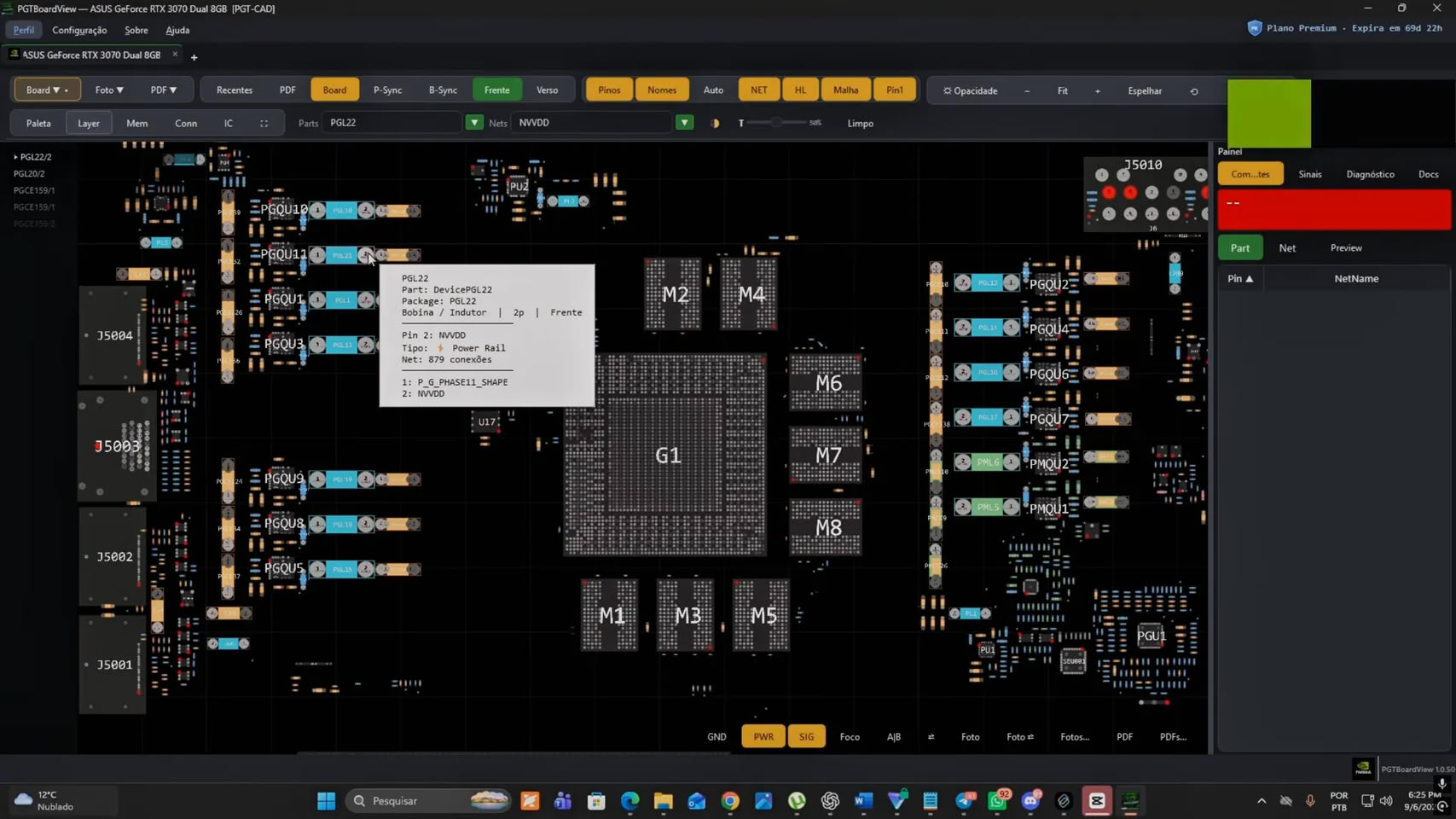
A Brazilian modder going by fmklab has built a working RTX 3070 Ti with 16 GB of memory, a configuration NVIDIA reportedly planned years ago but never brought to market. Instead of bolting bigger memory chips onto a retail 3070 Ti board, Fabio, aka fmklab, started with an ASUS TUF RTX 3070 PCB, which already runs on regular GDDR6 rather than the GDDR6X found on the real 3070 Ti. The RTX 3070 GPU was pulled and replaced with an actual 3070 Ti chip, and the original Samsung HC14 (8 Gb) memory modules were swapped for HC16 (16 Gb) units to double capacity. GPU-Z still reported 8 GB after the swap, so fmklab used NVIDIA's BIOS Reader tool to work out which memory straps needed rewiring. A few tweaks later, the full 16 GB buffer was showing up.

Once that was sorted, MATS testing came back clean, and the card ran a local LLM using nearly the full 16 GB pool. Moreover, Call of Duty: Warzone paired with a Ryzen 7 9800X3D was pulling over 13 GB with no signs of instability. NVIDIA had reportedly explored a 16 GB RTX 3070 Ti as far back as 2020, and the idea resurfaced through leaked engineering samples before NVIDIA reportedly shelved it. Fabio's Superposition score landed a bit below typical retail 3070 Ti runs, likely because GDDR6 is slower than GDDR6X, a fair tradeoff for doubling the memory this way. The base RTX 3070 has seen similar VRAM mods before, but this looks like the first working recreation of this specific 16 GB 3070 Ti variant.

Windows 11 Will Get Faster Boot Times and More Optimizations for 8 GB RAM Systems

At IFA 2026 in Berlin, Germany, Microsoft confirmed that the company is listening to user feedback on various aspects of the Windows experience, including boot times, Windows Hello, and optimizations for PC systems with 8 GB of RAM. Speaking at the event, Mark Linton, Corporate Vice President of Windows & Devices at Microsoft, stated that the company is making a series of decisions that will impact Windows 11 users, and many of these changes will be rolled out over the next few builds.
Mark Linton, MicrosoftWe've made significant gains on things like boot time, Windows Hello responsiveness… We're continuing to improve on the fundamentals... We're listening to customer feedback, continuously improving Windows, and you'll see those updates as Windows just gets better as the updates come through... We're optimizing so that 8 gig of RAM runs great on machines as well.

Samsung Electronics and ASML Expand Collaboration for Next-Generation Semiconductor Manufacturing

Samsung Electronics and ASML today announced an expansion of their long-standing strategic partnership, deepening collaboration on High NA EUV lithography and advanced semiconductor manufacturing technologies that will help drive the next generation of innovation in the AI era.

Building on years of successful cooperation, the companies will work together to accelerate the development and deployment of technologies that support the increasing performance and efficiency requirements of advanced semiconductor manufacturing.

Japanese Retailer Predicts Further GPU Price Hikes

We recently reported that NVIDIA's RTX 50-series GPU prices rose by a median 41% between August and July 2026, putting the RTX 5090 at a whopping $4,700+. However, it seems as though the DRAM and GPU crisis is not quite done emptying the pockets of gamers just yet. According to one Japanese retailer, Applied Group (アプライド), GPU prices are slated to rise in the coming months or weeks yet again.
Applied Group on X (machine translated)There's talk about graphics card price hikes, but some graphics cards are slated for even further price increases. For those considering an upgrade, I recommend doing so sooner rather than later.

Rockstar May Move GTA 6 PC Launch in Response to Expected Console Shortages

It has long been thought that there would be a long delay between the console and PC launches of Grand Theft Auto VI—GTA V launched to consoles a whole two years ahead of the PC port—however, the unprecedented times facing the PC and console hardware markets may be enough to pressure Rockstar into moving the PC launch of GTA VI ahead, according to recent rumors.

In a recent appearance on the VGC Podcast, Andy Robinson mentioned during a discussion about the ongoing gaming hardware situation that he thinks "they'll push the PC version up," referring to GTA VI. He went on to say that "There's a bit of noise about that. That perhaps the PC version might arrive sooner than some people might expect, just because of everything that's going on," suggesting high demand—some of which is induced by GTA VI itself—may drive Rockstar Games to release the PC port sooner.

SK hynix Boosts Leading-Edge 1c DRAM Production to a Dominant Position

SK hynix is shifting much of its capacity to the latest 1c DRAM node, according to recent reports. The South Korean giant is transitioning the bulk of its memory production between nodes, and as DRAM technology advances, the company is moving its production to more advanced 10 nm-class nodes. For SK hynix, the sixth-generation 10 nm class 1c DRAM node accounted for 10% of production in Q1 2026, with an increase to about 13% in Q2. In the current third quarter, the company is expected to manufacture 24% of its DRAM on 1c, while Q4 will see more than a third (34%) produced on that node. By Q1 2027, the 1c node will account for around 35%, making the fifth-generation 10 nm-class 1b node at 33%, officially SK hynix's most dominant node.

As a reminder, DRAM nodes are not the same as conventional logic nodes. DRAM manufacturers use variations of 10 nm and scale them with more EUV layers or advanced features. For SK hynix, the currently dominant 1b node is around 12-13 nm in actual design and involves about 4 layers of EUV patterning, while the most advanced 1c node shrinks to 11-12 nm with 5-6 layers of EUV. SK hynix will use the 1c node to manufacture HBM4E, LPDDR6, and DDR5 memory. For the older 1b node, SK hynix produces DDR5, LPDDR5X, HBM3E, and HBM4.

DRAM Industry Revenue Rises 59.5% QoQ in 2Q26 as Supply Expansion Continues to Lag Demand Growth

TrendForce's latest findings on the memory industry reveal that sharp rises in traditional DRAM contract prices have led to a 59.5% QoQ increase in total DRAM industry revenue, reaching nearly US$154.73 billion in 2Q26.

Growing demand for AI servers, fueled by expanding LLM training and AI inference, has driven higher shipments of HBM3e, LPDDR5X, and high-capacity RDIMMS. The surge in agentic AI applications is further boosting RDIMM demand across various capacities.

Microsoft Now Lets AI Build Native WinUI 3 Apps for Windows 11 in Under 30 Minutes

Microsoft has published a quick-start guide showing developers how to build a native WinUI 3 app for Windows 11 in about 30 minutes using AI. The workflow runs on free tools, VS Code,.NET 10, GitHub Copilot's free tier, and Microsoft's winapp CLI, so Visual Studio isn't needed. The guide covers scaffolding a project, using an AI agent to add features like a settings page, testing the result, and packaging it as an MSIX installer for the Microsoft Store.

The agent used here, called winui-dev, isn't the general Copilot chatbot most Windows users already know. Rather, it's a specialized plugin with skills for WinUI design, code review, UI testing, packaging, and migrating older apps. Microsoft also recommends connecting it to its Learn MCP server so it pulls current WinUI documentation instead of relying on training data, since WinUI 3 is newer and less represented in AI training sets than older frameworks like WPF and UWP.

Improved CPU Supply Narrows 2026 Global Notebook Shipment Decline to 9.4%, but Brands Still Face Heavy Cost Pressure

TrendForce's recent research into the notebook industry shows that CPU supply has markedly improved since 2Q26, enabling brands to gradually normalize their procurement and manufacturing processes. Meanwhile, persistent increases in DRAM and SSD costs have led brands to accelerate their procurement strategies to secure components earlier, resulting in shipment volumes exceeding expectations in the first half of the year. Nonetheless, the ongoing rise in memory prices, along with increased CPU costs, has further amplified cost pressures on notebook brands.

TrendForce notes that as CPU shortages ease in 2H26, continued advance procurement by brands, earlier replacement purchases by consumers, and stable commercial demand are expected to support an upward revision to shipment forecasts. As a result, the decline in global notebook shipments for full-year 2026 is expected to narrow to 9.4% YoY.

CXMT Captures 10% of the Global DRAM Market Revenue Share

According to Counterpoint Research trackers, Chinese memory giant CXMT captured 10% of the global DRAM market share by revenue in Q2 2026, which is 150% more than the company had a year ago. On a quarterly basis, the company also experienced significant growth of 25%, as it increased its market share from 8% in Q1 to 10% in Q2. This is impressive considering the company managed to grow its revenue market share despite constrained access to advanced tooling, while established giants like Samsung, SK hynix, and Micron have undisputed access to all semiconductor manufacturing tools.

Among other DRAM makers, Samsung retains the number one spot with a 38% share, SK hynix holds 25%, and Micron is just behind at 24%. Interestingly, over the last few quarters, Samsung managed to maintain and grow its number one position, while SK hynix's share dropped from 39% a year ago to the current 25%. Micron fluctuated between 22% and the current 24%, while Nanya doubled its share from 1% to 2%.
Return to Keyword Browsing
Nov 16th, 2026 04:12 CST change timezone

New Forum Posts

Popular Reviews

TPU on YouTube

Controversial News Posts