Thursday, July 11th 2019

Intel "Comet Lake" Not Before 2020, "Ice Lake-S" Not Before Q3-2020, Roadmap Suggests

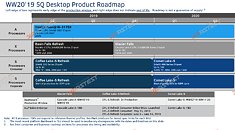
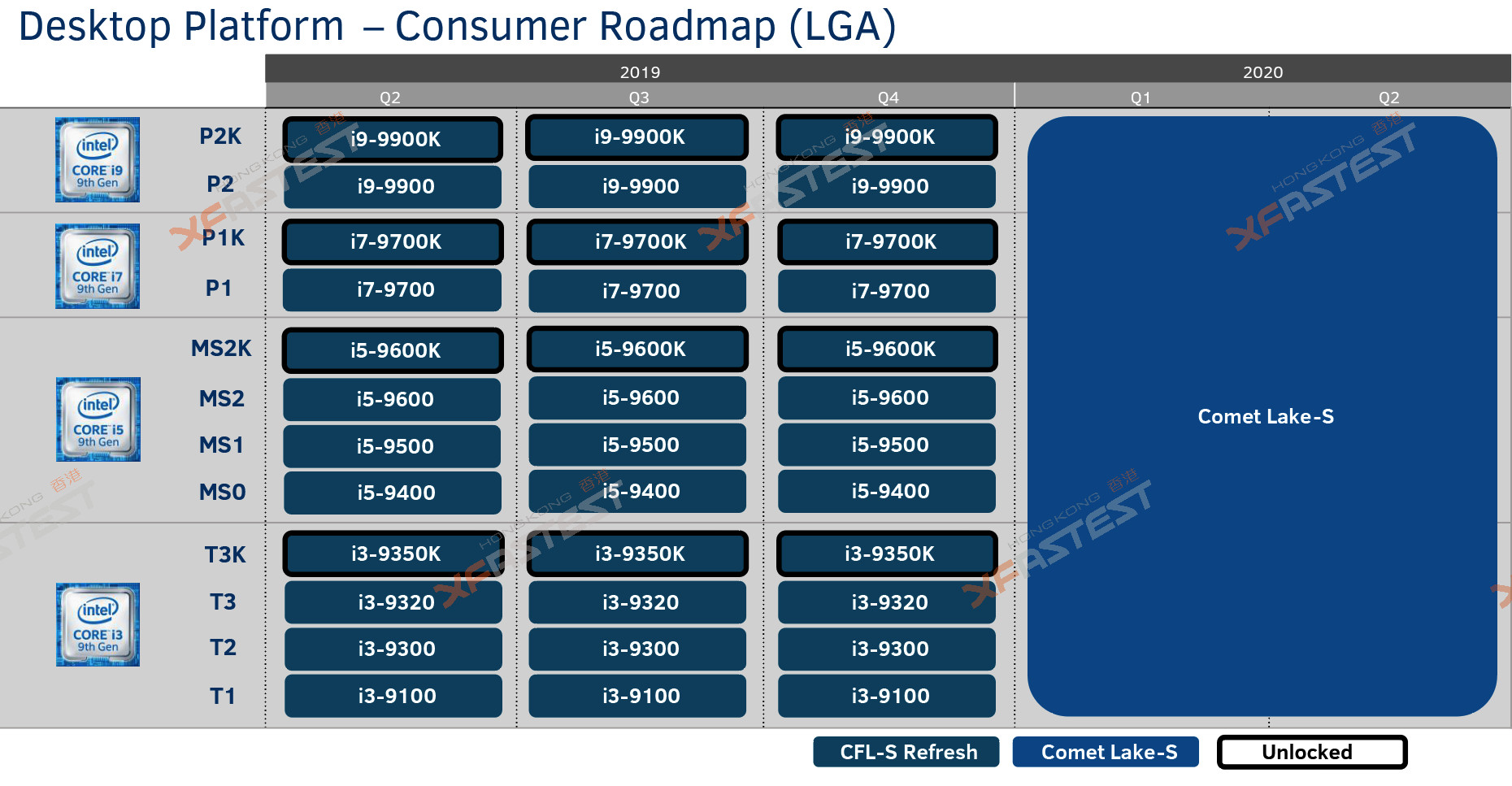
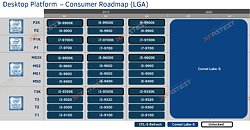
Earlier this week, news of Intel's 10th generation Core "Comet Lake" processors did rounds as the company's short-term response to AMD's 3rd generation Ryzen processors. According to slides leaked to the web by Hong Kong-based tech publication XFastest, "Comet Lake" isn't Intel's short-term reaction to "Zen 2," but rather all it has left to launch. These processors won't launch before 2020, the slide suggests, meaning that AMD will enjoy a free rein over the processor market until the turn of the year, including the all-important Holday shopping season.

More importantly, the slide suggests that "Comet Lake" will have a market presence spanning Q1 and Q2 2020, meaning that the 10 nm "Ice Lake" won't arrive on the desktop platform until at least Q3 2020. It's likely that the LGA1200 platform which debuts with "Comet Lake" will extend to "Ice Lake," so consumers aren't forced to buy a new motherboard within a span of six months. The platform diagram put out in another slide junks the idea of an on-package MCM of the processor and PCH dies (which was likely ripped off from the "Ice Lake-Y" MCM platform diagram).
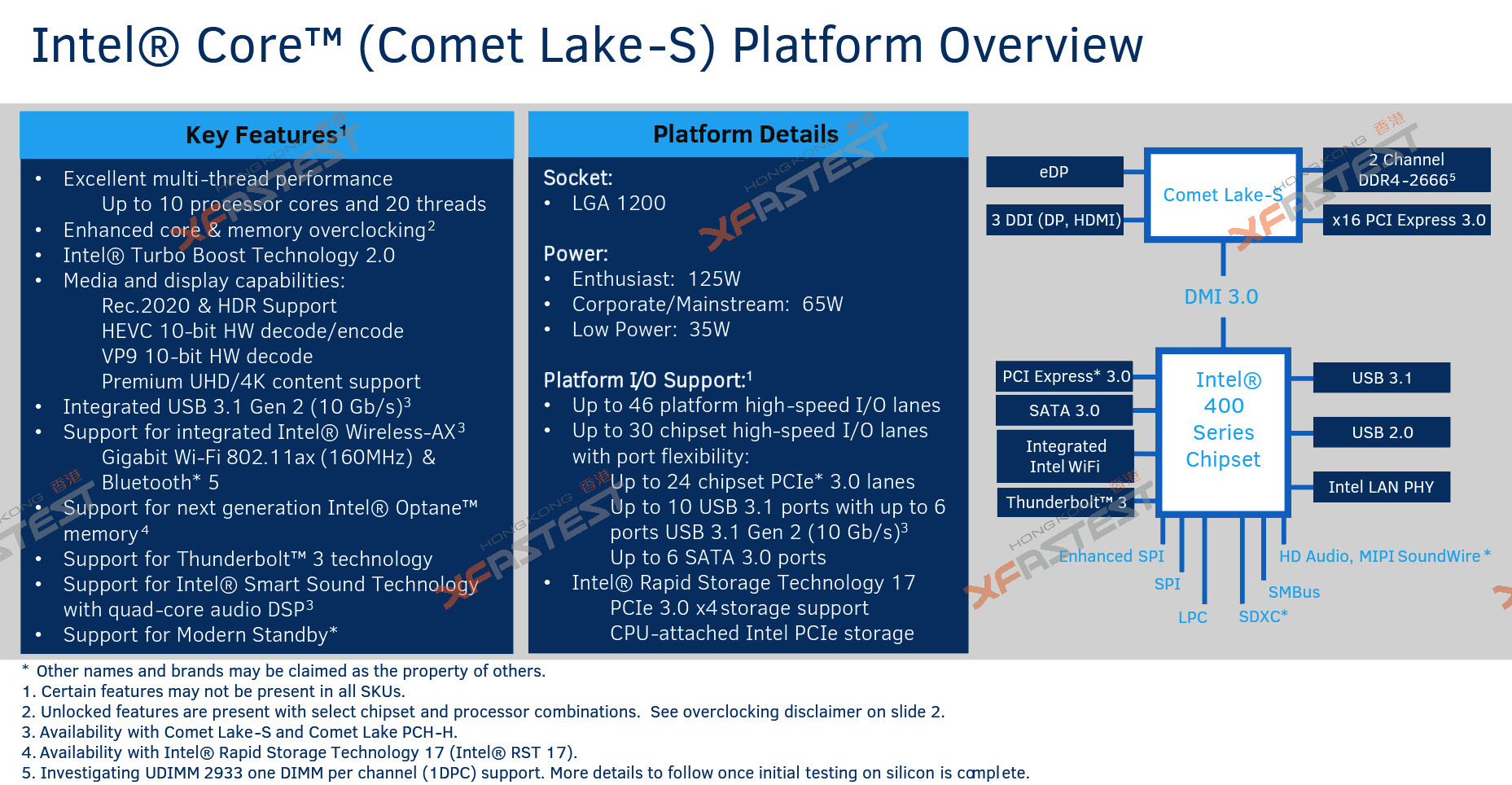
The new platform combines a "Comet Lake" processor with an Intel 400-series PCH, which talk to each other over DMI 3.0, which offers comparable bandwidth PCI-Express 3.0 x4. The AMD "Valhalla" platform implements PCI-Express 4.0 x4 between the SoC and X570 chipset. The platform's main PCI-Express x16 slot will remain gen 3.0.

Intel appears to have put much of its efforts into improving its 14 nanometer node one last time, and increasing core-counts with the introduction of a new 10-core silicon that does away with iGPU. With its "Skylake" core IPC within 5% of that of "Zen 2," and gaming performance leadership still held onto by a hair's breadth, Intel will focus on bolstering multi-thread performance by enabling HyperThreading on even its Core i5 and Core i3 desktop processor models, while providing more cores to the Dollar compared to its 9th generation "Coffee Lake Refresh."

The Core i3 series will be 4-core/8-thread, the Core i5 series 6-core/12-thread, the Core i7 series 8-core/16-thread, and the flagship Core i9 series 10-core/20-thread. Intel will leverage its refined 14 nm node to increase clock-speeds across the board, with its 10-core silicon having a TDP rating of 125 W, and not the 105 W we saw the other day. The Gen 9.5 iGPU on the 4/6/8-core models will be bolstered with more features via software, and be branded under the UHD 700-series.

With its mainstream desktop platform embattled, Intel will try to appease the PC enthusiast crowd by launching a new HEDT (high-end desktop) platform based on "Cascade Lake," codenamed "Glacial Falls," by Q4-2019. The new 14 nm "Cascade Lake-X" processor will be compatible with existing X299 chipset motherboards via a BIOS update, offer CPU core-counts of up to 18, TDP of up to 165 W, and increased performance via higher clock-speeds. It will compete with AMD's existing 2nd generation Ryzen Threadripper family. AMD's plans for a 3rd generation Threadripper based on the "Rome" MCM is on the back-burner even if not dead, with the company focusing on making sure it sells the high-margin 2nd generation EPYC processor in adequate volumes.
Source: XFastest
Add your own comment

98 Comments on Intel "Comet Lake" Not Before 2020, "Ice Lake-S" Not Before Q3-2020, Roadmap Suggests

#76
oxidized
Chloe PriceExactly, this is why many user is switching to AMD. Better prices, better multithreaded performance. Intel has better singlecore IPC but hey, it's 2019, not 2009.. :)
People is switching to AMD because they have a better value overall, no doubt, and they're driven by this GINORMOUS hype behind the underdog, as always people sympathize for the underdog and they're ultra happy if they manage to come out on top or close to to the opponent, especially if this opponent is intel.
londisteFrequency does seem to be more a manufacturing process issue rather than architecture at this point. Efficiency curve gets really-really bad somewhere around 4.4-4.5GHz using both GF/TSMC 14/12nm as well as TSMC 7nm. Intel's 14nm is kind of an extra step ahead when it comes to frequency but it is not that much and they have had a long time to fine-tune it.

As far as architecture goes, Intel will follow the same ideas AMD has - more cache, wider CPU. We'll see what happens after that.
Yeah but don't forget they switched to TSMC, and they're nothing like trash GloFo, and as of now the differences are yet to be seen, intel has always or pretty much, in the latest 15 years had the best silicon possible, and that's also part of why intel was so much above AMD back then, and for the same reason they still have a clear advantage in frequency which puts them ahead in gaming and most of single threaded applications. Hopefully they won't because i never thought the answer was more core, or splitting the dies in different parts, don't forget intel has a much older architecture and they still keep up, or more than just keep up, they have nothing to learn when it comes to architectures.
Posted on Reply
#77
Ruru
Trepie
oxidizedPeople is switching to AMD because they have a better value overall, no doubt, and they're driven by this GINORMOUS hype behind the underdog, as always people sympathize for the underdog and they're ultra happy if they manage to come out on top or close to to the opponent, especially if this opponent is intel.
I bought my 2600 in january, not with hype... I had a 5820K before and I like this more.

I'm happy that AMD can trade blows with Intel, last time was when they released Athlon 64, tho back then Pentium 4 got knocked out..
Posted on Reply
#78
londiste
Chloe PriceI bought my 2600 in january, not with hype... I had a 5820K before and I like this more.
Arent 2600 and 5820K pretty much equal in terms of performance? 2600 should be maybe 5% faster?
Posted on Reply
#79
oxidized
Chloe PriceI bought my 2600 in january, not with hype... I had a 5820K before and I like this more.

I'm happy that AMD can trade blows with Intel, last time was when they released Athlon 64, tho back then Pentium 4 got knocked out..
2014 vs 2018 CPU...Surprised it only beats that 5% or something.
londiste13% IPC improvement AMD claims seems to be about right for the most painful areas (games and AVX productivity mainly). This is simply excellent.
Memory latency getting worse was very much a concious decision. They did not have to build - for example desktop - CPUs this way. This is simply a tradeoff for consolidating the chip manufacturing across the entire range of CPUs.
13% IPC improvement 2000 to 3000? Are you sure? I mean i read a few benchmarks, but it didn't really look even half of that...
Posted on Reply
#81
Kaotik
There is no "Ice Lake-S". Desktop isn't getting Ice Lake, after Comet Lake there will be Rocket Lake which will still be 14nm. Earliest chance for 10nm on desktop is 2022, but who knows, they might just skip 10nm altogether on desktop and go for 7nm instead.
Posted on Reply
#82
phanbuey
dicktracy3900x has brutal temps at merely stock clock. 3950x? Forget it about it... 7nm doesn't look like the magic pill that allows high core counts with high clock speeds. I can now see why Threadripper got axed for this year's roadmap... wait for 7nm+.
the 3600x and the 3700x have similar temps, so I don't think the additional cores are going to make that much of a difference.
Posted on Reply
#84
Ruru
Trepie
oxidized2014 vs 2018 CPU...Surprised it only beats that 5% or something.
I'm not continuing this shit when I'm answering a troll. I hope nobody else will also do that.

e: And you have a 2600K, that's hella ancient!
Posted on Reply
#85
oxidized
Chloe PriceI'm not continuing this shit when I'm answering a troll. I hope nobody else will also do that.

e: And you have a 2600K, that's hella ancient!
You people are obsessed with trolls...Why should i be trolling, and what's my 2600K got to do with it?
Posted on Reply
#86
efikkan
londisteLooking at AMD roadmap, Zen2 > Zen3 should be more akin to Ryzen 1000 > 2000. Optimization, better efficiency, perhaps slight shrink thanks to changed manufacturing process but no big jump in performance (small one, definitely).
AMD have stated that we shouldn't expect large improvements in single thread performance in Zen 3.
I hope this doesn't mean that the successors will be smaller and smaller "tweaks".
londisteNote that I said for the most painful areas. Benchmarks do show considerable IPC increase, for example:
www.sweclockers.com/test/27760-amd-ryzen-9-3900x-och-7-3700x-matisse/28#contenttechreport
While Zen 2 is certainly a good step up in IPC over Zen(1), I think people are stretching the "IPC" term too far these days. IPC, if it still means anything, is an approximation of the CPU's throughput of instructions across a wide range of workloads, using the same instructions of course, and the IPC doesn't "change" based on the workload, and it should of course be single thread. I do wish for a standardized measure of performance to succeed IPC, because IPC is strictly about instructions, not performance. Take for example SIMD like AVX, which is fewer larger instructions which does huge chunks of work.
Posted on Reply
#87
bug
efikkanAMD have stated that we shouldn't expect large improvements in single thread performance in Zen 3.
I hope this doesn't mean that the successors will be smaller and smaller "tweaks".
If you have followed the industry, you'd know every major architecture is followed by ~5 years of tweaks and refinements. Athlon was refined into AthlonXP (under their various names), Athlon64 moved the memory controller onto the CPU die and it was refined into Athlon X2/4. Core was introduced on mobile, it moved to the desktop as Core 2, received its significant tweaks till Sandy Bridge and little else after that (the focus has shifted back to mobile).
Imho, if you go Zen2, you're getting 75-80% of what Zen will ever offer.
Posted on Reply
#88
efikkan
bugIf you have followed the industry, you'd know every major architecture is followed by ~5 years of tweaks and refinements. Athlon was refined into AthlonXP (under their various names), Athlon64 moved the memory controller onto the CPU die and it was refined into Athlon X2/4. Core was introduced on mobile, it moved to the desktop as Core 2, received its significant tweaks till Sandy Bridge and little else after that (the focus has shifted back to mobile).
Imho, if you go Zen2, you're getting 75-80% of what Zen will ever offer.
Well, I have followed the industry enough to know that you're wrong.
Intel and Nvidia have been steadily pushing out new architectures every ~2-3 years, and having 2-3 different designs in different stages of development at any time, up until Intel hit a snag with 10nm.

Intel:
2006: Conroe
2009: Nehalem
2011: Sandy Bridge
2013: Haswell
2015: Skylake
2019: Ice Lake (only partial)

Nvidia:
2006: Tesla
(2008: Tesla 2.0 (refinement))
2010: Fermi
2012: Kepler
2014: Maxwell
(2016: Pascal)
2017: Volta
(2018: Turing)

AMD:
2003: K8
2007: K10
2011: Bulldozer
2017: Zen
(2019: Zen 2)
(2020?: Zen 3)

I could also have mentioned AMD GPUs, but you all know how that will look.
Posted on Reply
#89
londiste
efikkanWhile Zen 2 is certainly a good step up in IPC over Zen(1), I think people are stretching the "IPC" term too far these days. IPC, if it still means anything, is an approximation of the CPU's throughput of instructions across a wide range of workloads, using the same instructions of course, and the IPC doesn't "change" based on the workload, and it should of course be single thread. I do wish for a standardized measure of performance to succeed IPC, because IPC is strictly about instructions, not performance. Take for example SIMD like AVX, which is fewer larger instructions which does huge chunks of work.
While you are technically correct and I too still cringe when reading or typing IPC in this context, it has become the de-facto term for relative single-core performance at the same clock speed.
Posted on Reply
#90
Aerpoweron
Don't forget Intel already has 10nm CPUs. They are the best they can do for now, and i don't want to know the yields.

It will take some time until the 10nm CPUs can surpass the very good optimized 14nm CPUs. And each process shrink comes with it's own adavantages and disadvantages.
Intel might have a heat issue for higher frequency CPUs with 14nm already. And going for 10nm this might get worse.

We need CPUs made out of carbon (Diamond in that case) which has superior heat transfer capabilities over silicon. But that is way into the future, and how do you cut these things efficiently?
Posted on Reply
#91
londiste
Might have? Intel's 14nm is not magic and efficiency curve is clearly going upwards at the same 4.2-4.3 GHz mark that AMD gets from TMSC. The only difference seems to be that it does not curve upwards that aggressively, making it possible to realistically have 5 GHz or a little above.
Posted on Reply
#92
efikkan
londisteWhile you are technically correct and I too still cringe when reading or typing IPC in this context, it has become the de-facto term for relative single-core performance at the same clock speed.
Even if we accept that the term is applied loosely as "performance per clock", it should still be workload independent. You should never take a single benchmark and extrapolate IPC by dividing by clock, and it should always be single thread. And especially not use trash like Geekbench and Cinebench, which may not even run the same code on different CPUs. And then all kinds of boosting must be completely disabled, of course.
AerpoweronDon't forget Intel already has 10nm CPUs. They are the best they can do for now, and i don't want to know the yields.

It will take some time until the 10nm CPUs can surpass the very good optimized 14nm CPUs. And each process shrink comes with it's own adavantages and disadvantages.
Intel might have a heat issue for higher frequency CPUs with 14nm already. And going for 10nm this might get worse.
Ice Lake-U and Ice Lake-Y is still on the "first gen" 10nm, the same as the disastrous launch of Cannon Lake last year. So in a year they've managed to go from nearly no working chips to "acceptable" volumes to ship a limited lineup, this is still without changing the gates or materials of the node. Just two months ago Intel "promised" to ship Ice Lake-SP on 10nm+ in Q2 2020, we'll see if they change their mind again, but at least this will be a "second generation" 10 nm node.

Even with Intel's older estimates, they didn't expect 10nm to outperform 14nm++ until 10nm+ or even 10nm++, but they were surely banking on launching Sunny Cove on 10nm with its good IPC gains to compensate for slightly lower boost clocks.

But as you are saying, node shrinks comes with disadvantages too. Different parts of the design can be shrunk at different rates, and different parts needs to be closer together for latency issues etc. There is also the issue of thermal density, which is already a problem for Intel at 14nm. Even AMD have stated that they expect future nodes to offer lower clocks, so we are probably at or close to the peak of what this type of technology can provide.

The only way forward is more IPC, and to keep the clocks within the "sweetspot".
AerpoweronWe need CPUs made out of carbon (Diamond in that case) which has superior heat transfer capabilities over silicon. But that is way into the future, and how do you cut these things efficiently?
We'll see, but not in the next five years.
Posted on Reply
#93
bug
efikkanWell, I have followed the industry enough to know that you're wrong.
Intel and Nvidia have been steadily pushing out new architectures every ~2-3 years, and having 2-3 different designs in different stages of development at any time, up until Intel hit a snag with 10nm.

Intel:
2006: Conroe
2009: Nehalem
2011: Sandy Bridge
2013: Haswell
2015: Skylake
2019: Ice Lake (only partial)

Nvidia:
2006: Tesla
(2008: Tesla 2.0 (refinement))
2010: Fermi
2012: Kepler
2014: Maxwell
(2016: Pascal)
2017: Volta
(2018: Turing)

AMD:
2003: K8
2007: K10
2011: Bulldozer
2017: Zen
(2019: Zen 2)
(2020?: Zen 3)

I could also have mentioned AMD GPUs, but you all know how that will look.
Ok, we say "architecture", but we mean different things.
Posted on Reply
#94
B-Real
oxidizedPeople is switching to AMD because they have a better value overall, no doubt, and they're driven by this GINORMOUS hype behind the underdog, as always people sympathize for the underdog and they're ultra happy if they manage to come out on top or close to to the opponent, especially if this opponent is intel.
It's funny, as because of this, people would switch to AMD from NV, as they are the underdog there too, but that's not happening. More important is they made big steps forward in the CPU segment, have better price/performance and power draw/performance numbers, and they just do better in workloads then much pricier Intels.
Posted on Reply
#95
medi01
efikkanIntel:
2006: Conroe
2009: Nehalem
2011: Sandy Bridge
2013: Haswell
2015: Skylake
2019: Ice Lake (only partial)
107,100 employees
efikkanNvidia:
2006: Tesla
(2008: Tesla 2.0 (refinement))
2010: Fermi
2012: Kepler
2014: Maxwell
(2016: Pascal)
2017: Volta
(2018: Turing)
11',528 employees

together vs
efikkanAMD:
2003: K8
2007: K10
2011: Bulldozer
2017: Zen
(2019: Zen 2)
(2020?: Zen 3)
10,500 employees

What could possibly go wrong, hm? How come AMD doesn't beat them on number of architectures per decade?
Mystery...
Posted on Reply
#96
Unregistered
btarunrZen3 on-track for Computex 2020. They'll use 7 nm EUV to clock those processors to Kingdom Come.
I would like you to explain to us how AMD is supposed to do that? According to Anandtech, early reports of 7nm EUV will offer "~8% lower power consumption at the same complexity and frequency (between 6% and 12% to be more precise)". Which makes sense, since the transistor density increases by only 20%. AMD themselves have defined Zen 3 as iterative through their own roadmap, which makes complete sense within the context of a small node shrink.
oxidized13% IPC improvement 2000 to 3000? Are you sure? I mean i read a few benchmarks, but it didn't really look even half of that...
Yes, IPC increased by 13%. Frequency improved around ~5% as well.
#97
oxidized
B-RealIt's funny, as because of this, people would switch to AMD from NV, as they are the underdog there too, but that's not happening. More important is they made big steps forward in the CPU segment, have better price/performance and power draw/performance numbers, and they just do better in workloads then much pricier Intels.
And they did in fact, some even switched from nvidia to AMD even if they already knew they were getting an overall worse product, ofc 1080Ti and 2080Ti users would never be able to do that. I totally agree, they made HUGE steps in the CPU segment, and they win in some of the workloads, but it automatically becomes "in all the workloads" because everyone is so hyped and roots for the underdog, just because it's the underdog, but don't forget they have everything and everyone on their side atm, and i really hope this isn't the best they can do.
Posted on Reply
#98
efikkan
bugOk, we say "architecture", but we mean different things.
Respectfully, I can't speak for you, but when I say architecture, I mean architecture.

No one who knows what they're talking about would dispute that Haswell and Skylake are different architectures from Sandy Bridge, despite offering a total gain of ~15% IPC. It's the underlying design which is the qualifier, not a specific performance metric. If that were the case, then Bulldozer wouldn't qualify as a new architecture since it's worse in some metrics than K10. I've criticized Haswell and Skylake plenty, not because they are bad, but because I think they don't go far enough in "useful" improvements. They do offer massive improvements in AVX, and better multicore scaling, both of which is good, but they offer little in IPC gains and "waste" silicon on special acceleration.

-----

Intel's current heat and thermal density problems are because they push the clocks to the extreme. Even the 8-core Coffee Lake with the (pointless) integrated GPU is ~174mm², meaning even at 14nm Intel could have made the cores ~10-20% larger, if the increased core side supplied enough IPC gains to run at a more sensible clock speed. I've said it many times before, this is Intel's lack of planning. They could have easily developed Sunny Cove for 14nm if the planning started early enough, or they could at least brought some improvements like in Cannon Lake and expanded upon that.
Posted on Reply
Add your own comment
Nov 23rd, 2026 20:40 CST change timezone

New Forum Posts

Popular Reviews

TPU on YouTube

Controversial News Posts