Wednesday, April 8th 2020

x86 Lacks Innovation, Arm is Catching up. Enough to Replace the Giant?
Intel's x86 processor architecture has been the dominant CPU instruction set for many decades, since IBM decided to put the Intel 8086 microprocessor into its first Personal Computer. Later, in 2006, Apple decided to replace their PowerPC based processors in Macintosh computers with Intel chips, too. This was the time when x86 became the only option for the masses to use and develop all their software on. While mobile phones and embedded devices are mostly Arm today, it is clear that x86 is still the dominant ISA (Instruction Set Architecture) for desktop computers today, with both Intel and AMD producing processors for it. Those processors are going inside millions of PCs that are used every day. Today I would like to share my thoughts on the demise of the x86 platform and how it might vanish in favor of the RISC-based Arm architecture.
Both AMD and Intel as producer, and millions of companies as consumer, have invested heavily in the x86 architecture, so why would x86 ever go extinct if "it just works"? The answer is that it doesn't just work.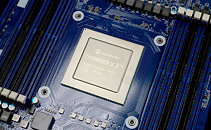 Comparing x86 to Arm
The x86 architecture is massive, having more than a thousand instructions, some of which are very complex. This approach is called Complex Instruction Set Computing (CISC). Internally, these instructions are split into micro-ops, which further complicates processor design. Arm's RISC (Reduced Instruction Set Computing) philosophy is much simpler, and intentionally so. The design goal here is to build simple designs that are easy to manage, with a focus on power efficiency, too. If you want to learn more, I would recommend reading this. It is a simple explanation of differences and what design goals each way achieves. However, today this comparison is becoming pointless as both design approaches copy from each other and use the best parts of each other. Neither architecture is static, they are both constantly evolving. For example Intel invented the original x86, but AMD later added support for 64-bit computing. Various extensions like MMX, SSE, AVX and virtualization have addressed specific requirements for the architecture to stay modern and performing. On the ARM side, things have progressed, too: 64-bit support and floating point math support were added, just like SIMD multimedia instructions and crypto acceleration.
Licensing
Being originally developed by Intel, the x86 ISA is a property of Intel Corporation. To use its ISA, companies such as AMD and VIA sign a licensing agreement with Intel to use the ISA for an upfront fee. Being that Intel controls who can use its technology, they decide who will be able to build an x86 processor. Obviously they want to make sure to have as little competition as possible. However, another company comes into play here. Around 1999, AMD developed an extension to x86, called x86-64 which enables the 64-bit computing capabilities that we all use in our computers. A few years later the first 64-bit x86 processors were released and took the market by storm, with both Intel and AMD using the exact same x86-64 extensions for compatibility. This means that Intel has to license the 64-bit extension from AMD, and Intel licenses the base x86 spec to AMD. This is the famous "cross-licensing agreement" in which AMD and Intel decided to give each other access to technology so both sides have benefits, because it wouldn't be possible to build a modern x86 CPU without both.
Arm's licensing model, on the other hand, is completely different. Arm will allow anyone to use its ISA, as long as that company pays a [very modest] licensing cost. There is an upfront fee which the licensee pays, to gain a ton of documentation and the rights to design a processor based on the Arm ISA. Once the final product is shipped to customers, Arm charges a small percentage of royalty for every chip sold. The licensing agreement is very flexible, as companies can either design their cores from scratch or use some predefined IP blocks available from Arm.
Software Support
The x86 architecture is today's de facto standard for high-performance applications—every developers creates software for it, and they have to, if they want to sell it. In the open source world, things are similar, but thanks to the openness of that whole ecosystem, many developers are embracing alternative architectures, too. Popular Linux distributions have added native support for Arm, which means if you want to run that platform you won't have to compile every piece of software yourself, but you're free to install ready-to-use binary packages, just like on the other popular Linux distributions. Microsoft only recently started supporting Arm with their Windows-on-Arm project that aims to bring Arm-based devices to the hands of millions of consumers. Microsoft already had a project called Windows RT, and its successor, Windows 10 for ARM, which tried to bring Windows 8 editions to Arm CPU.
Performance
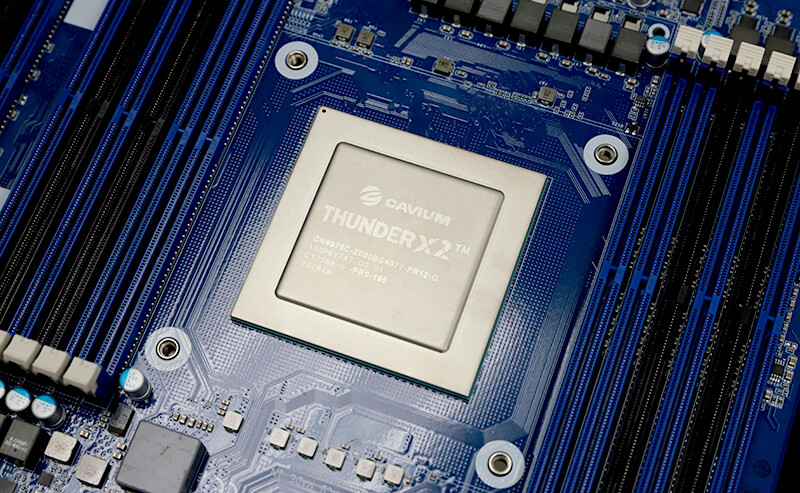
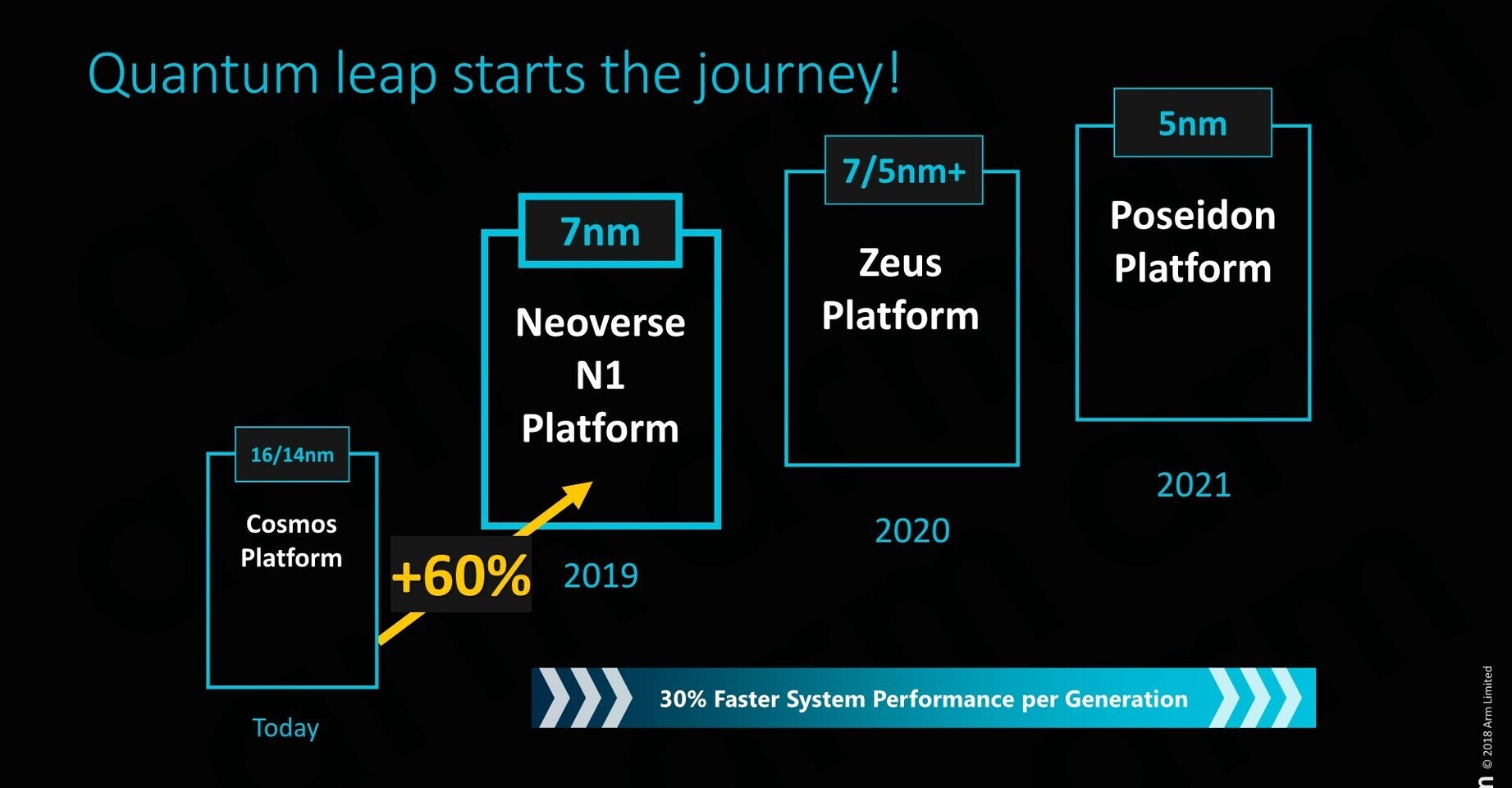
The Arm architecture is most popular for low-powered embedded and portable devices, where it can win with its energy-efficient design. That's why high performance has been a problem until recently. For example Marvell Technology Group (ThunderX processors) started out with first-generation Arm designs in 2014. Those weren't nearly as powerful as the x86 alternatives, however, it gave the buyers of server CPUs a sign - Arm processors are here. Today Marvell is shipping ThunderX2 processors that are very powerful and offer comparable performance similar to x86 alternatives (Broadwell and Skylake level performance), depending on the workload of course. Next-generation ThunderX3 processors are on their way this year. Another company doing processor design is Ampere Computing, and they just introduced their Altra CPUs, which should be very powerful as well.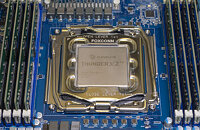 What is their secret sauce? The base of every core is Arm's Neoverse N1 server core, designed to give the best possible performance. The folks over at AnandTech have tested Amazon's Graviton2 design which uses these Neoverse N1 cores and came to an amazing conclusion - the chip is incredibly fast and it competes directly with Intel. Something unimaginable a few years ago. Today we already have decent performance needed to compete with Intel and AMD offerings, but you might wonder why it matters so much since there are options already in the form of Xeon and EPYC CPUs. It does matter, it creates competition, and competition is good for everyone. Cloud providers are looking into deploying these processors as they promise to offer much better performance per dollar, and higher power efficiency—power cost is one of the largest expenses for these companies.
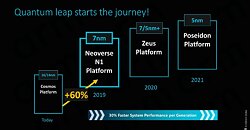 Arm isn't sitting idle, they are doing a lot of R&D on their Neoverse ecosystem with next-generation cores almost ready. Intel's innovation has been stagnant and, while AMD caught up and started to outrun them, it is not enough to keep x86 safe from a joint effort of Arm and startup companies that are gathering incredible talent. Just take a look at Nuvia Inc. which is bringing some of the best CPU architects in the world together: Gerard Williams III, Manu Gulati, John Bruno are all well-known names in the industry, and they are leading the company that is promising to beat everything with its CPU's performance. You can call these "just claims", but take a look at some of the products like Apple's A13 SoC. Its performance in some benchmarks is comparable to AMD's Zen 2 cores and Intel's Skylake, showing how far the Arm ecosystem has come and that it has the potential to beat x86 at its own game.
Performance-per-Watt disparity between Arm and x86 define fiefdoms between the two. Arm chips offer high performance/Watt in smartphone and tablet form-factors where Intel failed to make a dent with its x86-based "Medfield" SoCs. Intel, on the other hand, consumes a lot more power, to get a lot more work gone at larger form-factors. It's like comparing a high-speed railway locomotive to a Tesla Model X. Both do 200 km/h, but the former pulls in a lot more power, and transports a lot more people. Recent attempts at scaling Arm to an enterprise platform met with limited success. A test server based on a 64-core Cavium ThunderX 2 pulls 800 Watts off the wall, which isn't much different from high core-count Xeons. At least, it doesn't justify the cost for enterprise customers to re-tool their infrastructure around Arm. Enterprise Linux distributions like Novell or RHEL haven't invested too much in scalar Arm-based servers (besides microservers), and Microsoft has no Windows Server for Arm.
Apple & Microsoft
If Apple's plan to replace Intel x86 CPUs in its products realizes, then x86 lost one of the bigger customers. Apple's design teams have proven over the years that they can design some really good cores, the Ax lineup of processors (A11, A12 and most recently A13) is testament to that. The question remains however, how well can they scale such a design and how quickly they can adapt the ecosystem for it. With Apple having a tight grip on its App Store for Mac, it wouldn't be too difficult for them to force developers to ship an Arm-compatible binary, too, if they want to keep their product on App Store.
On the Microsoft Windows side, things are different. There is no centralized Store—Microsoft has tried, and failed. Plenty of legacy software exists that is developed for x86 only. Even major developers of Windows software are currently not providing Arm binaries. For example Adobe's Creative Suite, which is the backbone of the creative industry, is x86 only. Game developers are busy enough learning DirectX 12 or Vulkan, they sure don't want to start developing titles with Arm support, too—in addition to Xbox and Playstation. An exception is the Microsoft Office suite, which is available for Windows RT, and is fully functional on that platform. A huge percentage of Windows users are tied to their software stack for either work or entertainment, so the whole software development industry would need to pay more attention to Arm and offer their software on that platform as well. However, that seems impossible for now. Besides Microsoft Edge, there is not even a 3rd party web-browser available. Firefox is in beta, Google's Chrome has seen some development, but there is no public release. That's probably why Microsoft went with the "emulation" route, unlike Apple. According to Microsoft, applications compiled for the Windows platform can run "unmodified, with good performance and a seamless user experience". This emulation does not support 64-bit applications at this time. Microsoft's Universal Windows Platform (UWP) "Store" apps can easily be ported to run on Arm, because the API was designed for that from the ground up.
Server & Enterprise
The server market is important for x86—it has the best margins, high volume and is growing fast, thanks to cloud computing. Historically, Intel has held more than 95% of server shipments with its Xeon lineup of CPUs, while AMD occupied the rest of that, Arm really played no role here. Recently AMD started the production of EPYC processors that deliver good performance, run power efficient and have good pricing, making a big comeback and gnawing away at Intel's market share. Most of the codebases in that sector should be able to run on Arm, and even supercomputers can use the Arm ISA, where the biggest example is the Fugaku pre-exascale supercomputer. By doing the custom design of Arm CPUs, vendors will make x86 a thing of the past.
Conclusion
Arm-based processors are lower-cost than Intel and AMD based solutions, while having comparable performance, and consuming less energy. At least that's the promise. I think that servers are the first line where x86 will slowly phase away, and consumer products are second, with Apple pursuing custom chips and Microsoft already offering Arm-based laptops.
On the other hand, eulogies of x86 tend to be cyclical. Just when it appears that Arm has achieved enough performance per Watt to challenge Intel in the ultra-compact client-computing segments, Intel pushes back. Lakefield is an ambitious effort by Intel to take on Arm by combining high-efficiency and high-performance cores onto a single chip, along with packaging innovations relevant to ultra-portables. When it comes out, Lakefield could halt Arm in its tracks as it seeks out high-volume client-computing segments such as Apple's MacBooks. Lakefield has the potential to make Apple second-guess itself. It's very likely that Apple's forward-looking decisions were the main reason Intel sat down to design it.
So far, Arm ISA is dominant in the mobile space. Phones manufactured by Samsung, Apple, Huawei and many more feature a processor that has an Arm-based CPU inside. Intel tried to get into the mobile space with its x86 CPUs but failed due to their inefficiency. The adoption rate was low, and some manufacturers like Apple preferred to do custom designs. However, SoftBank didn't pay $31 billion to acquire ARM just so it could eke out revenues from licensing the IP to smartphone makers. The architecture is designed for processors of all shapes and sizes. Right now it takes companies with complete control over their product stack, such as Amazon and Apple, to get Arm to a point where it is a viable choice in the desktop and server space. By switching to Arm, vendors could see financial benefit as well. It is reported that Apple could see reduction in processor prices anywhere from 40% to 60% by going custom Arm. Amazon offers Graviton 2 based instances that are lower-priced compared to Xeon or EPYC based solutions. Of course complete control of both hardware and software comes with its own benefits, as a vendor can implement any feature that users potentially need, without a need to hope that a 3rd party will implement them. Custom design of course has some added upfront development costs, however, the vendor is later rewarded with lower cost per processor.
Both AMD and Intel as producer, and millions of companies as consumer, have invested heavily in the x86 architecture, so why would x86 ever go extinct if "it just works"? The answer is that it doesn't just work.
The x86 architecture is massive, having more than a thousand instructions, some of which are very complex. This approach is called Complex Instruction Set Computing (CISC). Internally, these instructions are split into micro-ops, which further complicates processor design. Arm's RISC (Reduced Instruction Set Computing) philosophy is much simpler, and intentionally so. The design goal here is to build simple designs that are easy to manage, with a focus on power efficiency, too. If you want to learn more, I would recommend reading this. It is a simple explanation of differences and what design goals each way achieves. However, today this comparison is becoming pointless as both design approaches copy from each other and use the best parts of each other. Neither architecture is static, they are both constantly evolving. For example Intel invented the original x86, but AMD later added support for 64-bit computing. Various extensions like MMX, SSE, AVX and virtualization have addressed specific requirements for the architecture to stay modern and performing. On the ARM side, things have progressed, too: 64-bit support and floating point math support were added, just like SIMD multimedia instructions and crypto acceleration.
Licensing
Being originally developed by Intel, the x86 ISA is a property of Intel Corporation. To use its ISA, companies such as AMD and VIA sign a licensing agreement with Intel to use the ISA for an upfront fee. Being that Intel controls who can use its technology, they decide who will be able to build an x86 processor. Obviously they want to make sure to have as little competition as possible. However, another company comes into play here. Around 1999, AMD developed an extension to x86, called x86-64 which enables the 64-bit computing capabilities that we all use in our computers. A few years later the first 64-bit x86 processors were released and took the market by storm, with both Intel and AMD using the exact same x86-64 extensions for compatibility. This means that Intel has to license the 64-bit extension from AMD, and Intel licenses the base x86 spec to AMD. This is the famous "cross-licensing agreement" in which AMD and Intel decided to give each other access to technology so both sides have benefits, because it wouldn't be possible to build a modern x86 CPU without both.
Arm's licensing model, on the other hand, is completely different. Arm will allow anyone to use its ISA, as long as that company pays a [very modest] licensing cost. There is an upfront fee which the licensee pays, to gain a ton of documentation and the rights to design a processor based on the Arm ISA. Once the final product is shipped to customers, Arm charges a small percentage of royalty for every chip sold. The licensing agreement is very flexible, as companies can either design their cores from scratch or use some predefined IP blocks available from Arm.
Software Support
The x86 architecture is today's de facto standard for high-performance applications—every developers creates software for it, and they have to, if they want to sell it. In the open source world, things are similar, but thanks to the openness of that whole ecosystem, many developers are embracing alternative architectures, too. Popular Linux distributions have added native support for Arm, which means if you want to run that platform you won't have to compile every piece of software yourself, but you're free to install ready-to-use binary packages, just like on the other popular Linux distributions. Microsoft only recently started supporting Arm with their Windows-on-Arm project that aims to bring Arm-based devices to the hands of millions of consumers. Microsoft already had a project called Windows RT, and its successor, Windows 10 for ARM, which tried to bring Windows 8 editions to Arm CPU.
Performance
The Arm architecture is most popular for low-powered embedded and portable devices, where it can win with its energy-efficient design. That's why high performance has been a problem until recently. For example Marvell Technology Group (ThunderX processors) started out with first-generation Arm designs in 2014. Those weren't nearly as powerful as the x86 alternatives, however, it gave the buyers of server CPUs a sign - Arm processors are here. Today Marvell is shipping ThunderX2 processors that are very powerful and offer comparable performance similar to x86 alternatives (Broadwell and Skylake level performance), depending on the workload of course. Next-generation ThunderX3 processors are on their way this year. Another company doing processor design is Ampere Computing, and they just introduced their Altra CPUs, which should be very powerful as well.

Performance-per-Watt disparity between Arm and x86 define fiefdoms between the two. Arm chips offer high performance/Watt in smartphone and tablet form-factors where Intel failed to make a dent with its x86-based "Medfield" SoCs. Intel, on the other hand, consumes a lot more power, to get a lot more work gone at larger form-factors. It's like comparing a high-speed railway locomotive to a Tesla Model X. Both do 200 km/h, but the former pulls in a lot more power, and transports a lot more people. Recent attempts at scaling Arm to an enterprise platform met with limited success. A test server based on a 64-core Cavium ThunderX 2 pulls 800 Watts off the wall, which isn't much different from high core-count Xeons. At least, it doesn't justify the cost for enterprise customers to re-tool their infrastructure around Arm. Enterprise Linux distributions like Novell or RHEL haven't invested too much in scalar Arm-based servers (besides microservers), and Microsoft has no Windows Server for Arm.
Apple & Microsoft
If Apple's plan to replace Intel x86 CPUs in its products realizes, then x86 lost one of the bigger customers. Apple's design teams have proven over the years that they can design some really good cores, the Ax lineup of processors (A11, A12 and most recently A13) is testament to that. The question remains however, how well can they scale such a design and how quickly they can adapt the ecosystem for it. With Apple having a tight grip on its App Store for Mac, it wouldn't be too difficult for them to force developers to ship an Arm-compatible binary, too, if they want to keep their product on App Store.
On the Microsoft Windows side, things are different. There is no centralized Store—Microsoft has tried, and failed. Plenty of legacy software exists that is developed for x86 only. Even major developers of Windows software are currently not providing Arm binaries. For example Adobe's Creative Suite, which is the backbone of the creative industry, is x86 only. Game developers are busy enough learning DirectX 12 or Vulkan, they sure don't want to start developing titles with Arm support, too—in addition to Xbox and Playstation. An exception is the Microsoft Office suite, which is available for Windows RT, and is fully functional on that platform. A huge percentage of Windows users are tied to their software stack for either work or entertainment, so the whole software development industry would need to pay more attention to Arm and offer their software on that platform as well. However, that seems impossible for now. Besides Microsoft Edge, there is not even a 3rd party web-browser available. Firefox is in beta, Google's Chrome has seen some development, but there is no public release. That's probably why Microsoft went with the "emulation" route, unlike Apple. According to Microsoft, applications compiled for the Windows platform can run "unmodified, with good performance and a seamless user experience". This emulation does not support 64-bit applications at this time. Microsoft's Universal Windows Platform (UWP) "Store" apps can easily be ported to run on Arm, because the API was designed for that from the ground up.
Server & Enterprise
The server market is important for x86—it has the best margins, high volume and is growing fast, thanks to cloud computing. Historically, Intel has held more than 95% of server shipments with its Xeon lineup of CPUs, while AMD occupied the rest of that, Arm really played no role here. Recently AMD started the production of EPYC processors that deliver good performance, run power efficient and have good pricing, making a big comeback and gnawing away at Intel's market share. Most of the codebases in that sector should be able to run on Arm, and even supercomputers can use the Arm ISA, where the biggest example is the Fugaku pre-exascale supercomputer. By doing the custom design of Arm CPUs, vendors will make x86 a thing of the past.
Conclusion
Arm-based processors are lower-cost than Intel and AMD based solutions, while having comparable performance, and consuming less energy. At least that's the promise. I think that servers are the first line where x86 will slowly phase away, and consumer products are second, with Apple pursuing custom chips and Microsoft already offering Arm-based laptops.
On the other hand, eulogies of x86 tend to be cyclical. Just when it appears that Arm has achieved enough performance per Watt to challenge Intel in the ultra-compact client-computing segments, Intel pushes back. Lakefield is an ambitious effort by Intel to take on Arm by combining high-efficiency and high-performance cores onto a single chip, along with packaging innovations relevant to ultra-portables. When it comes out, Lakefield could halt Arm in its tracks as it seeks out high-volume client-computing segments such as Apple's MacBooks. Lakefield has the potential to make Apple second-guess itself. It's very likely that Apple's forward-looking decisions were the main reason Intel sat down to design it.
So far, Arm ISA is dominant in the mobile space. Phones manufactured by Samsung, Apple, Huawei and many more feature a processor that has an Arm-based CPU inside. Intel tried to get into the mobile space with its x86 CPUs but failed due to their inefficiency. The adoption rate was low, and some manufacturers like Apple preferred to do custom designs. However, SoftBank didn't pay $31 billion to acquire ARM just so it could eke out revenues from licensing the IP to smartphone makers. The architecture is designed for processors of all shapes and sizes. Right now it takes companies with complete control over their product stack, such as Amazon and Apple, to get Arm to a point where it is a viable choice in the desktop and server space. By switching to Arm, vendors could see financial benefit as well. It is reported that Apple could see reduction in processor prices anywhere from 40% to 60% by going custom Arm. Amazon offers Graviton 2 based instances that are lower-priced compared to Xeon or EPYC based solutions. Of course complete control of both hardware and software comes with its own benefits, as a vendor can implement any feature that users potentially need, without a need to hope that a 3rd party will implement them. Custom design of course has some added upfront development costs, however, the vendor is later rewarded with lower cost per processor.
217 Comments on x86 Lacks Innovation, Arm is Catching up. Enough to Replace the Giant?
Empires rise and fall. Intel will be next.
I think the Op lacks some foresight too though, saying x86/64 lacks Innovation, AMD will with Intel ram that ideology back in his face within three years IMHO.
Arm will always have it's uses but the push to high end can't go fast enough and MIPS is stealing away their bottom end.
Interesting times.
The broader the purpose of ARM the fatter it will get. Arm laptops are terrible btw.
ARM would require a clean break for desktop computers in a way that Apple has some experience, but Microsoft likely will have to support ARM as a second class citizen for quite some time. Over time they will be able to add support for all the USB devices that need ARM specific drivers, but it's a long road and sure to break compatibility in enough areas that most businesses will continue to choose to keep with x86.
The mention of games is important, too, because consoles are moving to be more entrenched with x86, not less. PC gaming has benefited from the fact that ports now don't require rewriting the game engine to work on a different ISA. I suppose the Nintendo Switch and mobile are the only holdouts, where ARM is mandatory. I suppose the fact that most people use middleware like UE4 and Unity also helps to lay a path towards PCs eventually getting ARM binary support. But it is a sort of chicken and egg situation. Game makers aren't going to waste their time making sure that a game works on Windows on ARM when there aren't even drivers for graphics cards available. There's no hardware support for Windows on ARM outside of specific, mobile-oriented hardware stacks. So there's not even a customer waiting for game support until there is the chance to buy or build an ARM gaming machine. And AMD has little to no motivation to support their graphics cards on ARM. I guess Nvidia has enough of the stack working for their Shield products and for the Switch, but BSD/Linux drivers don't just port over to Windows on ARM. So the hardware isn't there because the driver support isn't there, the games aren't there because the hardware support isn't there, the driver support isn't there because the hardware and games aren't there. I don't see a credible way forward for Windows ARM game support outside of mobile games on the Windows store.
I appreciate the article, and I'm sure that ARM support will trickle into more controlled areas like ARM thin and lights and tablets, or servers with well defined stacks that are most of the way there to supporting ARM anyway, but for actual work and gaming PCs, someone would have to put out full support before there is even remotely a profit motive. I doubt that's going to happen now that game development is x86 first for PC and consoles. The only entry was during the PS3 and 360 days, when code had to be ported between ISAs just to get a port going at all. Now that things are so well aligned around x86, it would take an act of God to get support moving across hardware makers, drivers, software, and games. ARM will push x86 performance forward just because of servers and embedded. x86 is going nowhere for consumer laptops and desktops running Windows.
Practically no games are written with substantial amounts of x86 assembly or intrinsics these days (except perhaps a few uses AVX), so they should ultimately be portable. But having PCs very similar to the consoles is a huge advantage for other reasons, since development kits are not only expensive, but usually not ready years ahead of new consoles. Most games these days use off-the-shelf game engines, and most studios only write high-level code to interface with an engine.
It would be a per case scenario, maybe x86 on consumer grade hardware would be replaced by ARM, but I doubt the industry would make that change.
People always think way too easily of software. Take Windows and the criticism on it for instance. You can write books full of the bugs and minor and major screwups of MS, and of the infinite amount of issues users experience. And yet... it is still the dominant OS. Not just at home... but in enterprise too.
The code base and legacy Windows has is its strength, and I reckon it will remain so especially in a fast moving world such as this. Look at how we respond to changes. The Start Menu. The internet exploded... We don't want that. Its no coincidence that MS turned 180 degrees after the initial Windows 8 release and turned 10 into an improved 7. And if you squint a little bit, those releases we get now... aren't those really just glorified service packs? I think this company is learning quickly that people really are not ready for a paradigm shift at all when it comes to how they use technology. Those tablets and smartphone OS'es are just that. They are on top of other things that also just need to be done, or people just want to do. If you have serious productivity work of any kind, it won't happen on ARM.
And that is just consumer... now Enterprise. Look at what Windows has evolved into over there. A stable release, coupled with a top-end quality cloud service called Azure and all of the legacy and quality they built into Office and connected applications; all migrated and fully compliant with intranet / business environments. They are selling that subscription OS. But its called Azure now, and its booming. At the same time, MS's ARM efforts quickly turn to shit... :P
On a more direct front, AMD also still has their K12 ARM design in reserve, though they haven't had a need to bring it out after the runaway success of Ryzen. If any company was to be in a prime position to evolve with either side (ARM or x86-64), AMD would be it, as they'd also be able to take the console manufacturers with them, considering AMD's well-established Semi-Custom business.
------
At any rate, it'll be impossible for ARM (and it's "more open" cousin RISC-V) to really overtake x86-64 for the same reasons it's more popular than x86-64; the sheer variability between ARM designs. We already see issues in the mobile world where games and apps have issues running consistently across different ARM devices of the same generation, to say nothing of running consistently across older devices ("Your Device is No Longer Supported. Please Upgrade your Device to Continue Using This App").
x86-64 rarely experiences extreme changes between generations partially due to the lack of competitors, but does include support for older instructions, and is also more stable and consistent as a result. While not exactly optimal, it is possible to run even older OS like Win98 and ancient, single-purpose, x86 programs on a modern x86-64 CPU and it'd still run with minor tweaking.
Apple is pretty much the only one that's remotely capable of forcing the software ecosystem to change; but even that is limited to their walled garden. That and dictatorships with a strong technological arm, like China or Russia, who already are trying to reduce reliance on x86 in favor of ARM/RISC-V designs.
What we're more likely to see is heavy emulation. It's currently easier for x86-64 systems to emulate ARM-based software, but not the other way around. Microsoft is leading the way with their Windows on ARM initiative, and I expect others to follow suit. But I don't expect ARM to ever really overtake x86. Both can coexist with their niches; one able to be flexible and hyper-focused, one that remains steady and consistent.
X86 is just a dialect.
And then you have to consider, another point in favor of RISC was simpler compilers. But as the hardware grew stronger, smarter compilers aren't the problem they used to be (though as all things programming, simpler is still better). And then RISC itself isn't what it used to be. I don't know ARM architecture very well, but I'm willing to bet its instruction set isn't as reduced as it was 10-15 years ago.
So I guess what I'm trying to say is there are arguments going both ways.You know him so well :P
I also was amused that the Op went on to do a piece on tech that makes this whole thread a true comedy.
So CXL and genZ tie up and X86 has issues, with the accelerator tech it will bring it hasn't, you know.
There's still a big misunderstanding of what "efficiency" is.
Sure, if you run a PC for few hours and do multiple things: go through TPU forum, watch a movie, play a game, leave it idle while cooking etc, 9900K will use more power than e.g. 9900T or something similarly frugal. And way more than an ULV SoC for laptops or something ARM-based.
However, if you power up a PC, run a 100% load and switch it off, 9900K will use pretty much the same amount of energy any other CPU form it's generation would. It'll just complete the task a lot faster.
Check the last graph here:
www.techpowerup.com/review/intel-core-i9-9900k/16.html
So efficiency is measured differently for e.g. networking devices which run non-stop and for workstations which don't (not all of them anyway).
ARM CPUs aren't magically more efficient. They're just slow.
If you really want to compare, do it against a -U SoC.It's not about compliting for ARM being hard or not. It's about the cost of recompliting everything we need. And more importantly: of supporting and optimizing for both architectures.
If we now ask companies to make the same software for both x86 and ARM, they'll just ask more for it. And software is already way more expensive than hardware (at least in the enterprise segment).
It'll just make computing more complex. Complexity always costs. There's just no gain in this in long term.
There's still a lot that can be done to improve x86 efficiency and flexibility. The heterogeneous architecture idea (e.g. Intel Lakefield) is the most obvious - and for some reason: very underestimated on this forum...
If ARM didn't have big.LITTLE, we probably wouldn't be having this discussion. ARM SoCs would suck just like they did 10 years ago.
And why all of our smartphones and perhaps tablets (here I cannot confirm) are ARM based.
The only x86 segment is the desktop mainstream which actually doesn't see its best times with Intel not moving from its 5-year-old CPU, and VIA only competing with Intel's 7th gen i5 and i3.
I worked at companies that sold intel chips in lab equipment all year long, they sure as shit won't swap to arm , despite wanting iPad control.
Plus, the top two are GPGPU-based.
These are clusters. You have some processing potential in mind and you provide as many cores as you need to fullfil it.
But I commend how you're looking into new ways to support your crazy ideas. :)Because ARM was designed to power these devices.
BTW: your blender is also RISC-based. Make yourself a green tea smoothie - it'll help with all that stress.And puff! Just like that servers and laptops stopped existing.
Likewise, CISC architecture is developed on the basis of Load to Store memory access architecture - which RISC does not have - to maximise register bandwidth, cause RISC does not have alignment issues that come with L2S accessing. Had ARM had L2S now, its native access performance would stop being a feature of the code base.
Intel while there is a misconception that suggest hasn't developed its core architecture apart from simple IPC improvements, have actually made big swings in load to store accesses, essentially freeing any code alignment dependence. Write anything and it profers top notch cache buffering. Thus, it has made the opposite access pattern its core feature, exemption of any alignment penalty.
Intel and AMD has made such attempts to highlight a similar goal that which is, again, groundbreaking and distinct from supercomputer goals. You don't build a supercomputer for branch handling the most accesses by the base computer processor unit, you do it exclusive to computing. However, in client environment, throughput is second to accesses. Both cpu brands have their gpu compute lineups for throughput, the cpu is only relegated to its frontend decoder in future workload projections. In that read ahead decoding, you need L2S and that makes Intel a good cpu despite some form or another of depreceated dsp vector computers might score paper tiger thoroughput numbers, it is a joke Intel/AMD is too scalar to understand.
This is picture perfect performance right out of the box.
Zen+ efficiency was on par with 8-9th gen Core. Zen2 efficiency seems roughly on par with Ice Lake (not a big niche to compare...). Same x86 realm, compatible instruction set and 1/0 bits that need to be switched. Smaller transistors mean less energy. There's really no magic inside.
Intel already has a few more modern architectures. They're just not in the product line you're interested in.