Wednesday, April 8th 2020

x86 Lacks Innovation, Arm is Catching up. Enough to Replace the Giant?
Intel's x86 processor architecture has been the dominant CPU instruction set for many decades, since IBM decided to put the Intel 8086 microprocessor into its first Personal Computer. Later, in 2006, Apple decided to replace their PowerPC based processors in Macintosh computers with Intel chips, too. This was the time when x86 became the only option for the masses to use and develop all their software on. While mobile phones and embedded devices are mostly Arm today, it is clear that x86 is still the dominant ISA (Instruction Set Architecture) for desktop computers today, with both Intel and AMD producing processors for it. Those processors are going inside millions of PCs that are used every day. Today I would like to share my thoughts on the demise of the x86 platform and how it might vanish in favor of the RISC-based Arm architecture.
Both AMD and Intel as producer, and millions of companies as consumer, have invested heavily in the x86 architecture, so why would x86 ever go extinct if "it just works"? The answer is that it doesn't just work.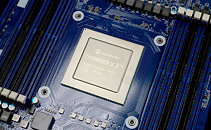 Comparing x86 to Arm
The x86 architecture is massive, having more than a thousand instructions, some of which are very complex. This approach is called Complex Instruction Set Computing (CISC). Internally, these instructions are split into micro-ops, which further complicates processor design. Arm's RISC (Reduced Instruction Set Computing) philosophy is much simpler, and intentionally so. The design goal here is to build simple designs that are easy to manage, with a focus on power efficiency, too. If you want to learn more, I would recommend reading this. It is a simple explanation of differences and what design goals each way achieves. However, today this comparison is becoming pointless as both design approaches copy from each other and use the best parts of each other. Neither architecture is static, they are both constantly evolving. For example Intel invented the original x86, but AMD later added support for 64-bit computing. Various extensions like MMX, SSE, AVX and virtualization have addressed specific requirements for the architecture to stay modern and performing. On the ARM side, things have progressed, too: 64-bit support and floating point math support were added, just like SIMD multimedia instructions and crypto acceleration.
Licensing
Being originally developed by Intel, the x86 ISA is a property of Intel Corporation. To use its ISA, companies such as AMD and VIA sign a licensing agreement with Intel to use the ISA for an upfront fee. Being that Intel controls who can use its technology, they decide who will be able to build an x86 processor. Obviously they want to make sure to have as little competition as possible. However, another company comes into play here. Around 1999, AMD developed an extension to x86, called x86-64 which enables the 64-bit computing capabilities that we all use in our computers. A few years later the first 64-bit x86 processors were released and took the market by storm, with both Intel and AMD using the exact same x86-64 extensions for compatibility. This means that Intel has to license the 64-bit extension from AMD, and Intel licenses the base x86 spec to AMD. This is the famous "cross-licensing agreement" in which AMD and Intel decided to give each other access to technology so both sides have benefits, because it wouldn't be possible to build a modern x86 CPU without both.
Arm's licensing model, on the other hand, is completely different. Arm will allow anyone to use its ISA, as long as that company pays a [very modest] licensing cost. There is an upfront fee which the licensee pays, to gain a ton of documentation and the rights to design a processor based on the Arm ISA. Once the final product is shipped to customers, Arm charges a small percentage of royalty for every chip sold. The licensing agreement is very flexible, as companies can either design their cores from scratch or use some predefined IP blocks available from Arm.
Software Support
The x86 architecture is today's de facto standard for high-performance applications—every developers creates software for it, and they have to, if they want to sell it. In the open source world, things are similar, but thanks to the openness of that whole ecosystem, many developers are embracing alternative architectures, too. Popular Linux distributions have added native support for Arm, which means if you want to run that platform you won't have to compile every piece of software yourself, but you're free to install ready-to-use binary packages, just like on the other popular Linux distributions. Microsoft only recently started supporting Arm with their Windows-on-Arm project that aims to bring Arm-based devices to the hands of millions of consumers. Microsoft already had a project called Windows RT, and its successor, Windows 10 for ARM, which tried to bring Windows 8 editions to Arm CPU.
Performance
The Arm architecture is most popular for low-powered embedded and portable devices, where it can win with its energy-efficient design. That's why high performance has been a problem until recently. For example Marvell Technology Group (ThunderX processors) started out with first-generation Arm designs in 2014. Those weren't nearly as powerful as the x86 alternatives, however, it gave the buyers of server CPUs a sign - Arm processors are here. Today Marvell is shipping ThunderX2 processors that are very powerful and offer comparable performance similar to x86 alternatives (Broadwell and Skylake level performance), depending on the workload of course. Next-generation ThunderX3 processors are on their way this year. Another company doing processor design is Ampere Computing, and they just introduced their Altra CPUs, which should be very powerful as well.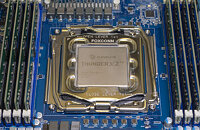 What is their secret sauce? The base of every core is Arm's Neoverse N1 server core, designed to give the best possible performance. The folks over at AnandTech have tested Amazon's Graviton2 design which uses these Neoverse N1 cores and came to an amazing conclusion - the chip is incredibly fast and it competes directly with Intel. Something unimaginable a few years ago. Today we already have decent performance needed to compete with Intel and AMD offerings, but you might wonder why it matters so much since there are options already in the form of Xeon and EPYC CPUs. It does matter, it creates competition, and competition is good for everyone. Cloud providers are looking into deploying these processors as they promise to offer much better performance per dollar, and higher power efficiency—power cost is one of the largest expenses for these companies.
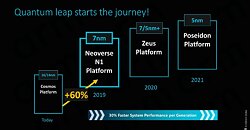 Arm isn't sitting idle, they are doing a lot of R&D on their Neoverse ecosystem with next-generation cores almost ready. Intel's innovation has been stagnant and, while AMD caught up and started to outrun them, it is not enough to keep x86 safe from a joint effort of Arm and startup companies that are gathering incredible talent. Just take a look at Nuvia Inc. which is bringing some of the best CPU architects in the world together: Gerard Williams III, Manu Gulati, John Bruno are all well-known names in the industry, and they are leading the company that is promising to beat everything with its CPU's performance. You can call these "just claims", but take a look at some of the products like Apple's A13 SoC. Its performance in some benchmarks is comparable to AMD's Zen 2 cores and Intel's Skylake, showing how far the Arm ecosystem has come and that it has the potential to beat x86 at its own game.
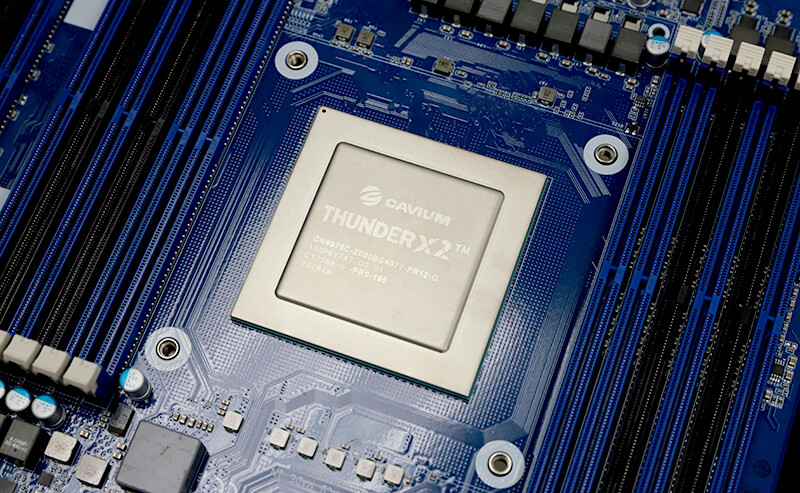
Performance-per-Watt disparity between Arm and x86 define fiefdoms between the two. Arm chips offer high performance/Watt in smartphone and tablet form-factors where Intel failed to make a dent with its x86-based "Medfield" SoCs. Intel, on the other hand, consumes a lot more power, to get a lot more work gone at larger form-factors. It's like comparing a high-speed railway locomotive to a Tesla Model X. Both do 200 km/h, but the former pulls in a lot more power, and transports a lot more people. Recent attempts at scaling Arm to an enterprise platform met with limited success. A test server based on a 64-core Cavium ThunderX 2 pulls 800 Watts off the wall, which isn't much different from high core-count Xeons. At least, it doesn't justify the cost for enterprise customers to re-tool their infrastructure around Arm. Enterprise Linux distributions like Novell or RHEL haven't invested too much in scalar Arm-based servers (besides microservers), and Microsoft has no Windows Server for Arm.
Apple & Microsoft
If Apple's plan to replace Intel x86 CPUs in its products realizes, then x86 lost one of the bigger customers. Apple's design teams have proven over the years that they can design some really good cores, the Ax lineup of processors (A11, A12 and most recently A13) is testament to that. The question remains however, how well can they scale such a design and how quickly they can adapt the ecosystem for it. With Apple having a tight grip on its App Store for Mac, it wouldn't be too difficult for them to force developers to ship an Arm-compatible binary, too, if they want to keep their product on App Store.
On the Microsoft Windows side, things are different. There is no centralized Store—Microsoft has tried, and failed. Plenty of legacy software exists that is developed for x86 only. Even major developers of Windows software are currently not providing Arm binaries. For example Adobe's Creative Suite, which is the backbone of the creative industry, is x86 only. Game developers are busy enough learning DirectX 12 or Vulkan, they sure don't want to start developing titles with Arm support, too—in addition to Xbox and Playstation. An exception is the Microsoft Office suite, which is available for Windows RT, and is fully functional on that platform. A huge percentage of Windows users are tied to their software stack for either work or entertainment, so the whole software development industry would need to pay more attention to Arm and offer their software on that platform as well. However, that seems impossible for now. Besides Microsoft Edge, there is not even a 3rd party web-browser available. Firefox is in beta, Google's Chrome has seen some development, but there is no public release. That's probably why Microsoft went with the "emulation" route, unlike Apple. According to Microsoft, applications compiled for the Windows platform can run "unmodified, with good performance and a seamless user experience". This emulation does not support 64-bit applications at this time. Microsoft's Universal Windows Platform (UWP) "Store" apps can easily be ported to run on Arm, because the API was designed for that from the ground up.
Server & Enterprise
The server market is important for x86—it has the best margins, high volume and is growing fast, thanks to cloud computing. Historically, Intel has held more than 95% of server shipments with its Xeon lineup of CPUs, while AMD occupied the rest of that, Arm really played no role here. Recently AMD started the production of EPYC processors that deliver good performance, run power efficient and have good pricing, making a big comeback and gnawing away at Intel's market share. Most of the codebases in that sector should be able to run on Arm, and even supercomputers can use the Arm ISA, where the biggest example is the Fugaku pre-exascale supercomputer. By doing the custom design of Arm CPUs, vendors will make x86 a thing of the past.
Conclusion
Arm-based processors are lower-cost than Intel and AMD based solutions, while having comparable performance, and consuming less energy. At least that's the promise. I think that servers are the first line where x86 will slowly phase away, and consumer products are second, with Apple pursuing custom chips and Microsoft already offering Arm-based laptops.
On the other hand, eulogies of x86 tend to be cyclical. Just when it appears that Arm has achieved enough performance per Watt to challenge Intel in the ultra-compact client-computing segments, Intel pushes back. Lakefield is an ambitious effort by Intel to take on Arm by combining high-efficiency and high-performance cores onto a single chip, along with packaging innovations relevant to ultra-portables. When it comes out, Lakefield could halt Arm in its tracks as it seeks out high-volume client-computing segments such as Apple's MacBooks. Lakefield has the potential to make Apple second-guess itself. It's very likely that Apple's forward-looking decisions were the main reason Intel sat down to design it.
So far, Arm ISA is dominant in the mobile space. Phones manufactured by Samsung, Apple, Huawei and many more feature a processor that has an Arm-based CPU inside. Intel tried to get into the mobile space with its x86 CPUs but failed due to their inefficiency. The adoption rate was low, and some manufacturers like Apple preferred to do custom designs. However, SoftBank didn't pay $31 billion to acquire ARM just so it could eke out revenues from licensing the IP to smartphone makers. The architecture is designed for processors of all shapes and sizes. Right now it takes companies with complete control over their product stack, such as Amazon and Apple, to get Arm to a point where it is a viable choice in the desktop and server space. By switching to Arm, vendors could see financial benefit as well. It is reported that Apple could see reduction in processor prices anywhere from 40% to 60% by going custom Arm. Amazon offers Graviton 2 based instances that are lower-priced compared to Xeon or EPYC based solutions. Of course complete control of both hardware and software comes with its own benefits, as a vendor can implement any feature that users potentially need, without a need to hope that a 3rd party will implement them. Custom design of course has some added upfront development costs, however, the vendor is later rewarded with lower cost per processor.
Both AMD and Intel as producer, and millions of companies as consumer, have invested heavily in the x86 architecture, so why would x86 ever go extinct if "it just works"? The answer is that it doesn't just work.
The x86 architecture is massive, having more than a thousand instructions, some of which are very complex. This approach is called Complex Instruction Set Computing (CISC). Internally, these instructions are split into micro-ops, which further complicates processor design. Arm's RISC (Reduced Instruction Set Computing) philosophy is much simpler, and intentionally so. The design goal here is to build simple designs that are easy to manage, with a focus on power efficiency, too. If you want to learn more, I would recommend reading this. It is a simple explanation of differences and what design goals each way achieves. However, today this comparison is becoming pointless as both design approaches copy from each other and use the best parts of each other. Neither architecture is static, they are both constantly evolving. For example Intel invented the original x86, but AMD later added support for 64-bit computing. Various extensions like MMX, SSE, AVX and virtualization have addressed specific requirements for the architecture to stay modern and performing. On the ARM side, things have progressed, too: 64-bit support and floating point math support were added, just like SIMD multimedia instructions and crypto acceleration.
Licensing
Being originally developed by Intel, the x86 ISA is a property of Intel Corporation. To use its ISA, companies such as AMD and VIA sign a licensing agreement with Intel to use the ISA for an upfront fee. Being that Intel controls who can use its technology, they decide who will be able to build an x86 processor. Obviously they want to make sure to have as little competition as possible. However, another company comes into play here. Around 1999, AMD developed an extension to x86, called x86-64 which enables the 64-bit computing capabilities that we all use in our computers. A few years later the first 64-bit x86 processors were released and took the market by storm, with both Intel and AMD using the exact same x86-64 extensions for compatibility. This means that Intel has to license the 64-bit extension from AMD, and Intel licenses the base x86 spec to AMD. This is the famous "cross-licensing agreement" in which AMD and Intel decided to give each other access to technology so both sides have benefits, because it wouldn't be possible to build a modern x86 CPU without both.
Arm's licensing model, on the other hand, is completely different. Arm will allow anyone to use its ISA, as long as that company pays a [very modest] licensing cost. There is an upfront fee which the licensee pays, to gain a ton of documentation and the rights to design a processor based on the Arm ISA. Once the final product is shipped to customers, Arm charges a small percentage of royalty for every chip sold. The licensing agreement is very flexible, as companies can either design their cores from scratch or use some predefined IP blocks available from Arm.
Software Support
The x86 architecture is today's de facto standard for high-performance applications—every developers creates software for it, and they have to, if they want to sell it. In the open source world, things are similar, but thanks to the openness of that whole ecosystem, many developers are embracing alternative architectures, too. Popular Linux distributions have added native support for Arm, which means if you want to run that platform you won't have to compile every piece of software yourself, but you're free to install ready-to-use binary packages, just like on the other popular Linux distributions. Microsoft only recently started supporting Arm with their Windows-on-Arm project that aims to bring Arm-based devices to the hands of millions of consumers. Microsoft already had a project called Windows RT, and its successor, Windows 10 for ARM, which tried to bring Windows 8 editions to Arm CPU.
Performance
The Arm architecture is most popular for low-powered embedded and portable devices, where it can win with its energy-efficient design. That's why high performance has been a problem until recently. For example Marvell Technology Group (ThunderX processors) started out with first-generation Arm designs in 2014. Those weren't nearly as powerful as the x86 alternatives, however, it gave the buyers of server CPUs a sign - Arm processors are here. Today Marvell is shipping ThunderX2 processors that are very powerful and offer comparable performance similar to x86 alternatives (Broadwell and Skylake level performance), depending on the workload of course. Next-generation ThunderX3 processors are on their way this year. Another company doing processor design is Ampere Computing, and they just introduced their Altra CPUs, which should be very powerful as well.

Performance-per-Watt disparity between Arm and x86 define fiefdoms between the two. Arm chips offer high performance/Watt in smartphone and tablet form-factors where Intel failed to make a dent with its x86-based "Medfield" SoCs. Intel, on the other hand, consumes a lot more power, to get a lot more work gone at larger form-factors. It's like comparing a high-speed railway locomotive to a Tesla Model X. Both do 200 km/h, but the former pulls in a lot more power, and transports a lot more people. Recent attempts at scaling Arm to an enterprise platform met with limited success. A test server based on a 64-core Cavium ThunderX 2 pulls 800 Watts off the wall, which isn't much different from high core-count Xeons. At least, it doesn't justify the cost for enterprise customers to re-tool their infrastructure around Arm. Enterprise Linux distributions like Novell or RHEL haven't invested too much in scalar Arm-based servers (besides microservers), and Microsoft has no Windows Server for Arm.
Apple & Microsoft
If Apple's plan to replace Intel x86 CPUs in its products realizes, then x86 lost one of the bigger customers. Apple's design teams have proven over the years that they can design some really good cores, the Ax lineup of processors (A11, A12 and most recently A13) is testament to that. The question remains however, how well can they scale such a design and how quickly they can adapt the ecosystem for it. With Apple having a tight grip on its App Store for Mac, it wouldn't be too difficult for them to force developers to ship an Arm-compatible binary, too, if they want to keep their product on App Store.
On the Microsoft Windows side, things are different. There is no centralized Store—Microsoft has tried, and failed. Plenty of legacy software exists that is developed for x86 only. Even major developers of Windows software are currently not providing Arm binaries. For example Adobe's Creative Suite, which is the backbone of the creative industry, is x86 only. Game developers are busy enough learning DirectX 12 or Vulkan, they sure don't want to start developing titles with Arm support, too—in addition to Xbox and Playstation. An exception is the Microsoft Office suite, which is available for Windows RT, and is fully functional on that platform. A huge percentage of Windows users are tied to their software stack for either work or entertainment, so the whole software development industry would need to pay more attention to Arm and offer their software on that platform as well. However, that seems impossible for now. Besides Microsoft Edge, there is not even a 3rd party web-browser available. Firefox is in beta, Google's Chrome has seen some development, but there is no public release. That's probably why Microsoft went with the "emulation" route, unlike Apple. According to Microsoft, applications compiled for the Windows platform can run "unmodified, with good performance and a seamless user experience". This emulation does not support 64-bit applications at this time. Microsoft's Universal Windows Platform (UWP) "Store" apps can easily be ported to run on Arm, because the API was designed for that from the ground up.
Server & Enterprise
The server market is important for x86—it has the best margins, high volume and is growing fast, thanks to cloud computing. Historically, Intel has held more than 95% of server shipments with its Xeon lineup of CPUs, while AMD occupied the rest of that, Arm really played no role here. Recently AMD started the production of EPYC processors that deliver good performance, run power efficient and have good pricing, making a big comeback and gnawing away at Intel's market share. Most of the codebases in that sector should be able to run on Arm, and even supercomputers can use the Arm ISA, where the biggest example is the Fugaku pre-exascale supercomputer. By doing the custom design of Arm CPUs, vendors will make x86 a thing of the past.
Conclusion
Arm-based processors are lower-cost than Intel and AMD based solutions, while having comparable performance, and consuming less energy. At least that's the promise. I think that servers are the first line where x86 will slowly phase away, and consumer products are second, with Apple pursuing custom chips and Microsoft already offering Arm-based laptops.
On the other hand, eulogies of x86 tend to be cyclical. Just when it appears that Arm has achieved enough performance per Watt to challenge Intel in the ultra-compact client-computing segments, Intel pushes back. Lakefield is an ambitious effort by Intel to take on Arm by combining high-efficiency and high-performance cores onto a single chip, along with packaging innovations relevant to ultra-portables. When it comes out, Lakefield could halt Arm in its tracks as it seeks out high-volume client-computing segments such as Apple's MacBooks. Lakefield has the potential to make Apple second-guess itself. It's very likely that Apple's forward-looking decisions were the main reason Intel sat down to design it.
So far, Arm ISA is dominant in the mobile space. Phones manufactured by Samsung, Apple, Huawei and many more feature a processor that has an Arm-based CPU inside. Intel tried to get into the mobile space with its x86 CPUs but failed due to their inefficiency. The adoption rate was low, and some manufacturers like Apple preferred to do custom designs. However, SoftBank didn't pay $31 billion to acquire ARM just so it could eke out revenues from licensing the IP to smartphone makers. The architecture is designed for processors of all shapes and sizes. Right now it takes companies with complete control over their product stack, such as Amazon and Apple, to get Arm to a point where it is a viable choice in the desktop and server space. By switching to Arm, vendors could see financial benefit as well. It is reported that Apple could see reduction in processor prices anywhere from 40% to 60% by going custom Arm. Amazon offers Graviton 2 based instances that are lower-priced compared to Xeon or EPYC based solutions. Of course complete control of both hardware and software comes with its own benefits, as a vendor can implement any feature that users potentially need, without a need to hope that a 3rd party will implement them. Custom design of course has some added upfront development costs, however, the vendor is later rewarded with lower cost per processor.
217 Comments on x86 Lacks Innovation, Arm is Catching up. Enough to Replace the Giant?
arstechnica.com/gaming/2011/08/accuracy-takes-power-one-mans-3ghz-quest-to-build-a-perfect-snes-emulator/
All the more reason not to prioritize a dozen or so different ARM variations.Sure, but this is microarchtecture, not ISA.
If Intel isn't able to make chips larger than say 150mm2 profitable, they just won't fight in these segments.
But below, with the right pricing, Intel will easily keep the market share leadership.
High-core server chips are a problem and this is something Intel will have to address one way or another.
Everything else is either doable one node behind or not that significant volume-wise. Intel makes many other products - they'll utilize their fab capacity anyway.
And yeah, there's obviously a market share threshold that will trigger Intel to go harder on AMD - e.g. taking over TSMC node supply. At this point they don't see this as necessary.
IO Die is kind of both new and old at the same time. Architecturally speaking this is good old pure chipset + bus configuration. Packaging and bus organization is new and different. No doubt Intel will follow AMD's lead on this one.
None of this is on topic though. Core count and managing core-to-core traffic has different approach for the manycore ARM and other CPUs as well. Mesh (not Intel one but generic mesh principle) does seem to be an up and coming one there, primarily due to the number of cores it seems.
Edit:
Sorry, it is called UPI now. Same thing.
I do not understand exactly what you mean by interconnect for inter-die connect not being quite the same as IF. IF is used throughout Zen precisely for inter-die connections - from one die to another in some topology in Zen/Zen+ and from CCD to IOD on Zen2.
The Ryzen Die
Not Icelake though or Sunny Cove to be precise, even if it's only relegated to laptops.
Never mind the fact that as you push past 5 GHz on Intel it appears that the performance gains drop off a cliff. Sure, you achieved 5.2 GHz... but does it really matter? Has it helped you? Nope. All it has given you is bragging rights at that point, no real performance gains while doing nothing but suck power.Exactly. AMD doesn't appear to be taking the foot up off the gas pedal so look forward to even more IPC increases as AMD moves forward. We may very well see an AMD chip that's clocked significantly lower (while using less power) than an Intel chip yet is trouncing them (Intel).
Only the native apps run descent (not that many) everything else runs like crap.
Maybe some of them can be replicated on your smartphone. Try it.
If it's interactive - you'll see if it's as smooth and responsive as on your laptop.
If it's more about processing, time it.
ARM can be a viable alternative for x86 in *some* scenarios and *some* people. And I'll be the first to admit it because I'm very much in that group (I'm mostly cloud-based).
But your suggestions that it's a solution for everyone is absurd.
Seriously, spend some time learning how computers work and how they are used.There's something seriously wrong with your PCs if they can't run a smooth video output. :eek:
On the other hand, I have a laptop with an i7 8550u in it and its single core performance more or less matches the performance of my overclocked 3930k and also has 16GB of ram, not to mention the capability to drive two 4k displays in addition to the built-in 1080p display. My phone isn't doing that.
Target market kind of overlaps with the people who are OK doing things with the phone, except maybe proper screen and keyboard. Consumer is a pretty accurate term here.
For a consumer, ARM is enough. So is an x86 CPU from last decade. The primary place where lowest end of such CPUs run into trouble for consumer is media playback and recording. This is usually resolved with ASIC blocks in the SoC - things like encoders/decoders and image processing in phones or similar blocks on x86 CPUs, usually integrated into iGPU for the latter. As long as iGPU or SoC can decode video stream from Youtube and Netflix, average user can make do with ARM (or Atom) as CPU.