Friday, November 28th 2025

Intel Could Manufacture Apple M-Series Chips in 2027 with 18A-P Node
According to one of the analysts closest to the Apple supply chain, Ming-Chi Kuo, Intel is expected to manufacture Apple's advanced M-series of chips by 2027. According to Kuo, Apple has used version 0.9.1 of process design kit (PDK) designed for Intel 18AP node. With performance, density, power, and every other metric going according to plan, Intel could become Apple's source of advanced node production in 2027. Additionally, Apple is reportedly waiting for Intel to release 18AP PDK version 1.0 or 1.1, which is scheduled for Q1 of 2026. When that gets released, Apple will start with lowest-end M-series chip, used by MacBook Air and iPad Pro devices.
Interestingly, Intel expected customers to adopt more of the refined 18A nodes—like 18A-P and 18A-PT—and later 14A nodes, than its current vanilla 18A. The 18A-P node enhances Intel's 18A by incorporating RibbonFET and PowerVia technologies, which offer better performance and energy efficiency. Compared to the regular 18A node, these improvements include newly designed low-threshold voltage components, optimized elements to reduce leakage, and refined ribbon width specifications, all aimed at boosting performance-per-watt metrics. Apple's designs are very similar to Intel's "Lunar Lake," which includes compute and memory on a single package. This is made using the "Foveros" advanced packaging, which we covered here.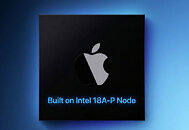 Apple is reportedly waiting to see how the final version of PDK 1.0 for the 18A-P performs before starting production. This could mean that volume production might begin by the end of 2026, with Apple expected to ship these Intel-made SoCs as early as the second or third quarter of 2027. With solid yield improvements, advanced packaging, and a promising outlook for the 14A node, Intel is becoming an increasingly attractive option for third parties. As Intel Foundry aims to break even in 2027, securing large clients like Apple definitely strengthens its position.
Source:
Ming-Chi Kuo
Interestingly, Intel expected customers to adopt more of the refined 18A nodes—like 18A-P and 18A-PT—and later 14A nodes, than its current vanilla 18A. The 18A-P node enhances Intel's 18A by incorporating RibbonFET and PowerVia technologies, which offer better performance and energy efficiency. Compared to the regular 18A node, these improvements include newly designed low-threshold voltage components, optimized elements to reduce leakage, and refined ribbon width specifications, all aimed at boosting performance-per-watt metrics. Apple's designs are very similar to Intel's "Lunar Lake," which includes compute and memory on a single package. This is made using the "Foveros" advanced packaging, which we covered here.

9 Comments on Intel Could Manufacture Apple M-Series Chips in 2027 with 18A-P Node
And, if anyone has a question on a moderator's action/decision... then. follow the Guideline for this"Anymore off topic comments/questions will be met with thread bans or other actions.
His predecessor was abut more problematic if I remember correctly.
Original. Topic. This isn't it.
Intel and Apple isn't as rosy.