Friday, January 2nd 2026

ASUS Intros Pro WS B850M-ACE SE Motherboard with IPMI for Home and SMB Servers
ASUS introduced the Pro WS B850M-ACE SE, an AMD Socket AM5 motherboard in the microATX form-factor that's laid out like a server motherboard, but targets a range of consumers spanning from home and small-business servers, to workstations with storage-heavy loadouts. The board draws power from a combination of 24-pin ATX, and 8+4 pin EPS. It supports the entire range of consumer Ryzen and commercial Ryzen PRO desktop processors from the Ryzen 7000 and Ryzen 9000 series. It also supports EPYC 4005 series server processors in the AM5 package. The board also supports ECC DDR5 unbuffered memory, with support for up to 256 GB of dual-channel (4 sub-channel) DDR5-5600 memory.
Among its use case-specific features are IPMI, U.2, and PCIe Gen 4 MCIO NVMe interfaces. The IPMI is driven by an ASPEED AST2600 chip that includes ASUS Control Center Express IT management software. Storage options include two M.2-2280 slots each with PCI-Express 5.0 x4 wiring, a PCIe Gen 4 MCIO, a U.2 Gen 3, and four SATA 6 Gbps ports. There's also an internal microSD slot for software key storage. There are three wired LAN interfaces—a 10 GbE driven by a Realtek RTL8127 PHY, a 2.5 GbE driven by Intel i225 series controller, and a third 1 GbE interface for the IPMI controller. USB interfaces include two 10 Gbps USB-C ports on the rear panel, a 20 Gbps USB-C header, three 10 Gbps USB type-A, an internal type-A, and additional 5 Gbps ports via headers. Display outputs include HDMI and DisplayPort from the iGPU, and a D-Sub from the IPMI chip. The board is expected to be priced around the $400 mark.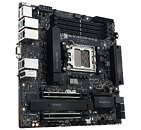
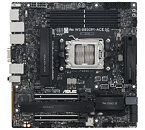
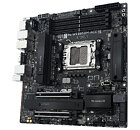
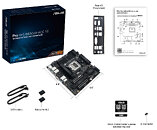
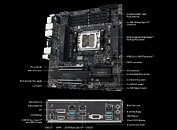
Among its use case-specific features are IPMI, U.2, and PCIe Gen 4 MCIO NVMe interfaces. The IPMI is driven by an ASPEED AST2600 chip that includes ASUS Control Center Express IT management software. Storage options include two M.2-2280 slots each with PCI-Express 5.0 x4 wiring, a PCIe Gen 4 MCIO, a U.2 Gen 3, and four SATA 6 Gbps ports. There's also an internal microSD slot for software key storage. There are three wired LAN interfaces—a 10 GbE driven by a Realtek RTL8127 PHY, a 2.5 GbE driven by Intel i225 series controller, and a third 1 GbE interface for the IPMI controller. USB interfaces include two 10 Gbps USB-C ports on the rear panel, a 20 Gbps USB-C header, three 10 Gbps USB type-A, an internal type-A, and additional 5 Gbps ports via headers. Display outputs include HDMI and DisplayPort from the iGPU, and a D-Sub from the IPMI chip. The board is expected to be priced around the $400 mark.


35 Comments on ASUS Intros Pro WS B850M-ACE SE Motherboard with IPMI for Home and SMB Servers
A. Requires USB4
B. X870E runs 2x PROM21s, in series (not parallel)
otherwise, single PROM21 w/ Gen5 M.2+X16 is currently called B850 or B650E
There are no dual-parallel PROM21 boards.
All dual PROM21 boards that have made it to market, are daisy-chained PROM21: X670/X670E and X870E
www.techpowerup.com/323052/amd-shuffles-feature-sets-of-its-800-series-chipset-x870-is-b650e-successor?cp=2
What I'm thinking about, is an AM5 board built to be a specialty workstation/budget TR replacement. -more PCIe lanes, via parallel fanout, rather than daisy-chaining.
'would be probably be some new little-known "AMD PRO XXX" chipset.
- chipless chipset for retail boards, not just for OEMs
- any number of their precious PCIe switches (PROM21) onboard, in any configuration
- more lane splitting to x2 and x1, both from the CPU and the chipset, because often you just need more links, not necessarily more lanes (the CPU may even be capable of that, as I was guessing in my post #19).
I know besides the point but we desperately need better connectivity and to an extent better memory bandwidth on "consumer" hardware.
A lot of X670/X870 motherboards are simply overpriced for the functionality they offer.
Intel still has cheaper Xeons but they are largely unobtanium.
Waiting for NovaLake benchmarks.
First one comes from the CPU Gen 5x16 and The second one comes from the b850 chipset, It is Gen 4x4 and it's best use is for an Asus USB4 add on card.
This board has a header for USB4
And the M-atx standard allows for 4 slots. It's up to the board makers to choose how they want to populate the board. There is nothing stopping them from adding another slot that would allow bifurcation of the primary x16 slot into 2 x8 slots.