Saturday, February 28th 2026

Intel "Bartlett Lake-S" Flagship Appears, Won't Boot on Consumer Motherboards

Intel's flagship "Bartlett Lake-S" processor—Core 9 273 PQE—has reached enthusiasts who are testing whether any consumer motherboard can boot the CPU and utilize its 12 P-Core gaming performance. According to Overclock.net user "Talon2016," who managed to obtain a sample of the LGA-1700 flagship CPU SKU, the processor won't boot using a consumer ASUS ROG Maximus Z790 Apex motherboard. These CPUs are designed for edge and embedded deployments with specialized platforms that lie outside the consumer sector. This high-TDP PQE variant has a base power of 125 W, powering a 12 P-Core variant with 24 threads and a base frequency of 3.4 GHz. This model can boost all 12 cores to 5.3 GHz, while a single thread can reach up to 5.9 GHz independently for tasks requiring intensive single-threaded performance. It is equipped with 36 MB of L3 cache and an integrated GPU with 32 EUs of Xe-LP graphics.

Unfortunately, regardless of the SKU or consumer motherboard choice, the platform will not work, and the CPU will not boot, as Intel has restricted "Bartlett Lake-S" to keep it away from consumers. Companies like ASRock have confirmed that the "Bartlett Lake-S" Core 200E will not be available for consumer motherboards and will only be used in the embedded and edge computer sector. This means you can technically buy and use this CPU for any Windows or Linux task, including gaming, but you will have to go through a process of acquiring an industrial-grade motherboard or a mini-PC that suits this platform. This means gaming support will be limited, as Intel explicitly will not bring any optimizations like APO/IPO to the platform for gaming. Instead, it will be treated as a generic x86-64 Intel CPU, just like any other processor. Extracting the maximum gaming performance could also be problematic, as there could be compatibility issues, given that Intel has envisioned other applications for this platform.
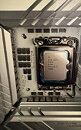
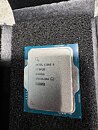
Sources: Talon2016 on Overclock.net, via VideoCardz
Add your own comment

40 Comments on Intel "Bartlett Lake-S" Flagship Appears, Won't Boot on Consumer Motherboards

#1
FreedomEclipse
~Technological Technocrat~
The black market is a beautiful thing.

Where there is a will. There will be a way. By hook or by crook.
Posted on Reply
#2
Macro Device
Remember Coffee Time allowing installing 8th/9th gen in 6th/7th gen motherboards as well as allowing working with Xeons on generic motherboards?

A similar hack is bound to happen to these 12-core tough guys as well.
Posted on Reply
#3
Verpal
Macro DeviceRemember Coffee Time allowing installing 8th/9th gen in 6th/7th gen motherboards as well as allowing working with Xeons on generic motherboards?

A similar hack is bound to happen to these 12-core tough guys as well.
That one require BIOS mod, I assume most DIY people won't really go that far.

Though, considering current price of RAM, there is obviously interest to upgrade to Bartlett lake and keep using DDR4.
Posted on Reply
#4
kondamin
when it becomes clear to intel their consumer division isn't making any more because of ram, i can see them step back on this bad decision.
Posted on Reply
#5
Wirko
Has it been confirmed that these chips have a combined DDR4/DDR5 memory controller? They might be derived from Sapphire Rapids/Emerald Rapids EE LCC silicon, which is DDR5 only.
Posted on Reply
#6
Sol_Badguy
Unfortunately, regardless of the SKU or consumer motherboard choice, the platform will not work, and the CPU will not boot, as Intel has restricted "Bartlett Lake-S" to keep it away from consumers.
Well then FU Intel, I guess. Be mindful about your decisions so that consumers don't keep staying away.
Companies like ASRock have confirmed that the "Bartlett Lake-S" Core 200E will not be available for consumer motherboards and will only be used in the embedded and edge computer sector.
Uuuu careful you don't cut yourselves on all that edge, you edgy enterprise losers!
kondaminwhen it becomes clear to intel their consumer division isn't making any more because of ram, i can see them step back on this bad decision.
I agree, but is this CPU a gaming beast?
Those 12P could be good/competitive in other scenarios as well, maybe that is one reason this is kept away from mainstream, if it's good it would cast doubt on the hybrid core approach Intel has been using for some time now.
Posted on Reply
#7
Macro Device
VerpalI assume most DIY people won't really go that far.
I don't care about most DIY people, I'll do it if this CPU is worth it. I just happen to own an LGA1700 DDR4 board with a placeholder i5-12400F onboard.
Posted on Reply
#8
ncrs
WirkoHas it been confirmed that these chips have a combined DDR4/DDR5 memory controller? They might be derived from Sapphire Rapids/Emerald Rapids EE LCC silicon, which is DDR5 only.
It's definitely not Sapphire/Emerald Rapids since it's derived from Raptor Lake-S:
Bartlett Lake-S is a derivative of Raptor Lake-S and is optimized for IoT/Edge applications. It shares the same memory controller registers as Raptor Lake-S. Add compute die IDs of Bartlett Lake-S and reuse the configuration data of Raptor Lake-S for Bartlett Lake-S EDAC support.
Posted on Reply
#9
Prototyped
UBU to replace the microcode and ME firmware blobs from the firmware of an appropriate embedded SBC?
Posted on Reply
#10
Solaris17
Super Dainty Moderator
PrototypedUBU to replace the microcode and ME firmware blobs from the firmware of an appropriate embedded SBC?
That’s what I was thinking too. Though I wouldn’t be surprised if OEMs also had a white list, I think it’s only a matter of time until someone downloads a bios update or dumps a rom and starts poking at it.
Posted on Reply
#11
Fouquin
Solaris17I think it’s only a matter of time until someone downloads a bios update or dumps a rom and starts poking at it.
They have been all week. That's where those photos came from; an OC.net thread 25 pages long wherein they have been discussing and testing many different available BIOS options to find the correct microcode revision to extract. The problem is that Bartlett Lake-S is two different things; one is just Raptor Lake and the other is the new 12P core.
Posted on Reply
#13
soulphie
years of blueballing and it gets a lockout from the consumer market for the few peope who still would buy intel CPUs
Posted on Reply
#14
Tomorrow
People still talking about an old 10nm design with lower clock speeds than 14th gen?
And some naive individuals really believe that 12 cores will somehow give a massive boost in games compared to 8 cores? (not to mention 16 e-cores to back them up).

This is a dead product based on years old silicon on an outdated process node not even meant for DIY sales.
To give you an idea of the gap the exist with Intel's own process technologies:

10nm > Intel 7 > Intel 3 > Intel 20A (canceled) > Intel 18A (we are here).
We are essentially at 2nm/3nm level. Old 10nm junk wont stand a chance.

But i suppose this is what happens when a company is so behind in desktop performance that people start to concoct various straws to pull at.
Happened with AMD too when they were behind.
Posted on Reply
#15
nguyen
Wait, Intel is not selling these chip to people who have LGA1700 motherboards? are they afraid no one will buy their Core Ultra products anymore :wtf:
Posted on Reply
#16
kondamin
Sol_BadguyWell then FU Intel, I guess. Be mindful about your decisions so that consumers don't keep staying away.

Uuuu careful you don't cut yourselves on all that edge, you edgy enterprise losers!

I agree, but is this CPU a gaming beast?
Those 12P could be good/competitive in other scenarios as well, maybe that is one reason this is kept away from mainstream, if it's good it would cast doubt on the hybrid core approach Intel has been using for some time now.
maybe it has full avx 512 like the xeon counterpart.
if it had been possible and i was on lga1700 i would have picked that over any other socket compatible soc
TomorrowPeople still talking about an old 10nm design with lower clock speeds than 14th gen?
And some naive individuals really believe that 12 cores will somehow give a massive boost in games compared to 8 cores? (not to mention 16 e-cores to back them up).

This is a dead product based on years old silicon on an outdated process node not even meant for DIY sales.
To give you an idea of the gap the exist with Intel's own process technologies:

10nm > Intel 7 > Intel 3 > Intel 20A (canceled) > Intel 18A (we are here).
We are essentially at 2nm/3nm level. Old 10nm junk wont stand a chance.

But i suppose this is what happens when a company is so behind in desktop performance that people start to concoct various straws to pull at.
Happened with AMD too when they were behind.
intel 7 = 10nm
ou forgot about intel 4 which was cancled too.
Posted on Reply
#17
wNotyarD
It's a matter of time for the Chinese on Aliexpress to sell their frankenboards working with BTL-S
Posted on Reply
#18
N/A
TomorrowPeople still talking about an old 10nm design with lower clock speeds than 14th gen?
And some naive individuals really believe that 12 cores will somehow give a massive boost in games compared to 8 cores? (not to mention 16 e-cores to back them up).
I would appreciate a 12-core 5.2 GHz, but at 500 W of power it's crazy.
Posted on Reply
#19
usiname
Sol_BadguyI agree, but is this CPU a gaming beast?
Those 12P could be good/competitive in other scenarios as well, maybe that is one reason this is kept away from mainstream, if it's good it would cast doubt on the hybrid core approach Intel has been using for some time now.
More cores don't lead to more performance in the games, 9600x vs 9700x shows that even 6 cores are enough. It has little better memory topology than 14900k for example, but also lower clocks and in the end the raw clocks matter more and it will lose to 14900ks and even 14900k in games. Add the fact that it is slower in MT + slower in ST and this CPU is completely pointless if you don't need it for some edge case scenarios
Posted on Reply
#21
Dr. Dro
kondaminmaybe it has full avx 512 like the xeon counterpart.
It does not. Confirmed fused off some time ago. It only offers the 12 P-cores in the same ring bus, the first and only processor to do so since the Core i9-10900K. It seems Intel intends to squander this opportunity to sell what would be an excellent CPU with clear demand, nobody will want this once Zen 6 with 12-core CCXs/CCDs lands.
Posted on Reply
#22
Sol_Badguy
usinameMore cores don't lead to more performance in the games, 9600x vs 9700x shows that even 6 cores are enough.
Sometimes there is a difference:
www.techpowerup.com/review/amd-ryzen-7-9850x3d/17.html
Baldur's Gate 3 - 5.7 %
Kingdom Come 2 - 4 %
Space Marine 2 - 9 %
Spider-Man 2 - 4 %
The Last of Us - 5.9 %

www.techpowerup.com/review/amd-ryzen-7-9700x/26.html
www.techpowerup.com/review/amd-ryzen-5-9600x/26.html
The frequency is pretty much the same at 6t (9700X has 55 MHz or so more which represents just 1%), the cache is the same so only the extra cores can create that % gap.
When the 9700X is at 8t the frequency is a bit lower, but still slightly higher than 9600X at 6t.

This is 6 vs 8, Intel has 8P which sounds like it's enough most of the time but we don't know that because we don't have a model with more than 8P to see where the scaling tapers off.
Similarly we don't have an AMD model with more than 8 cores on a single CCD, the ones with two CCDs have an extra latency involved which skews the results.

So there is still a chance that a specialized product like this can achieve some success in a particular scenario. I wouldn't dismiss the idea without seeing the numbers first.

/////
The frequency is pretty much the same at 6t (9700X has 55 MHz or so more which represents just 1%)
1% times 6 is 6% so yeah with perfect scaling this would explain everything above except the Space Marine 2 result.
Posted on Reply
#23
T550p
PrototypedSomeone seems to have found the microcode for the 12 P-core one (CPUID 0xD0670) -- winraid.level1techs.com/t/intel-amd-via-freescale-cpu-microcode-repositories-discussion/32301/1262
That microcode was extracted from a Bartlett Lake P CRB = customer reference board. As far as I know, it is currently the only board that has support for both Bartlett Lake-S 12P and Bartlett Lake-S Hybrid CPUs. No industrial or embedded boards as of now are known to support Bartlett Lake-S 12P out of the box, minus unofficial third party modifications such as the two UEFI images uploaded in that thread.

Currently, there are two individuals on overclock.net that has placed an order on Mouser for a Core 9 273PQE: Talon2016 is the first and has received it, PHANTOM410 is the second and has not received it yet. My hunch is that the microcode is not sufficient for the Z790 Apex to POST, which is the reason why the thread has another modified UEFI image containing several FSP binaries for Bartlett Lake-S 12P as a last resort, assuming the UEFI image with a microcode replacement fails to POST.

Nobody knows if the modification works, but chances are, it might not even work.
Posted on Reply
#24
Simon.J
“as Intel has restricted "Bartlett Lake-S" to keep it away from consumers.”

No wonder Intel was pushing its problematic CPUs with incompatible ISA across its questionable cores only later to provide a solution which is not available for consumers.
Such hardware solutions broken by the design should be punishable by the law.
Posted on Reply
#25
usiname
Sol_BadguySometimes there is a difference:
www.techpowerup.com/review/amd-ryzen-7-9850x3d/17.html
Baldur's Gate 3 - 5.7 %
Kingdom Come 2 - 4 %
Space Marine 2 - 9 %
Spider-Man 2 - 4 %
The Last of Us - 5.9 %

www.techpowerup.com/review/amd-ryzen-7-9700x/26.html
www.techpowerup.com/review/amd-ryzen-5-9600x/26.html
The frequency is pretty much the same at 6t (9700X has 55 MHz or so more which represents just 1%), the cache is the same so only the extra cores can create that % gap.
When the 9700X is at 8t the frequency is a bit lower, but still slightly higher than 9600X at 6t.

This is 6 vs 8, Intel has 8P which sounds like it's enough most of the time but we don't know that because we don't have a model with more than 8P to see where the scaling tapers off.
Similarly we don't have an AMD model with more than 8 cores on a single CCD, the ones with two CCDs have an extra latency involved which skews the results.

So there is still a chance that a specialized product like this can achieve some success in a particular scenario. I wouldn't dismiss the idea without seeing the numbers first.

/////

1% times 6 is 6% so yeah with perfect scaling this would explain everything above except the Space Marine 2 result.
The scalling from 6 to 8 is already too small to have more significant improvement with switching to 12 cores. If the game require more MT, 14900k/s will perform probably better.
Also, 720p is too much unrealistic, yes it show bottleneck, but it's not something that anyone is going to game at and the FPS is already pretty good. Compettive games that could benefit of enourmous FPS have enough already. Anyway, if the CPU is not bottleneck at 1080p it doesn't matter even if one is 50% better at 240p, but I get your point for theoretical comparison
Posted on Reply
Add your own comment
Nov 23rd, 2026 00:08 CST change timezone

New Forum Posts

Popular Reviews

TPU on YouTube

Controversial News Posts