Saturday, February 28th 2026

Intel "Bartlett Lake-S" Flagship Appears, Won't Boot on Consumer Motherboards
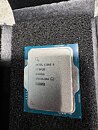
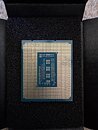
Intel's flagship "Bartlett Lake-S" processor—Core 9 273 PQE—has reached enthusiasts who are testing whether any consumer motherboard can boot the CPU and utilize its 12 P-Core gaming performance. According to Overclock.net user "Talon2016," who managed to obtain a sample of the LGA-1700 flagship CPU SKU, the processor won't boot using a consumer ASUS ROG Maximus Z790 Apex motherboard. These CPUs are designed for edge and embedded deployments with specialized platforms that lie outside the consumer sector. This high-TDP PQE variant has a base power of 125 W, powering a 12 P-Core variant with 24 threads and a base frequency of 3.4 GHz. This model can boost all 12 cores to 5.3 GHz, while a single thread can reach up to 5.9 GHz independently for tasks requiring intensive single-threaded performance. It is equipped with 36 MB of L3 cache and an integrated GPU with 32 EUs of Xe-LP graphics.
Unfortunately, regardless of the SKU or consumer motherboard choice, the platform will not work, and the CPU will not boot, as Intel has restricted "Bartlett Lake-S" to keep it away from consumers. Companies like ASRock have confirmed that the "Bartlett Lake-S" Core 200E will not be available for consumer motherboards and will only be used in the embedded and edge computer sector. This means you can technically buy and use this CPU for any Windows or Linux task, including gaming, but you will have to go through a process of acquiring an industrial-grade motherboard or a mini-PC that suits this platform. This means gaming support will be limited, as Intel explicitly will not bring any optimizations like APO/IPO to the platform for gaming. Instead, it will be treated as a generic x86-64 Intel CPU, just like any other processor. Extracting the maximum gaming performance could also be problematic, as there could be compatibility issues, given that Intel has envisioned other applications for this platform.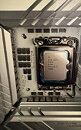
Sources:
Talon2016 on Overclock.net, via VideoCardz
Unfortunately, regardless of the SKU or consumer motherboard choice, the platform will not work, and the CPU will not boot, as Intel has restricted "Bartlett Lake-S" to keep it away from consumers. Companies like ASRock have confirmed that the "Bartlett Lake-S" Core 200E will not be available for consumer motherboards and will only be used in the embedded and edge computer sector. This means you can technically buy and use this CPU for any Windows or Linux task, including gaming, but you will have to go through a process of acquiring an industrial-grade motherboard or a mini-PC that suits this platform. This means gaming support will be limited, as Intel explicitly will not bring any optimizations like APO/IPO to the platform for gaming. Instead, it will be treated as a generic x86-64 Intel CPU, just like any other processor. Extracting the maximum gaming performance could also be problematic, as there could be compatibility issues, given that Intel has envisioned other applications for this platform.


40 Comments on Intel "Bartlett Lake-S" Flagship Appears, Won't Boot on Consumer Motherboards
e-cores may help, do nothing or do more harm than good.Intel 7 == 10nm Enhanced Superfin
Intel 3 == 7nm+ (Intel 4 == 7nm)Not yet.
Have to wait till 2027.
PS: How much can those e-cores help to achieve higher fps in gaming
Resident Evil - Requiem, RTX 5090, 1080p
Yes 2nm will come next year so we dont quite have that yet even tho some people say 18A is 2nm, but i still consider it 3nm class.
And yes. For desktop CPU at TSMC N2x we have to wait till 2027.Mostly ...You wrote the name of RTX 5080 incorectly. Twice.
This is a niche part for a niche market. No one ever said it was intended as a consumer part so why is it such a "bad decision"? Nova Lake will be annihilating it within a year anyways.
This is a niche part that would otherwise fit into an LGA1700 motherboard, and could've been a cost effective upgrade for those with DDR4 RAM, but Intel would rather sell you a CPU with e-cores.
Not the Last.
It happens when game/engine is not bent (too much) into RTX instead of DX.
2 games just last week.
Here is the 2nd
Isn't it bizarre how every time you increase the GPU load and push the bottleneck there, the 5080 just gets further and further ahead...