Monday, March 2nd 2026

Microsoft Shader Execution Reordering Brings 90% Performance Increase on Intel Arc B-Series, 80% on NVIDIA "Blackwell" GPUs
Microsoft recently updated its Agility SDK to version 1.619, bringing DirectX Shader Model 6.9 alongside some new DirectX 12 improvements. However, Microsoft's latest product demo about Shader Execution Reordering (SER) now confirms a massive performance uplift across several GPUs, with up to a 90% improvement on Intel Arc B-Series and more than 80% from independent sources' benchmarks on NVIDIA "Blackwell." With SER, the API gives applications the ability to dynamically sort rays for highly optimized parallel execution, improving performance by a large margin. In Microsoft's own testing, Intel's Arc B-Series GPUs, which include "Battlemage" discrete GPUs and Xe3-based integrated GPUs in "Panther Lake," managed to achieve a 90% framerate increase in the technology demonstration, suggesting that ray tracing performance still has some tricks up its sleeve for optimization.
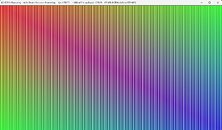
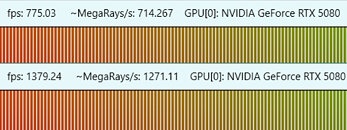
Meanwhile, the company also tested the NVIDIA GeForce RTX 4090 with SER, scoring a 40% improvement over the default ray sorting in the previous execution model. Independent testing from Osvaldo Pinali Doederlein on X showed that the GeForce RTX 5080 "Blackwell" GPU scored about an 80% improvement running this demo, which gives confidence that games implementing this technology will provide gamers with a massive performance boost once implemented. Microsoft has built this D3D12RaytracingHelloShaderExecutionReordering demo with a minimum demonstration of the SER technology, so anyone can test their own hardware and the performance improvement.
 Finally, it is important to note that this is just a technology demonstration, not real-world game testing. In real-world game testing, ray sorting using SER technology will definitely yield an improvement. However, given the nature and complexity of modern game engines and their ray tracing implementations, the improvement could be significantly smaller. This will remain the case until a game has been tested with the new technology update from the Agility SDK v1.619, which will likely require a few months of implementation and testing before being incorporated into an actual game. Only then can we test and see the real-world impact.
Sources:
Osvaldo Pinali Doederlein on X, Microsoft, VideoCardz
Meanwhile, the company also tested the NVIDIA GeForce RTX 4090 with SER, scoring a 40% improvement over the default ray sorting in the previous execution model. Independent testing from Osvaldo Pinali Doederlein on X showed that the GeForce RTX 5080 "Blackwell" GPU scored about an 80% improvement running this demo, which gives confidence that games implementing this technology will provide gamers with a massive performance boost once implemented. Microsoft has built this D3D12RaytracingHelloShaderExecutionReordering demo with a minimum demonstration of the SER technology, so anyone can test their own hardware and the performance improvement.


60 Comments on Microsoft Shader Execution Reordering Brings 90% Performance Increase on Intel Arc B-Series, 80% on NVIDIA "Blackwell" GPUs
The general method for progress.
Here is babies first introduction:
A GPU renders a frame after receiving a render command with relevant information from the CPU. It then renders that frame. This is a "real frame".
With MFG, the GPUs AI cores can inference what the next frame will look like based on the previous frame, and render it before receiving a command from the CPU. This is a "fake frame".
Fake frames do not always line up with Real frames, hence why MFG struggles with lower source framerates. At high framerates these mistakes are easily covered. At low frames....not so much. And if the GPU is rendering a Fake frame when the command for a Real frame comes in, it must finish the task at hand first, hence why MFG can cause latency issues.
Hope this encourages you to do a deep dive on how frame generation and rendering actually works.But officially supporting a workaround does not make something "native" either. If the code is built around FP8 and has to use workarounds to run on FP16 on older cards, that is not native, but it is officially supported.
Native implies that the code was built to run on that hardware's supported APIs and accelerators. FSR4 INT8 is just as native as DLSS 4.5 on FP16. Both are fallbacks from the original method of using FP8.
Tbh If I can either have 60-70 real fps with PT and DLSS performance or over 200 with 3x MFG in RE: Requiem on my 240Hz OLED screen, I always will choose the fake frames, because the image is just smooth. And that's where the FG is useful. Not to go from 20fps to 60 or more.
Is the scene unrealistic? Its trying very hard not to be, but it really looks like someone applied an instagram face filter and meticulous cleaning to a city scene. The whole thing makes no sense whatsoever. And this happens in a lot of RT/PT content. Even Cyberpunk, a city full of pollution and dust and shit, has mirror finish car reflections, because obviously everyone is washing them in the morning in Night City. In this picture, its even worse. They even forgot to apply bump mapping to full in your face surfaces like the pavement. I remember this kind of graphics from the early 3D rendering programs in 1995. Cheap reflective surfaces, but now... oh oh... you can reflect ANOTHER surface in it. Well wooptiedoo
The TL DR here is that RT/PT does absolutely nothing to improve the overall scene. Its just different lighting with the potential to create more dynamic scene lighting, but in practice is mostly just a massive resource hog and clearly takes budget, time and attention away from just getting the basics in order. You see this a lot in recent development in recent engines. UE5 games almost without exception apply this principle too. Add Nanite and ooooh look at the LoDs and software lighting, but in the meantime you're playing a total piece of junk with a latency that feels like double vsync over a shitty server connection.
Gaming does clearly not need nor benefits from RT/PT. But I knew that when Huang was pushing the tech on SIGGRAPH just over half a decade back. So far, I haven't seen a single successful deployment of the technology that is actually a net benefit across the board. Its always a trade off, a painful sacrifice, or a requirement to buy a 5090 and burn 400W of GPU to play a game that barely looks better than what you had - with frame generation on. If you can't see how deep you're in a cluster there, just wow.As far as I'm concerned neither of you are creating content that proves you know it better than developers, so just stahp. This is looking a little bit out of place unless you are talking about some actual thing you're working on. 'You dont understand it - NO U'... in a semantic discussion. Come on.
Keep it simple. You're looking at a scene like the one I commented on above... and you see something. It performs in a certain way on certain hardware. You make up the balance: is this worth it? The answer is quite often no in recent games. That's really all we need to know and fake or real and how you determine that does not even remotely come into play. Its the lipstick on the pig.
I think we all agree on the use case of FG. its clearly not to up your 15 FPS in PT to 45 or 60 to get 'a playable game' because you're still just playing at 15 FPS realistically. It serves to get FPS royally above 60. Some will use a boatload of cognitive dissonance to play PT 15 FPS content on their shiny GPU and turn on 4x FG 'because it feels smoother'. To each their own. It won't change a thing though in the simple comparative exercise against older content without an RT component that can still evoke beautiful scenes and even lighting, and can even do it dynamically too, but with less than half the performance footprint.Actually thats not really happening and that is why gaming has turned so shitty on the forefront of graphics development. The current method for progress is chaining a bunch of abstraction layers together to be able to load your cad design straight into the game and be done with it, and give gamers a game that performs like shit rolling uphill. Developers are more busy getting efficient workflows going than actually working on the content itself. Attention can only be given once, time is finite, and so are budgets. The idea of this increased efficiency is that developers generate more money in less time, but the opposite is true because it creates games that are complete slop, perform poorly, or need years of aftercare to reach their promise.
Its also why so many indie games are so much more game even if they graphically aren't the latest greatest and more often than not also don't run on UE5 nor push RT. This leaves budget and attention and time to actually make the game.
These tricks from Nvidia, shader execution reordering and opacity micromaps are a solution for a very high number of rays, to slightly help a very inefficient, brute force way of doing lighting, they were a good idea but something better poped up when they built RDNA4 and Intel battlemage
What happened along the way is the idea that they can predict the light, then we got neural radiance caching, ray reconstruction and a more intelligent sampling, AND THEN UNREAL MADE MEGALIGHTS ON PS5/AMD RX6700
1. Brute FORCE - calculate almost everything, PATH TRACING - RTX5090 500W
2. Smart way - less rays, estimate, fake it but in real time and looks like path tracing - PS5/RX6700 is good enough, older process node 200W, could be done on 50-100W on TSMC 4nm.
Path tracing and ray tracing the way is done right now by Nvidia is very costly and inefficient, probably on purpose, there are ways to be done very cheap but there is 0 interest on desktop PC.
They will not do this on consoles, PS6 will be efficient and GTA VI will look amazing on PS5, but on PC, i doubt they care, sales are good, why ruin a good thing, RT has to be expensive.
research.nvidia.com/publication/2021-06_real-time-neural-radiance-caching-path-tracing
It came as a part of SDK when Blackwell launched, as a part of Neural Rendering:
developer.nvidia.com/blog/nvidia-rtx-neural-rendering-introduces-next-era-of-ai-powered-graphics-innovation/
Path tracing that is implemented now in games is far from brute forcing it. It still uses tricks, like ReSTIR.
As for Megalights, we'll talk about it when a first game with it comes out and actually runs well, and is not rendered in 540p and the quality is good. So far all we seen is a tech demo.
Besides, Intel did "pursue" SER at least, as they will support it in Battlemage and have the hardware for it. Only AMD is left, because they do not actually care about discrete GPU market anymore. The only reason they are still in it, is because they make APUs for consoles. If they would not have it, then they would just scrap it and focus only on AI.
There is no interest from AMD and Nvidia, it's like those places where there is no affordable housing and nobody does anything to fix it on purpose so they can charge a very high rent.
Path tracing is a scam, progress is on hold to charge more money, Nvidia is chief and AMD is along for the ride.