Tuesday, April 7th 2026

"GPUBreach" is a Rowhammer Attack for GDDR6-Based NVIDIA GPUs That Bypasses IOMMU
Late last week, we reported on a new series of rowhammer bit-flip attacks targeting GDDR6-based NVIDIA GPUs. Most of these attacks can be mitigated by enabling IOMMU through the BIOS, which restricts the memory regions the GPU can access on the host system, thereby closing the primary attack path. However, researchers from the University of Toronto have introduced "GPUBreach," which can bypass IOMMU and enable CPU-side privilege escalation, unlike the previous "GDDRHammer" and "GeForge" attacks. In most typical server, workstation, and even PC configurations, IOMMU restricts the GPU's access to the CPU's physical addresses, preventing direct memory access. These are the typical DMA-based attacks that the Input-Output Memory Management Unit protects users from. However, the new "GPUBreach" operates differently.
For example, "GPUBreach" exploits memory-safe bugs in the actual GPU driver and corrupts them. When IOMMU confines the GPU's direct memory access to driver-assigned buffers, the new exploit corrupts metadata within these permitted buffers. This causes the driver, which has kernel privileges enabled on the CPU host, to perform out-of-band writes to the buffer, effectively bypassing any protection IOMMU can offer. This logic is built into the kernel by default, as the GPU driver is one of the most trusted components of the operating system. Hence, IOMMU bypass is possible when the metadata is corrupted. Since "GPUBreach" grants an attacker full root privilege escalation, the attack differs significantly from previous rowhammer attacks.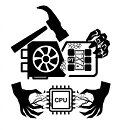 Researchers at the University of Toronto disclosed this attack to NVIDIA back in November 2025, as well as to hyperscalers like Google, AWS, and Microsoft. Newer NVIDIA GPUs are equipped with GDDR7 and HBM3/HBM4 memory, making them not susceptible to this attack. However, older GPUs with GDDR6 remain vulnerable, and NVIDIA may soon update their security disclosure. ECC memory helps with some of the GDDR6-based bit flips, but the technology is not immune. DRAM versions starting with DDR4, DDR5, LPDDR5, HBM3, and GDDR7 implement On-Die ECC (OD-ECC), which indirectly provides protection against rowhammer bit flips.
Source:
GPUBreach
For example, "GPUBreach" exploits memory-safe bugs in the actual GPU driver and corrupts them. When IOMMU confines the GPU's direct memory access to driver-assigned buffers, the new exploit corrupts metadata within these permitted buffers. This causes the driver, which has kernel privileges enabled on the CPU host, to perform out-of-band writes to the buffer, effectively bypassing any protection IOMMU can offer. This logic is built into the kernel by default, as the GPU driver is one of the most trusted components of the operating system. Hence, IOMMU bypass is possible when the metadata is corrupted. Since "GPUBreach" grants an attacker full root privilege escalation, the attack differs significantly from previous rowhammer attacks.

16 Comments on "GPUBreach" is a Rowhammer Attack for GDDR6-Based NVIDIA GPUs That Bypasses IOMMU
i would not claim it starts with ddr4 only and it will not be an issue with future ddr6 and future ddr7.
iommu will fail what else.
edit: evaluate the risk. what does the cve do? what is affected? will i take the risk? how much time does it take to fix it? what is the impact? do i loose performance?
-- whataboutism. of course it is not an issue for those who use it as a sony gamestation and not for work. why the need to run windows 11 when windows 7 is fine? why the need to even update firmware / software etc. all those claims it does not matter. i want to have access to those people computers at the time they write it. and check every software in question how old it is. i also want to check their smartphones and especially their devices where they shop from, do electronic banking etc. // security is not important is the usual comment which I will see instantly below every cve topic.
i do not use steam. steam never had any issues with questionable software which runs on graphic cards? and never had issues with shipping unofficial cracks to get even those steam purchased games to work? Steam never removed any games, right? /sarcasm.
"Rowhammer attacks on DDR4 exploit high-density memory cells, where rapidly accessing ("hammering") adjacent memory rows causes bits to flip in victim rows, bypassing traditional protections. While DDR4 introduced Target Row Refresh (TRR) to mitigate this, advanced, non-uniform, or multi-sided patterns (like TRRespass, BLACKSMITH, and SMASH) can bypass TRR. These attacks can lead to full privilege escalation, data corruption, and sandbox escapes."