Sunday, September 27th 2026
Modder Squeezes 74% More Performance Out of DLSS 5 on AMD Radeon in One Day
Modders working on bringing NVIDIA's DLSS 5 Neural Rendering to AMD Radeon GPUs just had their busiest day yet. The developer behind the DLSS-NR-on-AMD tool shipped two new versions within 24 hours, Alpha 0.3.3 and Alpha 0.4.0, together adding roughly 74% performance on Radeon hardware, according to the project's own GitHub release notes. YouTuber Ancient Gameplays tested the update in Cyberpunk 2077 at 3440x1440, and saw framerates climb from around 30 FPS on earlier builds to roughly 50 FPS on Alpha 0.4.0. That's a big jump for a workaround that started out barely playable. The original mod release had poor performance, but it looks like that's being addressed.
The tool works by feeding NVIDIA's own DLSS 5 DLL into Radeon RX 9000 GPUs, and reportedly RX 7000 cards too, intercepting the calls the DLL expects and routing the neural computation onto AMD hardware, since RDNA 4 supports the FP8 math DLSS 5 relies on. Alpha 0.3.3 also added a graphical installer with a built-in settings editor and overlay controls, so getting Neural Rendering running on Radeon apparently no longer means digging through file paths manually. Moreover, just today, the Alpha 0.4.1 update brought another 8% jump in overall performance, and a 9% performance increase under heavy gameplay loads.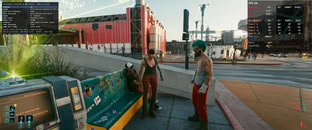
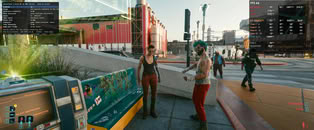
 The developer has reportedly told Ancient Gameplays that another major update is coming soon. At this pace, DLSS-NR-on-AMD could eventually get close to NVIDIA's own implementation, at least on paper. The modding community has been doing some great work ever since the DLSS 5 DLL leaked with NBA 2K27. The technology has since been ported over to RTX 40, RTX 30, RTX 20, AMD Radeon, and even Intel integrated graphics. As for the AMD implementation, the progress certainly looks promising for an unofficial mod barely a few weeks old.
Sources:
DLSS-NR on AMD (GitHub), Ancient Gameplays on YouTube, Wccftech
The tool works by feeding NVIDIA's own DLSS 5 DLL into Radeon RX 9000 GPUs, and reportedly RX 7000 cards too, intercepting the calls the DLL expects and routing the neural computation onto AMD hardware, since RDNA 4 supports the FP8 math DLSS 5 relies on. Alpha 0.3.3 also added a graphical installer with a built-in settings editor and overlay controls, so getting Neural Rendering running on Radeon apparently no longer means digging through file paths manually. Moreover, just today, the Alpha 0.4.1 update brought another 8% jump in overall performance, and a 9% performance increase under heavy gameplay loads.


161 Comments on Modder Squeezes 74% More Performance Out of DLSS 5 on AMD Radeon in One Day
Who needs more than that? It's a game, not a film. If the geeks wanna geek out, that's cool of course. But noting I'll likely use - especially not for CP77. I guess I could be wrong tho...
Agreed.
On the other hand GameWorks Libraries was closed source, meaning AMD didn't had the means to optimize it's cards for those libraries.
Keep trying to make black look white, but it will always remain black.
Maybe mod v1.0 will yield better performance on Radeons than native does on Geforces despite the lack of dedicated AI processing units (tensors).
Anyway, I find this whole situation quite hilarious, unprecedented and controversial. Nvidia worked hard (or at least it seems) to bring brand new proprietary post-processing game-changing technology (that was artificially restricted from being used on own older cards like RTX 4090 despite having all the capabilities to run it) instead of releasing refreshed line of GPUs (so called "Super" series). In the end, it's a nightmare for Nvidia, meaning it got completely out of their hands. Not only modders got it work on older Nvidia cards, the mod works quite well on Radeons as well and won't melt the damn connector while at it (well, except Radeon equipped with it).
Never underestimate the community (modders).
RTX 6000 GPUs are slated for release in 2028, whereas Radeon AT2 with new AI dedicated acceleration units is slated for release a whole year sooner. The HD5000 & Fermi moment might repeat, who knows ... But for me, AT2 is a hard pass, since I don't fall for AI/neural, fake/guessed frames and distorted images. And regular shaders will receive only a humble bump (+6/8 CUs). AMD, once again shoots themselves in the knees, because they are rumored to cripple the AT2 with 192-bit bus width and 18 GB VRAM. What an upgrade from RX 9070 XT ... So, as it seems, AMD will have once again in 15 years significant timing advantage and instead of disrupting the market, they supposedly choose to disrupt the new GPU. Hopefully, these rumors will change but since I knew how AMD fares last few years, they never fail to fail. Nvidia could not think of better competitor, LOL.
/hugefacepalm
/familylovebetweencousins
My local McDonald's doesn't give me food for free and I don't see anyone on the forums complaining. You haven't given me anything for free either, any reason Nvidia has to?
I did try out DLSS5 on CP2077 with everything maxed out (path traced) and the difference when running DLSS5 is smaller than in other games, or the same game with lower settings.
For example, the difference when enabling DLSS5 in Baldur's Gate 3 is massive (regardless of what people think of the end result). Here's a couple of screenshots I took:
Right now we are not living in GTX 970 era where nvidia has similar p/p to a R9 290X.
It's unbelievable that you guys don't notice a troll/flamer with zero common sense, who just posts comments to stir up conflict.
- AMD created HBM in collaboration with SK Hynix and made it available to competitors, Nvidia uses it in its biggest source of revenue and without HBM, they’d be nothing, because, realistically, there’s no alternative.
- Nvidia developed GDDR6X in collaboration with Micron and kept it to itself. That's as far as this discussion needs to go.
Gathering material to write a book?
A (bad) habit?
Optimism that the world can become a better place?
-----
Obviously you are right. I guess I like TPU and I try to help it.Selective memory?
Here is the breakdown regarding Nvidia's performance optimization for AMD's TressFX technology and the dynamics between the two GPU manufacturers.
1. Timeframe to Release the Optimized Driver
It took Nvidia less than two weeks to release a driver that significantly improved performance and stability for TressFX. [1]
- The Launch: Tomb Raider (2013)—the first game to feature AMD TressFX—released on March 5, 2013. At launch, Nvidia users faced severe crashes and massive frame rate drops when TressFX was enabled. [2, 3, 4]
- The Fix: Nvidia released the GeForce 314.21 Beta driver on March 18, 2013, specifically aiming to resolve the severe stability and performance regressions in the game. [1]
2. What Helped Nvidia Fix It So Quickly?Nvidia was heavily aided by the open-source nature of AMD TressFX.
Unlike Nvidia’s proprietary technologies, AMD built TressFX using standard DirectCompute (a part of Microsoft's DirectX API) and eventually open-sourced it via its GPUOpen initiative. [5, 6, 7]
At launch, Nvidia complained that Crystal Dynamics (the developer) had only provided them with the final game code days before release, leaving no time for driver optimization. However, because the TressFX code itself wasn't locked behind a proprietary black box, Nvidia's engineers could immediately study the implementation, identify where their architecture was choking, and optimize their drivers accordingly. Crystal Dynamics also issued a concurrent game patch to assist with stability. [2, 4, 5, 7, 8]
3. Degree of Performance Improvement
The initial GeForce 314.21 driver update brought up to a 45% to 60% performance improvement specifically for Tomb Raider, alongside crucial stability fixes that stopped the game from crashing when Lara Croft's hair physics were active. While TressFX initially ran much faster on AMD's Graphics Core Next (GCN) architecture (which was natively optimized for DirectCompute workloads), subsequent driver updates and the integration of TressFX 2.0 eventually leveled the playing field, making the performance impact roughly equal on both brands of GPUs. [5, 7, 9]
4. Can AMD Optimize for Nvidia's Proprietary Technologies?
Generally, no—not in the same way, because Nvidia's technologies are strictly proprietary.
The table below outlines the core differences in how both companies handle optimization for competing software libraries:
Feature Dimension
AMD's Tech (e.g., TressFX, FSR)
Nvidia's Tech (e.g., HairWorks, DLSS)
Source Code Availability
Open Source (MIT License / GPUOpen). Anyone can view, modify, and optimize it.
Proprietary Closed Source (GameWorks / Omniverse). The source code is hidden behind compiled DLLs.
Hardware Agnostic
Runs on all modern GPUs (AMD, Nvidia, Intel) via standard APIs (DirectCompute/Vulkan).
Often relies on proprietary hardware (e.g., Tensor Cores for DLSS), making it physically impossible to port to AMD.
AMD's Optimization Ability
Native implementation.
Extremely limited. AMD cannot read the underlying code to write specific driver instructions.
The HairWorks Contrast: Shortly after TressFX, Nvidia released HairWorks (part of Nvidia GameWorks). When games like The Witcher 3 launched with HairWorks, AMD GPUs suffered massive performance drops. Unlike Nvidia with TressFX, AMD could not fix this via drivers because the code was a closed "black box". AMD’s only workaround was to instruct users to manually override the tessellation levels inside the AMD Catalyst Control Center to mitigate the performance hit. [5, 6, 7, 10]
To help tailor more details, are you interested in:
[1] https://www.techpowerup.com
[2] https://www.kitguru.net
[3] https://www.techpowerup.com
[4] https://www.eurogamer.net
[5] https://wccftech.com
[6] https://en.wikipedia.org
[7] https://www.reddit.com
[8] https://store.steampowered.com
[9] https://www.guru3d.com
[10] https://www.reddit.comThat CPU version was so badly coded, by the company that has the best programmers in the world, that it could ran on nothing. I can't call a single digit slideshow as "running on CPU". As with other cases, when Nvidia offers something freely, it doesn't really offers anything for free. It just offers a slow version to make people have a taste and rush to buy the hardware where it really runs on it.
But since you seem to think it's ivil - can I run fsr 4 on my Nvidia? Heck I can't even run it on my Radeon GPU, lol.
How about afmf? Afmf2? Antilag? Antilag 2? R chill? R boost? Sam? Radeon super resolution? Hyper rx? Enhanced sync? Shall I keep going?
Surely you went ballistics in every single thread regarding those cause they are proprietary right? Right?
Get used to it.
I hope you now remembered what was going on with TressFX.
But no worries, as long as you are posting lies I'll reply underneath setting the record straight
Is there anything else you're struggling with?