Tuesday, November 17th 2026

Intel Publishes Benchmarks for D270 "Crescent Island" GPU, Claims Wins Over RTX PRO 6000
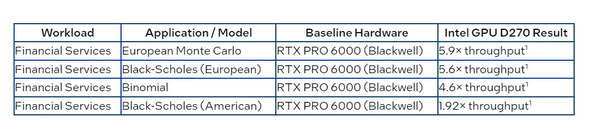
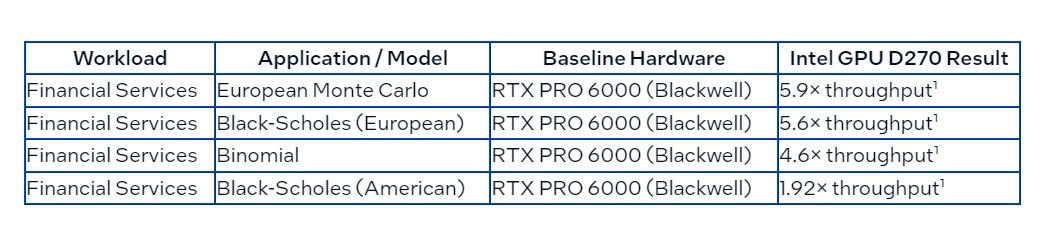
Intel's GPU D270 AI accelerator card, previously known as "Crescent Island," just got some first-party benchmarks. According to Intel, the GPU is up to 5.9 times faster than NVIDIA's RTX PRO 6000 Blackwell Server Edition in FP64 financial workloads. Going through the individual test results, the D270 system posted a 5.6x lead in European Black-Scholes, 4.6x in Binomial, and 1.92x in American Black-Scholes. Intel also points out the fact that the D270 runs at 350 W, while the NVIDIA RTX PRO 6000 has a 600 W power limit. Most of the lead seems to come from the D270's 32 Xe3P cores, each handling 64 FP64 FMA operations at native full rate. These benchmarks were published at SC26 in Chicago.
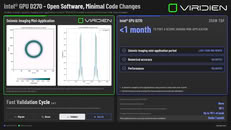
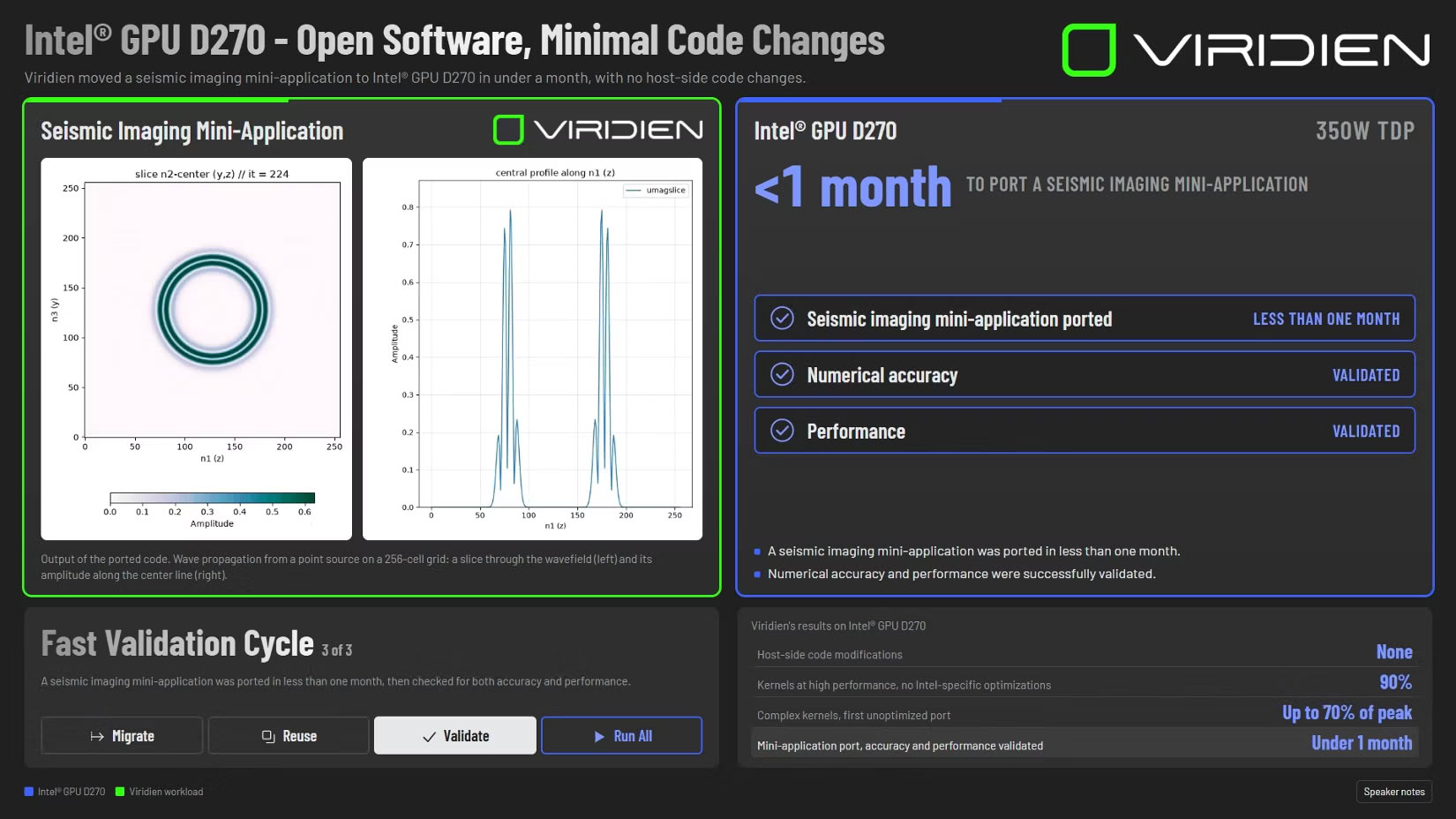
As for the AI figures, they are a lot more modest. Intel claims up to 29% lower latency on the Drex decision model and 1.12x the output token throughput on Qwen3-30B-A3B in FP8. These tests were both run against a single RTX PRO 6000. In the financial tests previously mentioned, the NVIDIA system had eight RTX PRO 6000 cards running against a single D270, though Intel doesn't mention how many were used per run. Intel also showed FP32 seismic modeling with Veridien, although performance figures were left out for this one. All results come from pre-production silicon, and it is important to note that these are first-party results that are intended to showcase the best-case scenarios for the D270. As a reminder, the D270 "Crescent Island" GPU can pack up to 480 GB of memory, while Intel-branded cards come with 160 GB of LPDDR5X as standard. There's still no official word on pricing or launch date.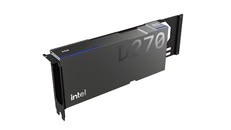
Source:
Intel
As for the AI figures, they are a lot more modest. Intel claims up to 29% lower latency on the Drex decision model and 1.12x the output token throughput on Qwen3-30B-A3B in FP8. These tests were both run against a single RTX PRO 6000. In the financial tests previously mentioned, the NVIDIA system had eight RTX PRO 6000 cards running against a single D270, though Intel doesn't mention how many were used per run. Intel also showed FP32 seismic modeling with Veridien, although performance figures were left out for this one. All results come from pre-production silicon, and it is important to note that these are first-party results that are intended to showcase the best-case scenarios for the D270. As a reminder, the D270 "Crescent Island" GPU can pack up to 480 GB of memory, while Intel-branded cards come with 160 GB of LPDDR5X as standard. There's still no official word on pricing or launch date.
8 Comments on Intel Publishes Benchmarks for D270 "Crescent Island" GPU, Claims Wins Over RTX PRO 6000
So who question. Why isn't Intel comparing this new card against cards that target FP64? Not only from Nvidia but also AMD?
Is the comparison with the RTX 6000 an indication of the price?
The D270 isn't particularly strong, has slow memory... but is probably fairly useful for a number of things due to the massive ram.
It doesn't compete against any of the SXM or OAM chips very well, but does ok against the RTX6000 for a few things.
It also has about 30% of the FP64 of the AMD MI350p, which is why they didn't talk about it...
The last data center-class GPU which combined graphics capabilities and FP64 compute was the GV100, and even its "GeForce" variant (Titan V, 1:2 ratio) can exceed the Pro 6000 Blackwell's FP64 performance (1.96 TF, 1:64 ratio) by >3.5x in real world conditions and benchmarks. With a 300 W (120% of default 250) power limit :P
Since HPC workloads stopped being as demanding of double precision math, AMD dropped it at around the same time as well, after Vega 20, although it was artificially segmented and the Radeon VII did not have all FP64 units enabled. Which was kind of good for the time anyway, that way gamers could get it and it wouldn't cost 3k...
No, double precision got split into the server accelerators to segment the markets it didn't stop being useful for HPC simulation.
Nvidia has been slowely abandoning that segment in favor of AI workloads but AMD has not... they even split their current gen into mi430x and mi450x to keep an HPC focused accelerator present.
This d270 competes against RTX6000 and Mi350p based on formfactor, how well it does depends on price.
It doesn't compete against the modules on peformance, price or power usage... its just a different class of accelerator.
but if you think AMD has abandoned HPC, or that HPC doesn't use FP64 anymore, take a gander at the MI430x
In any case It's not that it completely stopped being useful, it's that it got even more niched since the introduction of Ozaki emulation. Interesting that you mention though, Nvidia just announced a specialized Rubin HPC GPU with emphasis on native FP64 for complex simulations as the type you have in mind. So the demand is still there, with a price to match :fear:
www.hpcwire.com/2026/11/16/nvidia-recommits-to-fp64-with-a-new-gpu-the-rubin-hpc/
They changed Rubin's clocks. memory bandwidth and amount in response to AMDs mi450x announcement
And they made an HPC version now in response to the Mi430x
Nvidia has the best fabric by far, nvlink is insane... and IB is better than Eth, but Ultra eth cloess that gap and AMD took them by surprise by making a more powerful accelerator.
Rubin HPC is going to have to compete against AMDs next gen HPC accelerator, as its not expected till 2028...