Friday, September 6th 2019

Samsung Starts Offering First A-Die Based RAM
Samsung's B die has been widely known as a good, high performance variant of DRAM memory, loved by overclockers because of its ability to get to a high frequency with relatively low timings. However, B die has been discontinued and now Samsung started offering its replacement in form of the newly developed A die manufactured in 1z nm (1z class) lithography process. Despite the lack of technical details surrounding the new die type, Hardwareluxx has received a tip from its reader about new RAM offering that incorporates A die memory.
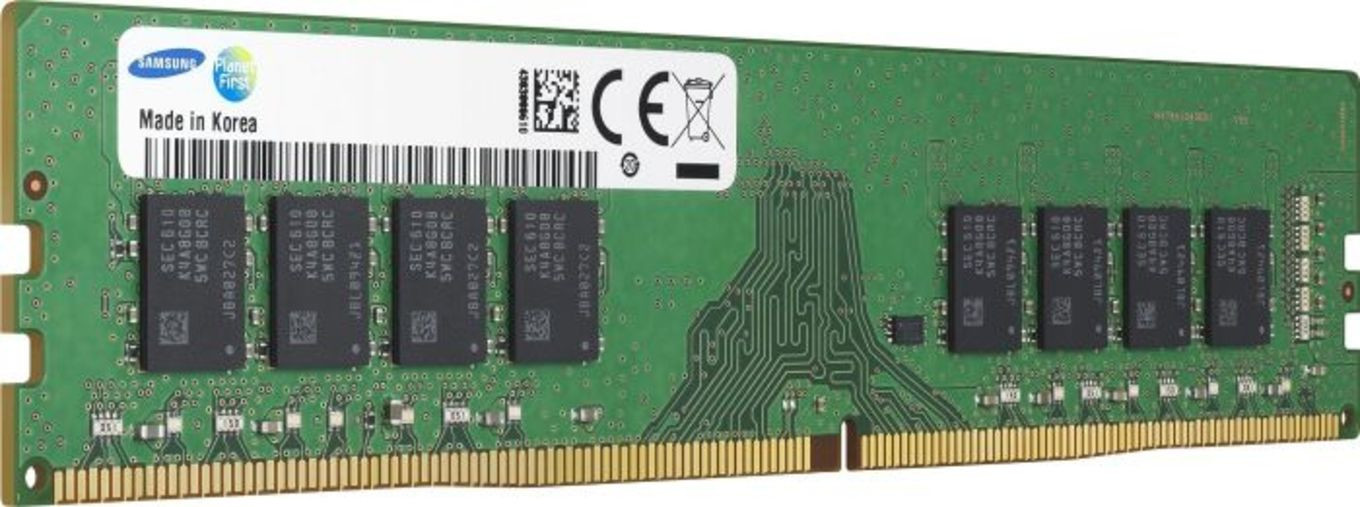
The M378A4G43AB2-CVF, as it is called in the listing, is a 32 GB, single dimm DDR4 RAM with operating speed of 2933 MHz and CL21-21-21 timings. This particular offer isn't something to be excited about as the frequency is good, but the timings are quite high for that speed. Given that we don't know where the A die is targeted at, we can speculate that its current aim is at mid-tier systems, where the mediocre performance is okay and the system isn't suffering (performance wise) because of it. Nonetheless this find is quite interesting as it gives first hints at what can we expect in therms of future A die DRAM offerings. Remember, it took some time for B die as well to get to the level of performance we have today, so it is entirely possible that A die will improve and try to aim for greater performance level than it currently has.

Source:
Hardwareluxx
The M378A4G43AB2-CVF, as it is called in the listing, is a 32 GB, single dimm DDR4 RAM with operating speed of 2933 MHz and CL21-21-21 timings. This particular offer isn't something to be excited about as the frequency is good, but the timings are quite high for that speed. Given that we don't know where the A die is targeted at, we can speculate that its current aim is at mid-tier systems, where the mediocre performance is okay and the system isn't suffering (performance wise) because of it. Nonetheless this find is quite interesting as it gives first hints at what can we expect in therms of future A die DRAM offerings. Remember, it took some time for B die as well to get to the level of performance we have today, so it is entirely possible that A die will improve and try to aim for greater performance level than it currently has.
52 Comments on Samsung Starts Offering First A-Die Based RAM
so that official specifications from the vendor is 2933 cl21 doesn't mean anything was what he was implying.
B-Die is NOT discontinued. When will outlets stop spreading this misinformation?
AFAIK Samsung's discontinuation of b-die is confirmed at this point. But counter me with facts and links and I will gladly recant.
Cas does go up with capacity, requires extra voltage to compensate and that would exceed jedec spec.
I had cas 6 ddr3 1600 but those were 2gb dimms...
www.techpowerup.com/forums/threads/samsung-b-die-20-nm-has-eol-been-canceled-mass-production-continued.255928/
www.samsung.com/semiconductor/dram/ddr4/
There's plenty of B-Die configurations in mass production.
The whole confusion started when someone downloaded the original PDF and did not bother to scroll down. The EOL variants were listed first and thus this whole fake news began spreading. Judging from this article it spreads to this day. If we're unlucky it will become a meme like "PC Gaming is dying" reapeated for the last decade.
Is A better than B? :)
I'm shell shocked, emotionally drained to the very bottom, I'm sorry. :oops: Is there some hope
Your shock is duly noted, keep us posted :ohwell:
People complaining JEDEC spec ram are slow.
Like water is wet.
"People die when they are killed" etc.
The links however, are appreciated. But they are also minsintrepreted, see below.Not really, though. The dies quoted in those threads still being produced are industrial, high temp tolerance parts. "Mass production" for them is much smaller batches, and you'll never see them in consumer products. Again, this is a case of someone not reading the complete PDF. (The thread author aparently even noted this, btw)
In the end, for all practical consumer ram applications, the news remains the same. Looking at the datasheet, I can't find any reference to the original b-die parts being anything but EOL but maybe a 10nm part will be released, dunno. It's performance characteristics however would likely be different. Still same story for practical purposes.
But here's another: www.samsung.com/semiconductor/global.semi/file/resource/2018/06/DDR4_Product_guide_May.18.pdf
This PDF states that all 260 pin B-Die based modules are EOL as of Q1 2019 but Wikipedia says 260pin is SO-DIMM so laptop memory.
Desktop is 288pin.
And if it were true that B-Die was EOL as of Q1 of this year how can G.Skill still be releasing highly binned SKU's based on B-Die later this year. Unless they have a warehouse full of them or something. Does not add up.
A die has better density per DIMM
B die will generally be the fastest die still, but is no longer being produced in favor of A die.
A die probably will not reach B die clocks for years to come really.
But someone dramatized this into "OMG B-die is EOL!!!1!" and people keep parroting it...
Gee, I was so hoping for 5500Mhz XMP kits by Rocket Lake and ddr5. Why does tech take so long? Are they splitting the atom or something? I guess they kinda are. :)
It's just RAM. DDR4 is doomed anyway.
@Tomorrow you're in some B-die religion or what?
Now, it's not really necessary. BIOS updates have made it so most RAM performs pretty well and B-die is kind of ridiculously expensive for the gains. But the culture around it isn't going to just vanish.
Then there's the aspect of just knowing what's the best RAM and how to spot it. If B-die is gone, and you've been kind of obsessing over tracking it down, what do you do when you want the best RAM for your system? It's not like this stuff is all that obvious. B-die itself was like this mystical thing, where you had to decipher the code in the specs in order to figure out if you could get the speed/timings you'd ideally want. You wouldn't always know just by looking "Oh, that's b-die and it'll do 3200/CL14." from a stick with almost identical specs that will run 400mhz slower or just never get past CL16. And there was no rhyme or reason to it.
Again, now not so much of an issue as far as I can tell, but stuff like that sticks around. I know I'll miss B-die... really it's a quality of life thing. Much easier to work with... you always know what you're getting with it. Other modules were far less consistent with earlier Ryzen chips.
The XMP "spec" and other stealth massive overvolts on auto is what happens when the industry sells the idea that OCing is an inherently easy and painfree process to clueless kiddies.
Only Samsung's own sticks using B-Die are EOL. Samsung continues to produce the chips for others like G.Skill etc.