Friday, September 9th 2022
Not All First Generation PCIe 5.0 SSDs Will Offer the Same Performance
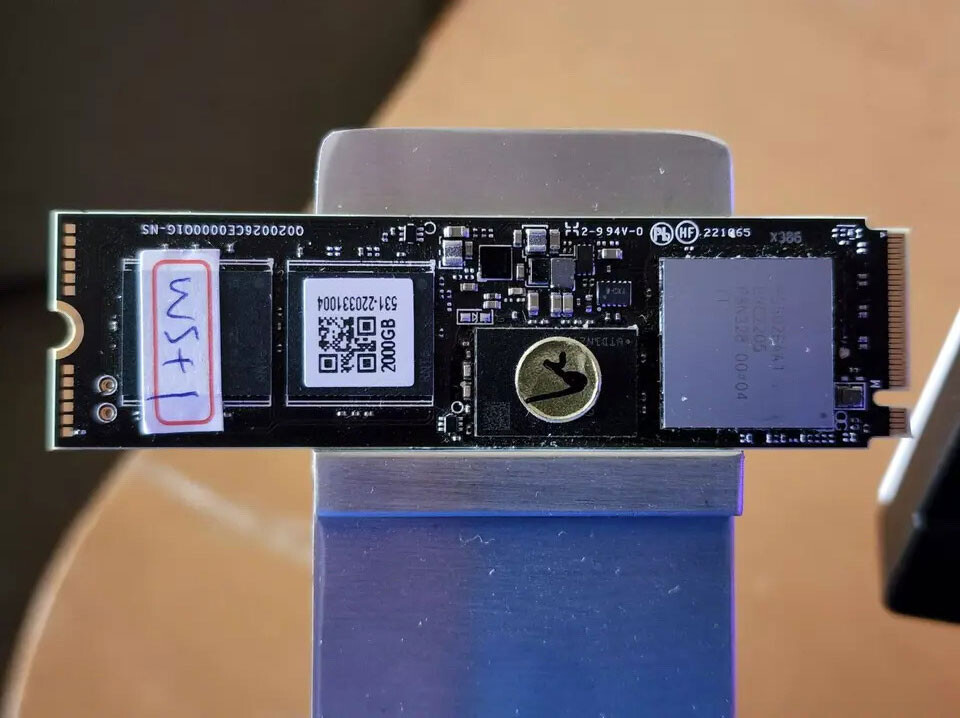
The first batch of PCIe 5.0 SSDs are all likely to be based on Phison's PS5026-E26 controller, which offers eight NAND channels, capable of supporting NAND speeds of up to 2400 MT/s. Phison's own figures for the controller are 13 GB/s writes and 12 GB/s reads, with up to 1.5 million random read IOPS and 2 million random write IOPS. However, as we've already seen from various SSD brands, many PCIe 5.0 SSDs won't exceed 10 GB/s when it comes to the sequential read/write speeds. This is because the current NAND flash simply isn't fast enough to saturate the PCIe 5.0 bus, which is capable of 15.75 GB/s. That said, Micron's 232-layer 3D NAND should be able to boost the performance up to 12.4 GB/s based on the numbers Gigabyte announced for their Aorus Gen 10000 SSD.
Based on an article over at Tom's Hardware, we shouldn't expect too many drives that exceed 10 GB/s sequential writes at launch, due to most drives using 176-layer 3D NAND flash, that is limited to 1600 MT/s. As such, it might be wise to hold off on buying the first generation of PCIe 5.0 drives and wait for better availability of 232-layer 3D NAND, as beyond Micron, SK Hynix is expected to have a 238-layer 3D NAND flash in the market sometime in the first half of 2023. If you're not really eager to have the fastest SSD out there for pure bragging rights, it would seem that mid 2023 might be the right time to get a PCIe 5.0 SSD.
Source:
Tom's Hardware
Based on an article over at Tom's Hardware, we shouldn't expect too many drives that exceed 10 GB/s sequential writes at launch, due to most drives using 176-layer 3D NAND flash, that is limited to 1600 MT/s. As such, it might be wise to hold off on buying the first generation of PCIe 5.0 drives and wait for better availability of 232-layer 3D NAND, as beyond Micron, SK Hynix is expected to have a 238-layer 3D NAND flash in the market sometime in the first half of 2023. If you're not really eager to have the fastest SSD out there for pure bragging rights, it would seem that mid 2023 might be the right time to get a PCIe 5.0 SSD.
55 Comments on Not All First Generation PCIe 5.0 SSDs Will Offer the Same Performance
Most of the enterprise world is on the higher capacity drives which means you can find plenty of refurbs for cheap and they are new. These are often drives that just had a failed motor and the refurb testing process is more strenuous than what a new drive receives.
Considering that the 18TB drives have a higher density, speed, and price when you know where to look I'd definitely call them superior. You are much less likely to get old stock with an 18TB drive to boot.
Also do note, many drives sold on Newegg and Amazon are OEM drives even if the product page says it comes with a warranty. Always check your drive serial number and always run a new drive through a full write / wipe to ensure proper functioning of the mechanics and ensure the disk surface doesn't have any imperfections. Preferably with real data although there are synthetic tests around for this purpose.