Monday, November 3rd 2025

Windows 11 Finally Fixes "Update and Shut Down" Functionality After a Decade

If you ever tried the infamous "Update and shut down" option in any Windows build, it often leads to a reboot instead to an actual shutdown. Now, Microsoft has finally fixed this issue starting with Windows 11 25H2 Build 26200.7019 (or 26100.7019 on 24H2). According to the Windows Latest, Microsoft has shipped this broken functionality way back with Windows 10, and has never fixed it since. However, the Windows teams working behind the update have finally managed to ship a working solution with a note stating in Windows 11 experiences that the new build: "Addressed underlying issue which can cause "Update and shutdown" to not actually shut down your PC after updating."

Microsoft has not disclosed the exact cause of the failure, but Windows Latest speculates it might be due to a race condition or an issue within the Windows Servicing Stack. When a user selects "Update and shut down," the operating system must complete two sequential tasks: applying all pending updates and then shutting down the computer. This process isn't straightforward because Windows needs to reboot into an offline servicing phase to replace locked system files, as indicated by the "working on updates" message. After this phase, the machine should power off, but instead, it returns to the login screen. The most likely explanation is that the Servicing Stack either fails to save or never receives the shutdown instruction, with the directive possibly getting lost during the reboot due to a timing conflict or interference from features like Fast Startup.

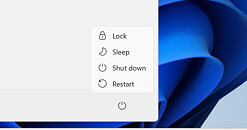
This bug has plagued Windows PCs since the announcement of Windows 10 and has been an issue for an entire decade. Countless users relied on this feature to mark the end of their workday with an updated PC that would shut down once updates were complete. Instead, users often found their machines powered on and sitting idle. Laptop users who left their PCs on battery power frequently discovered their devices drained, and if someone left their laptop before heading out or going to sleep, the issue was a significant source of trouble. Thankfully, Microsoft is gradually ironing out bugs like this to enhance the Windows 11 experience.
Source: Windows Latest
Add your own comment

32 Comments on Windows 11 Finally Fixes "Update and Shut Down" Functionality After a Decade

#1
Vayra86
Inb4 the first boot loop bug or something. This cant go well, lol
Posted on Reply
#2
AleksandarK
News Editor
Vayra86Inb4 the first boot loop bug or something. This cant go well, lol
I thought about that as well. I have to test the feature next time there is an update as Ive already applied all the updates for now :)
Posted on Reply
#3
rtwjunkie
PC Gaming Enthusiast
This is very weird because I've never had any issue with W10 update and shut down. Everything here at the house has always stayed shut down when using this option. In fact it has been so common for me that it always gives me anxiety hoping I didn't bork the update process by not allowing it to restart and do it's over 30% part of the update right away.
Posted on Reply
#4
Vayra86
rtwjunkieThis is very weird because I've never had any issue with W10 update and shut down. Everything here at the house has always stayed shut down when using this option. In fact it has been so common for me that it always gives me anxiety hoping I didn't bork the update process by not allowing it to restart and do it's over 30% part of the update right away.
I do recognize this bug, it happens all the time when you hit Update and shut down, both on current and last rig. There have also been updates that did show the correct behaviour. Its weird, but its also a complete and utter non issue :D

Looks like yet another great reason to not update a single thing and stick with my LTSC install as is.
Posted on Reply
#5
loztagainman
rtwjunkieThis is very weird because I've never had any issue with W10 update and shut down. Everything here at the house has always stayed shut down when using this option. In fact it has been so common for me that it always gives me anxiety hoping I didn't bork the update process by not allowing it to restart and do it's over 30% part of the update right away.
Well, that is extremely interesting, because I have never in the last 10 years had a single windows device that simply "updated and shutdown" as per the power options. I have without fail always had to wait to check and turn it off myself after it has restarted regardless. This has been for my home pcs with basically nothing on them but games and the gfx drivers, and managed devices provided by work. Honestly, I thought about instead looking for a way to modify the button so it wasn't there so I didn't get tricked into clicking it by accident yet again.
Posted on Reply
#6
TheDeeGee
Always worked as intended on my end.
Posted on Reply
#7
_roman_
It is very annoying to see people claim windows only needs one reboot.

No, Windows still needs quite often 6 reboots for a single windows update. Why do i know that? My uefi bootloader points to something else. I have to change 6 times to windows to get the update installed.

I do not get the point why windows needs reboots for updates. Anything else does not need so many reboots or any reboots at all for software installation. there is even software to reload the full new software without rebooting out there.

--

I have no idea which educations windows coders have gotten. I installed a new kernel and new linux-firmware and i shutdonw my box a few hours ago. I reboot my openrc and i3wm and it works. No extra reboot - it works instantly. It is not like the linux source and the gnu userspace is closed sourse so no one could learn from it.

It is never a good idea to shutdown and not to wait until the box is really shutdown: Personal example: MSI x670e and asus 670 have both the same bug that regularly, but not too often, a reboot or shutdown keeps the box in a waiting stage forever. Using the reset button or sevearl reset button like a few hours ago on msi forces the box to wake up. The firmware of the novuton chip may have bugs or issues with uefi.

-- My 5 weeks waiting periods are running out for both of my w11 pro boxes. Every few days a really big issue with w11 pro. I see troubles ahead.
Posted on Reply
#8
Vayra86
_roman_It is very annoying to see people claim windows only needs one reboot.

No, Windows still needs quite often 6 reboots for a single windows update. Why do i know that? My uefi bootloader points to something else. I have to change 6 times to windows to get the update installed.

I do not get the point why windows needs reboots for updates. Anything else does not need so many reboots or any reboots at all for software installation. there is even software to reload the full new software without rebooting out there.

--

I have no idea which educations windows coders have gotten. I installed a new kernel and new linux-firmware and i shutdonw my box a few hours ago. I reboot my openrc and i3wm and it works. No extra reboot - it works instantly. It is not like the linux source and the gnu userspace is closed sourse so no one could learn from it.

It is never a good idea to shutdown and not to wait until the box is really shutdown: Personal example: MSI x670e and asus 670 have both the same bug that regularly, but not too often, a reboot or shutdown keeps the box in a waiting stage forever. Using the reset button or sevearl reset button like a few hours ago on msi forces the box to wake up. The firmware of the novuton chip may have bugs or issues with uefi.

-- My 5 weeks waiting periods are running out for both of my w11 pro boxes. Every few days a really big issue with w11 pro. I see troubles ahead.
If you need 6 reboots for a Windows update, I suspect a strong case of PEBCAK mate

The behaviour described in this topic is the fact that Windows restarts instead of shutting down after doing an update. If you needed more reboots, you also had multiple update packages with wildly varying release dates going on. That's not the topic.
Posted on Reply
#9
Sort_of_Grim
"MS fixes.."

But better late than never, I suppose.
Posted on Reply
#10
Chomiq
I'll believe it when I see it. It used to be broken on my work laptop and sometimes on desktop.
Posted on Reply
#11
FR3D1
Ninja Cat
TheDeeGeeAlways worked as intended on my end.
This is true for me as well as for everyone else in my family and circle of friends whose systems I have installed/configured.
Strange? But that's how it is...


With a friendly smile,
Fred.
Posted on Reply
#12
Philaphlous
Waiting to update windows for awhile...prob for the rest of the year till they figure their stuff out...
Posted on Reply
#13
FierceRed
All "Windows 11 Two Minutes Hate" snark aside, I'm glad this is just fixed.

The loss of productivity and increase in cortisol this bug made should not be ignored.
Posted on Reply
#14
BArms
Everyone knows how awful the MS forums are for produce support. I have no doubt that over the last decade there were hundreds (or thousands) of replies telling people such cutting edge advice as running defrag, do windows update, update your antivirus or unplugging any USB devices.... when all along it was a bug and they had every reason to believe it was a bug. I suspect a lot of bugs like this one were/are in some MS internal database somewhere with an incorrect status listed of "won't fix, update antivirus for workaround" or something like that.
Posted on Reply
#15
remixedcat
well microsoft admitted that they use at least 30% AI code in windows so..
Posted on Reply
#17
DaemonForce
_roman_It is very annoying to see people claim windows only needs one reboot.
For production, it only needs ONE reboot.
Anybody that has configured their Windows Server for full time duty with ~200 days of uptime knows.
It's the client boxes that keep nagging for perpetual reboots, especially while Win10 was in service.
Nags to update, nags to restart, nags to FORCE update and restart, no option to make it stfu and quit.
Forced updates that would often fail and completely yeet the Win10 desktop.
Imagine going through this and then rebooting to a default size and color CMD window.
Then "rolling back changes..." for God knows how many minutes or hours if you're on OLD hardware.
Tools like wushowhide.diagcab, O&O Shutup and various telemetry removal tools are in dire need.
Posted on Reply
#18
Wirko
Next big goal for you, Microsoft, while your hands are still dirty with dirty code:
Fix the "reopen windows after automatic update and reboot" function in Windows 11.

50% of the time it didn't work for me.
25% of the time it worked fine, it restored the tabs in file explorer, tabs in Firefox, almost everything.
The remaining 25% were the most annoying. It would wait for me to start reopening programs manually, then suddenly wake up from unconsciousness and reopened those windows. So I ended up with two instances of Outlook and other stuff.
Posted on Reply
#19
adilazimdegilx
Ah, they are finally getting rid off the schrodinger's update shutdown. But I'm already so used to wait and check if actually shuts down at this point, I don't think I will ever trust it anyway.
Posted on Reply
#20
_roman_
Vayra86The behaviour described in this topic is the fact that Windows restarts instead of shutting down after doing an update. If you needed more reboots, you also had multiple update packages with wildly varying release dates going on. That's not the topic.
Nitpicking? I do not care that Windows during bootup decides to do a "Warm boot". I am sorry to have it phrased incorrectly. windows needs up to 6 warm boots which goes through hole post phase again, which means I have to point the bootloader again to windows per hand. I think the start menu says Reboot or says Reloads or restarts? Anyway this is bad practise. There is no real need for more than a single warm boot for any update. Proper implementation would fix that also with hotloading everything - which I see too often discussed and hardly implemented so far.
Posted on Reply
#21
Vayra86
_roman_Nitpicking? I do not care that Windows during bootup decides to do a "Warm boot". I am sorry to have it phrased incorrectly. windows needs up to 6 warm boots which goes through hole post phase again, which means I have to point the bootloader again to windows per hand. I think the start menu says Reboot or says Reloads or restarts? Anyway this is bad practise. There is no real need for more than a single warm boot for any update. Proper implementation would fix that also with hotloading everything - which I see too often discussed and hardly implemented so far.
Its not nitpicking, its just the fact that when you deal with computers and problems, troubleshooting only applies to issue that is being troubleshooted, and not various other 'similar and related' problems one might have. I don't disagree it could be even better, but hey, one step at a time, clearly... :D
WirkoNext big goal for you, Microsoft, while your hands are still dirty with dirty code:
Fix the "reopen windows after automatic update and reboot" function in Windows 11.

50% of the time it didn't work for me.
25% of the time it worked fine, it restored the tabs in file explorer, tabs in Firefox, almost everything.
The remaining 25% were the most annoying. It would wait for me to start reopening programs manually, then suddenly wake up from unconsciousness and reopened those windows. So I ended up with two instances of Outlook and other stuff.
God no, just completely axe this feature and make each boot a clean, exactly the same boot process.

Its exactly all the dynamic bullshit that's causing Windows so much trouble AND adds a shitload of latency to the OS.
Posted on Reply
#22
Blueberries
Great, now if they can just stop it from opening the OOBE randomly after an update, that would be great.
Posted on Reply
#23
Yraggul666
Fast and efficient by dhalsim pixdella.
Posted on Reply
#24
THU31
I've never heard of this and never had this happen to me on Windows 10. I use "update and shut down" every time.
Posted on Reply
#25
Wirko
Vayra86God no, just completely axe this feature and make each boot a clean, exactly the same boot process.

Its exactly all the dynamic bullshit that's causing Windows so much trouble AND adds a shitload of latency to the OS.
At home I close all windows and turn off the PC every day, so I could agree. But at work I never turned it off because WFH. Frequent automatic updates and reboots without restoring the windows were quite annoying.
Posted on Reply
Add your own comment
Nov 26th, 2026 02:47 CST change timezone

New Forum Posts

Popular Reviews

TPU on YouTube

Controversial News Posts