Tuesday, January 20th 2026

NVIDIA's GPU Memory Bundles Cost Less Than AMD's, Note AIB Partners

Taiwanese media outlet Benchlife has reportedly obtained information about the pricing of AMD and NVIDIA GPU and memory bundles shipped to their respective add-in-board partners. According to their findings, both AMD and NVIDIA have increased the prices of GDDR6 and GDDR7 memory to reflect the current industry-wide DRAM shortage. However, the report highlights that NVIDIA's pricing for GDDR6 and GDDR7 memory is significantly lower than AMD's. As AMD and NVIDIA bundle their GPU dies with GDDR6/GDDR7 memory, they can set the pricing of these bundles based on several factors. These factors include the cost at which they acquire the DRAM and the desired profit margin for the GPU dies. Typically, the memory is paired with the GPU die, which also influences the final pricing strategy.
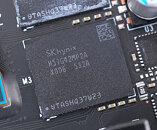
BenchlifeOn January 16th, NVIDIA officially notified its AIC partners that all bundled GDDR6 and GDDR7 memory packages are now increasing in price. We have been informed of the price increase through familiar AIC partners, but we won't specify the exact price here. What we can say is that NVIDIA's new prices are still lower than those announced by AMD to its AIB partners.
Fortunately, NVIDIA and AMD continue to include GDDR6 and GDDR7 memory with their GPU kits, which means AIBs don't have to independently source the costly graphics DRAM under less favorable terms. When AMD and NVIDIA negotiate with DRAM manufacturers like Samsung, Micron, and SK Hynix, they wield greater influence over the total capacity required and the pricing structure. This is especially true as they enter into long-term agreements regarding costs and purchasing decisions. If AIBs were to source DRAM on their own, they would likely face limited availability and significantly higher prices for any DRAM variant.
Source: Benchlife
Add your own comment

33 Comments on NVIDIA's GPU Memory Bundles Cost Less Than AMD's, Note AIB Partners

#1
Onasi
Interesting. Presumably, NV managed to secure better contracts and a larger supply, which allows them to do that.
Oh, and I am sure the comments on this topic will be very reasonable and not at all unhinged.
Posted on Reply
#2
SemperPC09
Not too surprising. NVIDIA is the bigger comapny and was likely able to secure larger amounts of vram at a lower cost than AMD could. Even though GDDR6 should be cheaper AMD likely didn't buy it at a Jenson discount. Plus, wouldn't be too shocked if AMD didn't order enough Vram for this gen.
Posted on Reply
#3
Quicks
Nah, the evil red team is just getting greedy. Nvidia will shortly read this, and adjust prices higher.
Posted on Reply
#4
Hecate91
The bundles probably cost less for Nvidia, doesn't mean they're going to pass the cost along.
Posted on Reply
#5
Onasi
Hecate91The bundles probably cost less for Nvidia, doesn't mean they're going to pass the cost along.
…they literally do. OEMs in this very article say that they pay less. Which ARE NVidias clients. You realize that you, as a customer, don’t buy your card from NVidia or AMD (FEs being the exception), right? Your money goes to OEMs. If THEY don’t feel like “passing the savings” it’s absolutely not the fault of NV.
Posted on Reply
#6
sudothelinuxwizard
Why aren't people reacting positively to this? I hate Ngreedia and their shafting of the common man as much as anyone, but when they do something positive for the consumer it should be acknowledged.

Yes, this isn't super hard for them to do, but them to think of us PC peeps at ALL given how much more the AI techbros make them is nice.
Not everyone at a big company is a super villain.
Posted on Reply
#7
Dirt Chip
So basically, size does matter.
More is less than.
Posted on Reply
#8
sudothelinuxwizard
Dirt ChipSo basically, size does matter.
More is less than.
Thanks, I can tell my non-existent GF that!
Posted on Reply
#9
jesdals
I think that something has been lost in translation here - if a AMD GDDR 6 bundle is more expensive than a Nvidia GDDR7 bundle. I would gues that it should have been that AMDs price adjustment is higher than Nvidias
Posted on Reply
#10
evernessince
Onasi…they literally do. OEMs in this very article say that they pay less. Which ARE NVidias clients. You realize that you, as a customer, don’t buy your card from NVidia or AMD (FEs being the exception), right? Your money goes to OEMs. If THEY don’t feel like “passing the savings” it’s absolutely not the fault of NV.
Depends on the cost of the GPU die itself, as noted in the article. Could be they are giving in one direction and taking in the other.

The article also doesn't make it clear what exactly is being compared here. AMD doesn't have GDDR7 consumer cards like Nvidia and yet the article states "the report highlights that NVIDIA's pricing for GDDR6 and GDDR7 memory is significantly lower than AMD's". The actual source has that one statement and most of it's words are spent elsewhere. This article is taking a translated sentence said in passing and making a whole thing about with inadequate details.

I have to assume we are talking about GDDR6 vs GDDR6 here because that's the only logical comparison. If Nvidia's GDDR7 is cheaper than AMD's GDDR6 that would be pretty crazy but that's not stated in the article.

Assuming the most logical scenario, GDDR6 vs GDDR6, the only card in the 5000 series that uses that kind of memory is the 5050. With a sample size of one SKU, and that being a budget SKU, it's entirely reasonable that Nvidia would indeed be charging less for the memory for a single budget card. Said card has already been panned in reviews for being poor value and it's entirely possible Nvidia gave a lower memory price entirely because they are aware of this.

This article needs to clarify additional details because as it's written, it leads people to conclusions based entirely on uncertainties. It states Nvidia's memory prices are lower than AMD's but the only apples to apples comparison I'm able to find here (because one isn't provided in the article) is one that's favorable to Nvidia.

There's also the question of quantity being produced. We know ASUS recently announced certain SKUs being discontinued and Nvidia twisting their arm to reverse that statement. End of the day, very little are being produced of certain models. I see 5070 Ti going for around $980 USD (lowest price) on Amazon right now while 9070 XT are going for $720. If Nvidia isn't producing enough, prices will increase.
sudothelinuxwizardWhy aren't people reacting positively to this? I hate Ngreedia and their shafting of the common man as much as anyone, but when they do something positive for the consumer it should be acknowledged.

Yes, this isn't super hard for them to do, but them to think of us PC peeps at ALL given how much more the AI techbros make them is nice.
Not everyone at a big company is a super villain.
^ Read above

Adding a bit more to what I said, people aren't going to celebrate price increases regardless. You also shouldn't assume something is positive. You should see actual positive results first. I remember people for a short period of time praising Nvidia for releasing LHR cards during the cypto boom and that praise ended up sourcing when they "accidentally" released a jailbreak to their own limitation. Even worse, they went on to release Crypto only cards that directly reduced the number of gaming GPUs and GPUs that could be resold and thus drive down GPU prices. That was just a test run for the AI boom.
Posted on Reply
#11
john_
One more evidence that AMD can't fight Nvidia on pricing. They can't put a much lower price on their GPUs and not expect an immediately respond from Nvidia. And Nvidia will keep making healthy profits, while AMD will have to start giving away it's GPUs for free, without any warranty that, that will secure more market share for them. So they put a price tag on their GPUs that will not alarm Nvidia, a price tag where the marketing department of Nvidia will report at Jensen that "AMD's GPUs are not a threat, the price difference is not enough to make loyal Nvidia customers consider AMD GPUs, we can keep prices as they are".
OnasiInteresting. Presumably, NV managed to secure better contracts and a larger supply, which allows them to do that.
Oh, and I am sure the comments on this topic will be very reasonable and not at all unhinged.
I don't thing Nvidia has to try. AMD will ask memory for 100 GPUs and Nvidia for 900 GPUs. It's just to be expected that Nvidia will get a better price offer than AMD, from before even the negotiations between Nvidia and the memory manufacturer even start.
Posted on Reply
#12
windwhirl
jesdalsI think that something has been lost in translation here - if a AMD GDDR 6 bundle is more expensive than a Nvidia GDDR7 bundle. I would gues that it should have been that AMDs price adjustment is higher than Nvidias
Machine translation of the source article says that Nvidia and AMD updated the price of the bundles, which in Nvidia's case also has Gddr7, but doesn't seem to indicate that GDDR7 is cheaper than GDDR6. It's just saying that AMD updated their GDDR6 bundles just like Nvidia updated their GDDR7 and GDDR6 bundles.

The price comparison doesn't seem to point out that GDDR7 is cheaper, which I'd think would garner a lot of attention if it had been written there.
Posted on Reply
#13
evernessince
windwhirlMachine translation of the source article says that Nvidia and AMD updated the price of the bundles, which in Nvidia's case also has Gddr7, but doesn't seem to indicate that GDDR7 is cheaper than GDDR6. It's just saying that AMD updated their GDDR6 bundles just like Nvidia updated their GDDR7 and GDDR6 bundles.

The price comparison doesn't seem to point out that GDDR7 is cheaper, which I'd think would garner a lot of attention if it had been written there.
If GGDR7 were cheaper that would explain the article but do you have a source for that? I cannot imagine a higher bandwidth memory being cheaper during the huge AI demand right now.
Posted on Reply
#14
john_
Onasi…they literally do. OEMs in this very article say that they pay less. Which ARE NVidias clients. You realize that you, as a customer, don’t buy your card from NVidia or AMD (FEs being the exception), right? Your money goes to OEMs. If THEY don’t feel like “passing the savings” it’s absolutely not the fault of NV.
And at the same time we know that Nvidia's AIBs make single digit profits, the reason EVGA stopped making discrete GPUs. So, while the VRAM might be cheaper, the GPU dies probably aren't. Nvidia is making a higher profit from GPU dies compared to AMD and uses VRAM to somehow sugarcoat the pricing pill.

I know that the article talks about bundles, but I think the source article means memory bundles alone, not VRAM and GPUs combined when comparing AMD's and Nvidia's pricing to AIBs. Something like "You ordered 10 GPUs and 40 memory chips, the price for the GPUs is X, the price of VRAM is Y, so total cost you pay is Z". And that Y is lower than AMD's Y. Just that, just pricing of Y, not Z.
Posted on Reply
#15
aktpu
sudothelinuxwizardthey do something positive for the consumer it should be acknowledged
Raising prices is positive? Sure man
Posted on Reply
#16
Onasi
john_And at the same time we know that Nvidia's AIBs make single digit profits, the reason EVGA stopped making discrete GPUs. So, while the VRAM might be cheaper, the GPU dies probably aren't. Nvidia is making a higher profit from GPU dies compared to AMD and uses VRAM to somehow sugarcoat the pricing pill.
We have no idea what current AIB margins are. The concrete example that gets constantly trotted out is the EVGA one and the more time passes the more I am starting to feel that it was just a cope excuse by the CEO who wanted to retire and kill off the company. Actions of other AIBs, like more Chinese ones expanding their ranges and MSI dropping AMD completely just don’t bear out the “completely unbearable margins” narrative.
john_I know that the article talks about bundles, but I think the source article means memory bundles alone, not VRAM and GPUs combined when comparing AMD's and Nvidia's pricing to AIBs. Something like "You ordered 10 GPUs and 40 memory chips, the price for the GPUs is X, the price of VRAM is Y, so total cost you pay is Z". And that Y is lower than AMD's Y. Just that, just pricing of Y, not Z.
Sure, it’s vague and I don’t doubt that chips themselves still go at a premium, though if said premium is significantly over AMD is impossible to say. The article is specifically about memory. Though, yeah, ultimately I don’t think that this is more than a curiosity and the market won’t be affected compared to the overall trends.
Posted on Reply
#17
Hecate91
john_And at the same time we know that Nvidia's AIBs make single digit profits, the reason EVGA stopped making discrete GPUs. So, while the VRAM might be cheaper, the GPU dies probably aren't. Nvidia is making a higher profit from GPU dies compared to AMD and uses VRAM to somehow sugarcoat the pricing pill.

I know that the article talks about bundles, but I think the source article means memory bundles alone, not VRAM and GPUs combined when comparing AMD's and Nvidia's pricing to AIBs. Something like "You ordered 10 GPUs and 40 memory chips, the price for the GPUs is X, the price of VRAM is Y, so total cost you pay is Z". And that Y is lower than AMD's Y. Just that, just pricing of Y, not Z.
Also while Nvidia cut the supply of GPU's sent to their AIB partners by 15-20%, with less GPUs sent the GPU+VRAM bundle may cost less as Nvidia can allocate more silicon and GDDR7 memory to AI datacenters. Nvidia makes a higher margin on GPU dies while sending out less, but the VRAM cost makes no sense as higher bandwidth memory is usually more expensive, the article is lacking details.
AleksandarK in NVIDIA Reportedly Cuts AIC Partner GPU Supply by up to 20%NVIDIA's shipments to add-in-card (AIC) partners may be 15-20% smaller, according to MEGAsizeGPU on X, who has accurately predicted NVIDIA's lineups in the past. According to that information, NVIDIA'…
sudothelinuxwizardWhy aren't people reacting positively to this? I hate Ngreedia and their shafting of the common man as much as anyone, but when they do something positive for the consumer it should be acknowledged.
There isn't anything positive for the consumer, GPU prices have only been going up.
Posted on Reply
#18
john_
OnasiWe have no idea what current AIB margins are. The concrete example that gets constantly trotted out is the EVGA one and the more time passes the more I am starting to feel that it was just a cope excuse by the CEO who wanted to retire and kill off the company. Actions of other AIBs, like more Chinese ones expanding their ranges and MSI dropping AMD completely just don’t bear out the “completely unbearable margins” narrative.
Well we have no idea if the rumor about VRAM pricing is real either, but here we are commending on this as if it is true.
Nevertheless, there are plenty of rumors about AIB profit margins and not just for EVGA. Also Nvidia builds and sells Founder's Edition cards, so it is in competition with it's AIBs. AIBs can't price their cards as high as they might want, with the exception of the high end models where people will probably pay much more for a card that is simply available.
Posted on Reply
#19
Onasi
john_Nevertheless, there are plenty of rumors about AIB profit margins and not just for EVGA. Also Nvidia builds and sells Founder's Edition cards, so it is in competition with it's AIBs. AIBs can't price their cards as high as they might want, with the exception of the high end models where people will probably pay much more for a card that is simply available.
Rumors are one thing, yeah, but I put more stock in what companies actually DO. And their actions so far don’t bear those rumors out.
As for pricing - AIBs can and absolutely do price their cards at whatever they want, it’s been going on for years. Even base models roll out with prices quoted immediately to the reviewers far above NV baseline. MSRP is pretty much a bazinga number these days. As for FEs being a competition - while this is technically true, the supply is extremely limited and in a lot of fairly significant markets there is straight up no option to buy those, so that argument always felt odd to me. If anything, this repeatedly proves that however much NV might not like this, they absolutely need AIBs and they have, so far, not demonstrated that they have a true ability to go full Apple and cut them out. Frankly, considering their focus switched over to the enterprise market, I don’t think they even try particularly hard to do that now, they seem to be content with letting AIBs run that side for them.
Posted on Reply
#20
Hecate91
OnasiIf THEY don’t feel like “passing the savings” it’s absolutely not the fault of NV.
It absolutely is if Nvidia refuses to work with their AIBs to keep prices down.
OnasiWe have no idea what current AIB margins are. The concrete example that gets constantly trotted out is the EVGA one and the more time passes the more I am starting to feel that it was just a cope excuse by the CEO who wanted to retire and kill off the company. Actions of other AIBs, like more Chinese ones expanding their ranges and MSI dropping AMD completely just don’t bear out the “completely unbearable margins” narrative.
AIB margins can't be high for every other brand out there to be expanding on making dozens upon dozens of SKUs to grab consumer attention, ridiculously overpriced high end cards to make up for margins on lower end segments, or AIBs getting into other things like monitors, power supplies, or peripherals with higher margins. MSI just plain sucked at making Radeon cards, they aren't missed in the market at all.
EVGA being gone proves over time they got out at the right time to have avoided all of the messes with pricing,12vhpwr, paper launches, and the pain of trying to compete against Nvidia's own FE cards undercutting them on price.
OnasiSure, it’s vague and I don’t doubt that chips themselves still go at a premium, though if said premium is significantly over AMD is impossible to say. The article is specifically about memory. Though, yeah, ultimately I don’t think that this is more than a curiosity and the market won’t be affected compared to the overall trends.
The article seems more like a rumor with regards to memory pricing, GDDR7 being cheaper than GDDR6 seems very unlikely.
Posted on Reply
#21
sudothelinuxwizard
aktpuRaising prices is positive? Sure man
No? But not stopping bundling will help to curb the increases somewhat.
Posted on Reply
#22
windwhirl
evernessinceIf GGDR7 were cheaper that would explain the article but do you have a source for that? I cannot imagine a higher bandwidth memory being cheaper during the huge AI demand right now.
Source for what I said is the same as the source of this news post, it just doesn't show the source when viewing this thread in the forum.
benchlife.info/nvidia-finally-raise-memory-price-but-remain-same-msrp/

For the record, I'm not stating whether GDDR7 is cheaper or more expensive than GDDR6. I'm just saying that it feels odd that, if GDDR7 is actually cheaper than GDDR6, the article doesn't mention it. GDDR7 being cheaper than GDDR6 would be quite the interesting fact if it were true (which may or may not be true, but the article doesn't say and I can't check that on my own).
Posted on Reply
#23
john_
windwhirlSource for what I said is the same as the source of this news post, it just doesn't show the source when viewing this thread in the forum.
You have to see the article in the site to get the source link(s). The source link here points to the site and there you can see the real source link(s).
Posted on Reply
#24
windwhirl
john_You have to see the article in the site to get the source link(s). The source link here points to the site and there you can see the real source link(s).
Yeah, I know. I do find that to be unnecessarily convoluted, but I digress...
Hecate91GDDR7 being cheaper than GDDR6 seems very unlikely.
I think along the same lines for the present time but I do wonder how far we are from the situation being reversed by increased GGDR7 supply and/or decreased GDDR6 supply, relative to the market demand.
Posted on Reply
#25
Onasi
Hecate91It absolutely is if Nvidia refuses to work with their AIBs to keep prices down.
Mmm, and CATL should work with Porsche to ensure that the next Taycan is affordable, I assume. Again, you blatantly don’t understand how the consumer AIC market works. NV looks out for NV in this case, their business (in the consumer space) is to sell GPU chips and memory to AIC. Why would they price those goods, which are in extreme demand, significantly below what they can earn? Do you think AMD does that? It’s just poor business, nobody would go for it.
Hecate91AIB margins can't be high for every other brand out there to be expanding on making dozens upon dozens of SKUs to grab consumer attention, ridiculously overpriced high end cards to make up for margins on lower end segments, or AIBs getting into other things like monitors, power supplies, or peripherals with higher margins. MSI just plain sucked at making Radeon cards, they aren't missed in the market at all.
Pretty much all notable AIBs have been diversified or started out as diversified long before the price hikes of the recent years. The days of companies making “just video cards” have been over since, like, 2000s. EVGA was an outlier with their primary focus. I have no idea how you can actually present such blatantly nonsensical arguments with a straight face. ASUS, for example, has been the largest AIC by volume in a lot of years and I somewhat doubt that their *checks notes* massive other markets ventures entirely exist to subsidize making NV GPUs. Like, what the actual fuck is that take?
As for MSI, sour grapes, I suppose.
Posted on Reply
Add your own comment
Nov 17th, 2026 21:20 CST change timezone

New Forum Posts

Popular Reviews

TPU on YouTube

Controversial News Posts