Thursday, June 18th 2026

AMD Quietly Drops Memory Encryption Feature from Consumer Ryzen CPUs
According to an investigation by Ars Technica, AMD has quietly removed a memory encryption feature from its consumer-focused Ryzen processors after years of inclusion. This feature, known as Transparent Secure Memory Encryption (TSME), is used to encrypt a system's memory content and prevent possible physical exploits that unencrypted memory data could be vulnerable to. Reportedly, AMD introduced TSME about a decade ago and began shipping it across all of its processors, including regular Ryzen, professional Ryzen Pro, Threadripper, and EPYC solutions. However, a random test on a Ryzen 7 9700X CPU, which uses "Zen 5" IP, has highlighted the absence of TSME support in consumer chips. In various exchanges between AMD engineers and some security professionals, the investigation led to a single response from AMD stating that "TSME is a security feature only applied to PRO CPUs as part of AMD PRO Technologies."
AMD has reportedly removed the feature quietly without prior notice. Discovering that the feature is missing is incredibly difficult on Windows-based machines, but still possible on Linux-based OS installations. Under a Linux-based OS, checking for firmware security revealed a missing encrypted RAM flag, despite TSME being enabled in the BIOS previously. It turns out that starting with the AGESA 1.2.7.0 build and in future AGESA versions, AMD has systematically removed the feature from its consumer Ryzen processors. After further investigation and inquiries to AMD, there is no information on whether the AGESA firmware is disabling this feature or if newer CPUs will ship with TSME disabled at the silicon level. All we know so far is that the feature is no longer present after years of being included on the consumer side.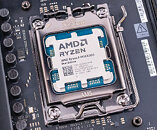 Finally, AMD is now reserving the feature for the AMD PRO section of its CPU products. Adding TSME to the PRO-exclusive list of features is another clear product distinction, indicating AMD's plan to differentiate its lineup from traditional consumer offerings. Interestingly, AMD never advertised TSME to consumers, but it was a nice added benefit. However, for those interested in additional security layers, especially in enterprise environments, switching to the PRO series of Ryzen CPUs might be a good idea.
Source:
Ars Technica
AMD has reportedly removed the feature quietly without prior notice. Discovering that the feature is missing is incredibly difficult on Windows-based machines, but still possible on Linux-based OS installations. Under a Linux-based OS, checking for firmware security revealed a missing encrypted RAM flag, despite TSME being enabled in the BIOS previously. It turns out that starting with the AGESA 1.2.7.0 build and in future AGESA versions, AMD has systematically removed the feature from its consumer Ryzen processors. After further investigation and inquiries to AMD, there is no information on whether the AGESA firmware is disabling this feature or if newer CPUs will ship with TSME disabled at the silicon level. All we know so far is that the feature is no longer present after years of being included on the consumer side.

54 Comments on AMD Quietly Drops Memory Encryption Feature from Consumer Ryzen CPUs
Support for DDR5 ECC also seems to have gone away on most AM5 motherboards and Zen 5 chips. Has been mostly free (except for APUs) since Zen 1.
Someone is going to use as a target for malware and some AI is going to figure out how to exploit it even on regular systems where there is only one user
it's a lock and key that already exists but amd decided to take the key away from us for product segmentation.
Malicious behavior.
- Nvidia is coming with ARM CPUs. Intel is becoming again a threat with new advanced and working manufacturing nodes. Qualcomm is already here, Mediatek will follow. We can't keep up with Nvidia in features, while Intel is advancing it's own feature set that is also offering to integrated GPUs.
What can we do?
- How about making a mess with FSR 4.1 thinking that we sill sell more RDNA 4 GPUs that way, keep using RDNA 3.5 in products giving Intel the opportunity to become a competitor, getting ready to remove iGPU so we can fit an NPU and have a clear disadvantage against future Intel CPUs and also remove security features from Ryzen CPUs to push 10 more people into paying for a Pro Ryzen chip?
I know that, if u ask MSI about ECC. They will say that AM4 and AM5 does not support it.
I note "not including" is very different from "removing" or "disabling".
Is it not possible that future CPUs simply will "not include" the feature at all? That is, that it simply is not coded into the "silicon level" of future CPUs in the first place?
In the past, essentially ALL houses and apartments being constructed were pre-wired for landline phones. In the last 10 - 15 years, more and more users only have cell phones and no-longer (or never did for younger folks) use landlines. Consequently, it is more and more common that new homes under construction are not being wired for regular copper phone lines. Does that imply builders are "removing" or "disabling" that feature? No.
In the past, essentially all cars came with a cassette player. Then a CD player in later years. Most (if not all) new cars today do not include cassette or CD players. Instead, the include Bluetooth and USB ports. Did car makers "remove" those players from cars made today? No.
I note the source article where ARS Technical claims "Users cry foul after AMD stripped memory crypto from its consumer CPUs".
"Users cry foul?" Interesting. I never saw any complaint or report by any user (let alone userS) until this story broke indicating "one" "Linux hobbyist" noticed the feature was "not supported". Where are all these users?
I now "cry foul" on Ars Technical for blowing WAY out of proportion and what amounts to making a mountain out of molehill over a feature that barely affected anyone. And I ask others in the media, as well as fellow readers, please do not toss gas on the fire that maybe was started by an angry arsonist with a grudge in the first place.
www.bing.com/entitydetails?q=intc&wt=FinanceGenericL3TabModule&ocid=ansMSNMoney11&qid=a1vmf2&t=a1vmf2&src=b_l3tsubp&id=a1vmf2&l3=L3_Chart&chart=quote&timeFrame=1Y&chartType=line
marketwise.com/investing/intel-stock-triples-will-rise-continue-and-sustain-turnaround/
Regardless, this thread has absolutely nothing to do with Intel.
AMD was contacted multiple times by several parties and this includes communication with 2 engineers.
There is no ambiguity here, it was 100% intention and AMD is being a POS by trying to play it's customers off it's partners and just removing features that customer could have potentially purchased their products for.
What they are doing here is not just wrong, it's illegal.MSI trying to pretend as if a feature doesn't exist to make competitors look good.The premise of the article regards existing CPUs losing the feature. Whether or not future CPUs do is another matter.To me, people making this argument haven't typically put effort into looking. It's akin to saying it can't be an issue because you never bothered searching. It's like yeah, that checks out. Never mind that the claimed issue is relatively new and impacts a smaller group of people. We also don't know the propensity of this group to publically report this issue, how big they are, ect. There simply hasn't been enough time for more issues to crop up.
Ultimately, the logic that because you can't personally observe a significant amount of complaints makes it a non issue is DEEPLY flawed to say the least. If there is factual proof that a problem exist, then said problem exist unless you are prove otherwise. The number impacted is immaterial as to whether something is or is not an issue. You cannot dismiss an issue wholesale because it doesn't meet your arbitrary complain quota. This flawed logic you could use to stamp out any issue in it's infancy.
I would like it for once if customers stopped beating each other down protecting their favorite companies. Companies should not be able to get away with things because there isn't enough victims yet, that's a screwed up mentality.Not yet but it might certainly be in the cards given their actions recently.Not the guy you're replying to but you aren't broaching his point. Good stock performance does not erase perceived missteps. Especially right now for companies like Intel, Nvidia, and AMD as they simply cannot make enough to meet demand.
My motherboard supports bifurcation that basically no one uses. Does that make it right if the feature is removed in a BIOS update? Apply that logic across the board, companies shouldn't have the right to unilaterally remove features from existing products.
So based on your uncanny powers of observation, you have decided I didn't even bother to look? Wow.
I did look. I searched here on TPU, BC, MG, TSG, Tom's, and Ars and found zero reports of anyone crying foul before Ars published that article. Zero.
So, how about you, @evernessince? Are you simply going to accept what you read on Ars as the gospel without putting any effort into looking to see if true?
Or are you just going to criticize others who do question them, again, without putting any effort into looking in to it?
So how about you showing us, okay? Show us where users are crying foul, other than you here.Oh, you mean as you just did? :kookoo:
FTR, I agree. Its why I made the post defending Intel. It made not sense to criticize them in this thread.No its not. The premise of the article is to spew FUD. I ask again, where are those supposed users "crying foul?"I didn't dismiss the issue, wholesale or in part. I totally accept whether that feature has been "removed", "disabled", or "not included" that it is no longer there.
What you are not understanding is what the actual issue is.That's total nonsense! One of the silliest things I've ever heard.
That implies even false perceptions by naïve people are right because those people are too ignorant and/or lazy to learn the facts. Total nonsense.Illegal? Bullshit!That is wrong. We own the hardware not the programming on it. The developer writes the code and are the owners of the copyright. We are simply licensed to use it.
AMD and Intel own the IP cores, firmware, and software that are part of their processor ecosystem. This includes:
- Hardware designs (microarchitecture, cores, I/O, etc.)
- Firmware (BIOS/UEFI, microcode updates)
- Drivers and software for their processors, chipsets, and other components
These are protected by copyright, patents, and trade secrets. Intel and AMD retain all rights unless explicitly licensed to others.These are the exact same laws that allow software developers like Microsoft, Norton, Intuit, Oracle, etc. to change their programs whether we consumers like it or not.
I note for years car makers have been wiring their cars during production to support all sorts of features that are only used or enabled on specific trim levels, or when the buyer pays for some additional option or accessory. Crawl under the dash and you likely will see several connectors and mounting brackets for things not there. Should users "cry foul" if suddenly, an unused connector is no longer included?
How is that different from AMD removing a feature hardly anyone used, or even knew was there?
Was it "illegal" when Samsung stopped putting DVI ports on their monitors, forcing some to buy a new graphics card that supported HDMI instead?
I've already pointed out the fallacy of your "where are those supposed users" argument, I'll not reapet myself. You've yet to actually make an argument against it.Which would be?No, it simply states that stock performance does not erase missteps and product issues.
Bar go up does not equal issue go away, in caveman speak.
We should shut this down with extreme prejudice because of the precedent it sets.