Monday, June 22nd 2026
AMD FSR Upscaling 4.1 Officially Released for Radeon RX 7000 GPUs

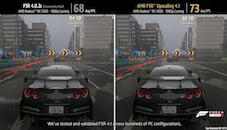
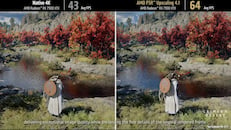
AMD has officially released the RDNA 3-focused FSR Upscaling 4.1 model for the Radeon RX 7000 series of graphics cards. This marks the first step towards deploying the FSR 4 technology across all RDNA gaming GPUs. According to a post on X by AMD's Jack Huynh, Senior Vice President and General Manager of the Computing and Graphics Group, FSR Upscaling 4.1 is now available for RDNA 3 GPUs. With the latest AMD Software: Adrenalin Edition 26.6.2 graphics driver download, Radeon RX 7000 series gamers can enjoy more than 300 games running FSR 4.1, providing a significant performance boost and finally offering features that RDNA 4 gamers have been enjoying for a while. You can find some AMD-provided performance comparisons in the slides below.

We have confirmed that AMD's FSR Upscaling 4.1 model for RDNA 3 GPUs is fundamentally different from the RDNA 4 version. RDNA 4 has native processing for 8-bit floating point data, allowing FSR 4.1 on RDNA 4 to run on FP8 data types. To get the FSR 4.1 Upscaling model to run on RDNA 3, AMD must convert this to 8-bit integer data, as RDNA 3 hardware uses INT8 data types without FP8 support. Generally, integer math is sufficient to optimize these models, but the conversion work is necessary, which explains the delay between RDNA 4 and RDNA 3 support. This difference required AMD to completely modify the FSR 4.1 model for the new data type and ensure there is no quality loss in the final visual output. AMD officially states that the visual fidelity is on par with the FSR 4.1 model that runs on RDNA 4.

Finally, AMD is also addressing RDNA 3-based APUs. Since integrated graphics are inherently weaker than discrete GPU solutions, some additional performance optimizations are needed. AMD claims that they are working on this with fine-tuned "lightweight machine learning models" to support FSR 4.1. Whether this includes RDNA 3.5 remains to be seen, but Valve's recent leak of the INT8-based FSR 4.1 model shows that the technology runs on RDNA 3.5 without issues, so future updates from AMD are expected.

Source: Jack Huynh on X
Add your own comment

106 Comments on AMD FSR Upscaling 4.1 Officially Released for Radeon RX 7000 GPUs

#76
AusWolf
Razor512I used the term vacuum because your original statement, ignored that the competition was doing and offering. There is more of a general expectation that products will receive updates that will generally improve the product compared to how it was at launch. This especially became the case in the early to mid 2000s. For example, someone with a ATI radeon 9700 pro from 2002, could comfortably run many AAA games at reasonably high settings, including maxing out Half Life 2 (launched in 2010) at 720p.
Half-Life 2 was released in 2004.

The rest of your argument holds true today as well. Present day GPUs play present day games well (surprise surprise). However, wanting a present day feature to run on a last gen, or even older card is a different matter. Nothing has ever been guaranteed in that regard, ever.
Razor512As for frame gen, I addressed it in my previous post www.techpowerup.com/forums/threads/amd-fsr-upscaling-4-1-officially-released-for-radeon-rx-7000-gpus.350185/post-5743809
Can you please summarise in a sentence or two? Your wall of text reads more like a marketing speech, a lame excuse for a lack of feature that has no reason not to be included with 40 or even 30 series RTX GPUs (which even you acknowledge in your post, if I understand it correctly).
Posted on Reply
#77
Rulumi
YouseethisHAGS is also not supported on vega. If that offer a 2,5% as well the total, along with resizable bar, would be 1,05x1,025=1,07625=7,625% for free. This is a generational leap nowadays :roll:
I think AMD only supports HAGS in RDNA 3 and newer. One of the early preview drivers allowed HAGS in RDNA 2 I think, but AMD eventually not after much removed the option and feature from RDNA 2, I don't know why.
Posted on Reply
#78
Youseethis
RulumiI think AMD only supports HAGS in RDNA 3 and newer. One of the early preview drivers allowed HAGS in RDNA 2 I think, but AMD eventually not after much removed the option and feature from RDNA 2, I don't know why.
They even tested it on 5000 series but it caused performance issues (if I remember correctly). Rdna does not have the hardware for it. Neither rdna 2 for that matter. Vega obviously can not do it. For hags it's a what if, but resizable bar and fsr 4 work just fine.
Posted on Reply
#79
Razor512
AusWolfHalf-Life 2 was released in 2004.

The rest of your argument holds true today as well. Present day GPUs play present day games well (surprise surprise). However, wanting a present day feature to run on a last gen, or even older card is a different matter. Nothing has ever been guaranteed in that regard, ever.


Can you please summarise in a sentence or two? Your wall of text reads more like a marketing speech, a lame excuse for a lack of feature that has no reason not to be included with 40 or even 30 series RTX GPUs (which even you acknowledge in your post, if I understand it correctly).
Sorry for the typo on the date, I was looking at a bunch of different games and random GPU reviews of cards from various years that still included the radeon 9700 pro in the results (that card remained relevant for quite a long time), and for the frame gen it is the middle paragraph. Though clearly it seems like you did not even attempt to read it and simply made up claims about the post, as that is the only way someone could interpret it that wrongly of a post going into detail about Nvidia's greed (this the post overall called out greed by both AMD and Nvidia).

There is not much room to summarize it without it. Since the way their greed was implemented is highly calculating. They deliberately held back frame gen when they could have implemented it on older cards, especially after they moved pass the model that needed the optical flow ASIC, but they artificially restricted it anyway since they didn't need widespread adoption for game devs to optimize for it, so long as they optimized for the latest DLSS upscaling models. This shows that Nvidia wants to restrict features as much as possible, but need the larger user base for at least one feature that uses the same inputs that frame gen would also use.

I then further supported the assertion by showing someone using multi-frame gen on RTX4000 cards but Nvidia adds a black overlay at the last stage of the render (as if intentionally blocking workarounds to the restriction). Overall it shows that Nvidia is increadibly greedy in feature support, but they are calculating enough in their greed to not sacrifice future success of their brand exclusive features.
That specific area is where AMD and Nvidia largely deviated. AMD locked features in such a way that is negatively impacting how willing game studios are willing to devote resources into implementing their brand exclusive features natively, especially when it comes to the additional Redstone features beyond upscaling.
Posted on Reply
#80
AusWolf
Razor512Sorry for the typo on the date, I was looking at a bunch of different games and random GPU reviews of cards from various years that still included the radeon 9700 pro in the results (that card remained relevant for quite a long time), and for the frame gen it is the middle paragraph.
Neither the 9700 Pro (while being awesome at the time), nor the following x800 series stayed relevant for long due to lack of Shader Model 3.0 support which Nvidia had in the Geforce 6000 series, and later ATi did as well with the x1800 series.
Razor512Though clearly it seems like you did not even attempt to read it and simply made up claims about the post, as that is the only way someone could interpret it that wrongly of a post going into detail about Nvidia's greed (this the post overall called out greed by both AMD and Nvidia).
I'm at work. I don't have time to read massive amounts of text. I apologise if that causes confusion.
Razor512That specific area is where AMD and Nvidia largely deviated. AMD locked features in such a way that is negatively impacting how willing game studios are willing to devote resources into implementing their brand exclusive features natively, especially when it comes to the additional Redstone features beyond upscaling.
So if Nvidia restricts a feature that's ok, but if AMD does it, that's the end of the world even if they make a translation layer available for it later? I read this part of your comment twice, but I still don't understand how you came to the conclusion that one gets a pass but the other one doesn't. You've got some super weird mental gymnastics going on there.

So sorry, but I can't accept any kind of far-fetched lengthy explanation to justify a double standard. Do you have FSR 4 on older cards that can't run the original code without translating it to INT8? Yes. Do you have MFG on older cards that are fully capable of running it without basically any software work? No. That's the end of it.
Posted on Reply
#81
shuffy_losys
AusWolfNeither the 9700 Pro (while being awesome at the time), nor the following x800 series stayed relevant for long due to lack of Shader Model 3.0 support which Nvidia had in the Geforce 6000 series, and later ATi did as well with the x1800 series.
I'd argue the R300 series stayed as relevant as it needed to be, because there wasn't really a killer app for Shader Model 3.0 until maybe around late 2005. The R300 had Half Life 2.
Posted on Reply
#82
Dr. Dro
Razor512I then further supported the assertion by showing someone using multi-frame gen on RTX4000 cards but Nvidia adds a black overlay at the last stage of the render (as if intentionally blocking workarounds to the restriction). Overall it shows that Nvidia is increadibly greedy in feature support, but they are calculating enough in their greed to not sacrifice future success of their brand exclusive features.
That specific area is where AMD and Nvidia largely deviated. AMD locked features in such a way that is negatively impacting how willing game studios are willing to devote resources into implementing their brand exclusive features natively, especially when it comes to the additional Redstone features beyond upscaling.
"Black frames" seem to be conjecture by the person that went plonking around in there, given how easy it was to dig it up and force it on, I doubt that it was intentionally "sabotaged". The most likely is that it expects input from the hardware portion in Blackwell that Ada lacks, resulting in unexpected behavior (aka an empty generated frame).


9:43-13:43 segment is what you want to look at
AusWolfSo if Nvidia restricts a feature that's ok, but if AMD does it, that's the end of the world even if they make a translation layer available for it later? I read this part of your comment twice, but I still don't understand how you came to the conclusion that one gets a pass but the other one doesn't. You've got some super weird mental gymnastics going on there.

So sorry, but I can't accept any kind of far-fetched lengthy explanation to justify a double standard. Do you have FSR 4 on older cards that can't run the original code without translating it to INT8? Yes. Do you have MFG on older cards that are fully capable of running it without basically any software work? No. That's the end of it.
That's not what he's talking about, though. As things stand, for example, if you have an RDNA 2 card, you don't even get the same updated driver code base people with RDNA 3+ get. Meanwhile, Ampere is thoroughly supported within its hardware limitations.

DLSS 4.5's multi frame generation algorithm relies on hardware flip metering to avoid frame time being all over the place. Without it, you will get extreme blur due to constant mispredictions, a single odd frame can throw it all up in the air. This is, more or less, the same vein as to why AMD has not brought AFMF to earlier generation GPUs. It's extremely easy to reproduce with Lossless Scaling, set MFG factor to x20 and load any game.

I just find it really odd to pick this quackery out of the actually useful things, while of course glossing over everything that actually matters
Posted on Reply
#83
Razor512
AusWolfSo if Nvidia restricts a feature that's ok, but if AMD does it, that's the end of the world even if they make a translation layer available for it later? I read this part of your comment twice, but I still don't understand how you came to the conclusion that one gets a pass but the other one doesn't. You've got some super weird mental gymnastics going on there.

So sorry, but I can't accept any kind of far-fetched lengthy explanation to justify a double standard. Do you have FSR 4 on older cards that can't run the original code without translating it to INT8? Yes. Do you have MFG on older cards that are fully capable of running it without basically any software work? No. That's the end of it.
It is not a double standard, I also never stated or even implied that it was okay for Nvidia to do that, hence the detailed post explaining exactly the opposite conclusion that you jumped to.
The point I was making is that Nvidia restricted things in a very calculating way that allowed them to limit what older cards got, but ensured that the key inputs needed for the features that they decided to restrict to newer cards would still command the full range of game studio resources.

For example, by releasing the latest DLSS upscaling (as well as every other model) and ray regeneration functions to all RTX cards, they ensure that nearly 90% of gamers can utilize those specific brand exclusive features. To be more clear, this means that if hypothetically only 0.000001% of gamers could use frame gen, their current strategy would still result in a good implementation of frame gen.
Since frame gen uses those same inputs within the render pipeline, if a game studio does a really good DLSS 4 and 4.5 upscaling implementation, then it naturally leads to a good frame gen implementation. This nuance allowed Nvidia to indulge in greed and not release those features on older cards.
Dr. Dro"Black frames" seem to be conjecture by the person that went plonking around in there, given how easy it was to dig it up and force it on, I doubt that it was intentionally "sabotaged". The most likely is that it expects input from the hardware portion in Blackwell that Ada lacks, resulting in unexpected behavior (aka an empty generated frame).
For this aspect, one of the users more recent upates as more individuals started contributing, indicated a successful multi frame generation under linux and spoofing a different device ID.
github.com/FirstEverTech/RTX4000-MFG-Unlock/releases/tag/v2.0-nsight-notes

Though this aspect is a work in progress as the OP is in the process of validating it with more in-depth monitoring of the render path and analysis of each generated frame. The specific parts that stood out to me were:


While the flip metering from the video you linked to is a concern, likely deeper analysis will be needed to see if there is any kind of fallback happening due to the hardware differences, or if it will be an issue of things generally looking okay but encountering occasional artifacts when pacing for a frame ends up deviating too much.

More of the discussion is happening outside of the git hub page on the guru3d forums, especially forums.guru3d.com/threads/rtx-4070-ti-running-dlss-4-mfg-4x-%E2%80%94-back-to-the-beginning-of-this-investigation.459801/ which focuses more on the Linux testing.
Posted on Reply
#84
AusWolf
Dr. DroThat's not what he's talking about, though. As things stand, for example, if you have an RDNA 2 card, you don't even get the same updated driver code base people with RDNA 3+ get. Meanwhile, Ampere is thoroughly supported within its hardware limitations.
1. You're moving the goalpost. We were talking about features, not the driver.
2. You don't need the newest driver code to enjoy your RDNA 2 card to the fullest. The new driver code brings nothing new to the table.
3. AMD promised a driver code update as and when necessary. Bugs are still being fixed. What else do you need?
Razor512It is not a double standard, I also never stated or even implied that it was okay for Nvidia to do that, hence the detailed post explaining exactly the opposite conclusion that you jumped to.
The point I was making is that Nvidia restricted things in a very calculating way that allowed them to limit what older cards got, but ensured that the key inputs needed for the features that they decided to restrict to newer cards would still command the full range of game studio resources.

For example, by releasing the latest DLSS upscaling (as well as every other model) and ray regeneration functions to all RTX cards, they ensure that nearly 90% of gamers can utilize those specific brand exclusive features. To be more clear, this means that if hypothetically only 0.000001% of gamers could use frame gen, their current strategy would still result in a good implementation of frame gen.
Since frame gen uses those same inputs within the render pipeline, if a game studio does a really good DLSS 4 and 4.5 upscaling implementation, then it naturally leads to a good frame gen implementation. This nuance allowed Nvidia to indulge in greed and not release those features on older cards.
You're mincing words again. To make sure I get you right, are you trying to make me swallow that Nvidia gets a pass because older gen cards run the newest DLSS version even though they don't run MFG, but AMD fails because their older cards don't run the new ML-based FSR 4 without a translation layer? Is it really about version numbers and feature names? What if AMD had called FSR 4 something entirely different? Like part of the Redstone feature group, for example. That way we would still be on FSR 3.1 while older cards would be missing Redstone. Is it really about version numbers and feature names?

I also don't get why we're still crying when here we are with full RX 7000 support and RX 6000 support being on the way. Why are we still beating the dead horse?
Posted on Reply
#85
Razor512
AusWolf1. You're moving the goalpost. We were talking about features, not the driver.
2. You don't need the newest driver code to enjoy your RDNA 2 card to the fullest. The new driver code brings nothing new to the table.
3. AMD promised a driver code update as and when necessary. Bugs are still being fixed. What else do you need?


You're mincing words again. To make sure I get you right, are you trying to make me swallow that Nvidia gets a pass because older gen cards run the newest DLSS version even though they don't run MFG, but AMD fails because their older cards don't run the new ML-based FSR 4 without a translation layer? Is it really about version numbers and feature names? What if AMD had called FSR 4 something entirely different? Like part of the Redstone feature group, for example. That way we would still be on FSR 3.1 while older cards would be missing Redstone. Is it really about version numbers and feature names?

I also don't get why we're still crying when here we are with full RX 7000 support and RX 6000 support being on the way. Why are we still beating the dead horse?
Simply put, Nvidia is not releasing the latest DLSS models and ray reconstruction to all RTX cards out of the kindness of their hearts. It is a business decision that requires one to think in a more nuanced fashion. They did not release even 2X frame generation to older cards, because from a greed standpoint, they didn't need to in order to ensure that it gets a good implementation in new titles, because a game dev doesn't need to even think about or even know that DLSS frame generation even exists in order to optimize for it, as simply optimizing for and doing a good implementation of the latest upscaling model, also means that frame generation also gets an optimized implementation as it is using the the work and inputs from the upscalers to generate additional frames, this is also why the tensor core workload is so low for each generated frame.

To be clear, this is not giving them a free pass or anything even remotely close to that. I am just explaining how Nvidia was able to gatekeep frame generation without running into the issues AMD is facing with the rest of their Redstone stack.
Posted on Reply
#86
AusWolf
Razor512Simply put, Nvidia is not releasing the latest DLSS models and ray reconstruction to all RTX cards out of the kindness of their hearts. It is a business decision that requires one to think in a more nuanced fashion. They did not release even 2X frame generation to older cards, because from a greed standpoint, they didn't need to in order to ensure that it gets a good implementation in new titles, because a game dev doesn't need to even think about or even know that DLSS frame generation even exists in order to optimize for it, as simply optimizing for and doing a good implementation of the latest upscaling model, also means that frame generation also gets an optimized implementation as it is using the the work and inputs from the upscalers to generate additional frames, this is also why the tensor core workload is so low for each generated frame.

To be clear, this is not giving them a free pass or anything even remotely close to that. I am just explaining how Nvidia was able to gatekeep frame generation without running into the issues AMD is facing with the rest of their Redstone stack.
That explains it from a developer / game adoption standpoint. It doesn't explain it from a user standpoint. If you own a 40 series card, you're not getting MFG, end of. Why or how is irrelevant.
I mean, yay, game support is flawless, that's super awesome, but your card doesn't run it even though it could. You got screwed over sideways. What else is there to explain?
Posted on Reply
#87
Dr. Dro
AusWolf1. You're moving the goalpost. We were talking about features, not the driver.
2. You don't need the newest driver code to enjoy your RDNA 2 card to the fullest. The new driver code brings nothing new to the table.
3. AMD promised a driver code update as and when necessary. Bugs are still being fixed. What else do you need?
1. They are inextricably linked. No new kernel drivers, no new advanced features.
2. Sure, just download some old driver and try to play new games. You do realize that this is exactly the problem, right?
3. AMD PR damage control argument verbatim. It is meaningless and doesn't address the problem of missing extensions and functionality, if anything, it's an argument crafted specifically to avoid it
Posted on Reply
#88
AusWolf
Dr. Dro1. They are inextricably linked. No new kernel drivers, no new advanced features.
No new card, no new features. No new features, why the need for new drivers?
Dr. Dro2. Sure, just download some old driver and try to play new games. You do realize that this is exactly the problem, right?
I rarely ever update my drivers even on Windows. It's not as necessary as people think.
Dr. Dro3. AMD PR damage control argument verbatim. It is meaningless and doesn't address the problem of missing extensions and functionality, if anything, it's an argument crafted specifically to avoid it
What functionality is missing?
Posted on Reply
#89
Razor512
AusWolfThat explains it from a developer / game adoption standpoint. It doesn't explain it from a user standpoint. If you own a 40 series card, you're not getting MFG, end of. Why or how is irrelevant.
I mean, yay, game support is flawless, that's super awesome, but your card doesn't run it even though it could. You got screwed over sideways. What else is there to explain?
I was never arguing it from the user standpoint. My reference to it was simply in support of, and limited to the logic and reasoning for the assertion that AMD should extend support for their brand exclusive versions of FSR as well as ray regeneration to their older cards, so that the user base that can utilize those functions can grow exponentially regardless of how many people own RX 9000 cards.

Since FSR 4 is not a simple one click toggle to add to a game, same with ray regeneration, it needs a large enough userbase for game studios to justify allocating the time and resource needed for a good and well optimized implementation of their brand exclusive functions (especially the additional Redstone functions beyond upscaling).
This is why Nvidia doesn't gatekeep the functions needed to compute the inputs needed for newer features that they want to gatekeep. Hence why they readily gatekeep frame Gen and anything else downstream from the DLSS model, but widely release new DLSS models, and any improvements to ray regeneration to all RTX cards.
If I were to rope in a user standpoint, it should be that the Nvidia customers gain a positive side effect from their business decision RTX users enjoy the latest DLSS models and ray reconstruction as a side effect of Nvidia wanting to ensure that developers dedicate the time and resources needed to implement those features well, since their downstream exclusive features depend on the base DLSS models being implemented as good as possible in the game.
Beyond that the company will also see less directly measurable benefits such as more positive consumer sentiment for at least maintaining the upscalers and ray regeneration, which can sway close decisions when deciding between 2 competing products.
Posted on Reply
#90
Dr. Dro
AusWolfNo new card, no new features. No new features, why the need for new drivers?
For anything that isn't a GPU, aka a highly programmable, advanced processor which is meant by design to constantly receive new functionality, you would be right. You can run audio drivers from 2008 on your Windows 11 PC, and it will work.

You're not wrong that if we go by pure obligation, this is the case. But an abandoned GPU is effectively a very expensive paperweight, so if you don't want the statement "AMD GPUs are complete dogshit" to go from a delusional fanboy's lunacy to uncontested reality, then you better demand prim and proper driver support with everything that's reasonable to ask and more.
AusWolfI rarely ever update my drivers even on Windows. It's not as necessary as people think.
Until you actually try to run something new. And even if you don't play anything new, there are always enhancements being done that will improve your experience and correct errors introduced by changes in the operating system and applications that you use on a day to day basis. While you don't need to download every single driver release they put out (even though, if you're buying a high-end graphics card, I don't see why you wouldn't make full use of it), at least once every couple of months you should keep it up to date for security, compatibility, and performance reasons.
AusWolfWhat functionality is missing?
Shader Model 6.10 and newest additions to DirectX 12
Nearly everything introduced to Vulkan runtime in the past year
Latest versions of AMF media framework

I could go on and on. Basically, right now, anyone with an RDNA 2 card is getting the same level of treatment as people running GTX 10 series cards. It's usable? Yeah, sure it is. But the signs of age are starting to show, some workarounds already needed, and staying behind already a reality. It will not get better from here, even if AMD makes good on their promise to release FSR 4 for them next year. Might even be a "send-off gift" of sorts, put this out and then never touch it again.
Posted on Reply
#91
AusWolf
Razor512I was never arguing it from the user standpoint. My reference to it was simply in support of, and limited to the logic and reasoning for the assertion that AMD should extend support for their brand exclusive versions of FSR as well as ray regeneration to their older cards, so that the user base that can utilize those functions can grow exponentially regardless of how many people own RX 9000 cards.

Since FSR 4 is not a simple one click toggle to add to a game, same with ray regeneration, it needs a large enough userbase for game studios to justify allocating the time and resource needed for a good and well optimized implementation of their brand exclusive functions (especially the additional Redstone functions beyond upscaling).
This is why Nvidia doesn't gatekeep the functions needed to compute the inputs needed for newer features that they want to gatekeep. Hence why they readily gatekeep frame Gen and anything else downstream from the DLSS model, but widely release new DLSS models, and any improvements to ray regeneration to all RTX cards.
Let's just say that gatekeeping features is bad. If there isn't a massive technical difficulty to implement a new feature on an older generation of GPUs, then it should be done. Better late than never.
Razor512If I were to rope in a user standpoint, it should be that the Nvidia customers gain a positive side effect from their business decision RTX users enjoy the latest DLSS models and ray reconstruction as a side effect of Nvidia wanting to ensure that developers dedicate the time and resources needed to implement those features well, since their downstream exclusive features depend on the base DLSS models being implemented as good as possible in the game.
Nvidia users don't get positive side effects, that's just mincing words again. I could equally say that they're getting a negative side effect from developers optimising everything with a heavy use of DLSS in mind.
Dr. Droyou better demand prim and proper driver support with everything that's reasonable to ask and more.
Which is there. Okay, not the newest code, but so what? It's not like a new kernel would magically make your 6700 XT perform 2x better or run games that it can't run (not to mention it runs everything anyway).

What exactly do you expect in RDNA 2 drivers that we're not getting?
Dr. DroUntil you actually try to run something new.
Not even then in most cases.
Dr. DroAnd even if you don't play anything new, there are always enhancements being done that will improve your experience. While you don't need to download every single driver release they put out (even though, if you're buying a high-end graphics card, I don't see why you wouldn't make full use of it), at least once every couple of months you should keep it up to date for security, compatibility, and performance reasons.
Which you're getting. AMD will update the kernel as and when needed. For example, the FSR 4 update.
Dr. DroShader Model 6.10
Nearly everything introduced to Vulkan runtime in the past year
Latest versions of AMF media framework
So these are not there in the newest RDNA 2 driver? Does it prevent you from playing any game?
Posted on Reply
#92
Razor512
AusWolfNvidia users don't get positive side effects, that's just mincing words again. I could equally say that they're getting a negative side effect from developers optimising everything with a heavy use of DLSS in mind.
From an Nvidia user standpoint, a positive side effect would be a user still using their RTX2080 is not stuck with DLSS 1.0. A user on an RTX 3080 is not stuck with DLSS 3.0, etc.
Posted on Reply
#93
Melvis
Sadly doesnt seem to work on W10 yet I see?
Posted on Reply
#94
Dr. Dro
AusWolfWhat exactly do you expect in RDNA 2 drivers that we're not getting?
At least equivalent functionality, reliability and longevity to their contemporary RTX 30 series GPUs.
AusWolfWhich you're getting. AMD will update the kernel as and when needed. For example, the FSR 4 update.
They will not, because they have refactored the entire kernel mode driver base, which is why the new drivers are incompatible with RDNA 1/2. The branches were split because of this change, and dropping these architectures was by design. This is what "maintenance mode" means, it is a softer way to state the discontinuance of development targeting the hardware.

Recent versions of the FSR SDK include a loader DLL, I presume this is the component responsible for interfacing with the graphics driver to selectively enable and disable FSR features. But I could be wrong here, I don't actually understand half of what's written on this page:

github.com/GPUOpen-LibrariesAndSDKs/FidelityFX-SDK/blob/main/Kits/FidelityFX/docs/getting-started/ffx-api.md#dlls-structure
AusWolfSo these are not there in the newest RDNA 2 driver? Does it prevent you from playing any game?
The very first games are starting to show. Live service games and new releases are usually the first to bump minimum driver version, and while in some cases, it may still work, in others there are known and documented problems with no fixes available, or provided (Subnautica 2's case)
MelvisSadly doesnt seem to work on W10 yet I see?
Download 26.6.3 hotfix driver

www.amd.com/en/resources/support-articles/release-notes/RN-RAD-WIN-26-6-3-HOTFIX.html

Whatever doesn't work is because it's not supported (FSR4 on Vulkan I believe)
Posted on Reply
#95
DAPUNISHER
Razor512Beyond that the company will also see less directly measurable benefits such as more positive consumer sentiment for at least maintaining the upscalers and ray regeneration, which can sway close decisions when deciding between 2 competing products.
This is the salient point. I'm a gamer. When I am shopping, the most important check boxes need to be checked on all of the competing products to warrant consideration. Long term support is near the top of the list. It is value added.

Which brings me to the salient point of deciding between 2 competing products. I am told I got what I paid for with RDNA 2. Fair enough, that's my bad for buying it. Won't repeat that mistake again. I should have purchased from the vendor that gives me more than what I paid for. Easy choice when clicking add to cart.
ZareekThis is hilarious! AMD releases a software feature for older hardware after it's been only available for the newer hardware for 6 months. People respond with "About time" and "Why did it take so long?" Meanwhile, Ngreedia releases DLSS, its own software technology with distinct features that only work on each new hardware generation,
AMD is also leaving generation behind. RDNA 1,2 do not have support for ML frame gen, ray regen, or radiance caching. 1 and 2 do not have the latest upscaling. Every generation of RTX has game ready drivers. RDNA 1 and 2 = sad trombone.
ZareekAMD is better for consumers than Ngreedia, maybe—well, not much if they are... I guess, go Intel? Wait, they've acted like criminals in the past too. Damn, we are out of options...
That's what I am laughing at. Good stuff.

Again, brand loyalty and tribalism are nonsense. That's why the products have to sell themselves. There are no good guy companies.

Getting more than what you paid for was a primary reason for buying AMD for a long time. AKA fine wine. I had great experiences with R9 380, 470, 580, Vega 56. They all aged great. If the best they can do now is WYSIWYG? that's a major selling point gone for me.
Posted on Reply
#96
AusWolf
Razor512From an Nvidia user standpoint, a positive side effect would be a user still using their RTX2080 is not stuck with DLSS 1.0. A user on an RTX 3080 is not stuck with DLSS 3.0, etc.
Ah so we're stuck with version numbers vs feature names. AMD is bad because old cards don't run a new version natively, but Nvidia does it better because new cards only don't run a new feature.

That's some weird-ass logic, man.
Dr. DroAt least equivalent functionality, reliability and longevity to their contemporary RTX 30 series GPUs.
What does that mean? I mean, you're mentioning ideas here, not measurable performance or features. How is your RDNA 2 card not reliable or functional?
Dr. DroThey will not, because they have refactored the entire kernel mode driver base, which is why the new drivers are incompatible with RDNA 1/2. The branches were split because of this change, and dropping these architectures was by design. This is what "maintenance mode" means, it is a softer way to state the discontinuance of development targeting the hardware.
They discontinued main branch development because it's not needed. RDNA 2 got all the features and fixes it needs.
Dr. DroSubnautica 2's case
Finally, something of substance to talk about!

I haven't heard about this, but I'll look into it. Actually, I've got Subnautica 2, as well as an RDNA 2 card laying around, I might as well test it once I've got a bit of free time.
DAPUNISHERThis is the salient point. I'm a gamer. When I am shopping, the most important check boxes need to be checked on all of the competing products to warrant consideration. Long term support is near the top of the list. It is value added.

Which brings me to the salient point of deciding between 2 competing products. I am told I got what I paid for with RDNA 2. Fair enough, that's my bad for buying it. Won't repeat that mistake again. I should have purchased from the vendor that gives me more than what I paid for. Easy choice when clicking add to cart.
What does your RDNA 2 card not do that was written on the box / product page? What assurances do other vendors give you regarding long term support?
DAPUNISHERAMD is also leaving generation behind. RDNA 1,2 do not have support for ML frame gen,
Because it doesn't have any ML hardware built in.
DAPUNISHERray regen, or radiance caching.
Because RT hardware on those GPUs is not as advanced as on Nvidia's. Considering that Nvidia was first with RT hardware on consumer cards, it's no surprise.
DAPUNISHER1 and 2 do not have the latest upscaling.
Again, because they lack ML hardware. Didn't you know that when they were released? Didn't you read a single review?
DAPUNISHEREvery generation of RTX has game ready drivers. RDNA 1 and 2 = sad trombone.
Do you know what a game ready driver does? How are AMD's drivers not game ready?

Come on guys, you could say that Nvidia is better because the box says "RTX" on it at this rate. :confused:
Posted on Reply
#97
Dr. Dro
AusWolfAh so we're stuck with version numbers vs feature names. AMD is bad because old cards don't run a new version natively, but Nvidia does it better because new cards only don't run a new feature.

That's some weird-ass logic, man.


What does that mean? I mean, you're mentioning ideas here, not measurable performance or features. How is your RDNA 2 card not reliable or functional?


They discontinued main branch development because it's not needed. RDNA 2 got all the features and fixes it needs.


Finally, something of substance to talk about!

I haven't heard about this, but I'll look into it. Actually, I've got Subnautica 2, as well as an RDNA 2 card laying around, I might as well test it once I've got a bit of free time.


What does your RDNA 2 card not do that was written on the box / product page? What assurances do other vendors give you regarding long term support?


Because it doesn't have any ML hardware built in.


Because RT hardware on those GPUs is not as advanced as on Nvidia's. Considering that Nvidia was first with RT hardware on consumer cards, it's no surprise.


Again, because they lack ML hardware. Didn't you know that when they were released? Didn't you read a single review?


Do you know what a game ready driver does? How are AMD's drivers not game ready?

Come on guys, you could say that Nvidia is better because the box says "RTX" on it at this rate. :confused:
This is futile, it's as if you actively look the other way and pretend everything is sunshine and roses, with the utmost devotion and trust to AMD's corporate statements

I give up
Posted on Reply
#98
Razor512
AusWolfAh so we're stuck with version numbers vs feature names. AMD is bad because old cards don't run a new version natively, but Nvidia does it better because new cards only don't run a new feature.

That's some weird-ass logic, man.
It was a response to your comment stating the following:
AusWolfNvidia users don't get positive side effects, that's just mincing words again. I could equally say that they're getting a negative side effect from developers optimising everything with a heavy use of DLSS in mind.
Nvidia is a corporation, thus their primary focus is making money. Their business model is tailored to that, and it relies on both customers buying their products, and companies using their brand exclusive features which they market as selling points for their products.
If game studios refused to use DLSS, then Nvidia would not be able to market it as a selling point.

Pursuant to that end, the way they ensure that game studios will willingly devote time and resources towards implementing those features well, is by ensuring that the largest number of people possible within their ecosystem can use at least the base form of those features.

The side effect of that business strategy, means that users on cards like the RTX 2000, 3000, and 4000, continue to get the latest DLSS upscaler models, along with any improvements to ray reconstruction, as those are currently the 2 most complex, and demanding tensor core workloads whose results feed into other brand exclusive features that Nvidia has been restricting between generations (the pattern you will notise is the restrictions have all been to features that work downstream of the base DLSS upscaler model), and any good will that comes from it is a bonus.

Since they need to ensure wide adoption of the DLSS models at the game studio level, users on older cards get the side effect of of long support cycles of a selection of those features.

To better understand the logic, compare it to what is happening to Redstone. Since it is restricted to the RX 9000 cards, what game studios see is redstone being a featureset that only around about 2% of gamers can use. With that in mind, a game studio does not have unlimited resources, thus anything allocated to implementing the full redstone featureset, will be taken away from other aspects of game development. If they had focused on supporting supporting a wider range of RDNA generations from the start, then their featureset would not be relying on just RX 9000 for determining a target market size when pitching the full Redstone featureset to game studios.

This is why pushing FSR 4.1 to older cards in a step in the right direction, as it now expands potential users supporting FSR 4.1, to around 4.7% of gamers. While still a small subset of overal AMD users, it represents a segment that game studios are more likely to focus on enough to more reliably implement but maybe not to the level of polish that DLSS would get simply due to the larger userbase. Though as it is now, odds are the rest of the Redstone featureset will remain underutilized, especially if they intend to continue the same behavior of heavy GPU generation feature restrictions that leaves every new brand exclusive feature as only being usable by a tiny subset of their users.

As an AMD user, this is what has me worried and at the moment is still pushing me away on the GPU side of things, because FSR 4.1 is simply a consession in a skirmish won by the community, and not a fundamental change in the radeon business model. This means that RX 9000 users could easily find themselves in the same situation as the RX 7000, and RX 6000 when the next RDNA generation comes out, and constant battles for support is a frustrating experience, especially if it is happening to the core/ base upscaling and RT related models.

While ideally it would be best if microsoft could do their own brand agnostic set of features to compete with Nvidia and AMD, but so far it looks like the industry is headed in the direction of more brand exclusivity.

Meanng outside of thsoe features, gamers ar emore stuck with things like TAA which look pretty bad and lead to artifacts even at native rendering.
And with how game development is going where people are being pushed into relying more on brand exclusive features, this means that people will gravitate to brands which put the least amount of friction into utilizing those features for the duration of their personal upgrade cycles.
Posted on Reply
#99
AusWolf
Dr. DroThis is futile, it's as if you actively look the other way and pretend everything is sunshine and roses, with the utmost devotion and trust to AMD's corporate statements

I give up
I don't believe corporate statements. I believe my own eyes. If I see anything wrong, I'll shout up.

Funny that you give up the moment I mention that I'm willing to read up on, and test something myself. But whatever. This conversation has become a bit one-dimensional anyway.
Razor512It was a response to your comment stating the following:


Nvidia is a corporation, thus their primary focus is making money. Their business model is tailored to that, and it relies on both customers buying their products, and companies using their brand exclusive features which they market as selling points for their products.
If game studios refused to use DLSS, then Nvidia would not be able to market it as a selling point.

Pursuant to that end, the way they ensure that game studios will willingly devote time and resources towards implementing those features well, is by ensuring that the largest number of people possible within their ecosystem can use at least the base form of those features.

The side effect of that business strategy, means that users on cards like the RTX 2000, 3000, and 4000, continue to get the latest DLSS upscaler models, along with any improvements to ray reconstruction, as those are currently the 2 most complex, and demanding tensor core workloads whose results feed into other brand exclusive features that Nvidia has been restricting between generations (the pattern you will notise is the restrictions have all been to features that work downstream of the base DLSS upscaler model), and any good will that comes from it is a bonus.

Since they need to ensure wide adoption of the DLSS models at the game studio level, users on older cards get the side effect of of long support cycles of a selection of those features.

To better understand the logic, compare it to what is happening to Redstone. Since it is restricted to the RX 9000 cards, what game studios see is redstone being a featureset that only around about 2% of gamers can use. With that in mind, a game studio does not have unlimited resources, thus anything allocated to implementing the full redstone featureset, will be taken away from other aspects of game development. If they had focused on supporting supporting a wider range of RDNA generations from the start, then their featureset would not be relying on just RX 9000 for determining a target market size when pitching the full Redstone featureset to game studios.
I understand your point on business strategy and game adoption. But please, please, try to understand my point as well. I would rather not repeat myself, but I will if you'd like me to. Long story short, nobody in their right mind expects an old GPU to run a new feature. If it does, it's a plus, not your basic human rights.
Razor512This is why pushing FSR 4.1 to older cards in a step in the right direction, as it now expands potential users supporting FSR 4.1, to around 4.7% of gamers. While still a small subset of overal AMD users, it represents a segment that game studios are more likely to focus on enough to more reliably implement but maybe not to the level of polish that DLSS would get simply due to the larger userbase.
So can we at least agree that releasing FSR 4 for RDNA 3 and 2, albeit a bit late, is a good thing? Is one allowed to be just a tiny bit happy about something in these troubled times?
Razor512As an AMD user, this is what has me worried and at the moment is still pushing me away on the GPU side of things, because FSR 4.1 is simply a consession in a skirmish won by the community, and not a fundamental change in the radeon business model. This means that RX 9000 users could easily find themselves in the same situation as the RX 7000, and RX 6000 when the next RDNA generation comes out, and constant battles for support is a frustrating experience, especially if it is happening to the core/ base upscaling and RT related models.
AMD could very well invent something for RDNA 5 that doesn't run on my 9070 XT. Or they might not. Who knows? I'm not pretending to see into the future. I just buy the GPU that best fits my needs and budget at the present moment as and when I need it, as I advise everyone else to do so.
Razor512While ideally it would be best if microsoft could do their own brand agnostic set of features to compete with Nvidia and AMD, but so far it looks like the industry is headed in the direction of more brand exclusivity.

Meanng outside of thsoe features, gamers ar emore stuck with things like TAA which look pretty bad and lead to artifacts even at native rendering.
With that, I agree 100%.
Posted on Reply
#100
JustBenching
Dr. DroAt least withdraw the personal attacks, if you don't like what I have to say.

He said you picked the empty box from the trash. :D
Cpt.Jank in AMD's FSR 4.1 Performance on RDNA 3 Notably Slower than FSR 3.1AMD recently released FSR 4.1 for its RDNA 3 GPUs , which demonstrated a handy performance increase over native rendering on RDNA 3, but a recent comparison by German outlet, ComputerBase , has reveal…
wolfnetting an absolute win for RDNA 2
Huh? Not yet man. Im still out in the cold waiting.
AusWolfNo new card, no new features. No new features, why the need for new drivers?


I rarely ever update my drivers even on Windows. It's not as necessary as people think.
Was thinking the same. Until Forza 6 came out, my 4090 was getting the same fps at 4k (71 if i remember correctly) as my friends 9070xt (~69). I was like wow, this game really likes AMD. Then I said heck, let's install latest drivers. Boom, hit 90 fps with just using the latest driver. Game specific drivers do bring tangible performance improvements. Now you might argue it's just one game, but I have no idea if that's true, it's just the only game that I spent time actually testing.

During my years with the RDNA 2 card there were a lot of games that failed to launch at all until I installed a newer driver (some examples are Horizon forbidden west, POE 2 and a call of duty - not sure which one, might have been MW2 but don't quote me on it). Not blaming the card here - Im just not upgrading drivers that often so I noticed some games refuse to launch on older ones.
Posted on Reply
Add your own comment
Nov 13th, 2026 06:43 PST change timezone

New Forum Posts

Popular Reviews

TPU on YouTube

Controversial News Posts