Friday, August 21st 2026

Intel "Nova Lake-S" 28-Core SKU With bLLC to Draw Nearly 300 W at PL2

Intel's upcoming "Nova Lake-S" desktop processors are nearing launch, and the rumor mill is intensifying as we receive more information about clock speeds, core configurations, and power consumption. According to a post on the Weibo forums, Intel's 28-core SKU with a big last-level cache (bLLC) integrated into the package will reach up to 296 W of power consumption at the Power Level 2 (PL2) setting. This is the maximum power draw the CPU can achieve during short bursts of turbo clocking, reaching its peak. Compared to the current top-end "Arrow Lake-S" 24-core Core Ultra 9 285K, which has a PL2 setting of 250 W, the additional four LPE-Cores on the latest "Nova Lake-S" will increase that number by about 18.4%.

Previously, we learned that "Nova Lake-S" will be very power-hungry, especially in the top-end SKUs. For example, Intel's top-end, overclocking-focused, dual compute die "Nova Lake-S" CPU with 52 cores will feature a PL2 mode with a power level of 474 W. This is an unprecedented number for an Intel consumer desktop platform, typically expected from a high-end desktop (HEDT) design. However, since this is a 52-core design that can be overclocked, it represents the highest CPU PL2 setting that Intel will be shipping with "Nova Lake-S." For single compute die SKUs, the PL2 limit appears to be 296 W.
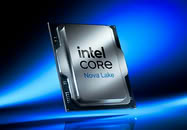
Finally, this could be the previously leaked Intel Core Ultra 9 4950K, identified as a 28-core "Nova Lake-S" desktop chip. It features 8 "Coyote Cove" P-Cores, 16 "Arctic Wolf" E-Cores, and 4 LPE-Cores. Intel is testing many SKUs for "Nova Lake-S," and a four-digit naming scheme could be necessary due to the numerous SKUs and configurations, so the new naming scheme might be on the way.
Source: HXL on X
Add your own comment

125 Comments on Intel "Nova Lake-S" 28-Core SKU With bLLC to Draw Nearly 300 W at PL2

#1
Sol_Badguy
So this overhyped POS is going to have a power draw similar to the 14900K instead of the 270K/285K???
tpucdn.com/review/intel-core-ultra-7-270k-plus/images/power-applications-compare-core-i9-14900k.png
Well then good luck Intel, you'll need it.
Compared to the current top-end "Arrow Lake-S" 24-core Core Ultra 9 285K, which has a PL2 setting of 250 W, the additional four LPE-Cores on the latest "Nova Lake-S" will increase that number by about 18.4%.
So the LPE cores are active during load? Why?
I thought they are only active in idle and very low load while the compute tile is disengaged, after the compute tile is engaged why do those little turds keep being active? For 1 extra fps and 1 extra CB point?

I hope AMD steamrolls these amateurs so I can buy this crap at a big discount and then put a nice 200 W power limit on it. :nutkick:
Posted on Reply
#2
Dr. Dro
Sol_BadguySo this overhyped POS is going to have a power draw similar to the 14900K instead of the 270K/285K???
tpucdn.com/review/intel-core-ultra-7-270k-plus/images/power-applications-compare-core-i9-14900k.png
Well then good luck Intel, you'll need it.

So the LPE cores are active during load? Why?
I thought they are only active in idle and very low load while the compute tile is disengaged, after the compute tile is engaged why do those little turds keep being active? For 1 extra fps and 1 extra CB point?

I hope AMD steamrolls these amateurs so I can buy this crap at a big discount and then put a nice 200 W power limit on it. :nutkick:
I wouldn't be so quick to judge, but there is little rush to adopt this. I will happily wait for the 52C version, the Z990 Apex, and hopefully some improvements on RAM pricing. By then their quirks and what they can do will be well documented, and life will be much easier.
Posted on Reply
#3
Darmok N Jalad
Well, the sanity lasted a little while at Intel. I would hope more moderate SKUs will be more reasonable. These are probably the power requirements they need to beat AMD’s current offerings, because there would be no other reason to push their next-gen architecture that hard. I guess they would have done the same with Arrow Lake S, but it probably didn’t work.
Posted on Reply
#4
BoggledBeagle
Sol_BadguySo this overhyped POS is going to have a power draw similar to the 14900K instead of the 270K/285K???
Well then good luck Intel, you'll need it.
Wow, not even an unwise car enthusiast would judge any car by its gas consumption alone without knowing the performance.
Posted on Reply
#5
JustBenching
I can't imagine we still live in a world where people complain about how much a cpu draws when left without power limits. In a tech forum out of all places. Fascinating.
Posted on Reply
#6
Ed_1
This CPU does support AVX 512 so that can pull high wattage.
Posted on Reply
#7
Darmok N Jalad
BoggledBeagleWow, not even an unwise car enthusiast would judge any car by its gas comsumption alone without knowing the performance.
Per my comments above, I'd be very surprised if the performance is more than 5-10% above what AMD will bring. That's just using history as a guide, because there is no reason to push that far past the efficiency mark on an architecture just to be "way faster" than the competition. You get decisively above, and stop there, because that increases your yields in production, and reduces the potential for product failures.

Also, cars analogies are hard to make in a broad sense here. No, the guy buying a supercar isn't worried about fuel economy, but the guy buying a commuter vehicle certainly would. Even then, automobile purchases are largely an emotional decision.
JustBenchingI can't imagine we still live in a world where people complain about how much a cpu draws when left without power limits. In a tech forum out of all places. Fascinating.
Yeah. I mean, we forum folk are the ones who often see or experience the product failures the most, either personally or through support. Besides, it's not like we haven't seen motherboard manufacturers abuse power curves to the detriment of specific SKUs (X3D) or entire product stacks (RPL).
Posted on Reply
#8
BoggledBeagle
Darmok N Jalad... there would be no other reason to push their next-gen architecture that hard. I guess they would have done the same with Arrow Lake S, but it probably didn’t work.
This is really confusing, but both manufacturers have been selling the CPUs performing as much as they can, not leaving any perfmonce on the table, for long years now. Have not you noticed?

Arrow lake draws 250W and in multithreading performance it is on par with the most powerful CPUs from AMD. which draw similar power. So your point was ... ???

Note now far AMD pushes the poor 8 core CPU:
www.techpowerup.com/review/amd-ryzen-7-9850x3d/23.html

This is truly a torture of the chip. :(
Posted on Reply
#9
Darmok N Jalad
BoggledBeagleThis is really confusing, but both manufacturers have been selling the CPUs performing as much as they can, not leaving any perfmonce on the table, for long years now. Have not you noticed?

Arrow lake draws 250W and in multithreading performance it is on par with the most powerful CPUs from AMD. which draw similar power. So your point was ... ???
Sure, and they have to push the power limits to what they do in order to make their product perform better than what it replaced or competed against. Raising the power limits every generation is one way to progress, but that approach drives up the total system cost, both to build and operate.
Posted on Reply
#10
Dr. Dro
Ed_1This CPU does support AVX 512 so that can pull high wattage.
Well, AMD mostly solved that problem with Granite Ridge, and no doubt this will be an area where AMD will continue to iterate in Olympic Ridge.
Posted on Reply
#11
RinSenpai
Darmok N JaladPer my comments above, I'd be very surprised if the performance is more than 5-10% above what AMD will bring. That's just using history as a guide, because there is no reason to push that far past the efficiency mark on an architecture just to be "way faster" than the competition. You get decisively above, and stop there, because that increases your chances of mass production, and reduces the potential for product failures.
If you used Intel, you'd know how Intel scales at higher power limits and 250W is still reasonable (though 220W is quite a sweet spot) if you're willing to use any i7-i9 at its optimal settings for anything that requires more cores. AMD on the other hand stops scaling before you even reach Intel's PL1 (125W) for anything that has 8 cores or less, and uses as much power for their Ryzen 9.
Darmok N JaladAlso, cars analogies are hard to make in a broad sense here. No, the guy buying a supercar isn't worried about fuel economy, but the guy buying a commuter vehicle certainly would. Even then, automobile purchases are largely an emotional decision.
No? If a family buy a car, they buy one with enough space and car trunk. A lot of people still favor utility over emotions when buying something they'll use daily, unless they have money to throw around.
Posted on Reply
#12
zus
Darmok N JaladPer my comments above, I'd be very surprised if the performance is more than 5-10% above what AMD will bring. That's just using history as a guide, because there is no reason to push that far past the efficiency mark on an architecture just to be "way faster" than the competition. You get decisively above, and stop there, because that increases your yields in production, and reduces the potential for product failures.
What if this thing consumes 20% more than a 285K, but performs 30% better? Can we even tell if it's past the efficiency mark without knowing the performance? Do we have any wattage numbers for zen 6 to compare with AMD?
Posted on Reply
#13
Cliff Bungalow
The Nova Lake CPU tile is larger, and it will run hotter, draw more power, and cost a lot more. So buckle up, and be prepared to open your wallet for 10% more performance.

I'm so glad I bought an Arrow Lake 270K on sale a couple of months ago. I knew it wouldn't be worth waiting for Nova Lake.
Posted on Reply
#14
JohH
Intel and AMD need to come to some agreement to stop doing that.
Single tile/CCD configurations should max out at ~150W and dual tile/CCD configurations should max out at ~300W.

If consumers want to increase power limits over that, don't stop them. But in a nicer world they wouldn't ship with such absurd power limits.
Posted on Reply
#15
N/A
Power limits removed, 500 Watts easily.
Posted on Reply
#16
Darmok N Jalad
RinSenpaiNo? If a family buy a car, they buy one with enough space and car trunk. A lot of people still favor utility over emotions when buying something they'll use daily, unless they have money to throw around.
I said "largely an emotional decision." Obviously, one doesn't go shopping for a van and come home with a convertible. Still, there's a reason cars are full of fluff, like stuffing the largest screen possible into the dash, or putting displays into the headrests. When prices are similar across brands, and features are comparable, subjective reasons (conveniences) will likely break the tie. There's a reason cars have all that stuff, because that is largely how they sell cars in today's marketplace. Some buyers are still practical, but it would appear many are okay taking on an 8 year loan to get something that is well beyond practical.

All this to say, this is why such an analogy is hard to make here. Though I guess my wife requires a keypad on her laptops, which eliminates many quality options. However, it puts a seemingly superfluous spec ahead of things like CPU or GPU performance, which only need to be adequate to her.
Posted on Reply
#17
bug
I'm a bit out of the loop so help me out here.
Back in Alder Lake days, PL2 value itself was not the issue. The issue was that Intel's guidance allowed motherboard manufacturers to basically run their mobos in PL2 mode all the time. Has this been corrected in Arrow Lake? Will it be corrected in Nova Lake?
I mean, I did the BIOS changes manually, it's not a big deal, and my 12600k has always run cool and quiet (yes, I went there). But it would be nicer to get a CPU that behaves out of the box. Not for me, but for many others.
Posted on Reply
#18
Tyler-98-W68
N/APower limits removed, 500 Watts easily.
500w 12th gen


Over 400w 285K


Almost 500w 14900K
Posted on Reply
#19
phanbuey
bugI'm a bit out of the loop so help me out here.
Back in Alder Lake days, PL2 value itself was not the issue. The issue was that Intel's guidance allowed motherboard manufacturers to basically run their mobos in PL2 mode all the time. Has this been corrected in Arrow Lake? Will it be corrected in Nova Lake?
I mean, I did the BIOS changes manually, it's not a big deal, and my 12600k has always run cool and quiet (yes, I went there). But it would be nicer to get a CPU that behaves out of the box. Not for me, but for many others.
Alder lake never had the problem - it was just 900 series and some 700 series raptor lake, and you are in fact correct. The PL2 on most motherboard bioses was uncapped and those chips easily hit 350W and 100C under water out of the box. Also they juiced the ring to insane speeds and Turbo boost 2.0 took a few cores to 6Ghz at like 1.5+v so the chips degraded.

Arrow lake has no such issues, and for the most part intel chips handle high wattages just fine, and you can easily undervolt them - same as AMD these days. Undervoling and OCing to get some extra performance out of them is the way to go in both camps.
Posted on Reply
#20
Dr. Dro
bugI'm a bit out of the loop so help me out here.
Back in Alder Lake days, PL2 value itself was not the issue. The issue was that Intel's guidance allowed motherboard manufacturers to basically run their mobos in PL2 mode all the time. Has this been corrected in Arrow Lake? Will it be corrected in Nova Lake?
I mean, I did the BIOS changes manually, it's not a big deal, and my 12600k has always run cool and quiet (yes, I went there). But it would be nicer to get a CPU that behaves out of the box. Not for me, but for many others.
This has already been corrected as part of the Raptor Lake fixes. Newer BIOSes have Intel's official specifications, which depends on chip type and SKU. KS models are granted additional allowance within Intel's spec.
phanbueyAlder lake never had the problem - it was just 900 series and some 700 series raptor lake, and you are in fact correct. The PL2 on most motherboard bioses was uncapped and those chips easily hit 350W and 100C under water out of the box. Also they juiced the ring to insane speeds and Turbo boost 2.0 took a few cores to 6Ghz at like 1.5+v so the chips degraded.

Arrow lake has no such issues, and for the most part intel chips handle high wattages just fine, and you can easily undervolt them - same as AMD these days. Undervoling and OCing to get some extra performance out of them is the way to go in both camps.
It's the same thing, ADL did run wild, it's that the microcode wasn't frying the CPUs lol
Posted on Reply
#21
BoggledBeagle
JohHIntel and AMD need to come to some agreement to stop doing that.
Single tile/CCD configurations should max out at ~150W and dual tile/CCD configurations should max out at ~300W.

If consumers want to increase power limits over that, don't stop them. But in a nicer world they wouldn't ship with such absurd power limits.
This is what I posted in the power limiting the 270K thread:


The point is - there is no sweet spot. There is no optimal power draw. The more you limit it, the more efficient it gets. You can see that the energy consumed to perform the defined task drops depending on how much limited the CPU is.

So if they sell a CPU with a high power limit, that is set in such a way that the CPU survives running some typical load for the time somebody defined to be the life of the CPU, it is up to the user to limit the CPU how they want, if they want better efficiency, if they want to run extremely demanding tasks 24/7, if they are limited by the cooler performance, etc.

You can see you save almost half of the energy when power limiting the 270K to 100W and lose only 20% of the performance.

So if 270K is an extreme inefficent version of the CPU, with what power limit should 270 non K sell, if it existed, to that it is a nice cool running enviroment friendly efficient product? Is it 100W? 125? 150? I am not sure, but it certainly should be somehow limited compared to the extreme K model.
Posted on Reply
#22
phanbuey
Dr. DroThis has already been corrected as part of the Raptor Lake fixes. Newer BIOSes have Intel's official specifications, which depends on chip type and SKU. KS models are granted additional allowance within Intel's spec.


It's the same thing, ADL did run wild, it's that the microcode wasn't frying the CPUs lol
Did they ever finally figure out what the actual cause was? I heard like ring, manufacturing defects, turbo boost, some bad bioses etc. but not sure what the final verdict was.
Posted on Reply
#23
Sol_Badguy
I think I know why these "geniuses" are back to Raptor Lake style power draw.

The LPE cores being active during load creates a countermeasure to the compute tile hotspot.
This way the heat is more spread out, there are more watts than without LPE cores active but the thermal density (W/active area) is less thus it will be easier to cool.

One other aspect could be unaffected 100% performance of the compute tile in heavy MT tasks because the LPE cores are busy keeping the OS bloat and background BS in check, otherwise those would take away performance from the compute tile in heavy MT tasks.
Sort of like "yo dawg we put a CPU in your CPU so you (actually the OS in the background) can compute while you compute".
Darmok N JaladThese are probably the power requirements they need to beat AMD’s current offerings, because there would be no other reason to push their next-gen architecture that hard.
100% because they don't have any Zen6 to compare so they have to beat current Zen5 X3D with enough margin so that they're confident it can hang with Zen6 X3D.
BoggledBeagleArrow lake draws 250W and in multithreading performance it is on par with the most powerful CPUs from AMD. which draw similar power.
The 9950X3D almost gets to 215 W in Keyshot. Clearly less than the 260 W for 270K/285K.
tpucdn.com/review/amd-ryzen-9-9950x3d2-dual-edition/images/power-applications-compare-ryzen-9-9950x3d.png
tpucdn.com/review/intel-core-ultra-7-270k-plus/images/power-applications-compare-core-ultra-9-285k.png
Posted on Reply
#24
Dr. Dro
BoggledBeagleThis is what I posted in the power limiting the 270K thread:


The point is - there is no sweet spot. There is no optimal power draw. The more you limit it, the more efficient it gets. You can see that the energy consumed to perform the defined task drops depending on how much limited the CPU is.

So if they sell a CPU with a high power limit, that is set in such a way that the CPU survives running some typical load for the time somebody defined to be the life of the CPU, it is up to the user to limit the CPU how they want, if they want better efficiency, if they want to run extremely demanding tasks 24/7, if they are limited by the cooler performance, etc.

You can see you save almost half of the energy when power limiting the 270K to 100W and lose only 20% of the performance.

So if 270K is an extreme inefficent version of the CPU, with what power limit should 270 non K sell, if it existed, to that it is a nice cool running enviroment friendly efficient product? Is it 100W? 125? 150? I am not sure, but it certainly should be somehow limited compared to the extreme K model.
According to your table, it is clearly at 200 W. Which, mind you, produces similar scores to Raptor Lake at 320 W. ARL is crazy power efficient compared to its predecessor
phanbueyDid they ever finally figure out what the actual cause was? I heard like ring, manufacturing defects, turbo boost, some bad bioses etc. but not sure what the final verdict was.
Yes, the algorithm that controls how much current is allowed to flow through the CPU had an incorrectly programmed curve and this is what was damaging the chips. Manufacturing defect (oxidation) was a separate issue that only affected a few very early 13th gen chips


www.techpowerup.com/327004/intel-isolates-raptor-lake-vmin-shift-instability-root-cause-new-microcode-update-coming
Posted on Reply
#25
Darmok N Jalad
BoggledBeagleThis is what I posted in the power limiting the 270K thread:


The point is - there is no sweet spot. There is no optimal power draw. The more you limit it, the more efficient it gets. You can see that the energy consumed to perform the defined task drops depending on how much limited the CPU is.

So if they sell a CPU with a high power limit, that is set in such a way that the CPU survives running some typical load for the time somebody defined to be the life of the CPU, it is up to the user to limit the CPU how they want, if they want better efficiency, if they want to run extremely demanding tasks 24/7, if they are limited by the cooler performance, etc.

You can see you save almost half of the energy when power limiting the 270K to 100W and lose only 20% of the performance.

So if 270K is an extreme inefficent version of the CPU, with what power limit should 270 non K sell, if it existed, to that it is a nice cool running enviroment friendly efficient product? Is it 100W? 125? 150? I am not sure, but it certainly should be somehow limited compared to the extreme K model.
Needing 2 times the energy to get 20% more performance very much suggests that there is a sweetspot. If there was no ideal, then 2x the power would get you 2x the performance, which clearly isn't happening--it's not even close. Many machines are designed to operate under a range of conditions, but they are most efficient under specific conditions. Once you start moving past those conditions, either the power-in becomes no longer worth the performance-out, and/or the machine simply fails. In the case of a 270K, Intel designed it past the ideal but stopped somewhere acceptably short of failure. AMD does the same, as does NVIDIA, as in all their designs, you can drastically reduce power demands while not surrendering an equal proportion of performance. In many cases, a lot more power only gets them 5%, but that can be the difference between winning and losing a benchmark, which is what helps determine pricing. A losing product typically sells for considerably less than the winning product. In saner times, at least.
Posted on Reply
Add your own comment
Nov 12th, 2026 06:34 PST change timezone

New Forum Posts

Popular Reviews

TPU on YouTube

Controversial News Posts