Friday, August 21st 2026

Intel "Nova Lake-S" 28-Core SKU With bLLC to Draw Nearly 300 W at PL2
Intel's upcoming "Nova Lake-S" desktop processors are nearing launch, and the rumor mill is intensifying as we receive more information about clock speeds, core configurations, and power consumption. According to a post on the Weibo forums, Intel's 28-core SKU with a big last-level cache (bLLC) integrated into the package will reach up to 296 W of power consumption at the Power Level 2 (PL2) setting. This is the maximum power draw the CPU can achieve during short bursts of turbo clocking, reaching its peak. Compared to the current top-end "Arrow Lake-S" 24-core Core Ultra 9 285K, which has a PL2 setting of 250 W, the additional four LPE-Cores on the latest "Nova Lake-S" will increase that number by about 18.4%.
Previously, we learned that "Nova Lake-S" will be very power-hungry, especially in the top-end SKUs. For example, Intel's top-end, overclocking-focused, dual compute die "Nova Lake-S" CPU with 52 cores will feature a PL2 mode with a power level of 474 W. This is an unprecedented number for an Intel consumer desktop platform, typically expected from a high-end desktop (HEDT) design. However, since this is a 52-core design that can be overclocked, it represents the highest CPU PL2 setting that Intel will be shipping with "Nova Lake-S." For single compute die SKUs, the PL2 limit appears to be 296 W.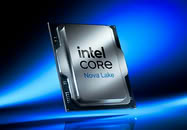 Finally, this could be the previously leaked Intel Core Ultra 9 4950K, identified as a 28-core "Nova Lake-S" desktop chip. It features 8 "Coyote Cove" P-Cores, 16 "Arctic Wolf" E-Cores, and 4 LPE-Cores. Intel is testing many SKUs for "Nova Lake-S," and a four-digit naming scheme could be necessary due to the numerous SKUs and configurations, so the new naming scheme might be on the way.
Source:
HXL on X
Previously, we learned that "Nova Lake-S" will be very power-hungry, especially in the top-end SKUs. For example, Intel's top-end, overclocking-focused, dual compute die "Nova Lake-S" CPU with 52 cores will feature a PL2 mode with a power level of 474 W. This is an unprecedented number for an Intel consumer desktop platform, typically expected from a high-end desktop (HEDT) design. However, since this is a 52-core design that can be overclocked, it represents the highest CPU PL2 setting that Intel will be shipping with "Nova Lake-S." For single compute die SKUs, the PL2 limit appears to be 296 W.

125 Comments on Intel "Nova Lake-S" 28-Core SKU With bLLC to Draw Nearly 300 W at PL2
Somebody would have to define, that when a CPU has the maximal power limit established, with which it can survive long enough, it should be sold with the power limit corresponding to the value of the ratio say 4 for a mainstram version and 2 for the ECO version?
The CPU will run for a very long time in its rated, safe specification, that isn't even up for debate IMHO
I remember when both AMD and Intel tried their hand at reducing power profiles on their CPUs some years ago and people lost their minds. "What do you mean my CPU doesn't suck down as much as it posssibly can OOTB for an extra 1-5%?!" I exaggerate, but that's how it read to me. Some people appreciate having a reasonably power-light CPU whose performance metrics are well advertised at that power level. Like me. I like my 65W CPUs.
I clearly said 9950X3D not 9950X3D2.
You can see where each is positioned in that chart, along with 270K and 285K.
So if 35W is a power limit with which the CPU is still fully functional and highly efficient, its total performance is very poor. I would never run 270K with 35W power limit, it makes no sense at all to limit a 24 core CPU so drastically.
That's not the 9950X3D, and that is peak all core power consumption, not power draw across a selection of applications.
And no, setting power limits aren't a fix for this either, given how memory makers got sued for not printing JEDEC speeds on the box, the average user is too dumb to know how to tinker around in the BIOS to get power consumption under control. Desktop CPU's should have a limit of 200W. With a 300W+ CPU, rest of the system power draw, a GPU, monitor, audio setup and it will nearly max out a 1500W North American power outlet.
No one in their right mind should support this trend toward products that are getting hotter and hotter and are major power guzzlers.
The lower the hardware’s power consumption, the less heat it generates. This simplifies the cooling requirements, the case, and all peripheral components. Even the motherboard design can be streamlined if the top-tier SKU supported by a given chipset has a more suitable/tame TDP. Not to mention reduced component wear, since they are more efficient. Has everyone already forgotten about the connectors catching fire and the CPUs, both X3D and i9, burning out?
There is nothing to celebrate with components seeing their TDP rise with every new generation.
Power consumption will also affect what kind of cooler and PSU you need., and how much you spend on them.
This is a 285K
When APX?
When Unified Core?
When full UMA where the memory is truly allocated in dynamic way like on Apple Silicon?
When will we finally have all of this?
The only thing anyone should care about is hardware running efficiently at any given workload regardless of how much power it's consuming. If someone has a problem with absolute power consumption power limits exist for a reason or just don't buy top end hardware.
Also it seems like people forgot that even high end hardware used to not be extremely power hungry, there was OC room if you wanted your PC to double as a room heater.