Friday, August 21st 2026

Intel "Nova Lake-S" 28-Core SKU With bLLC to Draw Nearly 300 W at PL2

Intel's upcoming "Nova Lake-S" desktop processors are nearing launch, and the rumor mill is intensifying as we receive more information about clock speeds, core configurations, and power consumption. According to a post on the Weibo forums, Intel's 28-core SKU with a big last-level cache (bLLC) integrated into the package will reach up to 296 W of power consumption at the Power Level 2 (PL2) setting. This is the maximum power draw the CPU can achieve during short bursts of turbo clocking, reaching its peak. Compared to the current top-end "Arrow Lake-S" 24-core Core Ultra 9 285K, which has a PL2 setting of 250 W, the additional four LPE-Cores on the latest "Nova Lake-S" will increase that number by about 18.4%.

Previously, we learned that "Nova Lake-S" will be very power-hungry, especially in the top-end SKUs. For example, Intel's top-end, overclocking-focused, dual compute die "Nova Lake-S" CPU with 52 cores will feature a PL2 mode with a power level of 474 W. This is an unprecedented number for an Intel consumer desktop platform, typically expected from a high-end desktop (HEDT) design. However, since this is a 52-core design that can be overclocked, it represents the highest CPU PL2 setting that Intel will be shipping with "Nova Lake-S." For single compute die SKUs, the PL2 limit appears to be 296 W.
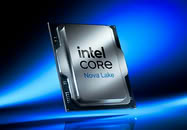
Finally, this could be the previously leaked Intel Core Ultra 9 4950K, identified as a 28-core "Nova Lake-S" desktop chip. It features 8 "Coyote Cove" P-Cores, 16 "Arctic Wolf" E-Cores, and 4 LPE-Cores. Intel is testing many SKUs for "Nova Lake-S," and a four-digit naming scheme could be necessary due to the numerous SKUs and configurations, so the new naming scheme might be on the way.
Source: HXL on X
Add your own comment

125 Comments on Intel "Nova Lake-S" 28-Core SKU With bLLC to Draw Nearly 300 W at PL2

#101
MufasaV
bugWhat's "reasonable" when you can't touch RAM or storage?
Reasonable price for a normal CPU upgrade gen on gen. RAM is unfortunate, but not a reason for stagnation of other seperate industries and BLLC if it does well, makes RAM much less relevant than it is today for a consumer so double the reason to wish it well now that RAM prices have skyrocketed
Posted on Reply
#102
bug
MufasaVReasonable price for a normal CPU upgrade gen on gen. RAM is unfortunate, but not a reason for stagnation of other seperate industries and BLLC if it does well, makes RAM much less relevant than it is today for a consumer so double the reason to wish it well now that RAM prices have skyrocketed
As someone still on DDR4, Nova Lake doesn't make sense to me if they sold the CPUs for $50. Not in the current market.
Posted on Reply
#103
thestryker6
bugAs someone still on DDR4, Nova Lake doesn't make sense to me if they sold the CPUs for $50. Not in the current market.
That means you're not in the market and has zero bearing on what a reasonable price for a CPU being sold is. It's not Intel's job to make up for the market being in shambles they just need to release a product at a price that makes sense for those who are actually buying.
Posted on Reply
#104
lemans24
Darmok N JaladPer my comments above, I'd be very surprised if the performance is more than 5-10% above what AMD will bring. That's just using history as a guide, because there is no reason to push that far past the efficiency mark on an architecture just to be "way faster" than the competition. You get decisively above, and stop there, because that increases your yields in production, and reduces the potential for product failures.

Also, cars analogies are hard to make in a broad sense here. No, the guy buying a supercar isn't worried about fuel economy, but the guy buying a commuter vehicle certainly would. Even then, automobile purchases are largely an emotional decision.


Yeah. I mean, we forum folk are the ones who often see or experience the product failures the most, either personally or through support. Besides, it's not like we haven't seen motherboard manufacturers abuse power curves to the detriment of specific SKUs (X3D) or entire product stacks (RPL).
so you really think the Nova Lake 28 core bllc version is a "commuter" chip??
Darmok N JaladSure, and they have to push the power limits to what they do in order to make their product perform better than what it replaced or competed against. Raising the power limits every generation is one way to progress, but that approach drives up the total system cost, both to build and operate.
So then don't raise your power limits. You do know that you have to actively change your power limits to get more maximum performance??
JohHIntel and AMD need to come to some agreement to stop doing that.
Single tile/CCD configurations should max out at ~150W and dual tile/CCD configurations should max out at ~300W.

If consumers want to increase power limits over that, don't stop them. But in a nicer world they wouldn't ship with such absurd power limits.
Is Intel/Amd forcing you to increase your power limits?? Most modern cpu's have no need for manual overclocking but for the few that do, setting you own limits is an option. You can get 90% of performance with stock power limits so no idea why your complaining against how power works with cpu's. Desktop socketed cpu's are domain of diy and gamers who want the fastest PC mostly.
Posted on Reply
#105
JohH
lemans24Is Intel/Amd forcing you to increase your power limits??
No, they are forcing me to go and reduce the power limit.
I don't know why PC gamers go to such lengths to defend such senseless defaults. It's not like GPUs where more power = more frames. Here it's entirely unrelated to frame rate. It's just 10% higher benchmark wankery. Both AMD and Intel chips perform fine at 150W now and in a better world they would agree to step back.
Posted on Reply
#106
zus
JohHNo, they are forcing me to go and reduce the power limit.
I don't know why PC gamers go to such lengths to defend such senseless defaults. It's not like GPUs where more power = more frames. Here it's entirely unrelated to frame rate. It's just 10% higher benchmark wankery. Both AMD and Intel chips perform fine at 150W now and in a better world they would agree to step back.
It just doesn't matter for gamers, none of these CPUs reach 300W while gaming.
Posted on Reply
#107
Sol_Badguy
Again following my posts #69 and #93 I'll try to analyze efficiency.
Perhaps I was too focused on the max power draw when in reality the average across a range of apps matters.
If a very high max power draw is a disadvantage then a very low ST power draw is an advantage.
So it evens out when looking at an average.

Regarding max power draw the original 2024 data was more favorable to Arrow Lake vs Zen5 for some reason.

Fast forward to 2026 and suddenly 285K max power draw goes up by 26 W while 9950X goes down by about 12 W.
However the average power draw doesn't change much for either CPU when comparing 2024 with 2026. Which seems to prove my previous point.

2024
285K goes to a max of 238 W
tpucdn.com/review/intel-core-ultra-9-285k/images/power-applications-compare-vs-9950x.png
9900X goes to a max of 172 W:
tpucdn.com/review/intel-core-ultra-9-285k/images/power-applications-compare-vs-9900x.png
9950X goes to a max of 220 W.
The max values for the 285K and 9950X are rather close.
tpucdn.com/review/amd-ryzen-7-9800x3d/images/power-applications.png
Average is also close, 132 vs 134 W.

2025
9950X goes to a max of 211 W.
9950X3D goes to a max of 212 W.
tpucdn.com/review/amd-ryzen-9-9950x3d/images/power-applications-compare-9950x.png

2026
285K goes to a max of 264 W.
tpucdn.com/review/intel-core-ultra-7-270k-plus/images/power-applications-compare-core-ultra-9-285k.png
9950X3D goes to a max of 209 W.
tpucdn.com/review/amd-ryzen-9-9950x3d2-dual-edition/images/power-applications-compare-ryzen-9-9950x3d.png
9900X and 9950X are missing in 2026.
But given the very similar 2025 results between the 9950X and 9950X3D I would assume that the same is valid in 2026.
tpucdn.com/review/intel-core-ultra-7-270k-plus/images/power-applications.png
Average is again close, 133 vs 137 W.
However after correcting for the anomalous Emu PS3 result, the average for the 285K should be 135 W.

Why do I bring the 9950X into the discussion?
Because the 9700X is capped at 80 W so it always goes to a max of 80 W, but the with 9900X and 9950X it's a bit different.
Given the 2024 to 2026 variation regarding the 9950X can I assume the 172 W from 2024 will hold true in 2026 for the 9900X?
Now you see the dilemma?
I can just rule of three it:
9700X (2024) - 80 W
9900X (2024) - 172 W
9950X (2024) - 220 W

9700X (2026) - 80 W
9950X (2026) - 208 W
9900X (2026) - (172 + 162.62)/2 = 167.31 -> 167 W estimated
Is that fair? Is it accurate? Can't be sure without actual testing.

Anyway.

It's possible that the increased Arrow Lake power draw for 2026 is because of 200S Boost?
Could be, this is the only explanation I can think of.


Again for apples to apples I need the 285K and a "12 core single CCD 9900X". These are the baselines for Nova Lake single tile bLLC vs Zen6 "10800X3D".
To compensate for the dual CCD penalty I will use the non-X3D to X3D app gain taken from the 9950X to 9950X3D examples.
The problem is the gains are different.
In 2025 we have 4.71% for apps.
tpucdn.com/review/amd-ryzen-9-9950x3d/images/relative-performance-cpu.png
tpucdn.com/review/amd-ryzen-9-9950x3d/images/average-fps-1280-720.png
In 2026 we have 3.46% for apps.
tpucdn.com/review/amd-ryzen-7-9850x3d/images/relative-performance-cpu.png
tpucdn.com/review/amd-ryzen-7-9850x3d/images/average-fps-1280-720.png
Okay I'll do 4.08% in apps and for 720p gaming I'll simply consider the "single CCD 9900X" as equal to the 9950X as to negate the dual CCD 6+6 penalty.

So for 2024 if I take the following for apps:
tpucdn.com/review/amd-ryzen-7-9800x3d/images/relative-performance-cpu.png
tpucdn.com/review/amd-ryzen-7-9800x3d/images/power-applications.png
285K - 121% / 132 W -> 0.917 rel. perf. / W
9900X - 112% / 113 W -> 0.991 rel. perf. / W
"single CCD 9900X est." - 116.6% / 113 W -> 1.032 rel. perf. / W
Then 1.032 / 0.917 -> 1.125 thus a "12 core single CCD 9900X" would be 12.5% more efficient on average than the 285K using 2024 data, in apps.

For games:
tpucdn.com/review/amd-ryzen-7-9800x3d/images/average-fps-1280-720.png
tpucdn.com/review/amd-ryzen-7-9800x3d/images/power-games.png
285K - 192.8 fps / 94 W -> 2.05 fps / W
9900X - 194.6 fps / 100 W -> 1.95 fps / W
"single CCD 9900X est." - 198.6 fps / 100 W -> 1.99 fps / W
Then 2.05 / 1.99 -> 1.030 thus the 285K would be 3% more efficient on average than the "12 core single CCD 9900X" using 2024 data, in 720p gaming.

And for 2026 if I take the following for apps:
tpucdn.com/review/intel-core-ultra-7-270k-plus/images/relative-performance-cpu.png
tpucdn.com/review/intel-core-ultra-7-270k-plus/images/power-applications.png
285K - 98.7% / 135 W -> 0.731 rel. perf. / W
9900X est. - 90% / 116 W -> 0.776 rel. perf. / W
"single CCD 9900X est." - 93.1% / 116 W -> 0.803 rel. perf. / W
Then 0.803 / 0.731 -> 1.098 thus a "12 core single CCD 9900X" would be 9.8% more efficient on average than the 285K using 2026 data, in apps.
Based on the 2024 data and where the 9900X is situated performance wise relative to the 9600X, 9700X, 9950X, 9800X3D I would say in the new 2026 chart it would be at 90%.
2024
9950X - 125.1%
9900X - 112.0%
9800X3D - 100.0%
9700X - 94.1%
9600X - 83.1%

2026
9950X - 101.5%
9800X3D - 81.9%
9700X - 74.2%
9600X - 66.0%
9900X - (90.87 + 91.73 + 88.31 + 88.95)/4 = 89.965 -> 90%

After applying a 2026 3.46% non-X3D to X3D gain to it the "single CCD 9900X" would be at 93.1%.

Power wise, again rule of three using the 9600X, 9700X, 9950X, 9800X3D.
2024
9600X - 60 W
9700X - 61 W
9800X3D - 88 W
9900X - 113 W
9950X - 135 W

2026
9600X - 63 W
9700X - 63 W
9800X3D - 88 W
9950X - 137 W
9900X - (118.65 + 116.7 + 113 + 114.67)/4 = 115.75 -> 116 W

For games:
tpucdn.com/review/amd-ryzen-9-9950x3d2-dual-edition/images/average-fps-1280-720.png
tpucdn.com/review/amd-ryzen-9-9950x3d2-dual-edition/images/power-games.png
285K - 196.4 fps / 112 W -> 1.75 fps / W
9900X est. - 200.6 fps / 119 W -> 1.69 fps / W
"single CCD 9900X est." - 206.0 fps / 119 W -> 1.73 fps / W
Then 1.75 / 1.73 -> 1.012 thus the 285K would be 1.2% more efficient on average than the "12 core single CCD 9900X" using 2026 data, in 720p gaming.
Using 2024 and 2026 data, rule of three using the 9600X, 9700X, 9950X, 9800X3D:
2024
9800X3D - 231.3 fps
9950X - 198.6 fps
9700X - 197.5 fps
9900X - 194.6 fps
9600X - 192.3 fps

2026
9800X3D - 237.1 fps
9950X - 206.0 fps

9700X - 203.5 fps
9600X - 198.3 fps
9900X - (200.67 + 200.51 + 201.85 + 199.48)/4 = 200.6 fps

Power wise, again rule of three using the 9600X, 9700X, 9950X, 9800X3D.
2024
9800X3D - 65 W
9600X - 66 W
9700X - 71 W
9900X - 100 W
9950X - 104 W

2026
9600X - 75 W
9700X - 77 W
9800X3D - 80 W
9950X - 134 W
9900X - (123.08 + 113.64 + 108.45 + 128.85)/4 = 118.5 -> 119 W
Sol_BadguyAnother aspect is core count increase. This is one area for which Zen4 to Zen5 provided 0 gains.
But now there will be extra cores on the CCD which for some games might make a difference.
Well if I force the assumption that in the scenarios where the 9950X3D2 manages to surpass the 9850X3D it's due to the core increase, then:
www.techpowerup.com/review/amd-ryzen-9-9950x3d2-dual-edition/17.html
Starfield - +0.2%
TLoU - +0.26%
Alan Wake 2 + RT - +1.46%
Indiana Jones + RT - +2.51%
Spider-Man 2 + RT - +1.89%
I'll exclude the first two because they're basically margin of error so the average for the remaining three is 1.95%. Let's round up to 2%.
Well this 2% wouldn't be every time, it would in some games so the bump to the total average would be pretty small.
But every bit counts.

Another aspect which favors AMD.
If we look at the 9800X3D vs 9900X gaming power draw we see a clear advantage for the single CCD part even accounting for the X3D gain. It would seem that dual CCD parts are more wasteful.
A "12 core single CCD 9900X" might have lower power draw than the actual 9900X, even having the same cores but on a bigger single CCD would help.
And I doubt the "10800X3D" would be wasteful. It does have more cores per CCD but it's still a single CCD therefore I believe the gaming power draw would be closer to the 9800X3D than to the 9900X.
Actually the juiced 9850X3D might be the closest match.
And one reason for which I believe this is AMD would not ruin the "10800X3D" by having it draw a lot of power in gaming. It does have a 50% core increase but not all games will use that. In those that don't I'm expecting power to be quite low, in some that are thread heavy power draw might be clearly higher than on the 9800X3D.

So even when estimating I have to use what's available, and what is favors AMD not Intel regarding efficiency. And if things scale up rather proportionally then Intel needs a bigger effort to match AMD in efficiency.
Even though in gaming the 285K ended up slightly more efficient in both 2024 and 2026 data, things would be different if I would bring the power draw of the "special 9900X" closer to the 9850X3D.
And if I use the estimated perf numbers for the NL bLLC and "10800X3D" from post #69 and pair them with the same 2026 power draw numbers for 285K (apps/gaming) and "special 9900X" (apps) + 9850X3D (gaming) then efficiency wise Zen6 wins clearly.

Thus when setting up expectations for NL vs Zen6, I am still giving AMD the upper hand.
I'm trying to look at this battle from all angles and be completely detached and objective. It's not impossible nor improbable for Intel to win but the signs when using the current gens as baselines for the future ones, are favoring AMD.

There is some hope for Intel, as the 2024 vs 2026 data for 285K shows that an increase in the max power draw doesn't automatically ruin the average, and likewise in the case of the 9950X a decrease of the max power draw doesn't mean an automatic improvement of said average.
However things add up, and the more MT apps in an average the greater the disadvantage. Performance might increase too but not at the same rate of the power draw meaning efficiency is worsened.
As such my concerns over the NL chip going over 250 W seem justified.

Even if this analysis restored a bit of faith in me, I still stand by the previous "AMD has this in the bag" statement.
Posted on Reply
#108
JohH
zusIt just doesn't matter for gamers, none of these CPUs reach 300W while gaming.
That is what I said. No one needs these idiotic power limits. They are entirely for wankers. Intel and AMD could ship at 150W and >99.99% of customers would never know the difference. If you need more, customers should KNOW that they have a good enough cooler before they OPT IN to destroying the earth by setting some anti-eco option. Customers shouldn't see a chip run over 200W because oopsy doopsy Windows update ran at the same time as Defender.

Stop bending over backwards to defend x86 monstrosities trying to get 10% higher benchmark scores with 80-100W extra power. They have plenty of performance with 150W power limits for 1 tile/CCD parts and 300W power limits for 2 tile/CCD parts. But they'll go beyond reasonable instead. Gamers don't benefit from it. Most customers do not benefit from chips being pushed far out of their efficiency envelope in MT. Yet it does waste power and metals on excessive coolers.
Posted on Reply
#109
Sol_Badguy
Sol_BadguyThe "10800X3D" over the "9900X 12 core single CCD" would be pretty much like the 9850X3D over the 7700X -> newer arch (smaller node), same frequency and power but with 3D-V Cache.
So the "10800X3D" would sit at 109.7% (18% better than the 93% 9900X3D) in the app perf chart compared to the NL chip at 123.5% (25.1% better than the 98.7% 285K) -> 12.6% better than the "10800X3D".

The "10800X3D" over the "9900X3D 12 core single CCD" would be pretty much like the 9700X (with doubled percentages) over the 7700 -> newer arch (smaller node), more frequency (at least 200 MHz) and same power.
So the "10800X3D" would sit at 112.8% (17.5% better than the 96% "9900X3D2") in the app perf chart compared to the NL chip at 123.5% (25.1% better than the 98.7% 285K) -> 9.5% better than the "10800X3D".

The "10800X3D" over the "9900X3D 12 core single CCD" would be pretty much like the 9800X3D over the 7800X3D -> newer arch (smaller node), more frequency (300 MHz), more power (150 vs 80 W).
So the "10800X3D" would sit at 115.6% (20.4% better than the 96% "9900X3D2") in the app perf chart compared to the NL chip at 123.5% (25.1% better than the 98.7% 285K) -> 6.8% better than the "10800X3D".

In conclusion the "10800X3D" could be 3.9% better in gaming at 720p compared to the NL "single tile flagship" while the NL chip could range from 6.8-9.5 to 12.6% better in apps (let's average those and say ~9.6%).
However max power draw could be under 190 W for the "10800X3D" while apparently it will be over 260 W for the NL chip.
Some corrections are needed. I was rounding off some numbers, and while the differences are small they are there.
tpucdn.com/review/intel-core-ultra-7-270k-plus/images/relative-performance-cpu.png
So if a 270K is the 100% baseline and the 285K is 98.7%, the 9900X is estimated at 90%, the 9900X3D at 93.1% (this is a stand-in for a 9900X 12 core single CCD), then a 9900X3D2 at 96.3% (this is a stand-in for a 9900X3D 12 core single CCD).
Right so using 93.1 instead of 93 and 96.3 instead of 96 the estimations are:
1. 109.86%
2. 113.15%
3. 115.95%
Now I have a fourth method of estimation.
We first use the 7900X and 9900X. There is only a gain from the newer arch, the frequency is basically the same and perhaps a small penalty because of the lower max power ceiling on the 9900X.
Sol_BadguyThe avg freq is obtained by averaging the three workloads on the vertical axis for each corresponding thread and then averaging these averages on the horizontal axis.
tpucdn.com/review/amd-ryzen-9-7900x/images/boost-clock-analysis.png
tpucdn.com/review/amd-ryzen-9-9900x/images/boost-clock-analysis.png
Average for 7900X is 5461.5 MHz.
Average for 9900X is 5439.5 MHz.

For the old data the difference (app avg) is rather small, 4.58%.
Now I need to have these two CPUs in the new dataset. I already estimated the 9900X at 90%.
tpucdn.com/review/amd-ryzen-7-9800x3d/images/relative-performance-cpu.png
9950X - 125.1%
7950X - 120.9%
9900X - 112.0%
7900X - 107.1%
9700X - 94 1%
7700X - 90.7%
7700 - 87.4%
9600X - 83.1%

Taking the 7700X and 7700 from here:
tpucdn.com/review/amd-ryzen-7-5800x3d-10th-anniversary/images/relative-performance-cpu.png

Converting them here:
tpucdn.com/review/intel-core-ultra-7-270k-plus/images/relative-performance-cpu.png
9950X - 101.5%
7950X - 93.9%
9900X - 90.0% estimated
7900X - 84.6% estimated
9700X - 74.2%
7700X - 71.2%
7700 - 68.5%
9600X - 66.0%

Rule of three using 9950X, 7950X, 9700X, 7700X, 7700 and 9600X:
7900X -> (86.9 + 83.18 + 84.45+ 84.07 + 83.94 + 85.06) / 6 = 84.6
The 7900X would be at 84.6%.
The 9900X would be 6.38% better in the new dataset.
However I need a single CCD 9900X, so I will double the gain in order to account for the dual CCD 6+6 to single CCD 12 improvement.
The gain is a bit high but it also compensates for the lack of a power limit penalty which was present from 7900X to 9900X. Also it compensates for the zero frequency increase from 7900X to 9900X.
So now I have a 10700X let's say at 101.5%. For the 10800X3D I use a 3.46% 9950X to 9950X3D gain thus it becomes 105%.

So now if I average the 4 estimations I get (109.86 + 113.15 + 115.95 + 105) / 4 = 111%
With a range of 105-116%.
I am pretty confident that the 10800X3D will land in this area.

App avg

NL single tile bLLC - 123.5%
10800X3D - 111.0% (range between 105-116%)
9950X3D - 105.0%
9950X - 101.5%
270K - 100.0% baseline
285K - 98.7%
9900X3D - 93.1%
9900X - 90.0%

There is one more possible advantage for the 10800X3D.
The SMT OFF vs SMT ON gain.

I use the 9700X because even though it's non-X3D it's the current arch.
If I look at the relative performance chart the gain for OFF is 2.5%.
tpucdn.com/review/amd-ryzen-9-9700x-performance-smt-disabled/images/relative-performance-games-1280-720.png
If I look at the avg fps chart the gain for OFF is 3.24%.
tpucdn.com/review/amd-ryzen-9-9700x-performance-smt-disabled/images/average-fps-1280-720.png
However I am interested in the best case scenario, which means either SMT OFF or ON depending on the game (the user can test himself to verify, then make the appropriate change for each game, not too much hassle).
www.techpowerup.com/review/amd-ryzen-9-9700x-performance-smt-disabled/15.html
Alan Wake 2 - 6.64% OFF
Baldur's Gate - 5.61% OFF
Counter-Strike 2 - 7.35% OFF
Cyberpunk 2077 - 2.1% ON
Elden Ring - 1.77% ON
Hogwarts Legacy - 2.58% ON
Remnant II - 5.22% OFF
Spider-Man Remastered - 17.72% OFF
Starfield - 1.7% OFF
TLoU - 5.86% ON

Average is 5.65%.

Alan Wake 2 + RT - 0.72% OFF
Cyberpunk 2077 + RT - 8.57% ON
Elden Ring + RT - 0% ON or OFF
Spider-Man Remastered + RT - 12.95% OFF

Average is 5.56%.
If I am pessimistic and say that a Zen6 X3D CPU is less affected by this compared to the 9700X example and I use HALF of this average (2.8%) I get.
NL single tile bLLC - 100% baseline
10800X3D - 103.9% default config (SMT ON)
10800X3D - 106.8% best case scenario (SMT OFF or ON depending on the game)
Sol_BadguySo now if I make a mock-up relative performance chart:

App avg

NL dual full tile bLLC - 157.3% (37% better than single tile)
NL dual full tile bLLC - 147.5% (28.5% better than single tile)
AMD "10950X3D2" - 143.4 141.4% (37% better than single CCD)
AMD "10950X3D2" - 134.5 132.6% (28.5% better than single CCD)
NL single full tile bLLC - 114.8% (9.6 11.25% better than "10800X3D")
AMD "10800X3D" - 104.7 103.2% (range between 97.7 - 107.8%)
9950X3D2 - 100% - baseline
9950X3D - 97.6%
9950X - 94.4%
270K - 93.0%
285K - 91.8%
7950X - 87.3%
14900K - 85.2%
9850X3D - 77.8%
9800X3D - 76.1%
7800X3D - 63.0%

720p gaming

AMD "10800X3D" - 115.3% (1.5% better than dual CCD)
AMD "10950X3D2" - 113.6%
NL single full tile bLLC - 111.0% (1.5% better than dual tile)
NL dual full tile bLLC - 109.4%

9850X3D - 102.2%
9800X3D - 100.8%
9950X3D2 - 100% baseline
9950X3D - 95.0%
7800X3D - 90.6%
9950X - 85.5%
270K - 84.0%
14900K - 83.6%
285K - 83.5%

7950X - 79.5%
Corrections made in red.

Some MT estimations made here and here.
Heavy MT will not be one of its strengths.

Yep I still give AMD the win, higher avg gaming perf, higher avg gaming efficiency, lower app avg perf but slightly higher app avg efficiency. :p
Posted on Reply
#110
maur0
When you have this CPU in hand, I want you to test it in my benchmark app. For now, its ranking is like this.

Posted on Reply
#111
konataVT
i think it is important to note some things. 1, the bLLC doesnt come for free, its effectively DRAM. also, 28C doesnt just spawn in and draw nothing, hence it needs power. 3. this is with the PL2, which is reserved for a more transient and opportunistic draw for very quick burst tasks. 4. nova lake cooler needs 15KG pressure or so, hence a cooler will be able to handle this.

overall, dont worry about the CPU at 300W for a few seconds when the GPU pulls 500W consistently. horses for courses.
Posted on Reply
#112
Prima.Vera
This story is almost like those from car engines, EU (AMD) vs USA (Intel).
A 3L engine from a German or Italian manufacturer is double the power and quarter of fuel consumption of an all made in US of A, 6L American engine. :D
The Irony is both Intel and AMD are USA companies...
Posted on Reply
#113
randomdude9182
Darmok N JaladPer my comments above, I'd be very surprised if the performance is more than 5-10% above what AMD will bring. That's just using history as a guide, because there is no reason to push that far past the efficiency mark on an architecture just to be "way faster" than the competition. You get decisively above, and stop there, because that increases your yields in production, and reduces the potential for product failures.

Also, cars analogies are hard to make in a broad sense here. No, the guy buying a supercar isn't worried about fuel economy, but the guy buying a commuter vehicle certainly would. Even then, automobile purchases are largely an emotional decision.


Yeah. I mean, we forum folk are the ones who often see or experience the product failures the most, either personally or through support. Besides, it's not like we haven't seen motherboard manufacturers abuse power curves to the detriment of specific SKUs (X3D) or entire product stacks (RPL).
not going to be faster. Mobile es ln 3nm using a ryzen 5 (ccd increase) ish config is literally 33% faster than the ryzen 9 and literally 50% faster than its previous gen equivlent, the ai 5s, in single core. Thats not even 2nm, which should see another 10% clocks increase at lower power, i think dekstop will get a 40% increase in st likley.
randomdude9182not going to be faster. Mobile es ln 3nm using a ryzen 5 (ccd increase) ish config is literally 33% faster than the ryzen 9 and literally 50% faster than its previous gen equivlent, the ai 5s, in single core. Thats not even 2nm, which should see another 10% clocks increase at lower power, i think dekstop will get a 40% increase in st likley.
i think amds going for apple, 70% more efficie.t lol
Posted on Reply
#114
randomdude9182
BoggledBeagleThis is really confusing, but both manufacturers have been selling the CPUs performing as much as they can, not leaving any perfmonce on the table, for long years now. Have not you noticed?

Arrow lake draws 250W and in multithreading performance it is on par with the most powerful CPUs from AMD. which draw similar power. So your point was ... ???

Note now far AMD pushes the poor 8 core CPU:
www.techpowerup.com/review/amd-ryzen-7-9850x3d/23.html

This is truly a torture of the chip. :(
250w vs 215w. Lol thats not that close considering n3e is a better node than n4x for efficiency.
Dr. DroAccording to your table, it is clearly at 200 W. Which, mind you, produces similar scores to Raptor Lake at 320 W. ARL is crazy power efficient compared to its predecessor


Yes, the algorithm that controls how much current is allowed to flow through the CPU had an incorrectly programmed curve and this is what was damaging the chips. Manufacturing defect (oxidation) was a separate issue that only affected a few very early 13th gen chips


www.techpowerup.com/327004/intel-isolates-raptor-lake-vmin-shift-instability-root-cause-new-microcode-update-coming
"ARL is crazy power efficient compared to its predecessor" yes comparing to a deffective cpu series that is basically a miniature sun is an effective illistruation. The sky is blue, got it.
Intel def helped thier efficiency, especially going to a 3nm class node, but thier efficiency is not that good compared to amd. 45w more power on a more efficient class of node is still pretty telling of intel's efficiency vs AMD.

Panther lake is also muvh more efficient than amd's mobile parts beacuse of 18A, whilst having horrible clock scaling issues, is a suprisingly amazing node. It beats tsmc's best 2.5nm ish node (based on n3 3rd gen efficiency improvements over 1rst gen being like 20%) in terms of transistor performance, which i think Intel dosent get nearly enough credit for how suprisingly good 18A is. Yes, they have scaling issues in terms of yeilds, and clocks are low, but when intel gets a functioning print, thier print performs dammed well. It allows them to quite literally brute force efficiency. Intels fab ability is wayy to underestimated, but thier cpu architecture is pretty mid though.

I hope intel can just shift to being a foundry. If they can improve yeilds, i think they have a much better chance at being a tsmc competitor vs trying to compete with AMD, especially with 14A. Maybe when they get their shit together they can come back to being a top performer, just like AMD did.
Posted on Reply
#115
Dr. Dro
randomdude9182250w vs 215w. Lol thats not that close considering n3e is a better node than n4x for efficiency.


"ARL is crazy power efficient compared to its predecessor" yes comparing to a deffective cpu series that is basically a miniature sun is an effective illistruation. The sky is blue, got it.
Intel def helped thier efficiency, especially going to a 3nm class node, but thier efficiency is not that good compared to amd. 45w more power on a more efficient class of node is still pretty telling of intel's efficiency vs AMD.
Raptor Lake is 5 year old 10 nm technology, it's not that it's a "miniature sun", it's actually pretty nuts given what it is. Arrow Lake may have failed to meet performance expectations at the high end but it is still generally regarded to be an upgrade over Raptor, especially with the Plus parts that have the D2D clock issue resolved. Not that you can't fix this on the 285K or 265K either, just enable 200S boost or whatever they call it.
Posted on Reply
#116
randomdude9182
Dr. DroRaptor Lake is 5 year old 10 nm technology, it's not that it's a "miniature sun", it's actually pretty nuts given what it is. Arrow Lake may have failed to meet performance expectations at the high end but it is still generally regarded to be an upgrade over Raptor, especially with the Plus parts that have the D2D clock issue resolved. Not that you can't fix this on the 285K or 265K either, just enable 200S boost or whatever they call it.
It was impressive how much it sucked power. It was powerful beaucse it drew 350w under load and was a miniature sun in terms of heat output. I will not be buying a miniature sun that cooks itself.
Posted on Reply
#117
Dr. Dro
randomdude9182It was impressive how much it sucked power. It was powerful beaucse it drew 350w under load and was a miniature sun in terms of heat output. I will not be buying a miniature sun that cooks itself.
It's not that bad because the die is large. I've had mine for almost 4 years atp, I've begun to treat it for what it is, a previous-generation CPU.
Posted on Reply
#118
kazuviking
randomdude9182It was impressive how much it sucked power. It was powerful beaucse it drew 350w under load and was a miniature sun in terms of heat output. I will not be buying a miniature sun that cooks itself.
All it was lacking is cache. Even now the 14900K would rip if it had 3 times the cache. Amd still have not matched its clock speed. Compared to its competitor which is the 7950X, it have better gaming perf/w.
Posted on Reply
#119
Dr. Dro
kazuvikingAll it was lacking is cache. Even now the 14900K would rip if it had 3 times the cache. Amd still have not matched its clock speed. Compared to its competitor which is the 7950X, it have better gaming perf/w.
I'm not sure I agree, the average speed of a 13KS/14K CPU is around 5.4-5.6 GHz, this is also the average speed of the 9850X3D. Not that it's comparable between architectures, but at the high-end both are at about the same level. Intel is LIGHT YEARS ahead for RAM tuning, but the X3D cache just trumps it all in the end.
Posted on Reply
#120
JustBenching
randomdude9182It was impressive how much it sucked power. It was powerful beaucse it drew 350w under load and was a miniature sun in terms of heat output. I will not be buying a miniature sun that cooks itself.
Man it's a tech forum. You really need to understand the difference between power and efficiency. They are not the same thing. Tpu did limit the 14900k and it aced the efficiency charts. Stop it, this is mental.

tpucdn.com/review/intel-core-i9-14900k-raptor-lake-tested-at-power-limits-down-to-35-w/images/efficiency-multithread.png
Dr. DroRaptor Lake is 5 year old 10 nm technology, it's not that it's a "miniature sun", it's actually pretty nuts given what it is. Arrow Lake may have failed to meet performance expectations at the high end but it is still generally regarded to be an upgrade over Raptor, especially with the Plus parts that have the D2D clock issue resolved. Not that you can't fix this on the 285K or 265K either, just enable 200S boost or whatever they call it.
Nah, the argument is that Intel is a miniature sun because if you get the unlocked k chip, remove all power limits, Amp limits, pl2 duration and temp limits it will draw a lot of power. Clearly it's the cpu fault that the user bought an unlocked k chip instead of the locked t or non k and didn't put any limits in place.

It's not like amds equivalent chips can draw 300w when you remove all limits right? Right?
Posted on Reply
#121
randomdude9182
kazuvikingAll it was lacking is cache. Even now the 14900K would rip if it had 3 times the cache. Amd still have not matched its clock speed. Compared to its competitor which is the 7950X, it have better gaming perf/w.
Raptor lake clocks a bit higher than amd's chips and performs the same. Raptor lake was an attempt to brute force power.
JustBenchingMan it's a tech forum. You really need to understand the difference between power and efficiency. They are not the same thing. Tpu did limit the 14900k and it aced the efficiency charts. Stop it, this is mental.

tpucdn.com/review/intel-core-i9-14900k-raptor-lake-tested-at-power-limits-down-to-35-w/images/efficiency-multithread.png


Nah, the argument is that Intel is a miniature sun because if you get the unlocked k chip, remove all power limits, Amp limits, pl2 duration and temp limits it will draw a lot of power. Clearly it's the cpu fault that the user bought an unlocked k chip instead of the locked t or non k and didn't put any limits in place.

It's not like amds equivalent chips can draw 300w when you remove all limits right? Right?
350w is literaly impossible to get on an amd chip, max is like 300W if you disable everything, and I dosent gain much. Raptor lake is on a dead platform. And no, I don't want to buy a dead platform just to not own my CPU. Buying a locked intel CPU is a wild thing to say. Amd's mobile chips can use pbo ffs.

And that's multithread lolll. the e cores help at lower power envelopes, duh. Please know that raptor lake draws that much power stock, no disabling any settings. I don't get why your so trying to cling onto Intel. Intel is doing shit rn stop bootlicking them. If an architecture is really superior, use up to date, modern data ffs.

Also the person who said 300w for the 24c SKU forgot that and jumped from 4nm to 2nm, which is (quite close to) a 40% intrinsic power reduction and a far superior node. Amd also improved the interconnect and io die so much that they got a 70% overall efficiency boost, which makes your napkin math heavily innacurate. You are using such crap numbers, you clearly have 0 clue about architecture design and are throwing shit at the wall until it sticks
Posted on Reply
#123
randomdude9182
Looking at other posts here, people also called your bukkshit out. Common man you literally just don't accept reality. This isn't 2017 Intel anymore buddy. If you took a second to realize what your doing and do some research, maybe you would understand. 1 tpu benchmark from 5 years ago isn't gonna make your case.

I'm using tsmc scaling data,cinnebench geekbench, and passmark scores. I used leaked plum-msd1 benchmarks which prove what I an saying is true. With unoptimized clocks on 3nm, a ryzen 5 (due to CCD core count and only using n3e instead of n2) beats a ryzen 9 chip from last gen whivh draws more power by 33% in st

That's the low end SKU, so its more like 50% actually. That's almost the same st leap as the 1800x was from fx
Sol_BadguySome corrections are needed. I was rounding off some numbers, and while the differences are small they are there.
tpucdn.com/review/intel-core-ultra-7-270k-plus/images/relative-performance-cpu.png
So if a 270K is the 100% baseline and the 285K is 98.7%, the 9900X is estimated at 90%, the 9900X3D at 93.1% (this is a stand-in for a 9900X 12 core single CCD), then a 9900X3D2 at 96.3% (this is a stand-in for a 9900X3D 12 core single CCD).
Right so using 93.1 instead of 93 and 96.3 instead of 96 the estimations are:
1. 109.86%
2. 113.15%
3. 115.95%
Now I have a fourth method of estimation.
We first use the 7900X and 9900X. There is only a gain from the newer arch, the frequency is basically the same and perhaps a small penalty because of the lower max power ceiling on the 9900X.

tpucdn.com/review/amd-ryzen-9-7900x/images/boost-clock-analysis.png
tpucdn.com/review/amd-ryzen-9-9900x/images/boost-clock-analysis.png
Average for 7900X is 5461.5 MHz.
Average for 9900X is 5439.5 MHz.

For the old data the difference (app avg) is rather small, 4.58%.
Now I need to have these two CPUs in the new dataset. I already estimated the 9900X at 90%.
tpucdn.com/review/amd-ryzen-7-9800x3d/images/relative-performance-cpu.png
9950X - 125.1%
7950X - 120.9%
9900X - 112.0%
7900X - 107.1%
9700X - 94 1%
7700X - 90.7%
7700 - 87.4%
9600X - 83.1%

Taking the 7700X and 7700 from here:
tpucdn.com/review/amd-ryzen-7-5800x3d-10th-anniversary/images/relative-performance-cpu.png

Converting them here:
tpucdn.com/review/intel-core-ultra-7-270k-plus/images/relative-performance-cpu.png
9950X - 101.5%
7950X - 93.9%
9900X - 90.0% estimated
7900X - 84.6% estimated
9700X - 74.2%
7700X - 71.2%
7700 - 68.5%
9600X - 66.0%

Rule of three using 9950X, 7950X, 9700X, 7700X, 7700 and 9600X:
7900X -> (86.9 + 83.18 + 84.45+ 84.07 + 83.94 + 85.06) / 6 = 84.6
The 7900X would be at 84.6%.
The 9900X would be 6.38% better in the new dataset.
However I need a single CCD 9900X, so I will double the gain in order to account for the dual CCD 6+6 to single CCD 12 improvement.
The gain is a bit high but it also compensates for the lack of a power limit penalty which was present from 7900X to 9900X. Also it compensates for the zero frequency increase from 7900X to 9900X.
So now I have a 10700X let's say at 101.5%. For the 10800X3D I use a 3.46% 9950X to 9950X3D gain thus it becomes 105%.

So now if I average the 4 estimations I get (109.86 + 113.15 + 115.95 + 105) / 4 = 111%
With a range of 105-116%.
I am pretty confident that the 10800X3D will land in this area.

App avg

NL single tile bLLC - 123.5%
10800X3D - 111.0% (range between 105-116%)
9950X3D - 105.0%
9950X - 101.5%
270K - 100.0% baseline
285K - 98.7%
9900X3D - 93.1%
9900X - 90.0%

There is one more possible advantage for the 10800X3D.
The SMT OFF vs SMT ON gain.

I use the 9700X because even though it's non-X3D it's the current arch.
If I look at the relative performance chart the gain for OFF is 2.5%.
tpucdn.com/review/amd-ryzen-9-9700x-performance-smt-disabled/images/relative-performance-games-1280-720.png
If I look at the avg fps chart the gain for OFF is 3.24%.
tpucdn.com/review/amd-ryzen-9-9700x-performance-smt-disabled/images/average-fps-1280-720.png
However I am interested in the best case scenario, which means either SMT OFF or ON depending on the game (the user can test himself to verify, then make the appropriate change for each game, not too much hassle).
www.techpowerup.com/review/amd-ryzen-9-9700x-performance-smt-disabled/15.html
Alan Wake 2 - 6.64% OFF
Baldur's Gate - 5.61% OFF
Counter-Strike 2 - 7.35% OFF
Cyberpunk 2077 - 2.1% ON
Elden Ring - 1.77% ON
Hogwarts Legacy - 2.58% ON
Remnant II - 5.22% OFF
Spider-Man Remastered - 17.72% OFF
Starfield - 1.7% OFF
TLoU - 5.86% ON

Average is 5.65%.

Alan Wake 2 + RT - 0.72% OFF
Cyberpunk 2077 + RT - 8.57% ON
Elden Ring + RT - 0% ON or OFF
Spider-Man Remastered + RT - 12.95% OFF

Average is 5.56%.
If I am pessimistic and say that a Zen6 X3D CPU is less affected by this compared to the 9700X example and I use HALF of this average (2.8%) I get.
NL single tile bLLC - 100% baseline
10800X3D - 103.9% default config (SMT ON)
10800X3D - 106.8% best case scenario (SMT OFF or ON depending on the game)

Corrections made in red.

Some MT estimations made here and here.
Heavy MT will not be one of its strengths.

Yep I still give AMD the win, higher avg gaming perf, higher avg gaming efficiency, lower app avg perf but slightly higher app avg efficiency. :p
St is going up by 40%. X3D gaining that little would be extremely hard to do with a 15% IPC bump, 20% higher clocks, and more l3 cashe. Your numbers don't reflect either company accurately. Asumming zen6 is not going to be a huge uplift is just not accurate with the Msd1 leaks.
Posted on Reply
#124
MufasaV
randomdude9182Looking at other posts here, people also called your bukkshit out. Common man you literally just don't accept reality. This isn't 2017 Intel anymore buddy. If you took a second to realize what your doing and do some research, maybe you would understand. 1 tpu benchmark from 5 years ago isn't gonna make your case.

I'm using tsmc scaling data,cinnebench geekbench, and passmark scores. I used leaked plum-msd1 benchmarks which prove what I an saying is true. With unoptimized clocks on 3nm, a ryzen 5 (due to CCD core count and only using n3e instead of n2) beats a ryzen 9 chip from last gen whivh draws more power by 33% in st

That's the low end SKU, so its more like 50% actually. That's almost the same st leap as the 1800x was from fx


St is going up by 40%. X3D gaining that little would be extremely hard to do with a 15% IPC bump, 20% higher clocks, and more l3 cashe. Your numbers don't reflect either company accurately. Asumming zen6 is not going to be a huge uplift is just not accurate with the Msd1 leaks.
Haven't laughed this hard since Zen 5 was hyped to be 50% better single thread. If it was that strong, it would show up in the already released marketing material for the AI clients AMD cares about the most, but it isn't.

Not that it's really relevant on the Nova Lake thread.
Posted on Reply
#125
randomdude9182
MufasaVHaven't laughed this hard since Zen 5 was hyped to be 50% better single thread. If it was that strong, it would show up in the already released marketing material for the AI clients AMD cares about the most, but it isn't.

Not that it's really relevant on the Nova Lake thread.
Nobody said 50%, even the crazy liers said 40% :)
MufasaVHaven't laughed this hard since Zen 5 was hyped to be 50% better single thread. If it was that strong, it would show up in the already released marketing material for the AI clients AMD cares about the most, but it isn't.

Not that it's really relevant on the Nova Lake thread.
. And the plum-msd1 leaks support my claims doofus.
Posted on Reply
Add your own comment
Nov 12th, 2026 05:53 PST change timezone

New Forum Posts

Popular Reviews

TPU on YouTube

Controversial News Posts