Friday, August 21st 2026

Intel "Nova Lake-S" 28-Core SKU With bLLC to Draw Nearly 300 W at PL2
Intel's upcoming "Nova Lake-S" desktop processors are nearing launch, and the rumor mill is intensifying as we receive more information about clock speeds, core configurations, and power consumption. According to a post on the Weibo forums, Intel's 28-core SKU with a big last-level cache (bLLC) integrated into the package will reach up to 296 W of power consumption at the Power Level 2 (PL2) setting. This is the maximum power draw the CPU can achieve during short bursts of turbo clocking, reaching its peak. Compared to the current top-end "Arrow Lake-S" 24-core Core Ultra 9 285K, which has a PL2 setting of 250 W, the additional four LPE-Cores on the latest "Nova Lake-S" will increase that number by about 18.4%.
Previously, we learned that "Nova Lake-S" will be very power-hungry, especially in the top-end SKUs. For example, Intel's top-end, overclocking-focused, dual compute die "Nova Lake-S" CPU with 52 cores will feature a PL2 mode with a power level of 474 W. This is an unprecedented number for an Intel consumer desktop platform, typically expected from a high-end desktop (HEDT) design. However, since this is a 52-core design that can be overclocked, it represents the highest CPU PL2 setting that Intel will be shipping with "Nova Lake-S." For single compute die SKUs, the PL2 limit appears to be 296 W.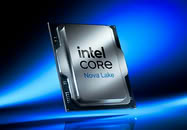 Finally, this could be the previously leaked Intel Core Ultra 9 4950K, identified as a 28-core "Nova Lake-S" desktop chip. It features 8 "Coyote Cove" P-Cores, 16 "Arctic Wolf" E-Cores, and 4 LPE-Cores. Intel is testing many SKUs for "Nova Lake-S," and a four-digit naming scheme could be necessary due to the numerous SKUs and configurations, so the new naming scheme might be on the way.
Source:
HXL on X
Previously, we learned that "Nova Lake-S" will be very power-hungry, especially in the top-end SKUs. For example, Intel's top-end, overclocking-focused, dual compute die "Nova Lake-S" CPU with 52 cores will feature a PL2 mode with a power level of 474 W. This is an unprecedented number for an Intel consumer desktop platform, typically expected from a high-end desktop (HEDT) design. However, since this is a 52-core design that can be overclocked, it represents the highest CPU PL2 setting that Intel will be shipping with "Nova Lake-S." For single compute die SKUs, the PL2 limit appears to be 296 W.

125 Comments on Intel "Nova Lake-S" 28-Core SKU With bLLC to Draw Nearly 300 W at PL2
Everyone's talking like like an Intel CPU consumes 300W 24/7 when it's on... Unless you work with your PC, you'll never use PL2 consistently.
Funnily enough, it seems like AMD's Ryzen 9 don't consume 225W 24/7 for whatever reason when this argument is brought up.
I mean, such CPU should never be a desktop part, just like RTX5090 should not be desktop part also.
We quickly normalized having 1 kW PSU in desktop PC...
It is crazy.
Wait for it to launch and 3rd Party reviews.
It also doesn't require additional cooling, high end motherboard or a larger case. I used a $44 dual tower air cooler with my 265K set to 295W and never had a problem. On the motherboard side pretty much any Z series ATX board above bottom of the barrel can easily handle that power consumption. I'm not sure where the "larger case" misconception comes from as larger doesn't mean better. One just needs a case with good airflow and something as cheap and relatively compact as the Lian-Li LANCOOL 207 fits that bill.Said hardware had a low performance ceiling which isn't the case anymore. My overclocked 6900K didn't use more than 160W while my 270K Plus can use over 300W yet my power bill didn't go up nor did my room get hotter. Turns out it depends on how efficient your chip is more than the peak power consumption.
Well genius yes sometimes when I cpu is under 100% load it may take that amount of power. But I'll ask you in gaming how many cpus are pegged at 100% usage?
Let's use a hypothetical compute scenario:
300W to process a heavy workload taking 8.02 minutes vs 200-250W (230W avg) taking 11.7 minutes. That's a sizable 46% improvement in performance at a cost of higher initial power. That's also 144,360J over 481.2s vs 161,460J over 702s. So, the 300W power usage also improved overall power efficiency by nearly 12% even with higher power draw because the task completed faster. You have to treat computation as a process that consumes power over time, not simply focus on a headline power figure.
Gaming hasn't really pushed CPUs hard in quite some time now because multi-threading is difficult when there are innumerable systems running within the game, many of which have data dependencies and/or require a series of actions to occur (serial processes). It's difficult to get full parallel compute from games on anything more than the GPU.
More heat = more problems.
And more expensive components.
And less reliability.
So, it is not about power per-se (although with PCs going to 1 kW it starts to be about that, too), it is about everything else such increase in power consumption causes...
In idle, the wall socket power of amd is about 20w higher than intel, which is a platform power difference that holds true for all the time the PC is running.
When gaming, the cpu package power of 270k plus is 35w higher than 9800x3d. So subtracting the higher amd platform power from the wall socket power, 270k plus is 15w higher than 9800x3d in gaming.
And the wall socket power of 250k plus/265k during gaming should be even lower than 9800x3d.
For most people, idle or low-to-medium load time is longer than gaming time, so intel cpu roughly has an average power saving advantage of 15w compared to amd cpu. According to AI, based on 3 years, 300 days per year, and 12 hours per day, it comes out to $28 or €47.
- Because of Zen 10-15% IPC
- Clocks will be ridiculoud High
- I am not even counting x3D
Again compared to the 270K/285K this "single tile flagship" will be like the 9850X3D over the 7700X and with something extra. Something which I didn't explore earlier but I will now.
Frequency.
There are some frequency differences between the 270K and 285K which give each some pros and cons depending on the scenario, but for the sake of simplicity I'll just take the 285K as a reference.
tpucdn.com/review/intel-core-ultra-9-285k/images/boost-clock-analysis.png
As I analyzed earlier the 9850X3D is pretty much on par frequency wise with the 7700X across the thread range, so the perf gains come from the newer arch and the 3D-V Cache.
Max power is only slightly increased from 140 W to 150 W.
The same will be for the NL "single tile flagship" over the 285K, but with a higher frequency as well.
The past has the answer.
tpucdn.com/review/intel-core-i9-14900k/images/boost-clock-analysis.png
tpucdn.com/review/intel-core-i9-14900ks/images/boost-clock-analysis.png
200 extra MHz for P-cores and 100 extra MHz for E-cores translate into:
www.techpowerup.com/review/intel-core-i9-14900ks/26.html
3% more app perf and 1.3% more gaming perf at 720p.
Okay but will the NL chip have only that much over the 285K? I don't know but if I were to guess I'd say this is the minimum frequency increase, it's likely more. Let's say it's double or even a bit more (somewhat higher than 6 but under 6.5 GHz), to the point where the previous percentages are doubled, so 6% higher in apps and 2.6% in gaming.
tpucdn.com/review/amd-ryzen-7-5800x3d-10th-anniversary/images/relative-performance-cpu.png
tpucdn.com/review/amd-ryzen-7-5800x3d-10th-anniversary/images/relative-performance-games-1280-720.png
Okay the 9850X3D over 7700X example (aka NL chip over 285K) would give 18% more app perf and 29.5% more gaming perf.
And with the doubled frequency gain percentages above we would have 125.1% higher app perf and 32.9% higher gaming perf.
At this point we see that with some hot-rodding (which is emphasized by the news subject) the NL chip can realistically get to 25% more app perf and 33% more gaming perf than the 285K.
How does this compare with Zen5 X3D and Zen6 X3D?
In gaming at 720p the 9850X3D is 22.4% better than the 285K which is almost the same to the 270K.
Thus the NL chip can realistically at the very least be on par with the 9850X3D if not clearly surpass it by 8.6% let's say.
Previously, some people including me have expressed some doubt over how effective the bLLC will be for Nova Lake, something along the lines of "can Intel get it right from the first try?".
Looking at how the 5800X3D currently holds up against newer non-X3D CPUs in gaming the answer is a resounding yes.
There is nothing stopping Intel from implementing this properly. Actually if AMD got it right (performance wise but not position wise) from the first try, Intel could potentially do even better as they had the time to learn from AMD's experiences.
What about the "10800X3D"?
Well if we look at the 9850X3D vs 7800X3D we have 12.8% more gaming perf by means of newer arch (and smaller node), higher power (150 vs 80 W) and higher frequency (600 MHz).
Now with the Zen5 to Zen6 some have stated that the bigger node jump than from Zen4 to Zen5 will give Zen6 a bigger gain over Zen5 than previously.
Really?
Well some of the extra frequency from Zen4 to Zen4 was possible (for X3D chips) due to positioning the 3D-V Cache underneath the CCDs as opposed to above like before.
So now AMD has already used up this trick meaning the extra frequency will come solely from the node jump.
Given that the node jump is bigger it offsets the lack of cache repositioning thus the frequency increase should be about the same as with Zen4 to Zen5.
Meaning the frequency increase gain won't be significantly higher either.
When it comes to non-X3D we could use the 9700X vs 7700 as those have the same power ceiling, so any gain comes from newer arch and frequency increase.
tpucdn.com/review/amd-ryzen-7-7700-non-x/images/boost-clock-analysis.png
tpucdn.com/review/amd-ryzen-7-9700x/images/boost-clock-analysis.png
At the start of the thread range there is a 170 MHz advantage for the 9700X but at the end of the range the frequency is almost identical (avg between the 3 tests).
So on average sort of 100 MHz more for the 9700X let's say.
That translates to 7.67% better in apps and 5.4% better in 720p gaming:
tpucdn.com/review/amd-ryzen-7-9800x3d/images/relative-performance-cpu.png
tpucdn.com/review/amd-ryzen-7-9800x3d/images/relative-performance-games-1280-720.png
For the old data, just to check.
tpucdn.com/review/amd-ryzen-7-5800x3d-10th-anniversary/images/relative-performance-cpu.png
tpucdn.com/review/amd-ryzen-7-5800x3d-10th-anniversary/images/relative-performance-games-1280-720.png
And 8.77% better in apps and 7.24% better in 720p gaming for the new data.
Let's assume we increase the frequency further until we double the percentages.
After all Zen6 is rumored to have very high frequency.
Another aspect is core count increase. This is one area for which Zen4 to Zen5 provided 0 gains.
But now there will be extra cores on the CCD which for some games might make a difference.
The power aspect can be ignored, I don't think that the 12 core "10800X3D" will go higher than the 6+6 core 9900X(3D) maybe a bit but inconsequential to gaming. The 9850X3D is already close to the 9900X(3D) and is heavily hot-rodded (~150 W max vs ~170 W max).
Going back to the 12.8% gain of the 9850X3D over the 7800X3D, if the "10800X3D" is another 12.8% over the 9850X3D then it would be 38.1% higher than the 285K which would make it 3.9% better than the NL "single tile flagship" in gaming at 720p.
When it comes to app perfomance I've touched on that before.
The 9900X3D is the stand-in for a "9900X 12 core single CCD".
It would be at 93% in the relative performance chart if the 270K would be at 100% and the 285K at 98.7%.
But we also need a "9900X3D 12 core single CCD" so then the "10800X3D" has newer arch and more frequency over it, for the same power ceiling.
Using the gain from 9950X to 9950X3D this would be at 96% in the performance chart.
The "10800X3D" over the "9900X 12 core single CCD" would be pretty much like the 9850X3D over the 7700X -> newer arch (smaller node), same frequency and power but with 3D-V Cache.
So the "10800X3D" would sit at 109.7% (18% better than the 93% 9900X3D) in the app perf chart compared to the NL chip at 123.5% (25.1% better than the 98.7% 285K) -> 12.6% better than the "10800X3D".
The "10800X3D" over the "9900X3D 12 core single CCD" would be pretty much like the 9700X (with doubled percentages) over the 7700 -> newer arch (smaller node), more frequency (at least 200 MHz) and same power.
So the "10800X3D" would sit at 112.8% (17.5% better than the 96% "9900X3D2") in the app perf chart compared to the NL chip at 123.5% (25.1% better than the 98.7% 285K) -> 9.5% better than the "10800X3D".
The "10800X3D" over the "9900X3D 12 core single CCD" would be pretty much like the 9800X3D over the 7800X3D -> newer arch (smaller node), more frequency (300 MHz), more power (150 vs 80 W).
So the "10800X3D" would sit at 115.6% (20.4% better than the 96% "9900X3D2") in the app perf chart compared to the NL chip at 123.5% (25.1% better than the 98.7% 285K) -> 6.8% better than the "10800X3D".
In conclusion the "10800X3D" could be 3.9% better in gaming at 720p compared to the NL "single tile flagship" while the NL chip could range from 6.8-9.5 to 12.6% better in apps (let's average those and say ~9.6%).
However max power draw could be under 190 W for the "10800X3D" while apparently it will be over 260 W for the NL chip.
Could this be realistic or is it too optimistic for one and too pessimistic for the other?
Yes my comparison makes sense for those who are capable of understanding my words.
Comparatively your post doesn't make any sense.
You ask me why do I compare single tile flagships when Intel doesn't (yet) have dual tile ones?
That's why because Intel only has single tile ones.
Who would've guessed... :rolleyes:
If you want me to ELI5 it to you fine.
In contrast, BSPD delivers power directly to the transistors from the bottom of the substrate. Therefore, in terms of chip thermal dissipation efficiency, the traditional method undoubtedly holds the advantage. The BSPD method leaves the transistors in the middle of the chip, which is disadvantageous for heat dissipation. BSPD reduce IR Drop that offset this negative impact to some extent.
Even if we pessimistically assume that 24 core Zen6 SKU has the same maximum power of ~300W, this would be a power budget for 24 big cores with SMT, whereas in Intel's case, there will be only 8 big cores and 20 small cores screaming 'moar powaaa'! Big cores have been bloated for years. Switching off SMT/HT and AVX512 were some of ways to curtail the power budget. It is not surprising that they are moving in a direction of a unified core in a few years, as e core team seems to be bringing more promising results.
Let's take an example from AMD's playbook of new Zen6 EPYC. The 9686F SKU with 96 cores (8 CCDs with 12 big cores each) features a power budget of 500W. It reaches 5 GHz and it features two large IODs. If we assume that each IOD consumes ~50W when fully loaded, there is ~400W left for eight CCDs, roughly 50W per CCD that can run at 5 GHz.
www.amd.com/en/products/processors/server/epyc/9006-series/amd-epyc-9686f.html
On desktop, they will push the same CCD well beyond 6 GHz. Do they need to bring extra 100W to do that? Most likely not. I'd assume that '10800X3D', or whatever the name, would still be ~120W CPU and dual CCD flagship ~200W. We will see in a few months.
I assume AMD is facing a severe power draw issue the last few generations which is why they are stuck with 6 and 8 core chips in thier mainstream CPUs, and even their high end are at 16. Let's hope Zen 6 fixes a bit of the power inefficiencies.