Friday, August 21st 2026

Intel "Nova Lake-S" 28-Core SKU With bLLC to Draw Nearly 300 W at PL2

Intel's upcoming "Nova Lake-S" desktop processors are nearing launch, and the rumor mill is intensifying as we receive more information about clock speeds, core configurations, and power consumption. According to a post on the Weibo forums, Intel's 28-core SKU with a big last-level cache (bLLC) integrated into the package will reach up to 296 W of power consumption at the Power Level 2 (PL2) setting. This is the maximum power draw the CPU can achieve during short bursts of turbo clocking, reaching its peak. Compared to the current top-end "Arrow Lake-S" 24-core Core Ultra 9 285K, which has a PL2 setting of 250 W, the additional four LPE-Cores on the latest "Nova Lake-S" will increase that number by about 18.4%.

Previously, we learned that "Nova Lake-S" will be very power-hungry, especially in the top-end SKUs. For example, Intel's top-end, overclocking-focused, dual compute die "Nova Lake-S" CPU with 52 cores will feature a PL2 mode with a power level of 474 W. This is an unprecedented number for an Intel consumer desktop platform, typically expected from a high-end desktop (HEDT) design. However, since this is a 52-core design that can be overclocked, it represents the highest CPU PL2 setting that Intel will be shipping with "Nova Lake-S." For single compute die SKUs, the PL2 limit appears to be 296 W.
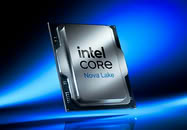
Finally, this could be the previously leaked Intel Core Ultra 9 4950K, identified as a 28-core "Nova Lake-S" desktop chip. It features 8 "Coyote Cove" P-Cores, 16 "Arctic Wolf" E-Cores, and 4 LPE-Cores. Intel is testing many SKUs for "Nova Lake-S," and a four-digit naming scheme could be necessary due to the numerous SKUs and configurations, so the new naming scheme might be on the way.
Source: HXL on X
Add your own comment

125 Comments on Intel "Nova Lake-S" 28-Core SKU With bLLC to Draw Nearly 300 W at PL2

#76
Tek-Check
JustBenchingPower draw is indeed important, but what power it uses out of the box isn't, since it takes 5 seconds to change that, whether within the bios or within windows itself. The name of the cpu is more important than the stock power draw, that's how useless that metric is.
The name of a CPU is important, indeed, as it comes with power usage reputation attached, among other things. That's one of reasons why Apple CPUs have built a reputation of being efficient, while still delivering admirable performance and single CCD X3D CPUs are efficient in gaming. The names 11900K, 13900K and 14900K are associated with guzzling power like mad, especially in gaming. Still, with more than DOUBLE of power used in gaming, those CPUs cannot beat X3D processors. Intel had to sit down and scratch their head to try to do something different. Hence the idea of large cache in Nova Lake.

The TPU review thumbnail says it all.
JustBenchingI expect Nova lake to be leading (massively actually) in Multithreaded efficiency at every power level as they do today. In fact, I expect Arrow lake to be leading Zen 6. There is no way a 10800x (or whatever it's named) 12 core CPU to be faster at similar power to the 270k. And that's even assuming it's at least 300$
MT efficiency? You spend so much time on TPU, but their reviews seem to be beyond your awareness. Why?
JustBenchingI assume AMD is facing a severe power draw issue the last few generations which is why they are stuck with 6 and 8 core chips in thier mainstream CPUs, and even their high end are at 16. Let's hope Zen 6 fixes a bit of the power inefficiencies.
Hahaha! I am sure you could post even bigger nonsense. I believe in you.
For the power consumption of mainstream chips across workloads, it's enough if you read reviews and get informed, so that you don't post nonsense.
www.techpowerup.com/review/amd-ryzen-9-9950x3d2-dual-edition/22.html
Posted on Reply
#77
Sol_Badguy
Tek-CheckEven if we pessimistically assume that 24 core Zen6 SKU has the same maximum power of ~300W, this would be a power budget for 24 big cores with SMT, whereas in Intel's case, there will be only 8 big cores and 20 small cores screaming 'moar powaaa'!
No need for pessimism, 300 W is right at the edge, probably too little.
Right now a 16 core 9950X(3D) goes to a max of 210 W. That's 13.1 W per core.
tpucdn.com/review/amd-ryzen-9-9950x3d2-dual-edition/images/power-applications-compare-ryzen-9-9950x3d.png
The node jump argument is valid until frequency comes into play. If the 6.5 GHz rumors are accurate the very high frequency needs some juice and power ceiling to back it up.
So 300 W / 24 = 12.5 W per core.
As I said right at the edge, I wouldn't be surprised if it's higher, after all the 7950X and 9950X3D2 both go over 250 W.
If core count stays the same then yes power draw is expected to progressively decrease with each smaller node, but here we're talking about a 50% core increase which would create a two steps forward one step back type of situation.
JustBenchingI expect Nova lake to be leading (massively actually) in Multithreaded efficiency at every power level as they do today. In fact, I expect Arrow lake to be leading Zen 6. There is no way a 10800x (or whatever it's named) 12 core CPU to be faster at similar power to the 270k.
Then brace yourself. You're setting yourself up for disappointment with such sky-high expectations.
The "10800X3D" does not need more than the 170 W of today's 9900X (both 12 core CPUs) to beat the 270K in MT which goes up to 260 W.
You would have to trim quite a bit of 270K's power ceiling to match the "10800X3D" and that means losing some percentages compared to stock. Meanwhile you just add a multiplier to today's 9900X's relative performance score (to estimate the Zen6 SKU) and bang you're past the stock 270K.

Oh oh I know what you're going to say, why don't we increase the power draw of the "10800X3D" to match the 270K's? So maybe then the efficiency is ruined. Yeah but if it wins at 170 W it will also win (bigger) at 260 W, which means beating the 270K at the same wattage aka being more efficient.
How's that working out for ya?
Posted on Reply
#78
JustBenching
Tek-CheckMT efficiency? You spend so much time on TPU, but their reviews seem to be beyond your awareness. Why?
Surely you understand what performance at the same power means, right? If you run the 270k at the same power as whatever amd CPU costs the same money (9700x?) it will be both significantly FASTER and significantly MORE efficient. I don't think you don't know this, I think you are just trying to waste my time to be fair.
Sol_BadguyThen brace yourself. You're setting yourself up for disappointment with such sky-high expectations.
The "10800X3D" does not need more than the 170 W of today's 9900X (both 12 core CPUs) to beat the 270K in MT which goes up to 260 W.
You would have to trim quite a bit of 270K's power ceiling to match the "10800X3D" and that means losing some percentages compared to stock. Meanwhile you just add a multiplier to today's 9900X's relative performance score (to estimate the Zen6 SKU) and bang you're past the stock 270K.
The 9900x at 170w is significantly slower than the 270k at 170w. Yes, the 10800x will be better than the 9900x in that regard, but how much better? I don't expect a 50% jump or anything.
Sol_BadguyOh oh I know what you're going to say, why don't we increase the power draw of the "10800X3D" to match the 270K's? So maybe then the efficiency is ruined. Yeah but if it wins at 170 W it will also win (bigger) at 260 W, which means beating the 270K at the same wattage aka being more efficient.
How's that working out for ya?
No, either way is fine. Either decrease the 270k or increase the competition, im fine with both, as long as it's the same power it's fair game for efficiency.
Posted on Reply
#79
Tek-Check
tsurugi$28 or €47
Did AI tell you that 28 dollars equals 47 euros, or did AI just pick a random country for pricing?
thestryker6There's no way to poll what node is being used so it's ripe for human error. Early ARL showed 20A which we know was never used because the node was canceled.
We can track what nodes are announced and then used by following historical developments. Early samples of Arrow Lake were, indeed, produced on 20A and shown to the public in 2023. Intel then realised that the performance of 20A was not stellar, cancelled it and contracted TSMC instead.
www.tomshardware.com/news/intel-displays-arrow-lake-wafer-with-20a-process-node-chips-arrive-in-2024

As a reminder, Meteor Lake silicon in a compute tile was also too weak for desktop CPUs. That's why the whole generation on initial 1851 socket was cancelled and motherboards were hidden for a year by vendors. We saw ES of Meteor Lake S CPUs. In place of those, Raptor Lake refresh was introduced and 1851 delayed the whole year.
JustBenchingSurely you understand what performance at the same power means, right? If you run the 270k at the same power as whatever amd CPU costs the same money (9700x?) it will be both significantly FASTER and significantly MORE efficient. I don't think you don't know this, I think you are just trying to waste my time to be fair.
You were rambling about MT efficiency. Money does not measure MT efficiency. Are you not aware of this? That's why I gave you TPU graph, to find out what the measure was. How about you learn this, once and for all, and stop wasting everyone's time for a change?
Posted on Reply
#80
thestryker6
Tek-CheckWe can track what nodes are announced and then used by following historical developments. Early samples of Arrow Lake were, indeed, produced on 20A and shown to the public in 2023. Intel then realised that the performance of 20A was not stellar, cancelled it and contracted TSMC instead.
Showing a wafer is not the same thing as working silicon the ARL samples that were sent out were not using 20A.
Tek-CheckAs a reminder, Meteor Lake silicon in a compute tile was also too weak for desktop CPUs.
It had nothing to do with MTL and everything to do with Intel 4.
Posted on Reply
#81
JustBenching
Tek-CheckMoney does not measure MT efficiency.
Of course it does. We compare products at similar price points. Comparing a 100$ product to a 999$ product is kinda useless

Anyways, as ive said, I find it highly unlikely for the 300$ zen 6 product to be more efficient at ISO power in MT compared to arrowlake, let alone novalake. Amd has good cpus but efficiency especially in MT workloads isn't their forte.
Posted on Reply
#82
Tek-Check
JustBenchingThe 9900x at 170w is significantly slower than the 270k at 170w. Yes, the 10800x will be better than the 9900x in that regard, but how much better? I don't expect a 50% jump or anything.
The only application in TPU reviews where 9900X uses ~170W is Blender.
Blender:
9900X (173 W) , 70 s
270K Plus (~250 W) 56 s
9950X (~220 W) , 56 s (for more context)

270K Plus is 20% faster with 45% more power and 100% more cores. Bravo?
Have you got any data for 270K Plus running Blender on 170 W? It will likely score way lower. Is this what you wish to call 'significantly faster'?
JustBenchingOf course it does. We compare products at similar price points. Comparing a 100$ product to a 999$ product is kinda useless
Again, money does not measure MT efficiency. Stop with this brain dead nonsense. When you introduce another variable, you need to name it accordingly.
JustBenchingAnyways, as ive said, I find it highly unlikely for the 300$ zen 6 product to be more efficient at ISO power in MT compared to arrowlake, let alone novalake. Amd has good cpus but efficiency especially in MT workloads isn't their forte.
The MT efficiency graph was posted for you. You don't need much effort to look at it and understand it. Or perhaps you do.
Posted on Reply
#83
zus
Tek-CheckThe only application in TPU reviews where 9900X uses ~170W is Blender.
Blender:
9900X (173 W) , 70 s
270K Plus (~250 W) 56 s
9950X (~220 W) , 56 s (for more context)

270K Plus is 20% faster with 45% more power and 100% more cores. Bravo?
Have you got any data for 270K Plus running Blender on 170 W? It will likely score way lower. Is this what you wish to call 'significantly faster'?
It wouldn't surprise me if they scored similarly, or even if the 270K Plus did better. Post #22 shows that the 270K+ only suffers a 5% penalty when limited at 175W (but that's Cinebench, not Blender). The only TPU test with power limits I could find was a really old 2023 14900K benchmark, but we can see there that the relation between power draw and performance is not linear. I don't have data for direct comparisons unfortunately, I think it would be interesting to see more benchmarks like these with newer processors too. But I believe the 270K+ would probably be very competitive against the 9900X at 170W.


125W -> 253W (100% increase), 76s -> 61s (20% reduction), the 14900K is definitely not tuned for efficiency out of the box.

These are the Blender numbers of the latest review, just to clarify that the other benchmark is clearly outdated.
Posted on Reply
#84
Tek-Check
zusBut I believe the 270K+ would probably be very competitive against the 9900X at 170W.
It should be. It features 100% more cores.
Posted on Reply
#85
truerock
Tyler-98-W68500w 12th gen


Over 400w 285K


Almost 500w 14900K
Good info - thanks
Sol_BadguyOkay since this news is about the "single tile flagship" so to speak I thought about an earlier estimation of mine.
Again compared to the 270K/285K this "single tile flagship" will be like the 9850X3D over the 7700X and with something extra. Something which I didn't explore earlier but I will now.
Frequency.

There are some frequency differences between the 270K and 285K which give each some pros and cons depending on the scenario, but for the sake of simplicity I'll just take the 285K as a reference.
tpucdn.com/review/intel-core-ultra-9-285k/images/boost-clock-analysis.png
As I analyzed earlier the 9850X3D is pretty much on par frequency wise with the 7700X across the thread range, so the perf gains come from the newer arch and the 3D-V Cache.
Max power is only slightly increased from 140 W to 150 W.
The same will be for the NL "single tile flagship" over the 285K, but with a higher frequency as well.

The past has the answer.
tpucdn.com/review/intel-core-i9-14900k/images/boost-clock-analysis.png
tpucdn.com/review/intel-core-i9-14900ks/images/boost-clock-analysis.png
200 extra MHz for P-cores and 100 extra MHz for E-cores translate into:
www.techpowerup.com/review/intel-core-i9-14900ks/26.html
3% more app perf and 1.3% more gaming perf at 720p.

Okay but will the NL chip have only that much over the 285K? I don't know but if I were to guess I'd say this is the minimum frequency increase, it's likely more. Let's say it's double or even a bit more (somewhat higher than 6 but under 6.5 GHz), to the point where the previous percentages are doubled, so 6% higher in apps and 2.6% in gaming.

tpucdn.com/review/amd-ryzen-7-5800x3d-10th-anniversary/images/relative-performance-cpu.png
tpucdn.com/review/amd-ryzen-7-5800x3d-10th-anniversary/images/relative-performance-games-1280-720.png
Okay the 9850X3D over 7700X example (aka NL chip over 285K) would give 18% more app perf and 29.5% more gaming perf.
And with the doubled frequency gain percentages above we would have 125.1% higher app perf and 32.9% higher gaming perf.
At this point we see that with some hot-rodding (which is emphasized by the news subject) the NL chip can realistically get to 25% more app perf and 33% more gaming perf than the 285K.

How does this compare with Zen5 X3D and Zen6 X3D?
In gaming at 720p the 9850X3D is 22.4% better than the 285K which is almost the same to the 270K.

Thus the NL chip can realistically at the very least be on par with the 9850X3D if not clearly surpass it by 8.6% let's say.

Previously, some people including me have expressed some doubt over how effective the bLLC will be for Nova Lake, something along the lines of "can Intel get it right from the first try?".
Looking at how the 5800X3D currently holds up against newer non-X3D CPUs in gaming the answer is a resounding yes.
There is nothing stopping Intel from implementing this properly. Actually if AMD got it right (performance wise but not position wise) from the first try, Intel could potentially do even better as they had the time to learn from AMD's experiences.

What about the "10800X3D"?
Well if we look at the 9850X3D vs 7800X3D we have 12.8% more gaming perf by means of newer arch (and smaller node), higher power (150 vs 80 W) and higher frequency (600 MHz).
Now with the Zen5 to Zen6 some have stated that the bigger node jump than from Zen4 to Zen5 will give Zen6 a bigger gain over Zen5 than previously.
Really?
Well some of the extra frequency from Zen4 to Zen4 was possible (for X3D chips) due to positioning the 3D-V Cache underneath the CCDs as opposed to above like before.
So now AMD has already used up this trick meaning the extra frequency will come solely from the node jump.
Given that the node jump is bigger it offsets the lack of cache repositioning thus the frequency increase should be about the same as with Zen4 to Zen5.
Meaning the frequency increase gain won't be significantly higher either.

When it comes to non-X3D we could use the 9700X vs 7700 as those have the same power ceiling, so any gain comes from newer arch and frequency increase.
tpucdn.com/review/amd-ryzen-7-7700-non-x/images/boost-clock-analysis.png
tpucdn.com/review/amd-ryzen-7-9700x/images/boost-clock-analysis.png
At the start of the thread range there is a 170 MHz advantage for the 9700X but at the end of the range the frequency is almost identical (avg between the 3 tests).
So on average sort of 100 MHz more for the 9700X let's say.
That translates to 7.67% better in apps and 5.4% better in 720p gaming:
tpucdn.com/review/amd-ryzen-7-9800x3d/images/relative-performance-cpu.png
tpucdn.com/review/amd-ryzen-7-9800x3d/images/relative-performance-games-1280-720.png
For the old data, just to check.
tpucdn.com/review/amd-ryzen-7-5800x3d-10th-anniversary/images/relative-performance-cpu.png
tpucdn.com/review/amd-ryzen-7-5800x3d-10th-anniversary/images/relative-performance-games-1280-720.png
And 8.77% better in apps and 7.24% better in 720p gaming for the new data.
Let's assume we increase the frequency further until we double the percentages.
After all Zen6 is rumored to have very high frequency.

Another aspect is core count increase. This is one area for which Zen4 to Zen5 provided 0 gains.
But now there will be extra cores on the CCD which for some games might make a difference.

The power aspect can be ignored, I don't think that the 12 core "10800X3D" will go higher than the 6+6 core 9900X(3D) maybe a bit but inconsequential to gaming. The 9850X3D is already close to the 9900X(3D) and is heavily hot-rodded (~150 W max vs ~170 W max).

Going back to the 12.8% gain of the 9850X3D over the 7800X3D, if the "10800X3D" is another 12.8% over the 9850X3D then it would be 38.1% higher than the 285K which would make it 3.9% better than the NL "single tile flagship" in gaming at 720p.

When it comes to app perfomance I've touched on that before.
The 9900X3D is the stand-in for a "9900X 12 core single CCD".
It would be at 93% in the relative performance chart if the 270K would be at 100% and the 285K at 98.7%.
But we also need a "9900X3D 12 core single CCD" so then the "10800X3D" has newer arch and more frequency over it, for the same power ceiling.
Using the gain from 9950X to 9950X3D this would be at 96% in the performance chart.

The "10800X3D" over the "9900X 12 core single CCD" would be pretty much like the 9850X3D over the 7700X -> newer arch (smaller node), same frequency and power but with 3D-V Cache.
So the "10800X3D" would sit at 109.7% (18% better than the 93% 9900X3D) in the app perf chart compared to the NL chip at 123.5% (25.1% better than the 98.7% 285K) -> 12.6% better than the "10800X3D".

The "10800X3D" over the "9900X3D 12 core single CCD" would be pretty much like the 9700X (with doubled percentages) over the 7700 -> newer arch (smaller node), more frequency (at least 200 MHz) and same power.
So the "10800X3D" would sit at 112.8% (17.5% better than the 96% "9900X3D2") in the app perf chart compared to the NL chip at 123.5% (25.1% better than the 98.7% 285K) -> 9.5% better than the "10800X3D".

The "10800X3D" over the "9900X3D 12 core single CCD" would be pretty much like the 9800X3D over the 7800X3D -> newer arch (smaller node), more frequency (300 MHz), more power (150 vs 80 W).
So the "10800X3D" would sit at 115.6% (20.4% better than the 96% "9900X3D2") in the app perf chart compared to the NL chip at 123.5% (25.1% better than the 98.7% 285K) -> 6.8% better than the "10800X3D".

In conclusion the "10800X3D" could be 3.9% better in gaming at 720p compared to the NL "single tile flagship" while the NL chip could range from 6.8-9.5 to 12.6% better in apps (let's average those and say ~9.6%).
However max power draw could be under 190 W for the "10800X3D" while apparently it will be over 260 W for the NL chip.

Could this be realistic or is it too optimistic for one and too pessimistic for the other?
720p gaming? People do that in 2026?

I don't think I've seen a 720p display in over 12 years.
Posted on Reply
#86
Intelko
Dr. DroHopefully never. I like my computers upgradable, so no unified memory for me.
But do you even understand the power of UMA?
And why according to you - UMA denies upgrading your ram if with full dynamic UMA you can share your ram with the GPU too?
Posted on Reply
#87
Sol_Badguy
truerock720p gaming? People do that in 2026?
For gauging CPU performance yes.
Low res reduces GPU bottleneck so you can correctly assess how strong the CPU is.
If one CPU is weak at low res it will also be weak at higher res.
Conversely 2160p increases GPU bottleneck so that reveals how strong a GPU is.

Moreover the DLSS Performance for 1440p output is 720p internal.
DLSS Performance for 2160p output is 1080p internal.
Those upscaled 720p to 1440p/1080p to 2160p are somewhat more taxing than native 720p/1080p but much easier than native 1440p or 2160p.
Posted on Reply
#88
Dr. Dro
IntelkoBut do you even understand the power of UMA?
And why according to you - UMA denies upgrading your ram if with full dynamic UMA you can share your ram with the GPU too?
Yes. Unified memory architectures are fast - see: Strix Halo. This is because several copy stages and other roundabout transfers are no longer necessary for data coherency - but they also have a downside, to achieve such tremendous bandwidth, you ultimately forsake upgradability.
Posted on Reply
#89
Denver
Dr. DroYes. Unified memory architectures are fast - see: Strix Halo. This is because several copy stages and other roundabout transfers are no longer necessary for data coherency - but they also have a downside, to achieve such tremendous bandwidth, you ultimately forsake upgradability.
There aren't any major advancements on the horizon.

So I'd be fine with a high-end APU with something like 48-64 RDNA5 CUs + 128GB of LPDDR6, it'd be a much better portable solution than a conventional laptop with a CPU and GPU. I could stick with that for a good 4–5 years.

Enough time for better hardware to emerge or for the machine apocalypse to arrive.
Posted on Reply
#90
JustBenching
zusIt wouldn't surprise me if they scored similarly, or even if the 270K Plus did better. Post #22 shows that the 270K+ only suffers a 5% penalty when limited at 175W (but that's Cinebench, not Blender). The only TPU test with power limits I could find was a really old 2023 14900K benchmark, but we can see there that the relation between power draw and performance is not linear. I don't have data for direct comparisons unfortunately, I think it would be interesting to see more benchmarks like these with newer processors too. But I believe the 270K+ would probably be very competitive against the 9900X at 170W.


125W -> 253W (100% increase), 76s -> 61s (20% reduction), the 14900K is definitely not tuned for efficiency out of the box.

These are the Blender numbers of the latest review, just to clarify that the other benchmark is clearly outdated.
I have a feeling everyone knows it but we are just pretending? I don't know, it really boggles my mind having to explain this in a tech forum.
Posted on Reply
#91
tsurugi
Tek-CheckAs a reminder, Meteor Lake silicon in a compute tile was also too weak for desktop CPUs
Intel in Meteorlake and Arrowlake both had plans for intel 4/20a DT cpu, your comment is invalid. Attributing intel's cancellation to node capability is a false attribution, and intel never claimed to cancel plans due to node reasons.
There is no information indicating 20a and intel 4 cannot manufacture DT cpus. In fact, precisely because they possess the capability to manufacture DT cpus, intel had the relevant plans.
Tek-CheckDid AI tell you that 28 dollars equals 47 euros, or did AI just pick a random country for pricing?
sufficient for an estimate that is 70% accurate
Posted on Reply
#92
Sol_Badguy
Following my post #69 I've decided to give AMD dual CCD and Intel dual tile a try.
It's not that complicated.

I use the single CCD to dual CCD scaling using the following CPUs.

Max power draw values

Frequency
The avg freq is obtained by averaging the three workloads on the vertical axis for each corresponding thread and then averaging these averages on the horizontal axis.

7700 to 7950X
tpucdn.com/review/amd-ryzen-7-7700-non-x/images/boost-clock-analysis.png
tpucdn.com/review/amd-ryzen-9-7950x/images/boost-clock-analysis.png
5322 MHz avg vs 5478 MHz avg
156 MHz higher avg freq, 237.5% higher max power draw (80 W vs 270 W) and scaling is 37%.

7700X to 7950X
tpucdn.com/review/amd-ryzen-7-7700x/images/boost-clock-analysis.png
tpucdn.com/review/amd-ryzen-9-7950x/images/boost-clock-analysis.png
5487 MHz avg vs 5478 MHz avg
Basically the same avg freq, 88.8% higher max power draw (143 W vs 270 W) and scaling is 31.8%.

9700X to 9950X
tpucdn.com/review/amd-ryzen-7-9700x/images/boost-clock-analysis.png
tpucdn.com/review/amd-ryzen-9-9950x/images/boost-clock-analysis.png
5441 MHz avg vs 5467 MHz avg
Almost the same avg freq, 164% higher max power draw (80 W vs 211 W) and scaling is 36.2%.

9800X3D to 9950X3D2
tpucdn.com/review/amd-ryzen-7-9800x3d/images/boost-clock-analysis.png
tpucdn.com/review/amd-ryzen-9-9950x3d2-dual-edition/images/boost-clock-analysis-all.png
5220 MHz avg vs 5446 MHz avg
226 MHz higher avg freq, 74.5% higher max power draw (153 W vs 267 W) and scaling is 31.4%.

9850X3D to 9950X3D2
tpucdn.com/review/amd-ryzen-7-9850x3d/images/boost-clock-analysis.png
tpucdn.com/review/amd-ryzen-9-9950x3d2-dual-edition/images/boost-clock-analysis-all.png
5470 MHz avg vs 5446 MHz avg
Okay so if the avg freq is (almost) the same, with 72.2% higher max power draw (155 W vs 267 W) the scaling is 28.5% which isn't great.

Old data 2024

www.techpowerup.com/review/amd-ryzen-7-9800x3d/27.html
App avg

7700 to 7950X - 38.33%
7700X to 7950X - 33.3%
9700X to 9950X - 32.94%

720p gaming

7700 to 7950X - 2.1%
7700X to 7950X - 0.6%
9700X to 9950X - 0%


New data 2026

www.techpowerup.com/review/amd-ryzen-7-5800x3d-10th-anniversary/24.html
App avg

7700 to 7950X - 37.04%
7700X to 7950X - 31.8%
9700X to 9950X - 36.22%
9800X3D to 9950X3D2 - 31.41%
9850X3D to 9950X3D2 - 28.53%

720p gaming

7700 to 7950X - 1.4%
7700X to 7950X - 0.7%
9700X to 9950X - 1.7%
9800X3D to 9950X3D2 - -0.8%
9850X3D to 9950X3D2 - -2.2%

Performance
So now if I make a mock-up relative performance chart:

App avg

NL dual full tile bLLC - 157.3% (37% better than single tile)
NL dual full tile bLLC - 147.5% (28.5% better than single tile)
AMD "10950X3D2" - 143.4% (37% better than single CCD)
AMD "10950X3D2" - 134.5% (28.5% better than single CCD)
NL single full tile bLLC - 114.8% (9.6% better than "10800X3D")
AMD "10800X3D" - 104.7%
9950X3D2 - 100% - baseline
9950X3D - 97.6%
9950X - 94.4%
270K - 93.0%
285K - 91.8%
7950X - 87.3%
14900K - 85.2%
9850X3D - 77.8%
9800X3D - 76.1%
7800X3D - 63.0%

720p gaming

AMD "10800X3D" - 115.3% (1.5% better than dual CCD)
AMD "10950X3D2" - 113.6%
NL single full tile bLLC - 111.0% (1.5% better than dual tile)
NL dual full tile bLLC - 109.4%

9850X3D - 102.2%
9800X3D - 100.8%
9950X3D2 - 100% baseline
9950X3D - 95.0%
7800X3D - 90.6%
9950X - 85.5%
270K - 84.0%
14900K - 83.6%
285K - 83.5%

7950X - 79.5%

For apps I took the lowest scaling value from 9850X3D to 9950X3D2 which is 28.5% as a multiplier applied to the single tile and single CCD respectively, and also the highest from the 7700 to 7950X which is 37%. However max power draw plays a role, for 9850X3D to 9950X3D it's 72% higher while for the other example it's 237% higher. I suppose I could use the more tame example of 9700X to 9950X which has 36% scaling for 164% higher max power.

If the NL single full tile bLLC has 260 W (which is lower than the value cited in this article) basically on par with 270K/285K, then 72% higher is 447 W which is a bit lower but fits perfectly within the 474 W cited a while ago for the dual tile flagship.
For AMD if my assumption is right that the "10800X3D" doesn't go higher than the ~170 W of the 9900X, then 72% higher is 292 W which is very plausible for the dual CCD "10950X3D2" when compared to the 9950X3D2 which has 2/3 core count and surely lower frequency. A big node jump would offset the required power draw significantly, 292 is roughly 10% more than 267, very plausible again considering the 50% increase in core count and higher frequency by probably 500 MHz at least.

Conclusion
There is a wild card here, the 4 LPE cores on the Nova Lake SoC tile.
If they contribute something it has to be app only, I don't how gaming could be influenced by them.
And regarding apps I have no idea how much, like maybe a couple of percent?
Scaling wise the NL compute tile is doubled, but the 4 LPE cores remain the same. So a marginal disadvantage if any.

Seems like AMD has this in the bag.
I mean sure the big dual chip looks like it's losing to Intel which could be ~10% faster but also appears to have 50% higher max power which is crazy. Because for these chips the heavy MT workloads (exactly their intended usage) would get to that max power.
I doubt that capping the Intel at 2/3 of the power would mean only a 10% perf penalty thus putting it on par with AMD in both avg perf and efficiency.
Same thing for the single chips.
I genuinely don't see AMD going for 200 W with the "10800X3D" but even if they did that only means higher perf, thus the NL single chip would have 30% higher max power draw for 5% higher avg perf?

Even if I take the best case for the NL dual tile vs worst for AMD dual CCD, that's still 17% higher avg perf for 50% higher max power.

With that said I am ready to be amazed/proven wrong.
Question is are you ready for major disappointment?
Posted on Reply
#93
JustBenching
Sol_BadguyConclusion
There is a wild card here, the 4 LPE cores on the Nova Lake SoC tile.
If they contribute something it has to be app only, I don't how gaming could be influenced by them.
And regarding apps I have no idea how much, like maybe a couple of percent?
Scaling wise the NL compute tile is doubled, but the 4 LPE cores remain the same. So a marginal disadvantage if any.

Seems like AMD has this in the bag.
I mean sure the big dual chip looks like it's losing to Intel which could be ~10% faster but also appears to have 50% higher max power which is crazy. Because for these chips the heavy MT workloads (exactly their intended usage) would get to that max power.
I doubt that capping the Intel at 2/3 of the power would mean only a 10% perf penalty thus putting it on par with AMD in both avg perf and efficiency.
Same thing for the single chips.
I genuinely don't see AMD going for 200 W with the "10800X3D" but even if they did that only means higher perf, thus the NL single chip would have 30% higher max power draw for 5% higher avg perf?

Even if I take the best case for the NL dual tile vs worst for AMD dual CCD, that's still 17% higher avg perf for 50% higher max power.

With that said I am ready to be amazed/proven wrong.
Question is are you ready for major disappointment?
As I've said, there is no chance a 300$ AMD CPU will be faster / more efficient in MT workloads at the same power as an Arrowlake 300$ CPU (so 270k) . The last time that happened was in 2019. ISO efficiency just isn't amd's forte.

Also there is no such thing as "max power" for chips. They would use as much power as Intel wants them to use. If they want to release it at 200w they will, if they want to release it at 999w they will do that. The power limit isn't anything that's inherent to the CPU, it's a decision made by the marketing department, that's why I don't pay attention to it and I go with ISO comparisons.

17% more performance for 50% higher power is a great result. Take a 9800x 3d and try to get a 17% higher score in Cinebench. You think you can do that with less than 50% more power? :p
Posted on Reply
#94
zus
Sol_BadguyI doubt that capping the Intel at 2/3 of the power would mean only a 10% perf penalty thus putting it on par with AMD in both avg perf and efficiency.
That's pretty much what @BoggledBeagle got with the 270K Plus in Cinebench, so I don't think it's impossible for Nova Lake either. The question is if this remains true for other applications.
Sol_BadguyI mean sure the big dual chip looks like it's losing to Intel which could be ~10% faster but also appears to have 50% higher max power which is crazy.
In that 14900K benchmark, the i9 managed to retain over 90% of the performance (average of all apps, not just max power) with only half the wattage, Intel was really pushing that chip to its limits (maybe a bit over its limits even, lol), I wonder if this will be the case for Nova Lake too, that might explain the crazy power draw we're seeing in these leaks.


edit: I checked KeyShot which seems to be one of the worst case scenarios for Intel, and yeah, the gap widens quite a bit.


Posted on Reply
#95
kazuviking
Sol_BadguySeems like AMD has this in the bag.
There is only going up in power draw as were reaching the absolute limits. Alderlake with the AVX-512 not fused off was on par with AM5 in performance.
Posted on Reply
#96
Sol_Badguy
@zus

The thing is the apps that go way past the cap limit will be hurt the most, it doesn't seem very dramatic when looking at an average which contains ST workloads which remain unaffected.

Using the 14900K test I have estimated how the 270K would fare using a 175 W cap here. Using the CB scores as a reference. But it only works for the average not precisely determining the result per app.

You can see in the table the column marked "tested" for 14900K, those are the actual results from the review, then the "estimated" column uses the CB score as reference and then rule of three for the apps which go above the 200 W cap. Based on the power draw difference.
And the estimation is very accurate overall but not so much per app.
And I used the same approach for 270K.

So the thing with significant power capping is that the heavy MT apps get hurt most, and that's the intended usage of these SKUs, heavy MT. Thus capping the dual tile heavily might mean losing it's performance edge over the AMD counterpart, so now they're neck and neck let's say for the sake of argument both in perf and efficiency.
Then what's the point?
Just to win? For bragging rights?
That's stupid.

And there was talk of an extra EPS connector on the mobo, WTF, so making things more complicated and more expensive just for a pissing contest?
When they could make it more tame and keep it more affordable. Of course power draw also has implications for cooling.
So if they're interested in making a statement, as in "we won, chest pounding moment" and an "enthusiast" platform, where it's solely about the absolute performance and not the compromises to get there (including the buckets of money to have such a rig) then yeah they might aim more for perception and emotion rather than reality and reason.

/////

Still I have some doubts about NL, power maxxing is a very cheap approach and the risk of overusing it is real.

It's good that AMD didn't repeat the 7950X with the 9950X and 9950X3D. They did with the 9950X3D2 but I don't care about that SKU.
They did juice the 9800X3D and 9850X3D because they needed the gaming king to remain king.
Now with the "10800X3D" there will be enough core firepower for MT that will satisfy many users.
So no need to juice as hard as with the previous 8 core SKUs.
If the 7800X3D was at 80 W, then 9800X3D and 9850x3D should have been at 120 W not 150 W.
But as I said there was a bit of pressure on them and initially it seemed like Zen5 underdelivered hence Zen 5%.
So they pushed it a bit more with the 9800X3D which came later because they also needed a very clear gap between it and the 7800X3D.
Again the statement dilemma, how clear does the statement have to be?

Meanwhile Intel made clear progress from Raptor Lake to Arrow Lake regarding power draw, but they were still rather high at max, and unfortunately it didn't help as AMD still won.
That's the point, there was no need for those MTPs, even with them overall the CPUs lost. Not by much but they lost. Also dead platform syndrome didn't help either with the adoption rates.
Just telling it like it is.
I'm expecting a bipolar approach with NL, very low idle power draw, very good ST performance and low power draw but then unhinged MT power draw to reach for the performance crown like there's no tomorrow (and thus rather poor efficiency at max).
I still want Intel to score a modest win overall, but man I'm losing faith. All the better, means I can't be very disappointed if they flop, however I can be very pleasantly surprised if they hit the bullseye.
Posted on Reply
#97
kazuviking
Sol_BadguyAnd there was talk of an extra EPS connector on the mobo, WTF, so making things more complicated and more expensive just for a pissing contest?
Eh, Xenons already have 2 EPS + 2 PCIE 8pin connectors for power already.
Sol_BadguyI'm expecting a bipolar approach with NL, very low idle power draw,
It will never happen with windows tho as for some reason it likes to use 4-5 cores just for nothing. Cannot wait for the shitfest that is gonna be scheduling for 3 types of cores.
Sol_BadguyI still want Intel to score a modest win overall, but man I'm losing faith
Intel only have to beat the 14900K gaming performance wise and the 285K efficiency wise and its a win in my book. If its priced properly like the 270K and 250K then NVL bLLC wont have an issue selling. But motherboard prices will be through the moon. ARL mobos still costs 250€+ for a fucking midrange Z890 model. Wont even mention ram prices.
Posted on Reply
#98
Sol_Badguy
kazuvikingIt will never happen with windows tho as for some reason it likes to use 4-5 cores just for nothing. Cannot wait for the shitfest that is gonna be scheduling for 3 types of cores.
Having AVX at least means there's no longer a handicap in Linux, that's great for those leaving Windows.
But yeah Hybrid arch complicates things.
kazuvikingIntel only have to beat the 14900K gaming performance wise and the 285K efficiency wise and its a win in my book. If its priced properly like the 270K and 250K then NVL bLLC wont have an issue selling. But motherboard prices will be through the moon. ARL mobos still costs 250€+ for a fucking midrange Z890 model. Wont even mention ram prices.
Surpassing the 14900K is a piece of cake for the upcoming arch.
tpucdn.com/review/intel-core-ultra-7-270k-plus/images/relative-performance-games-1280-720.png
The first hurdle is the 20% gap between the 9800X3D and the 270K.
NL bLLC can take care of that, however going one on one with the "10800X3D" will be a very hard battle in gaming.

They're not going to repeat the Arrow Lake Plus prices with NL bLLC. Not even with the vanilla ones, although those might be significantly cheaper.
I'm expecting the single tile with bLLC at $550-600.

In our region (at least) the mofo retailers started to hike the LGA1851 mobos mostly after Plus Refresh launch. The CPUs being semi-charity meant being more attractive and thus the mobos were sought after too. Which contrasts with the lowered prices from 2025 when Arrow Lake was ignored and thus the mobos dropped significantly.
Still the AM5 counterparts are arguably more expensive.

It's not only RAM prices, it's also lack of progress. It all got derailed. If the RAMpocalypse hadn't happened, then CUDIMM kits would've gotten cheaper, the higher capacity kits would've slowly increased in frequency, more and more kits would've appeared with single sided 32GB modules and basically every other aspect that can be considered progress.
But it seems that for the NL and Zen6 launch the majority of available RAM kits will be bottom of the barrel in specs. Monstrously overpriced of course.
Unless the RAM kit makers (so not the DRAM makers, the big three) have stored some chips in order to muster some fancier kits for these CPU launches.
Hard to be enthusiastic all things considered.
Posted on Reply
#99
MufasaV
kazuvikingIntel only have to beat the 14900K gaming performance wise and the 285K efficiency wise and its a win in my book. If its priced properly like the 270K and 250K then NVL bLLC wont have an issue selling. But motherboard prices will be through the moon. ARL mobos still costs 250€+ for a fucking midrange Z890 model. Wont even mention ram prices.
They'll do that with non BLLC core ultra 5. Now whether a BLLC ultra 5 will launch early at a reasonable price is the question
Posted on Reply
#100
bug
MufasaVThey'll do that with non BLLC core ultra 5. Now whether a BLLC ultra 5 will launch early at a reasonable price is the question
What's "reasonable" when you can't touch RAM or storage?
Posted on Reply
Add your own comment
Nov 12th, 2026 06:34 PST change timezone

New Forum Posts

Popular Reviews

TPU on YouTube

Controversial News Posts