Sunday, August 30th 2026

SK hynix CEO Says Memory Shortage Will Last Through 2030
SK hynix expects the current memory shortage to persist through the end of 2030, with no clear signs of a slowdown yet, according to CEO Kwak Noh-Jung. Speaking after the company's groundbreaking ceremony for its new Indiana packaging facility, Kwak said any eventual slowdown would likely be the result of a gradual easing rather than the sharp price crashes memory markets have previously seen, per Reuters. SK hynix had previously flagged tight supply lasting through 2028 for commodity DRAM, so this latest comment pushes that prediction out further.
Kwak's reasoning is that memory products have moved away from being purely commodity parts. AI-driven demand has pushed customers toward customized DRAM and HBM configurations, which makes future demand easier for manufacturers to forecast and less prone to the abrupt oversupply swings that caused previous crashes.
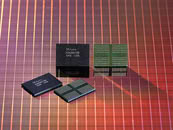 The Indiana facility itself won't add wafer capacity, since it's a packaging and testing site rather than a fab. Wafers will still be produced in South Korea and shipped to the US for HBM4E packaging, with cleanroom operations starting in the second half of 2028 and volume production targeted for the third quarter of 2029. For consumers, the takeaway is that DRAM and NAND prices are unlikely to meaningfully ease anytime soon, with PC, GPU, and console memory costs expected to stay elevated well into the next decade.
Source:
Reuters
Kwak's reasoning is that memory products have moved away from being purely commodity parts. AI-driven demand has pushed customers toward customized DRAM and HBM configurations, which makes future demand easier for manufacturers to forecast and less prone to the abrupt oversupply swings that caused previous crashes.


56 Comments on SK hynix CEO Says Memory Shortage Will Last Through 2030
(source: STH coverage)
* at least since newer generations of HBM will consume even more...
Maybe a new innovation will make it out by then anyway.
I wouldn't mind a nice 28 core chip with 256 Gigs of HBM slapped on there.
If I have 1000 mostly memory bound simulations I need to complete and they each take 1 hour on the HBM machine, they will take 32 hours on the DDR5 machine. I'll require 6 HBM machines to complete my workload in a week, but I'll require 192 DDR5 machines to complete that same workload in a week.
HBM is actually reducing the amount of memory in aggregate I require.
Your PC won't use HBM so the entire bandwidth argument, albeit correct, is beside the point in the context of current consumer memory pricing.
It's not like SK has been sitting around either. They've been pushing tens of billions of investment into new facilities to expand production. While Micron is catching up SK has been the most proactive about expanding for the future since 2024.And his point is that to match that throughput, you would need 32GB of DRAM on a very wide bus, the 3GB made on the same assembly line wouldnt cut it, so to meet AI demands they would have to sacrifice 10x the production if they were making DDR instead of HBM, making the shortage worse.
It was 2028 before, but as long as they keep getting off with price fixing they have no reason to supply the market with DDR5, even though consumer DRAM was admitted to be more profitable.
Also SK Hynix expanding since 2024 is meaningless, especially in the AI bubble. It'll take them years to finish, and unless the AI bubble pops there's nothing to suggest any expansion won't simply go to more HBM for scam altman and his friends.
Bring back 1960 XD Woohoo!!
Next generations are going to use even more due to increasing the number of TSVs required so the area of HBM memory dies has to grow too. Additionally it's going to tap into non-memory high end processes for the base die - either by moving the HBM controller from XPU to the stack (NVHBM) and/or putting some compute directly onto the base die. Not to mention increasing the number of stacked dies.
AI/ML is bandwidth and capacity constrained, so they wouldn't reduce capacity in favor of bandwidth. They want both.
The problem with trying to go to a very wide bus on "normal" DDR5 DRAM chips is the physical spacing between them will quickly skew the data/clocks too much without tons of redrivers jacking up the complexity/price. I know you said "die" and not "package" so I'm not exactly addressing what you said, but I wanted to throw that out there.
LPDDR looks like it's going the route that I think you're suggesting, they've adopted x128 width packages in the new iterations of the spec as opposed to DDR5's x4, x8 or x16 width packages. It wouldn't surprise me if we start seeing more high performance computers start using it despite it's LP moniker.Z-angled memory was supposed to be one of the technologies that addressed the extra space traditional HBM memory uses for it's stacking... I'm not sure how successful it will be though.
There is nothing anyone can do unless investors stop huffing cope and realize they're throwing money into a furnace.
Unless enthusiasts plan to empty their wallet instead of voting with it, we're stuck with the memory we have for at least the next 4-5 years. Also while hoping nothing fails in the meantime, as companies find any excuses to refuse an RMA.I'd love to see some evidence from people who said memory pricing would be back to normal by 2028. So far that isn't going to happen when the big 3 are colluding with each other.
You do realize if production isnt expanded, this shortage is gonna last a LOT longer, right?I'd love to see a counter argument that isnt just "nah none of that matters, the collusion man, we're never gonna buy RAM again maaaan". Considering it is 2026, you cant say that those who claimed the market would normalize by 2028 are wrong. If you could, then you should be buying futures contracts instead of crying on forums.