Monday, April 7th 2025

Nintendo Confirms That Switch 2 Joy-Cons Will Not Utilize Hall Effect Stick Technology
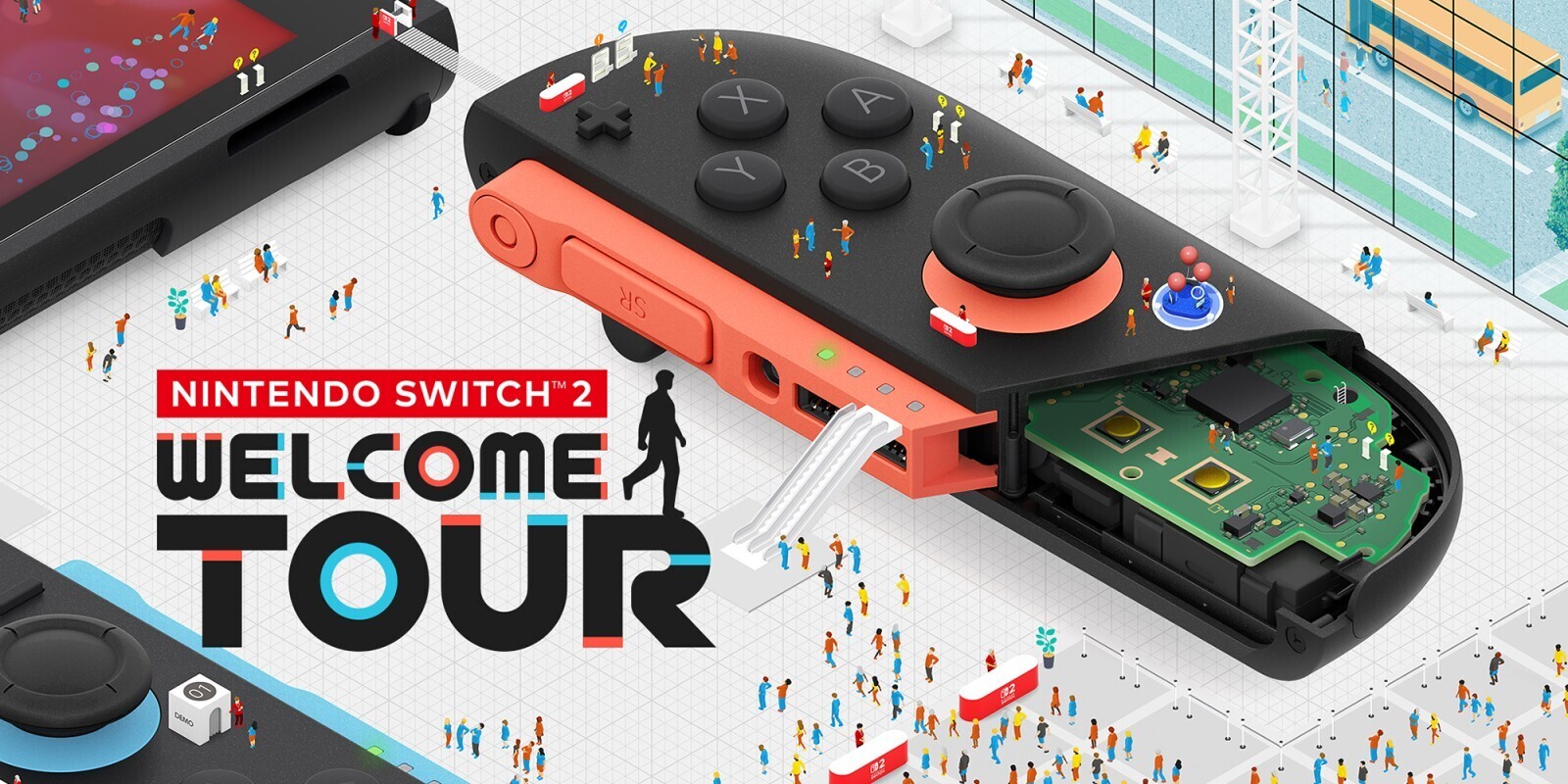
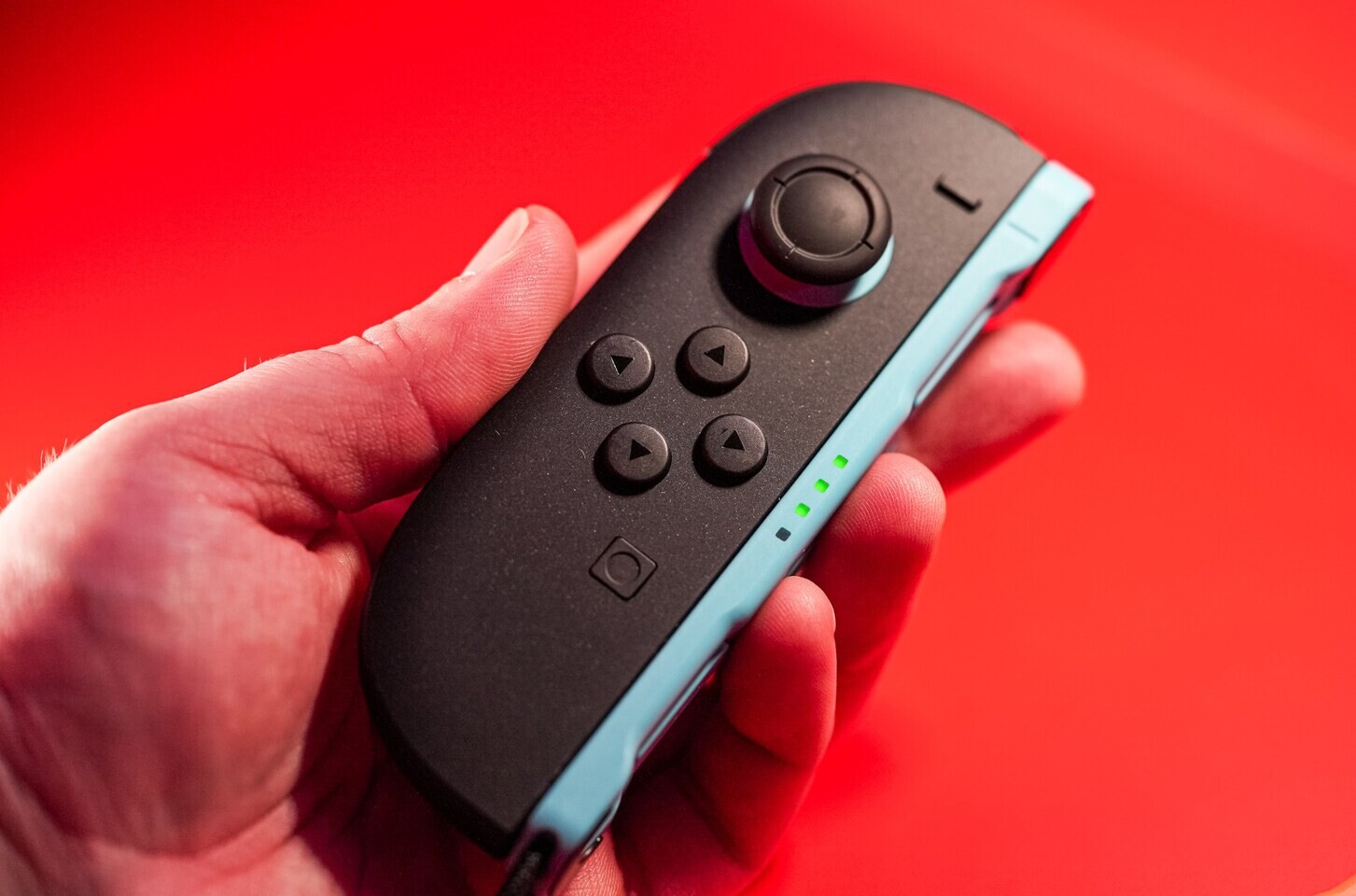
Following last week's jam-packed Switch 2 presentation, Nintendo staffers engaged in conversation with media outlets. To the surprise of many, a high level member of the incoming console's design team was quite comfortable with his name-dropping of NVIDIA graphics technologies. Meanwhile, Team Green was tasked with the disclosing of Switch 2's "internal" workings. Attention has turned to the much anticipated-hybrid console's bundled-in detachable Joy-Cons—in the lead up to official unveilings, online debates swirled around potential next-gen controllers being upgraded with Hall Effect joystick modules. Many owners of first-gen Switch systems have expressed frustration regarding faulty Joy-Cons—eventually, Nintendo was coerced into offering free repairs for customers affected by dreaded "stick drift" issues. Unfortunately, it seems that the House of Mario has not opted to outfit its Gen 2.0 Joy-Cons with popular "anti-drift" tech.
As reported by Nintendo Life, Nate Bihldorff—senior vice president of product development and publishing at Nintendo of America—"outright confirmed the exclusion" of Hall Effect. Up until the publication of Nintendo Life's sit down interview, other company representatives have opined that Switch 2's default control system features very "durable feeling" sticks. When asked about the reason behind "new-gen modules (feeling) so different to the original Switch's analog stick," Bihldorff responded with: "well, the Joy-Con 2's controllers have been designed from the ground up. They're not Hall Effect sticks, but they feel really good. Did you experience both the Joy-Con and the Pro Controller?" The interviewer confirmed that they had prior experience with both new models. In response, Bihldorff continued: "so, I like both, but that Pro Controller, for some reason the first time I grabbed it, I was like, 'this feels like a GameCube controller.' I was a GameCube guy. Something about it felt so familiar, but the stick on that especially. I tried to spend a lot of time making sure that it was quiet. I don't know if you tried really whacking the stick around, but it really is (quiet)...(The Switch 2 Pro Controller) is one of the quietest controllers I've ever played." Nintendo will likely not discuss the "ins and outs" of its proprietary stick design, but inevitable independent teardowns of commercial hardware could verify the provenance of underlying mechanisms. Nowadays, hardcore game controller snobs prefer third-party solutions that sport Tunneling Magnetoresistance (TMR) joysticks.

Sources:
Nintendo Life, The Verge (image source), VGC, Nintendo Life (full interview)
As reported by Nintendo Life, Nate Bihldorff—senior vice president of product development and publishing at Nintendo of America—"outright confirmed the exclusion" of Hall Effect. Up until the publication of Nintendo Life's sit down interview, other company representatives have opined that Switch 2's default control system features very "durable feeling" sticks. When asked about the reason behind "new-gen modules (feeling) so different to the original Switch's analog stick," Bihldorff responded with: "well, the Joy-Con 2's controllers have been designed from the ground up. They're not Hall Effect sticks, but they feel really good. Did you experience both the Joy-Con and the Pro Controller?" The interviewer confirmed that they had prior experience with both new models. In response, Bihldorff continued: "so, I like both, but that Pro Controller, for some reason the first time I grabbed it, I was like, 'this feels like a GameCube controller.' I was a GameCube guy. Something about it felt so familiar, but the stick on that especially. I tried to spend a lot of time making sure that it was quiet. I don't know if you tried really whacking the stick around, but it really is (quiet)...(The Switch 2 Pro Controller) is one of the quietest controllers I've ever played." Nintendo will likely not discuss the "ins and outs" of its proprietary stick design, but inevitable independent teardowns of commercial hardware could verify the provenance of underlying mechanisms. Nowadays, hardcore game controller snobs prefer third-party solutions that sport Tunneling Magnetoresistance (TMR) joysticks.

122 Comments on Nintendo Confirms That Switch 2 Joy-Cons Will Not Utilize Hall Effect Stick Technology
Nintendolife article
Note, they did not argue that their consoles didn't have drift. They argued that because the consumer clicked "accept" on their EULA a lawsuit was not acceptable, and they had to deal with the issue through arbitration. This, combined with their policy to fix joycons outside of warranty, means they know that their crap is broken but it's cheaper to fix the few complaints than to engineer something better. Halls Effect requires no moving parts, like their potentiometers, and thus are superior...but slightly more costly. Anecdote has the controllers showing 10-40% failure by drift...and most people buy a new $60 controller rather than jump through the hoops of a repair...so I'm sure the Nintendo bean counters have already proven that x fixes per y controllers is cheaper than z people buying a new controller, so they are profitable in designed failure.
Regarding literally everything else...the Switch 2 is not released. You cannot reasonably say that everything is better...because display models for a few minutes are not the same as a console being used for hundreds of hours. I own plenty of crap that feels weighty to be "premium"...and then you open it up to find a slag cast block in the bottom to make it heavier than the 3.4 ounces all of the circuit board weighs. You're defending a console's second generation, where the first struggled with 1920x1080 at 30 hz...and saying that it's "10x better with dlss." I'm telling you that the Nintendo bundles that you see up for demonstration have a game, premium case, and everything available. Kit it out. I'll wait. US, it's about $900. Let me buy a 9060 or 5060, a middle tier CPU, a motherboard, and keep me to a $900 budget. I'm betting I can make something as good as the Switch...but not portable. I can buy a Steam deck, and have something that I can upgrade. I can wait three months until games go on sale, and $90 will buy me 4 games on Steam or 1 game on the Switch 2. When you compare those offerings, I cannot reasonably suggest you go out and buy a Switch 2...because at this point the huge leap forward that the thing makes from the Switch 1 is only compelling if I'm willing to spend super premium prices on a very finite number of games...and rebuy the crap I've already paid for two or three times...while being forced into an annual subscription to maintain services.
For that, I offer Nintendo the most unpleasant curse I can offer anyone. It's a four letter word, in the sense that it's unpleasant to say in pleasant company. Amiibo.
That's a four letter word because it was cheap plastic crap, artificially limited in production to drive prices up, locked features of games from being accessed (acting as variable pricing DLC), and beyond all of this it showed Nintendo's greed was getting to the point where they'd happily sacrifice their loyal customers to a secondary market that was willing to charge hundreds of dollars for something that was once a micro-transaction. I'd not believe this statement if I were you...so here's my proof: Amiibo pricing list
If Bethesda gets crap for horse armor, why in Hades is Nintendo fine with $250 for a little white plastic square? Qbby pricing Yeah...I think that they've hit EA levels of greed, and it's only apparent now because when you can only buy 2 games a year that aren't remaster, remakes, ports, or slop IGN article on games coming to Switch
If you want one, cool, get one. If not, that's ok too.
One thing for sure Nintendo won the console wars years ago. Because of software. With the sole exception of Nintendo64, Nintendo has never been on the cutting edge of console hardware technology.
Look at Xbox X|S and PlayStation 5. They have tech specs that blow Switch out of the water. And yet Nintendo is king of the console gaming world. Tech specs matter very, Very, VERY little here.
CONTENT IS KING.
If you want to continue it, address what I already requested: what is your evidence that Nintendo solved this common problem that affects all potentiometers, and what is the magic material or process they used to solve it?
For sure there are fewer class action lawsuits about Joy-con drift today than there were five years ago. Was it a bad design? Poor QA from their part vendor(s)? Wrong choice of material (i.e., not all plastics are the same)?
Clearly there is a bell curve for Joy-con drift problems. Some people never got them, some people did get it after a few years, some got it shortly after acquiring a new unit. There are others who have complained about the same thing with their PlayStation gamepads, their Xbox gamepads, whatever.
However in the past couple of years, it appears the Joy-con drift bell curve has shifted more toward the direction of less problems. Solved 100%? Of course not. Solved to the point where the volume of complaints is lower? Apparently so based on my periodic reading of videogame news sites.
There is no perfect analog stick part. Hall Effect sensors fail too and some gamepad manufacturers are in the process of moving to newer technology (which doesn't necessarily mean better).
Five years from now there will be some hot new component that everyone will say "Why didn't Nintendo put this in the Switch 2 Joy-cons?" And some of those whiners will be the same ones who were here five years ago bitching about Joy-cons. And they have the right to complain, they paid for the Switch. There's no entitlement to expect a handheld game controller stick last beyond a few months, a year, etc.
For sure in the world of mass market consumer electronics, every cent spent on a component matters. All of these manufacturers need to make compromises in terms of costs, features, reliability, durability, uniformity, price fluctuations, availability, power efficiency, etc.
Does a Hall Effect sensor use more power than a standard sensor? I don't know. But some Nintendo engineer certainly does.
No need to answer for him.
Of course hall effect sensors fail. Everything does. Of course badly/cheaply designed or badly implemented hall effect sensors could be worse. But, in general, excluding those caveats, hall effect joysticks don't wear out, are reliable, and last a lot longer.
Potentiometers physically wear out with every movement. It's a wiper sliding on a resistive coating or winding (coating in this case). Hall effect sensors do not physically wear down.
Nintendo had such a PR disaster over this, that why does a small potential hall effect joystick licensing fee cause them to avoid hall effect joysticks and open themselves to another PR problem? It's short-sighted in our opinion. In our opinion, their is no certainty that the Switch2 won't also have drift problems. Their is no proof that anyone in this entire world has ever designed a potentiometer that doesn't wear out and cause non-linear and non-null issues and erratic output over time.
From the perspective of the common person, 90% of drift is generally chalked up to an old controller. IE, if there's drift you can trash it and buy a new one. Not unreasonable, if your console lasts 5-6 years and you buy 2-3 controllers over the entire life it's basically 2 games you cannot afford. For common users that's fine...and if the failure rate is 40% after 4 years of "gamer" use then it's probably something that casuals will never see.
Note that I still want Nintendo to not cheap out, but I had to interpolate. There's no huge movement or large group still complaining about the drift...so it's entirely rational for somebody to think it was fixed. That said, and considering who you are conversing with, maybe it's not entirely fruitful to have evidence and pretend that it'll change anything that was pre-conceived. People who start out with "I know your sources and will ignore them" usually don't really care about the opposing point.
New Joy-cons don't increase the value of their IP. Nintendo rightfully focuses on content not hardware. They only reduce eliminate nuisance behavior that shouldn't have existed in the first place to the extent it did in the first few years of Switch.
Nintendo doesn't want hardware to be the headline topic. They want it to be the software. Time and time again, here at TPU and elsewhere on the Internet there are a boatload of people who simply don't understand this despite the fact that Nintendo has kept the same focus for 40+ years in the videogame industry. Content is king.
For all of Xbox X|S and PlayStation 5's hardware superiority over Switch, look who is king in early 2025. And until the tariffs kicked in, Japan's videogame industry was *WAY* more healthier than their Western Hemisphere peers, especially Nintendo. I doubt if tariffs are going to help out Microsoft and Sony at this point.
Microsoft's Xbox is not quite at death's door but if they don't pull off some sort of reversal with their next generation system, it might end up being their last generation system. And painting more polygons isn't the key.
People are wringing their hands because Switch 2 doesn't have OLED or Hall Effect switches or score a bajillion points on Geekbench. Nintendo doesn't want people to fixate about those things.
So yeah until then I really didn't know people thought differently about it.
I have really fond memories of Goldeneye too. Despite playing in a corner of a small screen at about 15fps, it's still the most fun I've had in a multiplayer FPS ;)I remember being really surprised when I read most people use it handheld. I've used mine about 99% of the time docked. Just like ratirt said, when I'm out it's because I'm doing stuff, don't really have the opportunity to play vidya games, and at home, well I might as well play on a nice 55" screen. I've played a few times handheld as a novelty, or in bed etc, that's about it.
I wonder if people just love handheld play more than I realised, or it's a matter of convenience, ie not always having access to a TV.
The N64 controller -- like the console hardware -- was visionary in design, function and internals, the only time Nintendo truly flirted with the cutting edge. The analog stick everyone is familiar with started on N64. In the context of what others were doing at the time, the three handled design allowed game designers to include or ignore the stick as a control device.
Remember that this N64 controller also debuted haptic feedback in the form of the optional Rumble Pack. Again this was a revolutionary concept, today vibration motors, haptic feedback, etc. are all features that improve immersion, something the keyboard and mouse gang vehemently ignore.
Gaming on the go is an extremely big deal elsewhere, particularly in southeast Asia and Japan. That's why Switch sold so many units in that region. People in Japan have televisions and PC monitors. Trust me. In fact, the televisions in Japan blow doors on US sets. They aren't using Switches because they don't have access to a TV.
It's American gamers who are still largely sticking with their old habits of gaming at home in front of a stationary display. Or think of a "gaming PC" as some ATX mid-tower. Much of the world is doing their PC gaming on notebook PCs, just go look at the GPU survey at Steam. It has been like this since before the pandemic.
The young people of the rest of the world grabbed their smartphones, handheld gaming devices, and notebook PCs and walked out the front door.
And as @lexluthermiester it's not just an American thing, I'm English and love the big screen experience.
And southeast Asia does a *lot* of gaming on smartphones, not just the Switch.
It's worth pointing out that many people in southeast Asia have long commutes on public transit. You don't just walk to the company parking lot, get in your car and drive home. This has never been a thing in Japan. With the advent of quality handheld devices suitable for gaming, there's no surprise that gaming-on-the-go has really taken off in many regions.
The average American has zero clue about how much time the rest of the world spends on public transit. They only see their home and their car. Anyone with decent observational skills who has traveled abroad extensively (especially in southeast Asia) will understand this. It is not hidden and it's not rocket science. But many Americans rarely get out of their county, and even less so out of their state or the continent.
Americans love planting their big fat butts into their big fat gaming chairs in front of their big fat ultrawide gaming monitors driven by some big fat ATX mid-tower dehumidifier with their big fat thermos bottles of soda and big fat bags of Taco Bell next to them. That's fine.
But much of the rest of the world has gotten way more nimble. And like I said, this is nothing new. This has been the trend since before the pandemic. It basically all started in 2007 when Apple introduced the iPhone and accelerated by 2012. And this is why Switch now has competitors in handheld gaming devices like Steam Deck.
Let's be real. Nintendo knows intimately how often and how long Switch units are used in handheld mode and the same for docked mode. If the majority weren't using it in handheld mode significantly, there wouldn't be a Switch 2. Nintendo would have just reverted back to a stationary console like Xbox or PlayStation. Putting a display and battery in their gaming device isn't a vanity thing just for Nintendo. It's what users want and use. And not a limited minority. In very, Very, VERY large numbers.
Anyhow going back to the main topic, the type of hardware sensors in the Switch 2 controllers isn't really something Nintendo wants people to fixate on. It's about the games.
Remember that all consumer electronics innovation in the past 15+ years has been driven by smartphones. The Switch 2 is the way it is now more because of smartphones, not because of competing onsole or PC evolution. Don't like playing games on your phone? That's fine, no one is saying you have to. But that's the way things are trending.
Anyhow going back to the main topic, the type of hardware sensors in the Switch 2 controllers isn't really something Nintendo wants people to fixate on. It's about the games.
You didn't address anything relevant to your claim or provide supporting evidence for your misguided opinion. Therefore, you lost the argument when you decided to end the discussion.
One the other hand, a controller is about the same price. If they produce these things at stupid high volumes, and the latest estimation I've seen is that they're about $45 and sell for $80. Unless the math is off here...80-45 = $35. If each game currently sells for $60, and the cost of development and licensing leaves them with about 45% profit, .45*60 = $27. That's an extra $7 for the purchase of hardware versus software...and software is something that they release in such small amounts that it'd almost be silly to mention it.
My point is this. Nintendo is not good on the second generations. They survive in established and basically monopolistic markets, read: Gameboy. They fail when they have to compete. Read: WiiU. The Switch 2 could be a Steam Deck+Nintendo Console, but with their forced online services...and gods above that sucked with everything since the Gamecube...and other shenanigans this looks like a dud. Stack on a 50% increase in the price of games, and Nintendo's unofficial murder of owning the game cart being tantamount to owning the game, and it looks like Nintendo drank whatever water was around when Microsoft announced their new entertainment center cosplaying as an Xbox, and told everyone that if they didn't want to have an always online connection the product for them was the Xbox 360. Bong water spiked with LSD and concentrated Blizzard levels of not being able to read the room when your diehards are telling you the thing you are doing is weapons grade stupid.
One thing for sure is that the Mario film itself generated lots of profit and likely helped drive sales of merchandise. And something like kid focused movies have a different sales trajectory than standard Hollywood releases. The initial theatrical opening weekend isn't the key metric to total revenue. In the optical media era, DVD and Blu-ray sales (and rentals) were significant. These are always accounted for separate from theatrical box office ticket sales.I'm not convinced that Switch 2 is a luxury item based on the people whom I've seen using them in public. Premium priced? Yes. Luxury? No.One thing I have little faith in are armchair supply analysts who predict component costs.
Also, we know that while GM on Nintendo peripherals is quite high, they make the bulk of their profits from software sales. It's a publicly traded company they need to show investors how they are making money (from a high level). They aren't going to explain GM for every single hardware SKU, nobody does that.Nintendo's track record with second generation hardware is a different discussion worthy for another time and place. I do not believe that Switch 2 will outsell Switch (I've made that crystal clear repeatedly in this Q&A forum).
I also strongly believe that other game publishers (PlayStation, Xbox, and PC gaming) will follow with their own price increases. In a year from now, we can look back and most likely everyone will be paying more for a new title regardless of what hardware platform it is running on. You won't be able to say there's some sort of cheap gaming oasis or refuge, at least for new titles.
There are objectionable "features" about all gaming systems, not just Nintendo. They have all made their missteps. But Nintendo has been around for 140+ years and they have to adapt because the gaming universe is not static. Otherwise we would all be playing hanafuda on cards made by Nintendo.
Again, Nintendo likely trialled every single gamepad controller technology and component within their target COGS during the prototype phase. And there is nothing that prevents Nintendo from releasing Switch 2 Joy-con Pro controllers in the future. Maybe they can put Hall Effect sensors in a later model. Or TMR. Or maybe the magnets holding the Switch 2 Joy-cons in place interfere with some sensors. Or maybe they put the premium sensors in a future Switch 2 Pro Ultra controller. Who knows?
My guess is that there are several prototype controllers in Nintendo's labs right now with a bunch of alternate sensors. It wouldn't be surprised if they included some sort of upgrade with a mid-generation model 3-4 years down the line. Remember that Switch OLED wasn't just a bigger OLED screen, it also gained a physical Ethernet port in the dock, a better kickstand, had better battery life than previous Switch models.
I also wouldn't be surprised if there is a headless (screenless) and Joy-con-less Switch 2 prototype in a lab. But then it wouldn't be a "Switch" now, would it? :)
But one thing I'm pretty certain about, Nintendo will not explain the technical reasons why they opted for the current BOM.
Anyhow it's clear this discussion has run its course so I will bow out here and let others continue the merriment.
Enjoy!
:D:p:lovetpu:
You started the discussion that selling game>selling controller. You justified it by saying that it reinforces the IP. I replied by citing the biggest reinforcement of so many Nintendo IPs to exist in the last several decades...a movie that featured Mario, Bowser, Donkey Kong, Peach, Luigi, and enough stuff to cover multiple properties that they own...and you immediately agree that it was about the money and not about enforcing the IP...then tell me that I'm wrong. Seriously, what exactly compels a person to agree, then say the dumbest possible thing to contradict all of their point, in order to change the goal line...so they can pretend that they've won...nothing?
So we are clear, Nintendo has not been around for 140+ years. The name has been around that long. Love hotels, prostitute cards, trading cards, and that's the fun bits. Just because they've been around doesn't mean they can't do something seriously stupid...or there'd be a lot more 100+ year old companies. If your plan is to pretend longevity is a better indicator of success than anything else, let me introduce you to the skin walker Atari... Let me also introduce you to what Nintendo does best, maliciously use the copyright and patent office. Note that they only started to sue Palworld after they retroactively sought a patent "to have monsters collected in spheres." One that the US patent office basically gave them the finger on receiving because it was not novel or new...but a transparent cash grab to try and sue another competitor into dust by not making a game so good it didn't need to fear competitors, but to sick the lawyers on them.
It's kind of funny that you'd also like to claim that I made up numbers. OK...that's bull, but maybe you don't understand that I wouldn't throw out a magic number. I mean, 20 seconds on google could confirm what I said. "A Japanese product teardown firm, Fomalhaut Techno Solutions, estimated that each Joy-Con controller costs around $45 to manufacture. " is result one. Of course, just claiming I'm a liar is easy. Stupid and lazy, but easy.
Let's round out everything else with one fun new point. You may not know how product development works...so let me reveal a bit of fun. Market studies are done to determine pricing bands, target markets, and rough feature sets. Marketing sits with high level executives, and generates a target demographic with a target budget. They mix and match features, until they've got a proposal that they think will meet enough of the core demands for each market segment. At this point we either then break out into product categories, or we create a list of critical components. If you get categories, each set of component requirements is weighed against costs and competitors, and they have a final proposal that enters engineering. Marketing then attempts to communicate with engineering what requirements exist, and they setup a target timeline and budget. Each sub-section is then weighed, prioritized, and farmed out to either design or research. Design creates the packaging for the thing, research gets the technologies to work, then both are run through a bunch of prototypes. Cost versus performance is weighed, and 99.99994 times out of 100 companies will choose the the cheaper option to increase their bottom line (or to afford failures and overruns in other segments of the product). Yes, this is true with "premium" companies. This is how a 100% solution like halls effect sensors gent replaced by an 80% solution, because that 20% might cost them a few more cents. That also is not a guess. When an entire replacement switch set with screws and driver bought at low volumes is less than a $20 you are talking about cents at the factory. Amazon replacement product for joycon
By the time you get to production, some jag-off has determined that a C button that costs you $20 a year to use basic voice chat is more important than a basically idiot proof sensor.
Last bit, the BoM is a funny way to try and sound authoritative. The bill of materials almost sounds like you know everything about what you are talking about, and Nintendo doesn't have to justify anything to us peasants. I'll let that slide. $90 for a cartridge, that has a key needed to download a game is absolutely infuriating. I end with that because Nintendo is telling us physical games require a $10 premium over download, which require a $20 bump up to be 1080p. For the love of all that is holy, charge an extra $1 on your console, and get the premium switches/sensors. It's a 0.2% increase in cost. If you are incapable of the premium sensors, but want to charge a premium price, then don't be surprised when people tell you what you tell them. Namely, "take it or leave it," which Nintendo's already said. The only good thing is they don't have the balls, or arguably stupidity, to do it like Microsoft or Sony did in the last few generations. 3rd time stupid is apparently the charm...5th if you count the Jaguar and Dreamcast.
I fall entirely outside of the target audience for the Switch, but they'll always sell me hardware if they at the very least, don't actively block the controllers from being used on PC.
Move along little kitty, much ado about nothing..Tell that to the millions of people that spend 2+hours a day commuting on trains to and from work. Quit talking about things you know nothing about.Really? Now you're going to blatantly insult us? This speaks much more about YOU than it does us. Grow up, learn some respect and quit with your pathetic whining. Oh, and news flash for you there jiggilypuff, lazy fat people exist everywhere in the world. Such was never and will never be an exclusively American thing, not even close.This is little more than an attempt at slander and defamation. It's very sad. You really need to stop.
I have my complaints about Nintendo, but the seething hatred being displayed by some of the people in this thread is an eye opener. It makes my disdain for microsoft look timid by comparison, and THAT is saying something!
* An accurate, if eye bleeding summary
* You'll note that I could have literally thousands of fair use abuses for just content posted to youtube...without even trying
* You'll also note that Nintendo has been vehemently against emulation, somehow especially for those that were good (IE, dolphin and Yuzu). Note that their EULAs do not require you to run this on their hardware...because that would prevent them from selling you the games again on an emulator that they saw fit to copy from the projects they legally took down. Note this is also not slander: Nintendo museum caught emulating games on windows pc
I appreciate that you believe that Nintendo is fine...and I'm unreasonable. I also believe that you don't really understand what you are saying...because it'd be stupid to think that such a hugely influential company would be such litigious jerks. I also believe that's your severe ignorance on the issues at hand. I'm also sure that since Nintendo strives to keep their dirty laundry out of the news, through things like forced arbitration and cease and desist claims, that most normal people saw things like the SNES and NES emulators as a great window into the past...rather than a tacit plunging of a flag into what should be common property by the standards of copyright, but the big N wants to keep a monopoly on.
Note that this is a larger discussion...but Nintendo and Disney have a lot in common. They developed core IP that is aging out of regular copyright protection, seek to protect their monopoly by gaming the system and using aggressive litigation to make that happen, and it's all to protect a monopoly through a system that was designed to allow things to be created and monopolized to return their value to the creator, but then become a part of common property so that new things were constantly created and the old could always find life. Unfortunately, Nintendo and Disney are both incapable of creating new good things anymore, so they've both decided to guard their old things like dragons on a gold hoard, surrounded by legal goblins.
At this point you should absolutely also start criticism for my duplicity in loving the copyright system and capitalism. What I'm speaking sounds like communist fun...but that's where people get a bit stupid. I want the copyright system to work as intended. I think Disney should have the rights to Mickey, and after a reasonable time (read, less than a lifetime) Mickey should enter the public domain. I also believe that Mickey should be in vulgar crap, violence, and things I find deplorable once he hits the public domain...because the first person to make him into a Judge Dredd parody would have a winning spin-off that we'll never see under Disney.
Surprisingly, there can be a nuanced world where I respect Nintendo for going after reasonable legal actions (like suing fan movies that use their IP in ways they do not control), while lamenting the pants on head stupidity of trying to abuse the copyright system to bastardize the fair use of content on youtube expressly permitted under the appropriate doctrine. It's almost like if Nintendo was 40% or so less litigious I'd gladly love them all over again...but instead we have them copyright striking people who use videogame content for 10% of a video and pretending the other 90% that is user content has no value. It's almost like emulating a gamecube, popping in your legally purchase copy on a silly little disc, and expecting to be able to run the thing that the EULA doesn't forbid...because people recreated a console's environment...is a pretty reasonable thing when even Nintendo is doing it...but they'll sue the pants off of you if you do it.
So no, I'm not being petty when I tell Nintendo to go suck on a rusty tailpipe. I'm just not forgiving them for being dictatorial litigious weasels. Do note that the only phrase there not supported by a mountain of facts is a blatantly offensive and petty slander of the Mustela family of the Chordata phylum. That's semi-intelligent sounding speak for an insult to weasels...because I do at least want to try and end on a smile because NIntendo did make a lot of my childhood great. That said, Blizzard made WoW and Diablo. Raven made something other than CoD. The more things change, the more we realize that things are never static.
All the rest of your statement is just blah, blah, blah nonsense.. Not wasting my time with it.
Pull the other one..
They also only cost me less than £50. I dont know what the failure rates are for the switch on the sticks, but I am guessing Nintendo are same as Sony and are deliberately profiting from people buying replacements for drift issues?
www.aliexpress.com/item/1005006527395463.htmlYeah Nintendo focuses on content, Xbox and Sony focus on hardware as they think visuals make good games.