Monday, August 18th 2025

Microsoft Windows 11 24H2 Update May Cause SSD Failures
Microsoft issued an OS security update as part of the August 2025 Patch Tuesday cycle to counter the Lumma stealer and similar malware and exploits. The Windows 11 24H2 cumulative package KB5063878 was included in that rollout. Early deployments returned an installation error, 0x80240069, which Microsoft acknowledged and later addressed. Community testing has since identified a reproducible pattern in which certain SSDs, when running sustained sequential writes of approximately 50 GB, become inaccessible and display unreadable SMART telemetry. Follow-up analysis and vendor feedback to date primarily point to solid-state drives, although conclusions about traditional spinning hard disk drives remain unconfirmed.
A Japanese tester NichePCGamer published a 21-drive matrix and a repeatable procedure: copy a large game folder, write an approximately 62 GB archive composed of many video files to the target SSD, then decompress that archive on the same device. Failures were reported most frequently when controller utilization exceeded 60% during continuous writes. Reported devices include several Phison-based NVMe models and other drives using different controllers. Symptoms reportedly recur after a reboot, which often restores visibility temporarily but does not eliminate the underlying fault, creating a risk of file corruption if the same workload is repeated. Microsoft and SSD vendors are investigating and have not yet published a definitive root-cause report. Until vendors and Microsoft publish formal guidance, users with SSDs should back up important data, avoid long sequential transfers on systems updated to KB5063878, and monitor vendor and Microsoft advisories for SSD-specific firmware, driver, or OS fixes.
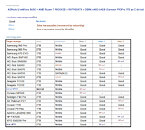
Update 14:02 UTC: Phison has posted an update, acknowledging the issue.
Update Aug 21st: Phison has reached out to us to let us know that some documents about this issue are fake.
Sources:
via Neowin, Notebookcheck
A Japanese tester NichePCGamer published a 21-drive matrix and a repeatable procedure: copy a large game folder, write an approximately 62 GB archive composed of many video files to the target SSD, then decompress that archive on the same device. Failures were reported most frequently when controller utilization exceeded 60% during continuous writes. Reported devices include several Phison-based NVMe models and other drives using different controllers. Symptoms reportedly recur after a reboot, which often restores visibility temporarily but does not eliminate the underlying fault, creating a risk of file corruption if the same workload is repeated. Microsoft and SSD vendors are investigating and have not yet published a definitive root-cause report. Until vendors and Microsoft publish formal guidance, users with SSDs should back up important data, avoid long sequential transfers on systems updated to KB5063878, and monitor vendor and Microsoft advisories for SSD-specific firmware, driver, or OS fixes.


Update Aug 21st: Phison has reached out to us to let us know that some documents about this issue are fake.
278 Comments on Microsoft Windows 11 24H2 Update May Cause SSD Failures
From my perspective I am keeping the update not installed on my testing VM, and am waiting for Microsoft to either confirm and fix or deny the update is broken.
It's an interesting idea. If Microsoft did change some aspect of HMB allocation perhaps they inadvertently triggered a corner case among HMB drives that have had their LBA's changed from their factory defaults. Maybe the controller freaks out and can't handle it because there was some assumption or expectation that the OS would only do something a certain way in how HMB is setup and used. This is all speculation on my part.
I wonder if anyone in this threadattempting to modify their drives was effected by the Windows 11 issue.
Unlike the 970 series of NVMe's the 990/980 pros didn't have their own Samsung driver as far as I know. The 970's could would with either the Samsung driver or Microsoft Standard NVMe driver.
and this also doesn't explain a buncha other spinners having issues tons of ultrastars and toshiba SPINNING DISKS are also being killed by this. Somone lost 5 toshibas.
Is it the DRAM cache in those also affected... but it also fucks up DRAMLESS drives.
And it's not like SSDs with Phison controllers are some sort of drive unicorn. There's good chance that Microsoft did little testing other than the cursory install and reboot on a couple of employees' systems.
And this particular update also borked OBS (NDI traffic drops) and AutoCAD.
www.windowslatest.com/2025/08/23/microsoft-admits-windows-11-kb5063878-autocad-admin-request-issue-obs-ndi-audio-video-lag/
I know Microsoft HATES software QA in 2025. They have an impressive track record going back years of taking one step forward and two steps back with these Patch Tuesday dumpster fires.
And it's likely that Windows software QA will continue to drop. There's zero indication that Microsoft cares one whit about putting out something they can be proud of at the end of the day.
WD Ultrastar
Seagate Exos
It's very disappointing to still not see some kind of statement from Microsoft on this, although not surprising as they haven't even pulled the update yet. They clearly don't care about their users enough to even have any sort of damage control about this update breaking drives.
I don't know what their QA routines are, and I don't know whether they are doing "less QA", but it's evident that whatever they are doing isn't working. It is very possible to use a tremendous amount of man power and still do a bad job due to lack of proper routines, training, etc.
The current SSD issue and now them pushing Recall when they said they wouldn't.