Monday, August 18th 2025

Microsoft Windows 11 24H2 Update May Cause SSD Failures
Microsoft issued an OS security update as part of the August 2025 Patch Tuesday cycle to counter the Lumma stealer and similar malware and exploits. The Windows 11 24H2 cumulative package KB5063878 was included in that rollout. Early deployments returned an installation error, 0x80240069, which Microsoft acknowledged and later addressed. Community testing has since identified a reproducible pattern in which certain SSDs, when running sustained sequential writes of approximately 50 GB, become inaccessible and display unreadable SMART telemetry. Follow-up analysis and vendor feedback to date primarily point to solid-state drives, although conclusions about traditional spinning hard disk drives remain unconfirmed.
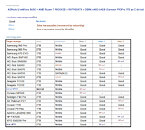
A Japanese tester NichePCGamer published a 21-drive matrix and a repeatable procedure: copy a large game folder, write an approximately 62 GB archive composed of many video files to the target SSD, then decompress that archive on the same device. Failures were reported most frequently when controller utilization exceeded 60% during continuous writes. Reported devices include several Phison-based NVMe models and other drives using different controllers. Symptoms reportedly recur after a reboot, which often restores visibility temporarily but does not eliminate the underlying fault, creating a risk of file corruption if the same workload is repeated. Microsoft and SSD vendors are investigating and have not yet published a definitive root-cause report. Until vendors and Microsoft publish formal guidance, users with SSDs should back up important data, avoid long sequential transfers on systems updated to KB5063878, and monitor vendor and Microsoft advisories for SSD-specific firmware, driver, or OS fixes.
Update 14:02 UTC: Phison has posted an update, acknowledging the issue.
Update Aug 21st: Phison has reached out to us to let us know that some documents about this issue are fake.
Sources:
via Neowin, Notebookcheck
A Japanese tester NichePCGamer published a 21-drive matrix and a repeatable procedure: copy a large game folder, write an approximately 62 GB archive composed of many video files to the target SSD, then decompress that archive on the same device. Failures were reported most frequently when controller utilization exceeded 60% during continuous writes. Reported devices include several Phison-based NVMe models and other drives using different controllers. Symptoms reportedly recur after a reboot, which often restores visibility temporarily but does not eliminate the underlying fault, creating a risk of file corruption if the same workload is repeated. Microsoft and SSD vendors are investigating and have not yet published a definitive root-cause report. Until vendors and Microsoft publish formal guidance, users with SSDs should back up important data, avoid long sequential transfers on systems updated to KB5063878, and monitor vendor and Microsoft advisories for SSD-specific firmware, driver, or OS fixes.


Update Aug 21st: Phison has reached out to us to let us know that some documents about this issue are fake.
278 Comments on Microsoft Windows 11 24H2 Update May Cause SSD Failures
Well I wasn't able to reproduce the issue with a virtualized NVMe driver. Fresh install of 24H2 and did the windows updates so VMWare Guests must be immune to the issue.
Looking into it a bit deeper using Linux and querying NVMe capabilities of the virtual disk there seems to be no option to change to simulate 4kn disk.
I don't need to know the specifics of how Microsoft goes about their release cycle. It just needs to work regardless if they use 2 people and some AI-powered contraption or five thousand people pulling the galley oars.
In the same way, you don't need to know what thickness food handling gloves someone is using at the airport catering company or that the pork reaches blah-blah-blah temperature. Nor do you need to know what brand soap the catering kitchen uses at their hand washing stations or how many millimeters the soap dispenser doses out. The food you eat on the airplane shouldn't sicken everyone in the cabin.And these foul-ups happen on a very regular basis. It's to the point that Patch Tuesday is like an SNL parody of release engineering. Hell, every Patch Tuesday I scan the headlines of 3-4 news sites to see what size dumpster fire the newly released patch is. And I never install the Patch Tuesday borkware the day it comes out because more often than not there's some sort of issue. It might not affect me but I'm not stupid enough to blindly install this junkware from a company that is basically the defending world champion of junkware.
Remember that destroying user data isn't just a regular foul-up. It is making the situation much, much worse. And this particular bug is triggered only with largish disk operations. Do you volunteer your own data to determine what the threshold is?
Does your mom know what sort of disk controller is in her computer? Should she? NO.
It is Microsoft's JOB to find a way to do adequate testing to assure users at all levels -- not just CTOs, not just mid-level IT managers, not just Joe Consumers -- that they actually have a clue at what they are doing and that they can be trusted.
TRUST IS EARNED and Microsoft squandered theirs years ago.
If they don't have anyone on staff who can get this done, they need to find someone who can.
Or just throw in the towel, release Windows source code to the world and say, "Okay people, you are on your own. Enjoy. We are going on holiday and won't be responding to messages. Buh bye."
The biggest problem is that Microsoft DOESN'T CARE.
I don't read minds so I don't know what the rest of you people here think (although some have some pretty kooky ideas about what is acceptable, tolerable, or excusable) but personally I think I should be able to run an operating system and install recommended security patches without fear that my data will be deleted without warning.
In my house there are devices running Apple's operating systems, Microsoft's, Google's, Linux, and more.
One little tidbit to think about: Microsoft Windows is still PAYWARE. We fork over money for this dungheap. Some people here actually pay full retail for their copies of Microsoft Windows. Now I know a lot of people online love bashing Apple about the "Apple tax" or this and that. Apple stopped charging for OS X (now called macOS) in 2013. Think about that.
If you have issues uninstalling the update, specifically error 0x800F0825, check to see if you have Windows Sandbox installed. If so, uninstall that first, then try removing the update again. I don't take credit for this tip, Theo of ThioJoe on YouTube suggested it and it worked on my system.
I agree with you @cvaldes. I've been willing to give Microsoft a pass on a number of issues with their updates in the past but this one? Nope. Not a chance. They fucked up by the numbers here and they need to fix this issue like YESTERDAY!!! I don't care what they have to do... roll the update back, release a hotfix... whatever, but this absolute radio silence from them is absolutely not acceptable while hundreds of thousands terabytes of personal data is at stake world wide.
The fact that there is no damn mention of this issue on Microsoft's own Windows Release Health page while the rest of the world is talking about this is ABSOLUTELY INEXCUSABLE!!! What the hell is going on inside Microsoft?!?! Are they burying their heads in the sand? Sticking their fingers in their ears while they sing LALALALA?
Whatever is happening inside Microsoft, they need to start some serious damage control. I would even go so far as to say they need to pay out to have every single person's dead SSD replaced and to have the data recovered because of their stupid ass mistake!!!
I'm having to forgo a lot to get a big HDD in 2 months to be able to image every system here.
I can't deal with losing a perfectly good SSD to some stupid update
I do wonder if using a non-512 byte format aector size is somehow related. It certainly could be.If its based on sector size ans you are using a 4K sector mode optane, I suppose it could. Not eager to try on mine though.
www.tomsguide.com/computing/windows-operating-systems/microsoft-confirms-latest-windows-11-update-is-tanking-streaming-app-performance
Or the a.i. they've shoehorned into Gamebar has been staring at the floor on by behalf (thanks!)
And I agree with your sentiment; anything that can cause data loss, downtime etc. for the customer is serious, and there is never an excuse for neglect.
But I have to stress, if the reports are true, then the underlying problem is with the SSDs themselves, so that's who needs to be held accountable. But this doesn't clear MS from all blame, as they should have caught it if they did proper QA, and held off the update until the situation is resolved.Again, I'm explaining from experience that the quality of the QA procedures and training for personnel is crucial, including bug reports across teams/projects. But we do know that it isn't working, as we see the number of serious problems that get through into production.
While I know nothing of the internals of MS, I know the field of software development is largely ruled by "dogma", meaning most devs/team leads subscribe to specific development philosophies, often whatever is trending, and thinks this will solve everything. Having trained a good handful of developers, I know many "experienced" developers think e.g. unit tests with code coverage proves the code is "bug free" (or that it catches most bugs), or that static analysis proves code quality etc., when none of these catch the important flaws. These were some of the things that surprised me working in larger corporate environments; so much arrogance and many "know-it-alls".
Then there is the problem of being taken serious. Whenever there is a major bug (software or hardware), like with e.g. Spectre, many people keep asking how could nobody knew? The answer is, some probably "knew", at least to some degree. Experienced developers usually have a good idea of weak spots, where they've taken shortcuts (possibly forced), and where they've seen lots of "issues" during debugging that they've haven't gotten to yet. And I've seen it several times, someone finds a serious flaw, then it usually stops somewhere in middle management, either because people don't believe it, or they don't want to take the fight risking ridicule if it turns out to be less serious. (You'll be surprised how quickly people are taking it personally when accusing their project/code of having bugs, people are usually very immature...) And in my experience, it's the people who are "new" to a project who uncover those fundamental design flaws.True, their list of sins is very long.
(Did they ever earn it?)I'm sure they have some decent people among their ~100.000 engineers, but I believe they need to "trim the fat" and weed out the bad ones. It doesn't matter if you have world class developers if they are surrounded and ruled by id***s.Well, the source code has been leaked several times, and are available to many partners. I don't think you really want it, there are so many fundamentally flawed designs that spending effort to patch it up will not get you anywhere.There is also the internal side of business politics; they know far more than they're sharing, but they also probably don't want to damage business relations, combined with seeing if things calm down so they can release a tiny foot note or something.You know that's not likely to happen, so it's not worth raising your heart rate over, no matter how justified it may be.
Instead focusing on managing such risks; whether it's choosing different software and hardware, having backups, having spare parts, etc. (I'm talking in general here)
I usually have 1-2 SSDs as spares because I know they are prone to failing randomly.In this case, the underlying problem isn't (for once) MS' fault.
Back in the day, Microsoft had a whole damn lab full of systems of various hardware and software configurations. Sure, it wasn't anywhere close to what's out in the real world but it gave them a far bigger idea of what works and what doesn't work. Under Satya, that group was disbanded and testing was shoved onto the end user and now we have this bullshit. Bugs that should've never escaped the lab are being set free on the often unprepared public.Things are not going to calm down. If anything, it's going to get worse as more and more news outlets start reporting on this along with more YouTube channels. Microsoft really needs to get out in front of this and start doing some serious damage control.I call bullshit. Proper testing like what happened in the past under Bill Gates and Steve Ballmer would have caught this issue before it became a problem.
99.9% of consumers rely on Windows Update for all of their system updates including device drivers, security patches, etc. Joe Consumer isn't reading BleepingComputer, TheRegister, WindowsLatest, whatever to see how barfy this month's Redmond Dogchow is. They eventually drink whatever Kool-Aid Microshaft pours in their cup.
What if this bug wiped out 10 years of your mom's photo library?
And I bet this bug got past many corporate IT groups as well.
These Phison-based SSDs were working fine on Monday August 11th, weren't they? And then problems started after the only thing that changed was a Patch Tuesday update? And there are people here who say that this is not Microsloth's fault? Releasing an OS change that destroys user data? Like I wrote before, that's software universe's biggest possible sin. Do this enough and you are just begging for a class-action lawsuit.
And yet some of you are saying, "Well, maybe the Phison drives are out of spec, noncompliant, etc." TOO FLIPPING LATE. There are tens of thousands (if not hundreds of thousands of them) on the market or already deployed in regular production systems, which aren't just those run by professional enterprise sysadmins. This also means your auntie's home PC.
For fun go ask your relatives what drive controllers their SSDs are using. Go ahead.
And yet some of you seem to think this is not really that big of a deal. Go apply for a job at Microsoft. You will fit RIGHT IN. It's people like you who are running Windows Release Engineering in 2025. Absolutely appalling.
If some sequence of operations causes an SSD to "lock up" or get its internal state corrupted then that's entirely on the SSD manufacturer, which in turn should hold the controller manufacturer responsible if that turns out the be the cause. This is not the time for irrational feelings and outbursts, but common sense and logical deduction. The severity of the problem doesn't change who's responsible, nor does it change the facts. (And yes, data loss is very serious.)
Microshaft has zero excuses for this travesty. THAT is common sense.
And what pisses me off the most about all of this is that Microsoft has yet to acknowledge this issue anywhere on their website. Not on the Windows Release Health page and not on the update's knowledge base article. Not anywhere!!! They have had all of last week to say something and they've been completely radio silent despite numerous tech web sites talking about this issue.
This is a slap in the face of every single Windows user! This amounts to Microsoft saying they don't care about your data loss. Sucks to suck.
If the command is accepted, it is a valid command and if that valid command leads to the controller choking, the firmware and or the controller are to blame.Lol, nope.
many of them crash the controller under high temperatures, and doing 50+GB's consecutive writes generates plenty.
Everyone reporting an issue is in a northern hemisphere location where heatwaves are currently occuring.
I have two XPG SX8200 PRO 1TB drives.
I have three XPG SX8100 2TB drives.
As far as I know, the controllers for these are REALTEK, not PHISON.
I also have two WD Blue SN5850 1TB SSDs in my laptop.
I was able to remove that faulty update from my laptop, but I couldn't remove it from my desktop.
Am I at risk with these SSD models?
I would be very grateful if anyone could provide some information.
Deleted 120 GB, installed 100GB, then deleted again, I think system is still stable.