Monday, August 18th 2025

Microsoft Windows 11 24H2 Update May Cause SSD Failures
Microsoft issued an OS security update as part of the August 2025 Patch Tuesday cycle to counter the Lumma stealer and similar malware and exploits. The Windows 11 24H2 cumulative package KB5063878 was included in that rollout. Early deployments returned an installation error, 0x80240069, which Microsoft acknowledged and later addressed. Community testing has since identified a reproducible pattern in which certain SSDs, when running sustained sequential writes of approximately 50 GB, become inaccessible and display unreadable SMART telemetry. Follow-up analysis and vendor feedback to date primarily point to solid-state drives, although conclusions about traditional spinning hard disk drives remain unconfirmed.
A Japanese tester NichePCGamer published a 21-drive matrix and a repeatable procedure: copy a large game folder, write an approximately 62 GB archive composed of many video files to the target SSD, then decompress that archive on the same device. Failures were reported most frequently when controller utilization exceeded 60% during continuous writes. Reported devices include several Phison-based NVMe models and other drives using different controllers. Symptoms reportedly recur after a reboot, which often restores visibility temporarily but does not eliminate the underlying fault, creating a risk of file corruption if the same workload is repeated. Microsoft and SSD vendors are investigating and have not yet published a definitive root-cause report. Until vendors and Microsoft publish formal guidance, users with SSDs should back up important data, avoid long sequential transfers on systems updated to KB5063878, and monitor vendor and Microsoft advisories for SSD-specific firmware, driver, or OS fixes.
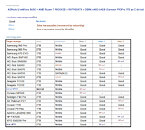
Update 14:02 UTC: Phison has posted an update, acknowledging the issue.
Update Aug 21st: Phison has reached out to us to let us know that some documents about this issue are fake.
Sources:
via Neowin, Notebookcheck
A Japanese tester NichePCGamer published a 21-drive matrix and a repeatable procedure: copy a large game folder, write an approximately 62 GB archive composed of many video files to the target SSD, then decompress that archive on the same device. Failures were reported most frequently when controller utilization exceeded 60% during continuous writes. Reported devices include several Phison-based NVMe models and other drives using different controllers. Symptoms reportedly recur after a reboot, which often restores visibility temporarily but does not eliminate the underlying fault, creating a risk of file corruption if the same workload is repeated. Microsoft and SSD vendors are investigating and have not yet published a definitive root-cause report. Until vendors and Microsoft publish formal guidance, users with SSDs should back up important data, avoid long sequential transfers on systems updated to KB5063878, and monitor vendor and Microsoft advisories for SSD-specific firmware, driver, or OS fixes.


Update Aug 21st: Phison has reached out to us to let us know that some documents about this issue are fake.
278 Comments on Microsoft Windows 11 24H2 Update May Cause SSD Failures
The drives have a defect, they were defective products from the moment they were made, you just didn't know it yet. Defective products should be handled by the manufacturer.
(And big fonts doesn't change the facts either…)When the drive locks up and have corrupted its internal state, then the flaw is in the drive itself. It's always the device's responsibility to validate commands. If some sequence of commands (valid or invalid) causes a product to malfunction, then the product is 100% defective. You show a complete lack of technical knowledge of the subject matter.
Think of all the servers that run Linux. Yeah.
Feel free to check the command line output. You can ignore the german text there:
www.computerbase.de/forum/threads/erzeugt-der-neue-linux-ntfs-treiber-korrupte-dateien.2145812/
The issue was solved by reverting back to the long term fuse module ntfs-3g
Anyway. I think some people would like when we keep the topic on microsoft windows only.
It's interesting to see that microsoft did nothing so far. I'm very interested in such topics when it is about data safety.
Both things can be true, people. The fault can lie with the drive controller firmware, and Microsoft still should never have shipped this.Why not? The kernel supports it. The key difference is if your vendor for the drive is the linux kernel, don't blame MS for bugs, obviously.The linux kernel NTFS module was donated by Paradox software and is of iffy quality btw. They are trying to bring it up to speed, but it's been slow. NTFS-3G is far more mature.Also an interesting thing to note, although I will say this trend of accepting every drive that fails right now on social media as being "affected" is stupid and has to stop.
There could very well be multiple ramifications at play with the Microsoft Update with storage devices but no matter the case it would probably be a good idea for MS to pull the update if there is any positive correlation at all with certain drive failures even if the reasons for the failure are not 100% certain yet. The idea they haven't yet makes me think 1) They don't think it's their problem, 2) They don't care about users or their data, or 3) They update management is grossly incompetent right now. The very fact Phison had to get involved to go out defend themselves does make me think there is some real issue going on but either nobody knows the root cause just yet or perhaps the root cause needs some kind of secrecy like it might reveal some zero day exploit or perhaps was the result of industrial espionage.
To deny this is to deny who these vendors are, and what they have tried pulling beneath our noses.
I completely uninstalled the problematic update on my laptop and postponed updates.
No matter what I do on my desktop computer, I can't uninstall KB5063878.
Everything gives me an error code.
My last resort is restoring a backup I made in June with Acronis. But before I do that, I want to ask again: is there another solution I can do?
That is, to uninstall KB5063878 again.
It won't uninstall with a DOS command either. I can't uninstall it from there by booting into safe boot. It always gives an error code.
Besides this, I can't think of anything else. I don't want to reinstall windows from scratch. Reinstalling a ton of programs and customizing them is a very long and tedious process.
@Sora
@remixedcat
@Youseethis
Somebody put support for Microsoft's ridiculous heap in there and many others adopted it.
Just another joyous horror of open source, usually the moment someone needs disk recovery.And that is mildly terrifying as 22H2 is still Win10 territory, including my Win10ProWS environments.
I already have issues with updates randomly destroying performance, uptime and general system stability.
I don't need Microsoft retroactively reaching back into the ether and causing problems for older builds too.
If this claws back into the Windows Server world, specifically 2016/2019 flavors, there will be a global problem.
What I'm saying is that expecting "windows stuff" to work perfectly is not realistic. I am glad that Wine has caught up to Windows games as much as it has now, but it is still a game of bug-hunting.IIRC those bugs didn't live long enough in the mainline kernel to make it to common distributions, no?
Heck, even ZFS had to fix a long standing corruption bug that was probably in it since its beginnings at Sun.
Enterprise, right. I ended up in using Pro editions of both 10 and 11 on all machines I maintain.:) Happy life without constant Minesweeper gameplay (will it break? lol),;):D
Multiple Samsung SSD models had some firmware issues around a decade ago which lead to wear and corruption, which only happened in Linux, and it was covered but no outcry. And back then Samsung and Intel were known as the "good" consumer SSDs for Linux, as the vast majority of them were misbehaving, especially with the trim command. I don't remember anyone being foolish enough to call for lawsuits against the Linux community for defective hardware…
It's sad to see how far the competence in tech forums have fallen.Storage issues are so common that if everyone looks for a problem (or something to explain whatever strange symptoms they've experienced), we will get a lot of noise data.
That was a truly isolated firmware incident while this recent windows 11 thing affects all ssds regardless of controller/firmware/etc.
Anyways, a really big question I haven't seen answered is if disabling defender makes you immune to issues... because I do disable it on a few of my workstations, so that is certainly a datapoint, considering this update was designed to "address a new ransomware variant."Not really. NTFS is a patent nightmare. It is derived from HPFS which was coded by IBM and they likely would not consent to documentation either. So many other parties were involved at some point too... I think it's safe to say its probably easier to reverse engineer it than navigate the legal hurdles in the modern NTFS's case.
Note, that has a lot of its own drawbacks that should be obvious, but its something I have to ask.