Tuesday, October 21st 2025

AGESA Update Hints at AMD Ryzen 9000G Desktop APUs Coming Soon

We have seen previous rumors claim that AMD would launch Ryzen 9000G series APUs for its AM5 platform sometime soon, although there has been no official announcement from AMD, yet. Most recently, though, data miners combing through AMD's AGESA 1207 code have managed to find evidence of new Krackan Point desktop APUs. Krackan Point has been spotted in MSI BIOS updates with references to the 00B60Fxx microcode, and the changelog for ASUS X870 beta BIOS versions mentions "new APU support," which could only really be Ryzen 9000G. These new APUs are said to be based on Zen 5, but previous leaks said that they would instead be a rehash of the 8000G APUs, making them a Zen 4 refresh. At any rate, it will likely still be a while before launch, since this is the first time the code has been spotted in desktop BIOS versions.

Until now, Krackan Point APUs have been limited to mobile applications, with the AMD Ryzen AI 5 340 and Ryzen AI 7 350 both coming to laptops earlier this year. Until now AM5 owners looking for an APU have been limited to something like the AMD Ryzen 7 8700G, which launched all the way back in January 2024. If the laptop silicon is anything to go by, Krackan Point will bring AMD's RDNA 3.5 to the desktop, although with iGPUs falling short of the powerful Strix Halo 8060S. We will likely see APUs top out at the same Radeon 860M iGPU as the laptop variants, or potentially step up to the Radeon 890M iGPU, where the Ryzen 8000G APUs topped out at the 780M. The 890M would bring 256 more shaders into the mix for a decent performance uplift, although this seems to be a GPU configuration reserved for Strix Point. Current speculation also suggests that CPU core counts will be limited to eight and six cores for the Ryzen 7 and Ryzen 5 CPUs, respectively.
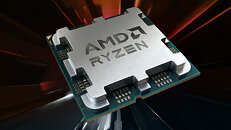
Sources: HXL on X, VideoCardz
Add your own comment

31 Comments on AGESA Update Hints at AMD Ryzen 9000G Desktop APUs Coming Soon

#1
HBSound
It will be nice to see the complete integration of the GPU/CPU into a complete APU. To the point that it removes the separate GPU, and comes with all the necessary components to stand alone, without the need for a GPU in the desktop setup for CAD/3D/BIM.
Posted on Reply
#2
Cheeseball
Not a Potato
It is highly likely they're just going to take the AI 7 350 and boost its TDP, like how they did with the 7940HS and used that for the 8700G.
Posted on Reply
#3
HBSound
CheeseballIt is highly likely they're just going to take the AI 7 350 and boost its TDP, like how they did with the 7940HS and used that for the 8700G.
Will there ever be the kind of APU I am referring to in my post - or is that just wishful thinking and dreaming?
Posted on Reply
#4
LabRat 891
HBSoundWill there ever be the kind of APU I am referring to in my post - or is that just wishful thinking and dreaming?
Currently, wishful thinking and dreaming.

Though, if demand for portable 'local AI' becomes strong (esp. in Enterprise and Industrial applications) I could see a monolithic 'EPYC AI' w/ an HBMstack, for unified VRAM and SysRAM. It would be very expensive, at the minimum.
CheeseballIt is highly likely they're just going to take the AI 7 350 and boost its TDP, like how they did with the 7940HS and used that for the 8700G.
Makes sense.

Still, disappointed in no Gen5 PCIe (or at least 4.0x24).
Posted on Reply
#5
Chaitanya
Probably at *CES and hopefully integrated GPU is sufficiently powerful compared to previous iterations of "APU". Also I hope there is a high end SKU with 3DVcache.
Posted on Reply
#6
Cheeseball
Not a Potato
LabRat 891Currently, wishful thinking and dreaming.

Though, if demand for portable 'local AI' becomes strong (esp. in Enterprise and Industrial applications) I could see a monolithic 'EPYC AI' w/ an HBMstack, for unified VRAM and SysRAM. It would be very expensive, at the minimum.


Makes sense.

Still, disappointed in no Gen5 PCIe (or at least 4.0x24).
Maybe still not enough space to fit the Gen5 controller along with the bigger iGPU? That seems to be the main reason why the iGPUs in the 7000/9000 series all have that puny 610M instead of something like the 740M, 860M, etc. since most people who buy the mainline CPUs will most likely pair it with a dGPU.
Posted on Reply
#8
damric
AMD needs a working driver for the NPU portion of the 8000 series. Right now it's pretty much impossible for a layman to install, needing about 40 hoops to jump through for an 8600G or 8700G which advertise this feature. They need to make it simple step like how a GPU driver installs, download and execute.
Posted on Reply
#9
TheinsanegamerN
I doubt we will see the 890m desktop side. DDR5 desktop RAM is such a restricting factor in performance, with anything less then LPDDR5x you're cutting the thing off at the knees.

Now if AMD could use CUDIMMs to push 9000+ mhz, then the 890m would be viable.
HBSoundIt will be nice to see the complete integration of the GPU/CPU into a complete APU. To the point that it removes the separate GPU, and comes with all the necessary components to stand alone, without the need for a GPU in the desktop setup for CAD/3D/BIM.
Welcome to 2012? AMD has been pumping out APUs that work without dGPUs since Llano....

God I miss Llano.
CheeseballMaybe still not enough space to fit the Gen5 controller along with the bigger iGPU? That seems to be the main reason why the iGPUs in the 7000/9000 series all have that puny 610M instead of something like the 740M, 860M, etc. since most people who buy the mainline CPUs will most likely pair it with a dGPU.
PCIe 5.0 storage is currently a huge power hog compared to 4.0 drives with little if any perceived benefit. I wouldnt count on getting PCIe 5.0 until zen 6 at the earliest. Not sure what you even need it for, what workloads are you regularly running on a laptop that necessitate 14GB/s of data transfer on bulk files? Random 4k is no better then old SATA III drives......
Posted on Reply
#10
TumbleGeorge
TheinsanegamerNRandom 4k is no better then old SATA III drives......
But it is better. Significantly. Not sure where is bottleneck which prevents some applications like games from loading as fast as the random read difference between SATA III SSD and M.2?
Posted on Reply
#11
ymdhis
Older leaks also mentioned that Strix Point would get an APU release as well. Krackan Point is... the same as Strix Point, with lower core count. So it could be a Phoenix 1 + Phoenix 2 situation as with the 8000G chips.

Strix Halo was never meant for AM5, it's too big and requires soldered RAM.

edit: on the other hand, APUs historically only had max 6/8 cores (12/16 threads) at best, and Strix Point has considerably more. Could be that we will only get Krackan Point, in which case the 8700G may end up with a stronger iGPU - unless the difference for RDNA3.5 is enough to offset the lower amount of CUs.
Biggest bummer is that it will only have 16 PCIe lanes, so the primary GPU slot will only be able to use PCIE 8x, with no option to bifurcate.
Posted on Reply
#12
Chrispy_
I was wondering when these were coming, since Zen5 has been around for 15 months and it's odd that there are no Zen5 APUs still. However, the performance uplift from Zen4 to Zen5 is marginal, and the uplift from RDNA3 to RDNA3.5 is even smaller.

What would be cool would be Strix Halo's IOD on the new APUs. The old 780M IGP is fine for low-end graphics in older titles, but 12CU doesn't really cut it any more in a world of incredibly affordable 1440p and 4K panels. However, the hurdle here is that I think Strix Halo has an LPDDR5X controller and doesn't transfer over to desktop DDR5 easily. As such, I suspect the 9000G will top out at the 890M IGP of Strix Point (16CU), and sadly that'll be for a prohibitively expensive AM5 variant of the Ryzen AI 9 HX370/375 - the value proposition of which will be murdered by the fact you can pick up a working, guaranteed (ebay buyer protection) 6500XT with 16CU, dedicated 18GT/s GDDR6 from about $40.

www.ebay.com/sch/i.html?_nkw=RX+6500&_sacat=0&LH_Complete=1&LH_Sold=1&LH_ItemCondition=1500%7C2010%7C3000%7C1000&_udhi=70&_sop=15
Posted on Reply
#13
GenericUsername2001
Chrispy_I was wondering when these were coming, since Zen5 has been around for 15 months and it's odd that there are no Zen5 APUs still. However, the performance uplift from Zen4 to Zen5 is marginal, and the uplift from RDNA3 to RDNA3.5 is even smaller.

What would be cool would be Strix Halo's IOD on the new APUs. The old 780M IGP is fine for low-end graphics in older titles, but 12CU doesn't really cut it any more in a world of incredibly affordable 1440p and 4K panels. However, the hurdle here is that I think Strix Halo has an LPDDR5X controller and doesn't transfer over to desktop DDR5 easily. As such, I suspect the 9000G will top out at the 890M IGP of Strix Point (16CU), and sadly that'll be for a prohibitively expensive AM5 variant of the Ryzen AI 9 HX370/375 - the value proposition of which will be murdered by the fact you can pick up a working, guaranteed (ebay buyer protection) 6500XT with 16CU, dedicated 18GT/s GDDR6 from about $40.

www.ebay.com/sch/i.html?_nkw=RX+6500&_sacat=0&LH_Complete=1&LH_Sold=1&LH_ItemCondition=1500%7C2010%7C3000%7C1000&_udhi=70&_sop=15
Strix Halo's IOD/iGPU has a 256 bit memory controller (aka "quad channel") to get the memory bandwidth needed for its rather large iGPU, so that just flat out won't work on Socket AM5, which uses a 128 bit memory bus. And apparently its memory controller is picky memory timing and such; when Framework was designing their ITX mini-PC that uses Strix Halo they worked with AMD to try to get LPCAMM RAM working with it, but that did not pan out and they had to go with soldiered RAM. So you are right that Strix Point with 16 CU is probably the best we will see on Socket AM5 for now, and probably won't make much sense anyways. Hopefully the successor to Strix Halo (Medusa Halo I believe is the code name tossed around) will be more flexible with memory and at least support LPCAMM memory.
Posted on Reply
#14
ymdhis
Strix Halo on AM5 wouldn't work, it's too large, expensive to make, and wouldn't perform any good with socketed DDR5. What is important is that they used it to test the new interconnects that gets the chiplets closer together, cutting down on latency and power usage. If we see those for Zen 6 next year, then there's a chance there will be more "Halo" products, but I don't think they'll come to socketed APUs.

On another note, the Medusa Halo (?) is meant to have two different IODs, a larger and a smaller, and there were rumours that they want to repurpose the IODs as dGPUs. Which means the next Halo chips won't be some impossible to find super expensive product, but something produced in larger quantities. Mass production + a smaller IOD = price reduction and better availability.
Posted on Reply
#15
LastDudeALive
damricAMD needs a working driver for the NPU portion of the 8000 series. Right now it's pretty much impossible for a layman to install, needing about 40 hoops to jump through for an 8600G or 8700G which advertise this feature. They need to make it simple step like how a GPU driver installs, download and execute.
It can't be downloaded through AMD Adrenaline or something like that? That's crazy. My work laptop has a first-gen Core Ultra CPU with an NPU, and the Intel driver update software gets updates for that no problem, along with WiFi, Bluetooth, and GPU updates.
Posted on Reply
#16
Mack4285
Chrispy_I was wondering when these were coming, since Zen5 has been around for 15 months and it's odd that there are no Zen5 APUs still.
AMD is always late with their APU:s. They really don't want to focus on them. Which is strange.
Posted on Reply
#17
LastDudeALive
Mack4285AMD is always late with their APU:s. They really don't want to focus on them. Which is strange.
There's just not a significant market for socketed desktop APUs.

Gamers need discrete GPUs and full CPUs, not APUs with gimped cache, PCIe lanes, and lowered clock speeds.

Workstations need high core counts and speeds, and if they're doing any GPU-accelerated tasks they're using discrete Nvidia GPUs.

Home and office users are totally fine with basic iGPUs.

The only places where APUs are relevant are laptops (which AMD focuses on) and micro-PCs, which use laptop chips instead of socketed APUs.
Posted on Reply
#18
GenericUsername2001
Mack4285AMD is always late with their APU:s. They really don't want to focus on them. Which is strange.
The desktop APUs are based on laptop chip dies; I imagine AMD is prioritizing the large laptop OEMs for chip deliveries before bothering with the smaller socketed desktop APU market.
Posted on Reply
#19
Chrispy_
GenericUsername2001Strix Halo's IOD/iGPU has a 256 bit memory controller (aka "quad channel") to get the memory bandwidth needed for its rather large iGPU, so that just flat out won't work on Socket AM5, which uses a 128 bit memory bus.
Yeah, I remembered the Framework piece about trying to get it to work with CAMM, but I'd forgotten it was quad channel.

Harvested dies with a defective memory controller or two could be configured for AM5 but it's extra work for a low-volume market and unlikely to happen - with the fussy memory controller built for laptop soldered LPGDDR5 being the nail in the coffin for it ever happening with Strix Halo :\
GenericUsername2001The desktop APUs are based on laptop chip dies; I imagine AMD is prioritizing the large laptop OEMs for chip deliveries before bothering with the smaller socketed desktop APU market.
Yeah, I suspect it's that; Satisfy the billion-dollar laptop OEM contracts first and then once there's surplus production, tap it for the socketed APU market.
Posted on Reply
#20
mechtech
TumbleGeorgeBut it is better. Significantly. Not sure where is bottleneck which prevents some applications like games from loading as fast as the random read difference between SATA III SSD and M.2?
Ya good question.

I remember running some type of mem test on an older PC I had but it had a ssd. The CPU cache was fast from 1kb and dropped off to 2MB, but the ssd was fast at 4MB but dropped off as it got smaller in file size. I wonder if they crossed on the low parts of the graph or something and that's what dictates actual throughput??
Posted on Reply
#21
damric
LastDudeALiveIt can't be downloaded through AMD Adrenaline or something like that? That's crazy. My work laptop has a first-gen Core Ultra CPU with an NPU, and the Intel driver update software gets updates for that no problem, along with WiFi, Bluetooth, and GPU updates.
Sadly no. Not easy at all. As a matter of fact I gave up trying to get it to work as I had other projects piling up. I had last attempted about 3 weeks ago. There's a whole lot of command line stuff that needs to be configured before you can even install it, and AMD's guide for it is quite garbage.
Posted on Reply
#22
TumbleGeorge
mechtechYa good question.

I remember running some type of mem test on an older PC I had but it had a ssd. The CPU cache was fast from 1kb and dropped off to 2MB, but the ssd was fast at 4MB but dropped off as it got smaller in file size. I wonder if they crossed on the low parts of the graph or something and that's what dictates actual throughput??
Drive Type,Typical 4K Q1T1 Random Read Speed (MB/s)

Typical SATA 3 SSD, ~15 - 25 MB/s

SanDisk (WD) SN8100 (PCIe Gen5 NVMe), ~100 - 150 MB/s

This is big difference. Very big. In sequential file reading difference even is more big if reading does not exceed size of the SLC buffer when file is so much long.
Posted on Reply
#23
RaceT3ch
Would this be called Ryzen 10000?
Posted on Reply
#24
TumbleGeorge
RaceT3chWould this be called Ryzen 10000?
Literally in title. Ryzen 9000G. If AMD decided to use different name series in last moment will be surprise.
Posted on Reply
#25
Chrispy_
TumbleGeorgeDrive Type,Typical 4K Q1T1 Random Read Speed (MB/s)

Typical SATA 3 SSD, ~15 - 25 MB/s

SanDisk (WD) SN8100 (PCIe Gen5 NVMe), ~100 - 150 MB/s

This is big difference. Very big. In sequential file reading difference even is more big if reading does not exceed size of the SLC buffer when file is so much long.
Those figures look VERY wrong.
Intel X25-M (G1) was getting those sort of speeds as as SATA II drive back in 2008. I remember my (relatively) cheap Indilinx Barefoot drive getting 26MB/s on 4K random reads back in 2009. Sandforce controllers (still 15 years old and still SATA II) bumped that up to over 30MB/s for 4K random. I can't link TPU reviews because random 4K reads weren't part of the review tests here 17 years ago, but the info is out there in an 18-year old version of CrystalDiskMark:


A typical SATA3 drive's 4K Q1T1 read performance is about 40-50MB/s
[INDENT]50.5MB/s = Samsung 850 Evo 500GB[/INDENT]
[INDENT]47.8MB/s = Crucial MX500 525GB[/INDENT]
[INDENT]44.9MB/s = Sandisk Ultra 3D / WD Blue 500GB[/INDENT]
[INDENT]34.3MB/s = Toshiba TR200 (ancient OCZ model rebranded).[/INDENT]
[INDENT][/INDENT]
And the 8100 is the absolute fastest 4K Q1T1 NVMe drive you can buy right now. It's not typical, it's an outlier. Median 4K Q1T1 performance numbers for 2025 Gen5 reviews show ~100MB/s. So yes, there is an improvement over SATA3 but it's only about double the performance, and we're comparing premium Gen5 drives with that list above which is low/mid-tier SATA SSDs without a single "Pro" drive in that list, so to do a more fair apples-to-apples comparison, the equivalent drive to yesteryear's mainstream-priced SATA product is probably something like a Kingston NV3 at 81.7MB/s as tested here by W1zzard. You only have to go back to the NV2 to find 4K Q1T1 results that are the exact same ~50MB/s of a SATA3 drive.

Typical budget SATA = ~45MB/s
Typical budget NVMe = ~80MB/s

The fact that we are finally seeing an increase in QD1, 1T IOPS after almost 20 years is great, but that doesn't mean it's going to be a night-and-day difference like the original switch from spinning rust to NAND was back in 2008.
Posted on Reply
Add your own comment
Nov 11th, 2026 04:14 CST change timezone

New Forum Posts

Popular Reviews

TPU on YouTube

Controversial News Posts