Wednesday, November 12th 2025

Valve Announces Steam Machine, Steam Frame, and Steam Controller
Valve has finally put an end to the months-long rumor cycle about its next-generation hardware. Today, Valve has introduced three new additions to its hardware library with Steam Machine, Steam Frame, and Steam Controller. Starting with the more interesting hardware, we finally have a successor to the original Steam Machine more than a decade after the original was introduced. Also called the Steam Machine, this one brings more modern hardware optimized to co-exist with the SteamOS Linux build, and a powerful software stack to run any game. Available in 512 GB and 2 TB SSD models with microSD expansion, it pairs a semi-custom AMD Zen 4 processor with RDNA 3 graphics to achieve supposed 4K gaming at 60 FPS with ray tracing and FSR support. Being semi-custom GPU, it might be closer to AMD's RDNA 3.5, than the pure RDNA 3.
Bundled with a Steam Controller, the system features an integrated 2.4 GHz radio alongside Wi-Fi 6E and Bluetooth for wide peripheral compatibility. Video output options include DisplayPort 1.4 for up to 4K at 240 Hz and HDMI 2.0, complemented by Ethernet, USB-C 10 Gbps, and four USB-A ports. Running SteamOS with rapid suspend/resume and wake-on-controller functionality, it combines 16 GB DDR5 system memory with 8 GB GDDR6 VRAM, an internal power supply, and a customizable LED bar that reflects system status for a complete living room experience. Valve has packaged it as a small black box, which will blend in with any HTPC environment.


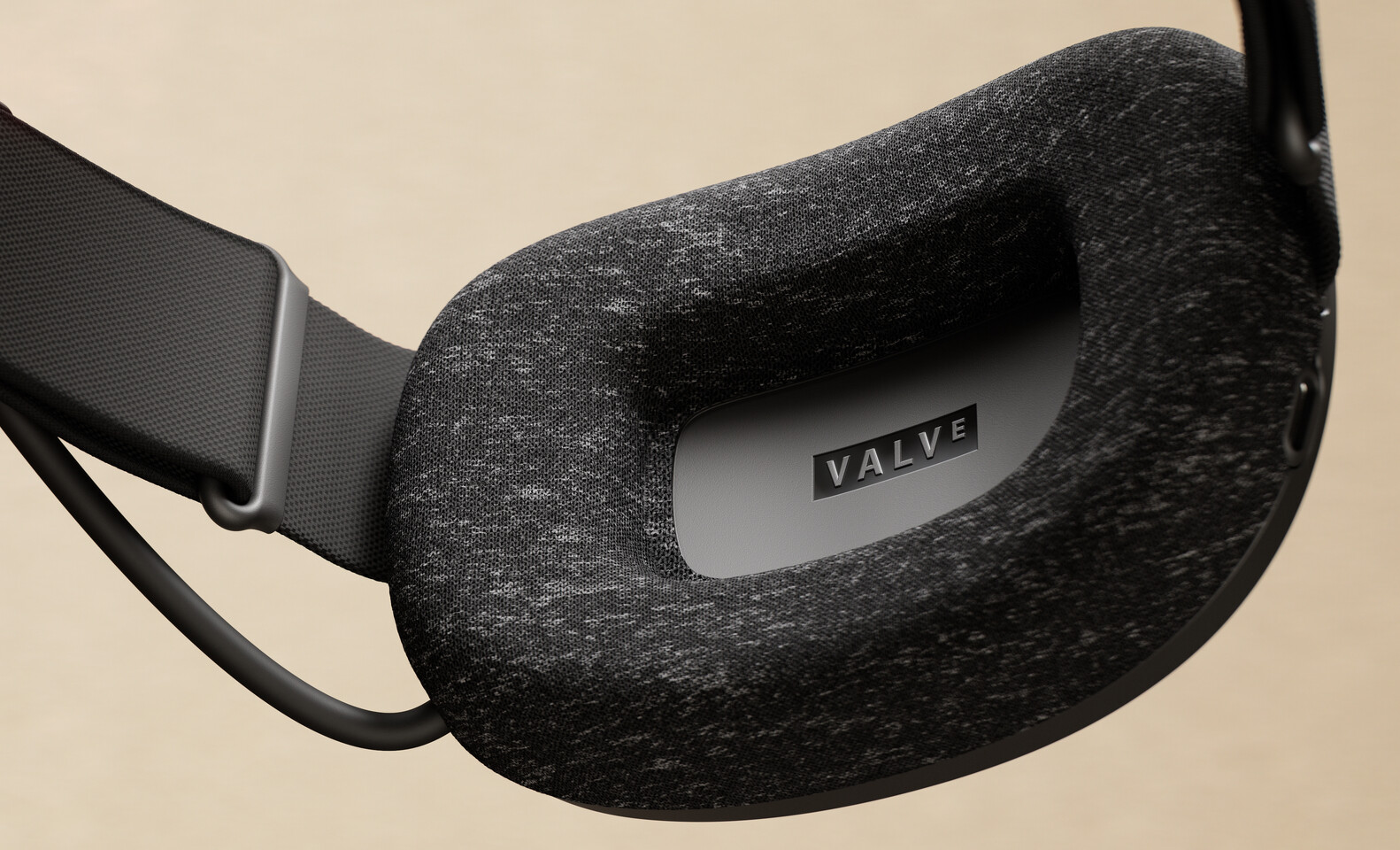
 Next, we have Valve's Steam Frame—the second VR headset from the company. The Steam Frame is designed as a featherweight PC VR gaming headset with a modular architecture, weighting a mere 185 g by itself, and 440 g with included headstrap that includes facial interface, audio, and a rear battery. Inside there is a Snapdragon 8 Gen 3 processor with 16 GB unified LPDDR5X RAM and up to 1 TB storage. This will help it stream Steam games via Wi-Fi 7 and an included low-latency adapter, using eye-tracking to drive foveated streaming that sharpens resolution precisely where you look.
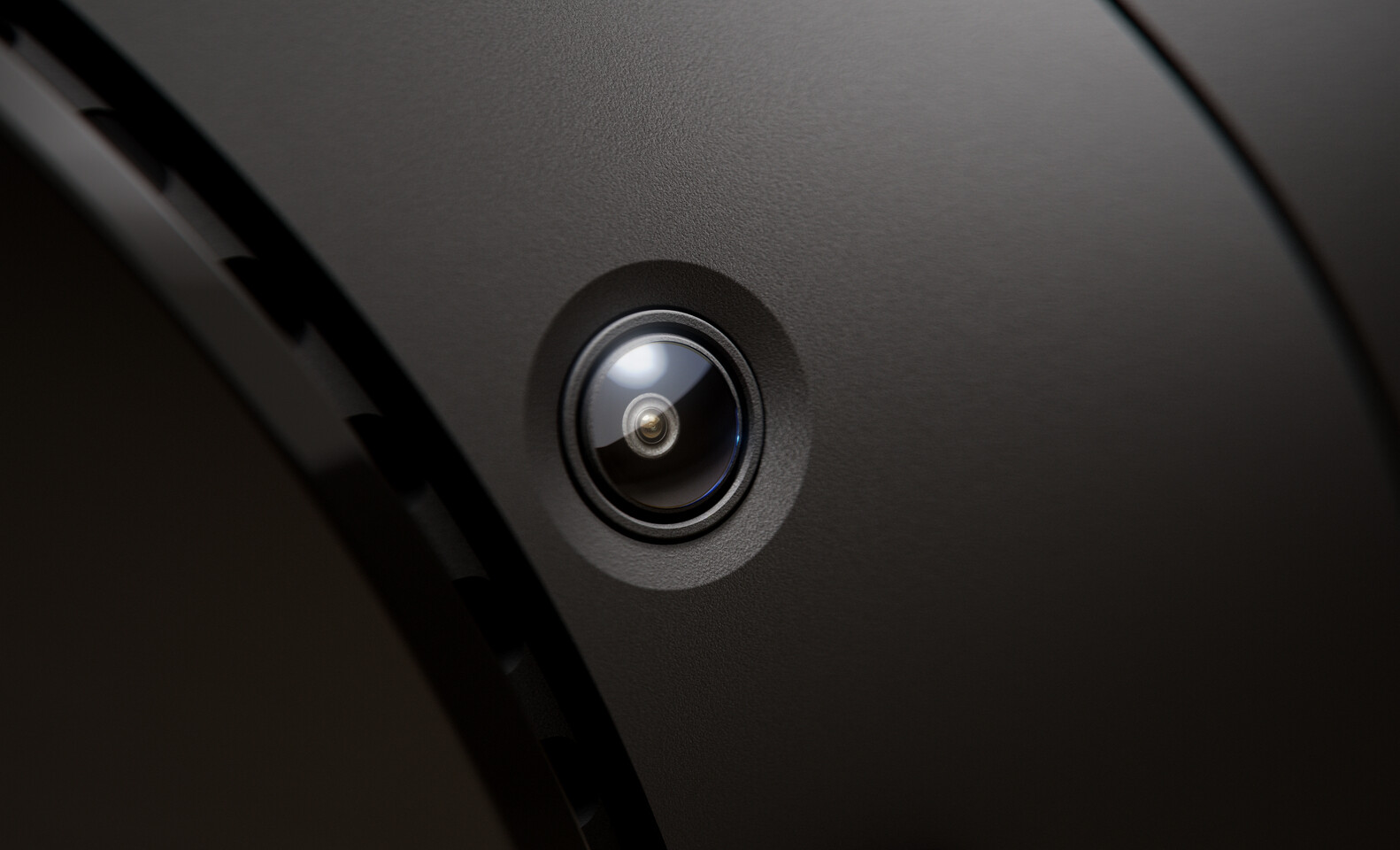
There is a dual 2160x2160 pancake display pair that refreshes at 144 Hz across a 110-degree field. Four outward cameras and an IR illuminator maintain tracking in any environment, so that your VR experience becomes life-like. Integrated audio and a 21.6Wh battery complement the SteamOS experience with full suspend/resume, powering Steam Frame Controllers that feature magnetic TMR thumbsticks and capacitive finger sensing on 40-hour batteries, bridging traditional gamepad familiarity with VR immersion.



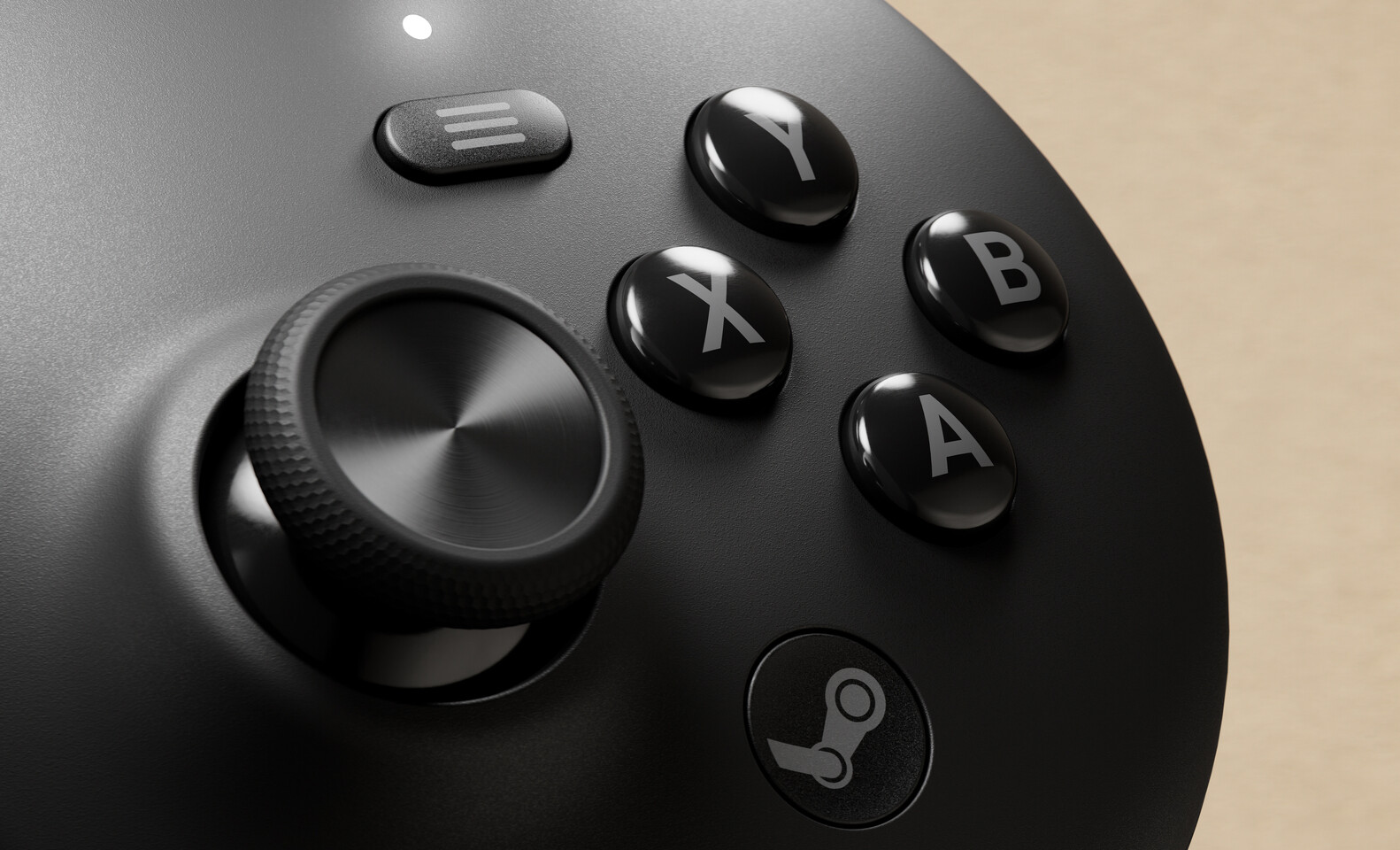
 Last but not least, we have Valve Steam Controller. This controller works across Steam's whole ecosystem with three ways to connect. The pre-paired Steam Controller Puck is the main hookup, using a proprietary wireless signal that hits about 8 milliseconds of lag at 5 meters—more stable than Bluetooth—and lets you sync up to four controllers at once. You can also use regular Bluetooth or just plug in via USB. The rechargeable battery runs for 35+ hours and charges either through the Puck or a USB cable. For controls, you get magnetic TMR thumbsticks that are super responsive, capacitive grips that can trigger gyro or other commands, and four haptic motors that give really detailed feedback. There's also pressure-sensitive trackpads with a 6-axis IMU, four programmable grip buttons, and all the standard controls you expect. It works with Windows, Mac, Linux, handhelds, phones via Steam Link, and all Steam hardware. Every new hardware announced today will start shipping in early 2026.




Source:
Valve
Bundled with a Steam Controller, the system features an integrated 2.4 GHz radio alongside Wi-Fi 6E and Bluetooth for wide peripheral compatibility. Video output options include DisplayPort 1.4 for up to 4K at 240 Hz and HDMI 2.0, complemented by Ethernet, USB-C 10 Gbps, and four USB-A ports. Running SteamOS with rapid suspend/resume and wake-on-controller functionality, it combines 16 GB DDR5 system memory with 8 GB GDDR6 VRAM, an internal power supply, and a customizable LED bar that reflects system status for a complete living room experience. Valve has packaged it as a small black box, which will blend in with any HTPC environment.


There is a dual 2160x2160 pancake display pair that refreshes at 144 Hz across a 110-degree field. Four outward cameras and an IR illuminator maintain tracking in any environment, so that your VR experience becomes life-like. Integrated audio and a 21.6Wh battery complement the SteamOS experience with full suspend/resume, powering Steam Frame Controllers that feature magnetic TMR thumbsticks and capacitive finger sensing on 40-hour batteries, bridging traditional gamepad familiarity with VR immersion.





204 Comments on Valve Announces Steam Machine, Steam Frame, and Steam Controller
I picked up the i7 12700H, 32GB DDR5, RTX 3060 (12GB VRAM), 2TBnVME variant for $63X.XX on Newegg a couple months back I also added an additional 4TBnVME storage to it.
SteamOS isn't overbloated with AI and spyware garbage like Windows, RAM and VRAM is less of an issue.The CPU and GPU aren't consuming enough power to need more than 4-5 phases, and with what the system seems to be aimed at, it doesn't need a ton of IO, and you can use the USB-C port with a USB hub for additional ports. IMO, a 512gb SSD is enough, especially since SSD prices are getting out of hand. I'd rather the price be kept down on it than it having a 2TB SSD.
Depending on what the Steam Machine costs, it could be a decent value for a light gaming system compared to building your own because of how RAM and SSD prices have skyrocketed.
Apple is certainly good at providing the illusion of an over engineered device, but they solder in everything, take every step to keep you from repairing your own device let alone opening it, and they upcharge ridiculous amounts to get any more RAM and storage.
The specs are not great but if it's reasonably priced then could be popular as a mini gaming pc
The specs state a high speed micro sd card slot, not clear if this micro sd express?
The machine looks simple, compact and the looks nice in an tv cabinet and another good thing is it doesn’t resemble a dehumidifier.
In addition, things like FSR & DLSS also consume additional VRAM.I only mentioned in passing that such features are only considered useful at 2K and higher, with the exception of DLAA.In my opinion, they should have based it on the “Mac Pro (late 2013)”.If the item doesn't change hands for €300 before tax, it will make a better doorstop. Because an “office PC” is simply not worth any more than that.With a friendly smile,
Fred.
RX 6700 for comparison's sake, as that is the gpu usually compared to the ps5's gpu.
(Numbers are not pulled out of my ass, they are listed by valve themselves: store.steampowered.com/sale/steammachine)
Looks like the SSD can be upgraded but doesn't seem to be an additonal M2 slot
In Valve I trust.
People are also getting hung up on the 8GB of RAM too. Go look at 7600 vs 7600XT benchmarks. Nothing to go crazy about. For big graphical titles a 7600 class GPU is a 1080p medium card. Going with 16GB of RAM likely would not justify the cost increase. The performance difference at 1080p could come down to clocks and TDP alone. The 7600XT has 200MHz higher game clock and 100MHz higher boost clocks. When you get to 4k and see a much wider gap in performance where the 16GB of RAM actually matters, the 7600XT can't even play those games.
Remember, for cards that are offered today, the 7600 is a low-end card. It is right there with a Radeon 6650XT. It is right there with the GeForce 5050. If cards like these had 16GB of RAM, everyone would be saying it's a waste of RAM.
At the same time I do think they should have gone for more GPU. This is barely escaping APU based desktop gaming right here, which it obviously also is. But people already have laptops for that which come with a screen and are more portable or... a Steam Deck.
I don't see the sell in a slightly less underpowered Deck without a screen to be fairly honest - I'd much rather have a Deck then for as much money. And I do think this Machine is more expensive than the OLED deck, but maybe I'll be proven wrong. Basically, if you have a desktop machine with desktop-ish form factors, it better be a beast, or there's just no point vs portable gaming devices.
OTOH, if the Deck didn't exist, I would probably buy one of these because damn its cute.
If you want to play the latest AAA slop running Windows only spyware anticheats you're not going to care about this Steam machine regardless of the hardware it has.
I would recommend people go actually look at the top played games on Steam, not everything needs an RTX 5090.
store.steampowered.com/charts/mostplayed