Saturday, January 10th 2026

The 5 Biggest No-Shows of CES 2026
As the Consumer Electronics Show of 2026 comes to an end, our field crew has done of a lot of work to keep readers updated. However, pre-CES expectations were high for several product launches, that sadly didn't happen. In today's piece we are ranking the top five things we didn't get at CES 2026, even with hopes of a product launch occurring during the show.
1) First on our non-weighted ranking is NVIDIA's GeForce RTX 50-series "Blackwell" SUPER refresh. This mid-cycle was originally planned for late Q1 to early Q2 2026, with a possible announcement at CES 2026. The "SUPER" treatment was planned with denser GDDR7 memory modules with 3 GB of capacity per chip, increasing the memory configuration of the standard GeForce RTX 5070, RTX 5070 Ti, and RTX 5080. Initially, the RTX 5070 SUPER was planned with an upgrade to offer 18 GB, while the RTX 5070 Ti SUPER and RTX 5080 SUPER would each provide 24 GB of GDDR7 memory.
 2) At number two is NVIDIA's rumored Arm-based N1X SoC for gaming laptops. The processor was expected to debut around CES 2026, which would have set up direct competition with Qualcomm's Snapdragon X2 Plus announced at the show. NVIDIA reportedly used its GB10 Superchip—the design powering DGX Spark—as the blueprint for N1/N1X. The CPU features 20 Arm v9.2 cores split into two clusters of ten, each backed by 16 MB of shared L3 cache (32 MB total), while each core maintains private L2 storage. The memory subsystem leverages a unified LPDDR5X-9400 fabric on a 256-bit bus, supporting up to 128 GB and delivering roughly 301 GB/s of raw bandwidth, though it's unclear if such capacity will remain an option in consumer laptops. As the package is rated at approximately 140 W TDP, connectivity includes PCIe 5.0 for high-speed NVMe SSD connection.
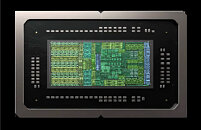 3) Coming in at number three, AMD's CEO Dr. Lisa Su was at CES 2026 with a very interesting keynote, but with no official information about the rumored AMD Ryzen 9 9950X3D2 processor. As with all the products mentioned here, it was believed that CES 2026 was the day of announcement. This processor reportedly features 16 cores and 32 threads, with 3D V-Cache on both chiplets, totaling approximately 192 MB of L3 cache. It operates at a base frequency of 4.30 GHz, with boost clocks reaching 5.6 GHz. Compared to its predecessor, it sacrifices a modest 100 MHz in peak speed for significantly greater cache capacity and more flexible scheduling. This setup is expected to benefit cache-sensitive workloads and gaming, while also appealing to workstation and creator users handling memory-intensive tasks. However, this enhanced capability comes with a thermal cost, as the rumored TDP rises to 200 W from the 9950X3D's 170 W, potentially pushing PPT values close to 250 W. Instead of this SKU, we got the announcement for a Ryzen 7 9850X3D, which is similar to Ryzen 7 9800X3D but cranks the boost frequency by another 400 MHz to 5.6 GHz.
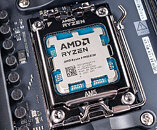
 4) At number four is Intel's "Arrow Lake Refresh" of the current "Arrow Lake-S" desktop CPU family. We hoped to see Intel come out with a more tuned "Arrow Lake" silicon which would give gamers a couple of extra FPS when building on the LGA-1851 socket. Originally the rumor mill showed a few SKUs like Core Ultra 9 290K Plus,
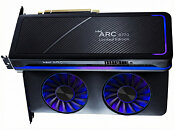
Core Ultra 7 270K Plus, and Core Ultra 5 250K Plus, which would gain about 100 MHz in base and boost frequencies across P- and E-cores. Intel also planned an upgraded memory controller supporting DDR5 memory running at 7,200 MT/s, a significant increase over the 6,400 MT/s transfer rate of the regular "Arrow Lake." With the refresh we would get a lot of tiny optimizations that made the original launch bumpy and unappealing for some gamers, but it looks like that might not be the case anymore. Perhaps Intel's only true goal for CES 2026 was the long-rumored "Panther Lake" launch, and not the desktop line refresh. The company's "Nova Lake" is a few months away, so we possibly won't get "Arrow Lake Refresh" at all. 5) Last but not least, a great part of the community was interested in the launch of Intel's flagship Arc "Battlemage" B770 GPU based on the BMG-G31 die. With 32 Xe2 cores and 16 GB of GDDR6 memory on a 256-bit interface, the card was nearing launch as it surfaces in more software libraries. However, Intel's CES 2026 keynote focused more on "Panther Lake," with zero mention of discrete graphics. The Arc B770 is expected to carry a 300 W TDP, representing Intel's highest-ever rating in the consumer Arc discrete GPU segment. That 300 W board-level figure significantly exceeds Intel's recent mainstream offerings. Previous high-end cards like the Arc "Alchemist" A770 and several B-series "Battlemage" models, for example, have operated within a 190 to 225 W range. Whatever this added TDP would gain a lot of real-world performance, we are yet to see.
1) First on our non-weighted ranking is NVIDIA's GeForce RTX 50-series "Blackwell" SUPER refresh. This mid-cycle was originally planned for late Q1 to early Q2 2026, with a possible announcement at CES 2026. The "SUPER" treatment was planned with denser GDDR7 memory modules with 3 GB of capacity per chip, increasing the memory configuration of the standard GeForce RTX 5070, RTX 5070 Ti, and RTX 5080. Initially, the RTX 5070 SUPER was planned with an upgrade to offer 18 GB, while the RTX 5070 Ti SUPER and RTX 5080 SUPER would each provide 24 GB of GDDR7 memory.


Core Ultra 7 270K Plus, and Core Ultra 5 250K Plus, which would gain about 100 MHz in base and boost frequencies across P- and E-cores. Intel also planned an upgraded memory controller supporting DDR5 memory running at 7,200 MT/s, a significant increase over the 6,400 MT/s transfer rate of the regular "Arrow Lake." With the refresh we would get a lot of tiny optimizations that made the original launch bumpy and unappealing for some gamers, but it looks like that might not be the case anymore. Perhaps Intel's only true goal for CES 2026 was the long-rumored "Panther Lake" launch, and not the desktop line refresh. The company's "Nova Lake" is a few months away, so we possibly won't get "Arrow Lake Refresh" at all.


83 Comments on The 5 Biggest No-Shows of CES 2026
Frankly, at this point I'd almost welcome another Carrington Event.
Besides hyped expectations, life is also getting more expensive for the happy few and we consumers have to finance that ;) .
We got MX-7 now we can spend them re-pasting everything :)
CES this year was boring and seemed effectively pointless, a consumer show ruined by AI and datacenter hardware, and corporate billionaires telling us how great AI is while we fund their datacenters with higher hardware and electricity prices.
Apple has never been an official attendee of CES (if they were, it was probably back in the Eighties with a minimal presence). They were official exhibitors and lead participants of Macworld Expo which ran around the same time as CES (Macworld Expo in SF, Winter CES in Vegas, around the first full week of January) so they never attended both, at least officially. They might have sent a handful of employees to CES for competitive analysis purposes back in the day but most Apple employees ended up at Macworld Expo instead of CES. After all, SF is just a drive up the Peninsula from the Cupertino/Silicon Valley.
2009 was the last year that Apple officially attended Macworld Expo after which they started doing their own announcement events. They do not exhibit at any other tradeshows. Moreover ever since the beginning of COVID-19 pandemic, Apple has switched to pre-recorded announcements as well. They occasionally do an live in-person hands-on session for the media after their keynotes but the presentations themselves are canned.
Generally speaking, both Sony Interactive Entertainment and Xbox do their own announcements, following Apple's lead. Same with Nintendo.
Apple figured out that by running their own events at their own schedule, they can capture almost all of the tech media's attention that week. At a major tradeshow like CES, E3, Comdex, Computex, etc. everyone shares the limelight.
Apple's two main announcement dates are pretty predictable these days. The first is the WWDC (developers conference) keynote in early June. This basically covers new features for iOS, macOS, and sometimes some new hardware architecture that will launch in conjunction with the new operating system software.
The second major announcement for Apple is their annual fall iPhone announcement since the smartphone family is the cash cow of their product line. Remember that since the mid-2010's the smartphone clearly dethroned the PC as the primary driver of pretty much all consumer electronics innovation. Apple's iPhone announcement is typically in the first half of September with some of the newly announced handsets shipping before the end of the quarter (which ends on the last Saturday of September), usually on the Friday a week before (so there are about eight days of new iPhone sales).
In fact, Apple's two big keynote dates are generally avoided by other companies as potential event dates because those companies know that their news will be squashed like trying to ship a new record the day of a Taylor Swift album release.
All other Apple announcements are at their discretion in terms of calendar dates. They are not pressured to make an announcement at any tradeshow so they can do things when they (and their manufacturing partners) please. This has been copied by many other companies in recent years. Streaming video on the Internet has accelerated this.
By abandoning tradeshows in 2009 Apple is not at the mercy of someone else's calendar in terms of hardware releases, software development, or supply chain logistics. Nor do Apple's announcements get buried in a pile of hundreds of other press releases desperate for their 30 seconds in the limelight.