Saturday, January 10th 2026

The 5 Biggest No-Shows of CES 2026
As the Consumer Electronics Show of 2026 comes to an end, our field crew has done of a lot of work to keep readers updated. However, pre-CES expectations were high for several product launches, that sadly didn't happen. In today's piece we are ranking the top five things we didn't get at CES 2026, even with hopes of a product launch occurring during the show.
1) First on our non-weighted ranking is NVIDIA's GeForce RTX 50-series "Blackwell" SUPER refresh. This mid-cycle was originally planned for late Q1 to early Q2 2026, with a possible announcement at CES 2026. The "SUPER" treatment was planned with denser GDDR7 memory modules with 3 GB of capacity per chip, increasing the memory configuration of the standard GeForce RTX 5070, RTX 5070 Ti, and RTX 5080. Initially, the RTX 5070 SUPER was planned with an upgrade to offer 18 GB, while the RTX 5070 Ti SUPER and RTX 5080 SUPER would each provide 24 GB of GDDR7 memory.
 2) At number two is NVIDIA's rumored Arm-based N1X SoC for gaming laptops. The processor was expected to debut around CES 2026, which would have set up direct competition with Qualcomm's Snapdragon X2 Plus announced at the show. NVIDIA reportedly used its GB10 Superchip—the design powering DGX Spark—as the blueprint for N1/N1X. The CPU features 20 Arm v9.2 cores split into two clusters of ten, each backed by 16 MB of shared L3 cache (32 MB total), while each core maintains private L2 storage. The memory subsystem leverages a unified LPDDR5X-9400 fabric on a 256-bit bus, supporting up to 128 GB and delivering roughly 301 GB/s of raw bandwidth, though it's unclear if such capacity will remain an option in consumer laptops. As the package is rated at approximately 140 W TDP, connectivity includes PCIe 5.0 for high-speed NVMe SSD connection.
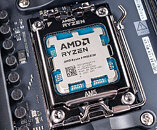
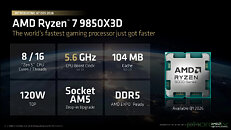
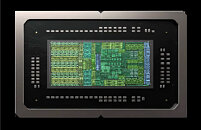 3) Coming in at number three, AMD's CEO Dr. Lisa Su was at CES 2026 with a very interesting keynote, but with no official information about the rumored AMD Ryzen 9 9950X3D2 processor. As with all the products mentioned here, it was believed that CES 2026 was the day of announcement. This processor reportedly features 16 cores and 32 threads, with 3D V-Cache on both chiplets, totaling approximately 192 MB of L3 cache. It operates at a base frequency of 4.30 GHz, with boost clocks reaching 5.6 GHz. Compared to its predecessor, it sacrifices a modest 100 MHz in peak speed for significantly greater cache capacity and more flexible scheduling. This setup is expected to benefit cache-sensitive workloads and gaming, while also appealing to workstation and creator users handling memory-intensive tasks. However, this enhanced capability comes with a thermal cost, as the rumored TDP rises to 200 W from the 9950X3D's 170 W, potentially pushing PPT values close to 250 W. Instead of this SKU, we got the announcement for a Ryzen 7 9850X3D, which is similar to Ryzen 7 9800X3D but cranks the boost frequency by another 400 MHz to 5.6 GHz.
 4) At number four is Intel's "Arrow Lake Refresh" of the current "Arrow Lake-S" desktop CPU family. We hoped to see Intel come out with a more tuned "Arrow Lake" silicon which would give gamers a couple of extra FPS when building on the LGA-1851 socket. Originally the rumor mill showed a few SKUs like Core Ultra 9 290K Plus,
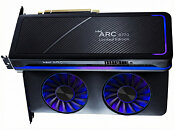
Core Ultra 7 270K Plus, and Core Ultra 5 250K Plus, which would gain about 100 MHz in base and boost frequencies across P- and E-cores. Intel also planned an upgraded memory controller supporting DDR5 memory running at 7,200 MT/s, a significant increase over the 6,400 MT/s transfer rate of the regular "Arrow Lake." With the refresh we would get a lot of tiny optimizations that made the original launch bumpy and unappealing for some gamers, but it looks like that might not be the case anymore. Perhaps Intel's only true goal for CES 2026 was the long-rumored "Panther Lake" launch, and not the desktop line refresh. The company's "Nova Lake" is a few months away, so we possibly won't get "Arrow Lake Refresh" at all. 5) Last but not least, a great part of the community was interested in the launch of Intel's flagship Arc "Battlemage" B770 GPU based on the BMG-G31 die. With 32 Xe2 cores and 16 GB of GDDR6 memory on a 256-bit interface, the card was nearing launch as it surfaces in more software libraries. However, Intel's CES 2026 keynote focused more on "Panther Lake," with zero mention of discrete graphics. The Arc B770 is expected to carry a 300 W TDP, representing Intel's highest-ever rating in the consumer Arc discrete GPU segment. That 300 W board-level figure significantly exceeds Intel's recent mainstream offerings. Previous high-end cards like the Arc "Alchemist" A770 and several B-series "Battlemage" models, for example, have operated within a 190 to 225 W range. Whatever this added TDP would gain a lot of real-world performance, we are yet to see.
1) First on our non-weighted ranking is NVIDIA's GeForce RTX 50-series "Blackwell" SUPER refresh. This mid-cycle was originally planned for late Q1 to early Q2 2026, with a possible announcement at CES 2026. The "SUPER" treatment was planned with denser GDDR7 memory modules with 3 GB of capacity per chip, increasing the memory configuration of the standard GeForce RTX 5070, RTX 5070 Ti, and RTX 5080. Initially, the RTX 5070 SUPER was planned with an upgrade to offer 18 GB, while the RTX 5070 Ti SUPER and RTX 5080 SUPER would each provide 24 GB of GDDR7 memory.


Core Ultra 7 270K Plus, and Core Ultra 5 250K Plus, which would gain about 100 MHz in base and boost frequencies across P- and E-cores. Intel also planned an upgraded memory controller supporting DDR5 memory running at 7,200 MT/s, a significant increase over the 6,400 MT/s transfer rate of the regular "Arrow Lake." With the refresh we would get a lot of tiny optimizations that made the original launch bumpy and unappealing for some gamers, but it looks like that might not be the case anymore. Perhaps Intel's only true goal for CES 2026 was the long-rumored "Panther Lake" launch, and not the desktop line refresh. The company's "Nova Lake" is a few months away, so we possibly won't get "Arrow Lake Refresh" at all.


83 Comments on The 5 Biggest No-Shows of CES 2026
A 5030 is like $2000
This beats gpus no one can afford and mid cycle microscopic boost clock increases
Vacuum cleaners that have the Dalecs beat
There are people angry with e steps in France, now they made this.
It's true we're in a transition period and whether all this will work out in the future remains to be seen. But that's a different issue, and so saying there was nothing "consumer" in these main announcements is factually incorrect.
It was also anything but "dumb". Again, see the caveats above, but from a pure tech perspective a thing like Vera Rubin is simply amazing.
There is a company called Ixi that is bringing autofocus glasses to market…
A majority of the things shown in the jacket man's keynote is going to affect consumers in a mostly negative way, polluted water, higher electricity costs, higher cost of tech, consumers pushed towards subscriptions to tech instead of ownership as AI companies hoard memory, mass surveillance, job loss as corporations replace people with LLMs.
There is no way all of the outlandish promises these out of touch CEO's claim can work out in reality, currently there isn't enough water or electricity so buyers of AI hardware can power up datacenters, it's dumb and definitely feels like a stupid scam to shift computing power away from the average consumer.
Just one more new product burned by high DRAM prices (see NVidia Super series, etc.)
It's all about AI data centers and EV now.
We went from multiple GPU down to just one and eventually the GPU will be part of a system on chip, just like the mobile market has.
I for one think this is a better direction. Too many children online wasting credit card money to flex on Facebook.
Later, you'll subscribe for cloud computing power.
You'll own nothing and be happy!
But it's interesting to see that the public has finally almost universally had enough of this "AI" nonsense already, and it's time for the tech press to address this. Not primarily the tirades like GN does, but more in the sense of holding these companies accountable and simply down-prioritizing non-consumer news.
If you don't accept that's what human beings like to do, well you don't understand people at all. Do you only reflect on what you recently ate or do you also imagine what your next meal is going to be? Or the final scores of today's football fixtures. Yeah, we thought so.
My guess is that rumor discussion drives well over half of reader engagement at media sites like TPU, PCGamer, and others.
Sure there are some people who would like to just stick to post mortems of old news but the majority of people out there have a lot of curiosity about what's coming next. It's worth pointing out that the stock market itself is very forward looking and guess what? People run stock markets.
If you don't want to discuss rumors just stay out of those discussion threads. But criticizing others for wanting to talk about rumors is just plain obtuse and more than a little rude. And here's my prediction: you will do it again and again and again here at TPU. Complaints like yours is one of several factors that made me reduce my TPU posting frequency. It's just a drag on community sentiment, something that ignore lists won't fix.This particular discussion thread shows how little familiarity a lot of people have about CES apart from very recent history.
There has been an automotive pavilion at Winter CES FOR DECADES. You know in the Nineties where was also an official "Adult Software" pavilion at CES that later spun off and became AVN Expo? That's a discussion for another time and place but yes, there were aisles and aisles of VHS cassettes and the newfangled shiny DVD as well as the companies who produced them and the talent who starred in them.
30 years ago the Auto pavilion would have been filled with aftermarket stereo headunits, speakers, amplifiers, police scanners, radars, trunk mounted CD changers, etc. 20 years ago there would have been some aftermarket backup cameras and such. Even silly rigs designed to help people who interested in "wardriving".
Let's be real: today's cars are basically computers on wheels. Automotive innovations certainly fall within the framework of "Consumer Electronics". More today than thirty years ago, a car's tech is important to Joe Consumer.
There are wheelchairs with autonomous driving (you can use one for free at Haneda Airport to get around the terminal). There's no reason why autonomous driving technology couldn't be part of CES. After all, Joe Consumer is interested in the technology.
CES will continue to evolve as time goes on. Videogames used to also be a big part of CES before the videogame industry decided it wanted its own show which became E3 (Electronics Entertainment Expo) which survived for many years.
Today the whole tradeshow concept is pretty aged in the era of instantly available news on the Internet, streaming video and digital downloads. The fact that CES still exists is pretty amazing, long past the demise of Comdex, Macworld Expo, E3 and countless other tradeshows.
In addition, the complexity of the problem of data center expansion like a bulldozer wrecking fragile fields of wheat would require tech journalism to venture into new territories of analysis and consider wider impact on water supply shortages, unsustainable pressure on electricity grid, socially unjust tax breaks for big corporations and communities affected right now by a gigantic build up of data centers in their neighborhoods. Those are seriously uncomfortable topics to tackle and discuss, but extremely important.
Essentially, tech journalists would need to become more holistic in thinking beyond hardware and software blinkers, and develop environmental consciousness, local community awareness and sustainability-oriented reporting. Without this new mind-set, one cannot hold those companies and other enablers accountable. Some may not enjoy Gamers Nexus style of reporting, which is fine, but he and his team are way more advanced and mature in tackling topics with the mind-set and knowledge described above, more than any other tech outlet on the planet. This is because they are independent, smart, curious, courageous and are driven by environmental awareness and sustainability mind-set.
Like I said, you have done this before and you will do this again much to the detriment of sites like TPU and others that you probably visit.
You only want discussion on topics that are YOUR personal interest and stay on a course of YOUR personal train of thought. You are the center of the universe and don't tolerate anything not within your gravity. That's unfortunately a very common attitude online these days. And it's not just PC hardware, you do the exact same thing for videogames. You regularly denigrate people who like to play live service co-op games.
Unfortunately the Internet is chock full of people who have the same "if you don't agree with me, you are stupid" attitude.
Returning back to the thread's topic (non-shows at CES), what TPU and other media sites really should be doing in 2026 is scoring rumor mongers on accuracy. There are a couple of sites that do this. There's at least one site that has several different categories (like plausibility, timing, track record, etc.) for rumor scoring.
Note that the finance industry has been doing this for decades (the StarMine rating for analysts is one).
With the emergence of consumer-friendly statistical analysis, fantasy sports, and AI assistants, it seems like creating and maintaining a useful database of rumor predictions (or fantasy sports prognostications) would be feasible in 2026. I'm sure W1zzard is already very well aware of certain news sites that have a tragically poor track record concerning prediction accuracy.
CES is really an anachronism at this point and its placement at the beginning of January is really poor. It's right after the holiday season when most consumers are thinking about giving their wallets a rest and more concerning about the upcoming tax season (I'm thinking about my second property tax payment right now). It's also right before the lunar new year when many manufacturers in Southeast Asia take a break which makes shipping product before the end of Q1 a challenge.