Thursday, February 5th 2026

ASRock Releases Official Statement Regarding Ryzen 9000 Series and ASRock AM5 Motherboard Firmware
ASRock is closely monitoring recent discussions regarding the performance and behavior of AMD Ryzen 9000 series processors on ASRock AMD platforms. In response to these reports, we have implemented comprehensive internal reviews and rigorous verification processes. We have been working in seamless coordination with AMD continuously to further validate system performance across a wide range of hardware configurations, while optimizing BIOS and enhancing overall system stability.
ASRock deeply values user feedback as a cornerstone of our continuous improvement. Customers experiencing technical difficulties or seeking further assistance are encouraged to contact the ASRock Technical Support Department. We remain committed to delivering high-performance products that meet the highest standards of quality and performance.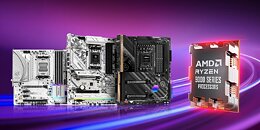
Source:
ASRock
ASRock deeply values user feedback as a cornerstone of our continuous improvement. Customers experiencing technical difficulties or seeking further assistance are encouraged to contact the ASRock Technical Support Department. We remain committed to delivering high-performance products that meet the highest standards of quality and performance.

54 Comments on ASRock Releases Official Statement Regarding Ryzen 9000 Series and ASRock AM5 Motherboard Firmware
I mean... Good... but I get people's frustration that they still don't know what the issue is.
I also understand that chasing an intermittent or fringe case issue that requires some kind of tolerance overlap between the motherboard and CPU could be very difficult to find, especially if it's a voltage setting AMD assures them is fine. Could also be a bad part in the sensing or voltage set circuits causing a reading to not be exactly as it should be. I would think they could have validated that pretty easily though.
Given how much generic and off topic it is.
They didn't dismiss the problem, didn't throw AMD under the bus by saying it is their problem, didn't suggested it could be customer fault.
They said, they are actively investigating the issue, not just by going through user reports, but to try to simulate the problem themselves as well.
They encouraged people to contact them directly instead through distributors/retailers, to simplify and speed up the process.
They offered contact specifically to technical support, not just to general support, where they deal with sales, shipping and stuff.
Not that Asus also did not have their share of issues too, but majority of reports are connected to ASRock.
march 2025:
www.asrock.com/news/index.us.asp?iD=5612
I'll never buy ASRock again.
I know they say the frequency is very close to normal rate of malfunctions, and Puget Systems hasn't found that AMD CPUs have any higher rate of failing than their Intel CPUs - but then again as they focus on productivity I suspect they don't sell many 9800X3D that are failing the most.
I guess by this rate of investigation we'll see the change of generation sooner than any disclosure on what went wrong.
extreme.pcgameshardware.de/threads/defekte-ryzen-immer-mehr-cpus-sterben-auf-asrock-mainboards.671505/page-2#post-12033923
it was wrong claims and bad journalsim.
my recently purchased cpu ryzen 7700x does not boot with save voltages with heavvily reduced default settings with 6000mt/s cl30.
several of those dead reddit posts had in use heavy overclock which is not supported with 6000mt/s and cl30.
6000mt/s is heavy overclock, even worse with cl30.
the reddit posters, some, i did not read every post, do claim never have overclocked. they are liers and most likely used default unsafe voltages.
amd should focus on the shareholders and implement a mechansim to restrict those values. amd removed really save sensors output for the radeon 7800xt with the user does not need it.
some android makers have build in fuses for unlocking. it seems fine for years. that could be easily implemented as a one time only blow overclocker fuse
it is pcgh fault to publish data and never write in red below every chart, overclock values. i see it too often questions why 6000mt/s does not boot etc.as pcgh quoted, asrock said soc voltage was the root cause
asrock never published any 8d-report
amd never published any 8d-report
they did nothing
I wonder why?
it#s very interesting no uefi updates since 10/22/2025: www.msi.com/Motherboard/X670E-GAMING-PLUS-WIFI/support
november + december + january + few weeks = 3 months + a several days no uefi updates
the usual curve optimizer minus 30 or minus 25 work point to what? why is it so often posted? why is it so often recommended?
my shelf stored ryzen 7600x on shelf stored asus prime x670-p motherboard did boot with negative -0.17V DC CPU Voltage offest, i used it for a long time with negative 0.13V cpu voltage offset. that means too much default voltages. all voltages down.
--
asrock products i may purchase would be pc cases without power supply units below 30€, below 10€ usb human input devices. same as for samsung, gigabyte, sanddisk, corsair, nzxt, asus for companies which may have sold questionable quality. i never had before a monitor with coil whine and the same device developed after 3 years a green dot, some companies are trash tier, e.g. my asus proart pa278qv monitor
some hardware just works others is problematic, asrock is one of those
You can't have it both ways, market something, not stating right upfront that this voids your warranty, and at the same time avoid responsibility by claiming "it has Overclock in it's name - AMD Extended Profiles for Overclocking (AMD EXPO™ Technology) - of course it's risky and not under warranty - when it goes wrong."
Overclocking CPUs, memory is of course risky, since nobody can know how far will you push them. But XMP, EXPO should be considered "Qualified" levels, or they can stop advertising them this minute
B650E steel legend/9600x?? I'm running JEDEC and auto voltage for now but is this enough??
My bios is v3.50
And with ASrock man their reputation is in the gutter for the same reason... Quality Control.
I would also say that while their failure rates have been much lower, ASUS, Gigabyte, etc. have all also seen failures and you better believe they're all investigating. Nobody's figured out a "root-cause" yet. First they have to weed out all the user-error stuff, then you have issues that are going to be "Motherboard X and CPU 1 had an issue, but motherboard X and CPUs 2-250 do not....what is the issue with combo X+1?". This is not trivial to solve and honestly, they could find more than one issue where something was "within safe margins" when they did their initial testing, but with a larger sample-set it turns out it wasn't. So they'll tweak several little things until the failure rate improves.
There are failures of non-X3D CPUs, but it's mostly the X3D CPUs...which are more sensitive to thermal issues and thus voltages...I'm still inclined to think this is either from them running these on the hairy edge of stability for maximum performance and when you run on the edge you'll have a higher failure rate than normal...or there's some tolerance issue with the motherboard sockets themselves. ASRock seems to use a slightly different socket than everybody else, so you factor in some heating cycles on the 3D cache and maybe there's a pressure issue somewhere that is more likely to happen with their sockets than other ones. Of course this is just pulling a theory from the air, but until they figure it out, which will take time, that's all we can do other than wait.
I still think the vast majority of people with ASRock motherboards and AMD CPUs have nothing to worry about. Even a 1% failure rate would look massive if 1/4 of those people went on Reddit and posted about it. A 0.1% would look big too...there are a lot of these out there lol.
Actually, was there reports of MSI failure yet at all?
Of course it is very tricky, but they need to be much more open and proactive if they want to regain trust...