Friday, July 17th 2026

PC Vendors "Fight" for CXMT Memory Supply, Smaller OEMs Struggle
Major PC OEMs are beginning to secure deals with Chinese memory maker CXMT, as the supply chain has been depleted of available DRAM from the big three memory makers—SK hynix, Samsung, and Micron. According to a report from DigiTimes, CXMT's memory capacity has been booked through the end of 2027, leaving little room for new customers to source DRAM from China's largest memory producer. The report notes that large PC vendors such as Dell, HP, and Apple are the only ones that managed to receive allocations, while smaller brands with less presence in the desktop and laptop market have been left with nearly no allocation.
An important aspect of this situation is the negotiation leverage that larger PC vendors have. As they command more volume than smaller companies, Dell, HP, and Apple are willing to sign bigger contracts with CXMT to secure a larger DRAM supply, even at prices higher than historical levels. For CXMT, this is a positive indication that capacity expansion is well-received and a signal to continue building new fabs. DigiTimes also notes that the United States government has not yet made a firm decision on whether to keep CXMT on the barred entity list, so PC OEMs are taking advantage of the opportunity to stockpile any available DRAM. Future policy changes might impact this, but for now, long-term supply agreements are being made to secure any DDR5/LPDDR5X memory possible.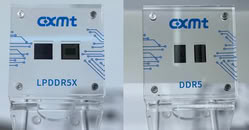 It's worth recalling that CXMT's production capacity is projected to reach about 350,000 DRAM wafers per month by the end of 2026, if all its current expansion plans proceed without interruptions. In comparison, Micron, one of the "big three" DRAM manufacturers, is estimated to produce about 375,000 DRAM wafers per month by the end of 2026. This means CXMT is nearly matching the production capacity. Additionally, CXMT is constructing its cleanrooms—where the actual silicon is produced—in just around 12 months, whereas the rest of the DRAM manufacturing industry typically takes 21-24 months, a full year ahead of SK hynix, Micron, and Samsung.
Source:
DigiTimes
An important aspect of this situation is the negotiation leverage that larger PC vendors have. As they command more volume than smaller companies, Dell, HP, and Apple are willing to sign bigger contracts with CXMT to secure a larger DRAM supply, even at prices higher than historical levels. For CXMT, this is a positive indication that capacity expansion is well-received and a signal to continue building new fabs. DigiTimes also notes that the United States government has not yet made a firm decision on whether to keep CXMT on the barred entity list, so PC OEMs are taking advantage of the opportunity to stockpile any available DRAM. Future policy changes might impact this, but for now, long-term supply agreements are being made to secure any DDR5/LPDDR5X memory possible.

28 Comments on PC Vendors "Fight" for CXMT Memory Supply, Smaller OEMs Struggle
Dell Lenovo HP, super micro, ... are just participating
The fact that you own and maintain hardware yourself, that it's a one time purchase (and not a recurring fee), that you can upgrade it as needed, and that you don't depend on any terms and conditions (which they may change at their discretion) of the cloud company is simply invaluable. Moreover, cloud computing also needs very fast and low latency internet connection, and obviously in case of network outage you have no way to access it. Too bad if you don't have new fiber internet in your home.
I also stand behind my decision not to buy any RAM and SSDs unless absolutely necessary now (which so far hasn't been necessary for me). And no, I'm not exactly convinced by the popular online media and websites saying "Buy now, the prices will NeVEr go down" as that is, from what I can tell, obviously an attempt to nudge people to pay their inflated prices so they can profit as much as possible from it. Profit definitely seems to be one of the biggest motives (if not the biggest motive) of these large companies.