Friday, July 17th 2026

PC Vendors "Fight" for CXMT Memory Supply, Smaller OEMs Struggle
Major PC OEMs are beginning to secure deals with Chinese memory maker CXMT, as the supply chain has been depleted of available DRAM from the big three memory makers—SK hynix, Samsung, and Micron. According to a report from DigiTimes, CXMT's memory capacity has been booked through the end of 2027, leaving little room for new customers to source DRAM from China's largest memory producer. The report notes that large PC vendors such as Dell, HP, and Apple are the only ones that managed to receive allocations, while smaller brands with less presence in the desktop and laptop market have been left with nearly no allocation.
An important aspect of this situation is the negotiation leverage that larger PC vendors have. As they command more volume than smaller companies, Dell, HP, and Apple are willing to sign bigger contracts with CXMT to secure a larger DRAM supply, even at prices higher than historical levels. For CXMT, this is a positive indication that capacity expansion is well-received and a signal to continue building new fabs. DigiTimes also notes that the United States government has not yet made a firm decision on whether to keep CXMT on the barred entity list, so PC OEMs are taking advantage of the opportunity to stockpile any available DRAM. Future policy changes might impact this, but for now, long-term supply agreements are being made to secure any DDR5/LPDDR5X memory possible.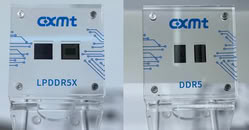 It's worth recalling that CXMT's production capacity is projected to reach about 350,000 DRAM wafers per month by the end of 2026, if all its current expansion plans proceed without interruptions. In comparison, Micron, one of the "big three" DRAM manufacturers, is estimated to produce about 375,000 DRAM wafers per month by the end of 2026. This means CXMT is nearly matching the production capacity. Additionally, CXMT is constructing its cleanrooms—where the actual silicon is produced—in just around 12 months, whereas the rest of the DRAM manufacturing industry typically takes 21-24 months, a full year ahead of SK hynix, Micron, and Samsung.
Source:
DigiTimes
An important aspect of this situation is the negotiation leverage that larger PC vendors have. As they command more volume than smaller companies, Dell, HP, and Apple are willing to sign bigger contracts with CXMT to secure a larger DRAM supply, even at prices higher than historical levels. For CXMT, this is a positive indication that capacity expansion is well-received and a signal to continue building new fabs. DigiTimes also notes that the United States government has not yet made a firm decision on whether to keep CXMT on the barred entity list, so PC OEMs are taking advantage of the opportunity to stockpile any available DRAM. Future policy changes might impact this, but for now, long-term supply agreements are being made to secure any DDR5/LPDDR5X memory possible.

28 Comments on PC Vendors "Fight" for CXMT Memory Supply, Smaller OEMs Struggle
Smaller OEM's are getting screwed, the DIY sector won't have any alternate supplier, and consumers will still be facing high prices on PC's and components.
🤣
😱
they said in the articleThe big 3 were/are all booked up with datacenter orders, that meant less for everyone else
Now, CXMT steps up to add more supply, BUT, I don't see any indication they are selling it cheaper
I also think there are other costs that those that buy from CXMT have to consider as well
All it says is they are paying above historical norms. No shit. Everything is above historical norms. They're not paying 2023 prices, but there's also no guarantee they are paying the same price they'd pay for micron ram.Yep. It will never get better. You should probably join the Amish and embrace your no tech future.
I doubt we'll see 2025 levels of memory and storage pricing again, because once prices go up they never return to that level of normal, it happened with essentially everything after 2020, and graphics cards after the crypto mining hype for example.
The whatboutisms are tiring, please stop with that nonsense. It would be interesting if the AI tech bros would just be honest and say you won't own your tech, because things are heading that way with subscriptions.
those hoax messages who states the dram prices will fall in 2027, good luck, we talk in 2028 when year 2027 has passed.
What we see now feels like artificial shortages to justify extreme prices.
Of course with taking in account the maximum profit margin companies are aiming for, it probably is not lucrative enough and in their interrest to reserve a bigger piece of the pie for this market segment.
And they are certainly not hesitant because of ethics or emotions, they're going for the big money.
Let's just hope the market for RAM (or memory chips in general) get saturated soon and that then the prices will slowly normalize, but it's hard to put a time frame on it unless you're a visionair/clairvoyant.
But like @Hecate91 already mentioned, in the future we may become more and more dependant on the big tech (data centers), with no personal (high tech) system as almost nobody can afford it.
We'll be the new milking cows paying for subsciptions (they'll need returns on the investments), at least that is how I see it, without the intention to create a conspiracy theory.
@A Computer Guy , you know what they say; Where there is smoke, there is.....
and scam altman should have been laughed at more and shot down. people lost their ability to feel for people these days, and thus it emboldens scammers.
So will the bubble burst start of 2028 or will dram start coming down a bit or neither?
When the people who ordered the stuff go broke, those orders will go upon smoke.
Dell is meeting this imperative head-on, providing organizations with the infrastructure they need to turn AI and simulation ambition into realized outcomes at scale.
Dell Introduces PowerEdge XE8812 Server with NVIDIA Vera Rubin NVL4 Architecture:
www.techpowerup.com/350175/dell-introduces-poweredge-xe8812-server-with-nvidia-vera-rubin-nvl4-architecture
EU asks: Is a vegetarian sausage really a sausage?:
www.bbc.co.uk/news/world-europe-54618520
just saying :laugh:
Meanwhile the likes of Imec and asml get subsidies to further chip manufacturing and development that chip manufacturers use and licence.
As the body of evidence that CFO and CTO's that held back pouring resources in a fast AI deployment made the right choice
The dram cartel keep claiming all their RAM and SSDs have been bought out by the ai companies who don't own any servers to install them in, clearly they are paper transactions for the ai circular investment scam and an excuse for extortionate DRAM prices
The things that actually matter
Or maybe its a comedy show, I've stopped seeing the differenceWell honestly I think the world has caught on to that little detail at this point.
Its the reason the EU is stuck between rock and hard place rn
We want our own datacenters, lots of shit's planned... but where do you source the chips and who's gonna carry all of the construction? Its easy to end up at the same US companies again which is precisely what we're looking to escape.
Similar things occur in Defense contracting.
And natural gas
And rare earth metals
Things are moving but as so very often we in the EU start having a real need when the rest of the world's also in a real need of a thing. So now we're waiting in line :) And THAT is the actual, biggest driver for change: not getting your requested stuff at all. So now the UK nationalized its steel plant, and Europe is scrambling together sovereign data platforms, and more countries start buying Swedish fighter jets. Its moving...
I thought It was or will be a lot less.
It will certainly help to boost the global supply, but I a wondering If It will be enough to finally lower prices and most likely most of this supply will end up at China's market.
This would allow for Chinese brands of electronics that require dram to be significantly cheaper to produce and and give them a serious leg up on competing against none chinese brands that need to bid stupid money for scraps of dram.
I can't say much without erring into politics, but it does feel like PC usage as we know it will have a hard time surviving this one.