Saturday, September 26th 2026

PNY Reportedly Denies Melted RTX 5090 Warranty Claim, Says Native PSU Cables Not Covered
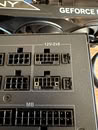
PNY has allegedly denied a warranty claim on a burned-out GeForce RTX 5090 and closed the customer's ticket after he asked which part of the warranty it was citing. Redditor u/Melodic_Initial_1767 says his card died last month after both ends of its 12V-2x6 cable melted, on the GPU side and the power supply side. He says the card ran at stock clocks with no overclock, a power limit set below default, and was idle when it failed. The cable he was using was not a cheap third-party adapter; it came bundled with his ASRock PG-1600G power supply.
According to the Redditor, PNY's denial stated that only a PNY-approved cable or adapter is covered, and that damage from a third-party cable, adapter, or PSU cable falls on that maker instead. He says he checked PNY's warranty document and installation guide and found no mention of approved cables, connectors, or the 12V-2x6 standard in either. When he asked twice which clause backed the denial, a "Senior Technician" reportedly said the decision was final and closed the ticket without answering.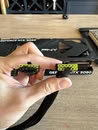
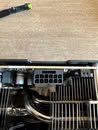
 Melting 12V-2x6 connectors have shown up on RTX 5090 cards repeatedly since launch, and independent testing has traced some cases to uneven current distribution across the connector's pins rather than any specific cable brand. Separately, NVIDIA has also faced criticism this month over an RTX 5090 claim it rejected over a faded serial number, so this isn't the only RMA dispute around the card. PNY hasn't issued a public statement yet, and the account so far rests on the customer's word, so it should be taken with a grain of salt.
Source:
Reddit
According to the Redditor, PNY's denial stated that only a PNY-approved cable or adapter is covered, and that damage from a third-party cable, adapter, or PSU cable falls on that maker instead. He says he checked PNY's warranty document and installation guide and found no mention of approved cables, connectors, or the 12V-2x6 standard in either. When he asked twice which clause backed the denial, a "Senior Technician" reportedly said the decision was final and closed the ticket without answering.


143 Comments on PNY Reportedly Denies Melted RTX 5090 Warranty Claim, Says Native PSU Cables Not Covered
I wonder if both brands melt equally or whether one brand is more temperature-resistant than the other....
Going back to the original reddit post:If that OP has a installation guide that doesn't include anything close to what was shipped with my 3080 Ti I would consider filing a claim with the respective consumer rights bureau.
I also wonder why they haven't decided to make similar RMA claim to Asrock, seeing how the cable failed on both the GPU and PSU end.
Also, from reddit thread:
So one thing to note is that this guy was also using the Asrock PSU with this magical "GPU Safeguard+" that also failed to shut off the PSU. So yeah, I'd say avoid anything from Asrock. At least in this case MSI didn't fuss around with the RMA and replaced the card.
I think an analogous example would be, say I had a car, bought tires from X company, tire explodes and I wreck my car, isn't the tire company responsible at this point?
Especially if my suspicions are right and a lot of cables come with pretty bad quality..
So the GPU can pull maybe 15-20A down one of the wire pairs for any number of reasons and the GPU end of the cable is fine because it's being actively cooled, despite the GPU running waaaay out of spec. I'm going to guess that the PSU side of that same cable, tucked away in the basement or backside of the motherboard, possibly suffocating in a rats nest of wiring is the end that melts first.
Once there's a circuit break in the melted wire-pairs at the PSU end, the remaining wire pairs carry even more current and that's when they finally get hot enough to melt the GPU end. The thermal probes are at a specific point in the cable, they don't have universal visibility of all parts of the cable and connectors, so although this system did shut down - presumably by the ThermalGuard temperature sensor - it was too late to prevent pin damage at the GPU end.
If it was me designing these temperature-sensing cables, and I had to pick just one location for the sensor, it would be the PSU end - simply because the PSU is less likely to be actively cooled and therefore likely to be the hottest end of the cable.
And for sure there is no such statement with card delivered - because that would be like admitting your product is not conforming to industrial standard which no one will admit.
I really would like to see disclaimer with any delivered card stating that adapter must be used instead of native cable 😁😜
Really pathetic from PNY side...So, do not buy graphic cards that so not come with their own 12V2 cable? Checked.
P. S. Standards exist for the reason, you know...You are absolutely right.
I don't know what the standard says, might say minitek because amphenol was one of the main developers. I always call it micro-fit anyway because it's easier, i think the molex terminology is more commonplace and more easily recognised than the minitek moniker.I get the benefit of the doubt but looking at it with market and engineering context it makes no sense. If that was the case all components would need to either have a QVL or bundle their own end-to-end accessories - also known as a prebuilt PC.
Everything is built to a cost and the accepted practice is that the PSU just needs to protect against short circuits, overpower and similar issues. Things it can easily measure and control. On the other end - literally - devices take care of themselves, the PSU provides as much power as the devices ask until OCP trips and the device takes care to not ask for more power than it can handle. The industry may want/try to shift that responsibility towards the PSU, the sense pins on the 12VHPWR are designed to allow that, but so far it hasn't happened yet.
I don't know if that happening will be a plus or not, but what it will be is more expensive!
Does it make sense to have that on the PSU side for PCIe when it's impossible to implement for the other pins (24, EPS, etc.)? Maybe it could be a trade, PSU manufacturers take the hit on this one and the rest of the PC space agrees to move towards ATX12VO?
What we really need is a consumer shift to the same 48V that is starting to appear in servers so that >600W of power to a single device doesn't require more current than an arc-welder.
Most laptops run on about 20V and USB-PD is commonly 20V. If the PCI-SIG isn't going to bring server-grade 48V to the desktop, they should at least move to 20V - We've had 20V consumer computing for a decade already outside of ATX, so it's about damn time ATX caught up to that at the very least.
12V is arbitrary and legacy, just about every single piece of hardware in a modern computer runs at somewhere close to 1Volt, with motherboards and GPUs having their own VRMs. The problem is that it's a chicken-or-egg scenario. ATX PSUs are 12V because motherboards and GPUs are still 12V and vice-versa. Changing to a different voltage will break compatibility, or drive up the cost of GPUs and boards since they'll need VRMs that can handle both the old 12V input as well as whatever the new voltage standard is.
Maybe you forgot to turn something off, maybe a protection mechanism failed the wrong way and exposed 48V+ where it shouldn't be, who knows... but with a low voltage like 20~30V there's a low probability anything will happen, if you bump it to 48V+ there's a high probability something bad will happen (low probability event with high severity consequence - not acceptable for consumer product).
An LFP cell is 3.2V nominally, you can just as easily have 32V pack as you can a 48V (or 51.2V) one - and you definitely can't skip any conversion stage either way! pc components are not made for varying voltage depending on battery charge state
PC component compatibilty with battery voltage is very much a "depends on the circuit" situation. Something like an HDD motor cares a decent bit, but your various VRMs like VCore or Vmem? Those care a lot less, as long as you design them with such voltage changes in mind. You don't even need to look particularly far for real-world examples - every laptop, phone and tablet runs of battery power just fine.
Also, the LFP discharge curve is a lot more flat than the ones for NMC or NCA chemistries found in current laptops, phones and tablets:
www.pny.com/nvidia-rtx-pro-5500-blackwell
www.tomshardware.com/pc-components/gpus/chinas-tech-giants-drop-usd35-billion-on-export-compliant-nvidia-rtx-pro-5500-workstation-gpu-orders-to-power-ai-ambitions-according-to-reports-bytedance-alibaba-and-tencent-order-3-million-cards-despite-warnings-that-only-10-percent-of-orders-are-fulfillable