Saturday, November 7th 2026

NVIDIA Marks 20 Years of the GeForce 8800 GTX With a Free Path-Traced Steam Demo

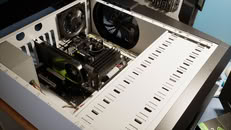
NVIDIA is celebrating 20 years of the GeForce 8800 GTX, which hit store shelves on November 8, 2006, with a free tech demo on Steam. Called GeForce 8800 GTX - 20 Years of a Legend, it was created by Unreal Engine artist Dylan Browne, the developer of Through The Ages, with support from NVIDIA. The semi-interactive demo puts players in a 2006-era PC gaming room, where they can unbox the 8800 GTX, inspect it up close, and install it in an era-accurate PC tower, with GeForce easter eggs scattered around. The scene is rendered with path tracing, DLSS 4.5 Ray Reconstruction, Dynamic Multi Frame Generation, and RTX Mega Geometry. It is available now on Steam and is coming soon to GeForce NOW for Ultimate members.

Naturally, the 8800 GTX itself can't run any of this, which is quite ironic, to say the least. Steam lists an RTX 4070 as the bare minimum and recommends an RTX 5080, alongside 32 GB of system RAM and 30 GB of storage. That RAM figure alone is over 40 times the 8800 GTX's 768 MB of video memory. The recommended RTX 5080 is far from cheap right now either, with TechSpot's October survey putting its lowest US price at around $2,200. So a demo built around the thrill of unboxing a new GPU in 2006 wants one of the priciest gaming cards of 2026 to look its best.
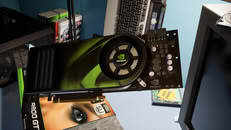

The original card was built on the G80 architecture with 128 unified stream processors, paired with 768 MB of GDDR3 memory on a 384-bit bus, and launched at $599. It brought DirectX 10 support and was the first CUDA-capable GPU. Back then, it powered games like Crysis, BioShock, and Company of Heroes. NVIDIA eventually moved the 8800 series off mainline driver support with the Release 340 branch.

Sources: NVIDIA, Steam
Add your own comment

64 Comments on NVIDIA Marks 20 Years of the GeForce 8800 GTX With a Free Path-Traced Steam Demo

#27
Arkz
I skipped the 8800 GTX cause of the cost, but then bought the bargain 8800 GT a year later. The XFX 8800 GT Alpha Dog Edition to be precise.
Posted on Reply
#28
4KGAMINGFOREVER
'Played' the demo yesterday. Had to turn down some of the dlss settings. I went for dlss performance, with dynamic frame gen up to 6 times and cinematic graphics settings without the dof, motion blur and all those post processing effects. I did enjoy it. Looks a bit like PC builder simulator.
Posted on Reply
#29
Youseethis
FouquinThe 8800 GT remained a pretty smart buy at the mid-range until 2009, and many of the other G92 cards served long lives. There's 17 months between the release of the 8800 GT (G92-A2) and GTS 250 (G92B) with a ton of G92 cards in between that all serve roughly the same market position (8800 GTS 512, 9800 GT, 9800 GTX, 9800 GTX+) which were still putting up a good fight as affordable entry points to getting into PC gaming. Battlefield 4 released 6 years to the day of the 8800 GT still has it listed as the minimum requirement to play; if you were somebody that paid $350 brand new or waited until mid 2008 to get one for $190 you were getting 5-6 years of usable life out of that purchase. (Assuming it didn't die to Bumpgate.) Not much different from today.
This says more about the quality of the software rather than the hardware. Tesla did not support direct3d 11.

In 2008 there was the gtx 260 core216 available at the same 299$ msrp and t was almost twice as fast with almost double the vram after 1 year.

A more modern equivalent, especially in price would be the r9 290x 8gb. It's from 2014 (the 8gb model) and it's still usable, or it would be if it had proper driver support. (come on amd). What is twice as fast today? You would have to go to an rx 5700 to get that 2x speed but it has the same 8gb vram. At least it was slightly cheaper adjusted for inflation, but it was 5 years later, not 1. Another example, this time about features: Compare nvidia ampere, ada and blackwell. 3 gens in 5 years and what do they offer? A few rt tricks that will be unused for years and fp8/fp4.

I am not complaining, like I said, it might be boring but those cards will last much longer, or they would if they had more vram but that is a different story :roll:


I lost a 8800gt to bumpgate :( I still have my 3 gtx 260 core216 65nm. Somehow they survived along with a 8800gts.

Two of those poor gtx 260 survived this:


Considering the bumpgate I am extremely lucky. I still have this system, reassembled in 2024.
HyderzCrysis flashbacks :)
Ahhh good old retro games. 20 years old soon.
Posted on Reply
#30
Zazigalka
The card I could only dream of as a teenager, had to make do with used mx440s and the like
Posted on Reply
#31
Fouquin
YouseethisTesla did not support direct3d 11.
That's okay, many games didn't support DX11 either. If they did, DX9/10 fallback modes almost always existed.
YouseethisIn 2008 there was the gtx 260 core216 available at the same 299$ msrp and t was almost twice as fast with almost double the vram after 1 year.
When the GTX 260-216 was $299 the 8800 GT was down to as low as $99. The 9800 GT had replaced it and was as low as $115 with a free copy of Crysis. The GTX 280 wasn't even twice as fast as the 8800 GT, the GTX 260-216 was 1.6x as fast but at that point it was 3x the price.

Therein lies what made the 8800 GT such an incredible entry card; nearly as fast as its generational flagship at a ridiculously low price, even further aggressive price reductions in a short time keeping it in contention in the face of a newer generation, and you could still put two together in SLI for the handful of games where that made sense and still be under the cost of the latest mid-range. The next card we had that offered the full package was the HD 5770 and I remember reading all the comparisons in reviews discussing how the 8800/9800 GT was the card to beat for the value segment to get people to upgrade and choose AMD.
Posted on Reply
#32
Youseethis
FouquinThat's okay, many games didn't support DX11 either. If they did, DX9/10 fallback modes almost always existed.


When the GTX 260-216 was $299 the 8800 GT was down to as low as $99. The 9800 GT had replaced it and was as low as $115 with a free copy of Crysis. The GTX 280 wasn't even twice as fast as the 8800 GT, the GTX 260-216 was 1.6x as fast but at that point it was 3x the price.

Therein lies what made the 8800 GT such an incredible entry card; nearly as fast as its generational flagship at a ridiculously low price, even further aggressive price reductions in a short time keeping it in contention in the face of a newer generation, and you could still put two together in SLI for the handful of games where that made sense and still be under the cost of the latest mid-range. The next card we had that offered the full package was the HD 5770 and I remember reading all the comparisons in reviews discussing how the 8800/9800 GT was the card to beat for the value segment to get people to upgrade and choose AMD.
It was around 1,8x-1,9x at full hd or more, when it could stretch it's legs. It is logical isn't it? Almost double the shaders, rops and vram. The modern example is the 5090 vs the 5080.

Again though, all that is praise for the software. The hardware advanced quickly, it got faster and the software devs knew it. SLI was useful as well. The older cards became appropriately cheap and everyone was happy.

Anyway, my original argument is that cards today are usable for much longer.
If there is any discrepancy from that, it's the software's fault. Back then there were fallback options dx9,dx10 and dx11 on a game. Now older cards are abandoned (drivers and games) even though they support direct3d12 but not 12.1 or 12.2 (ultimate).

It's a good thing that people remember how cheap hardware used to get though :toast:
115$ with a game=180$ adjusted for inflation. Imagine even a brand new rtx 4070 at 199$ with a free new game. Although the appropriate card would be the 4080. Imagine a 4080 at 199$ with a free game. Not even when the card is 10 years old and used will it go that low.
Posted on Reply
#33
Fouquin
YouseethisIt was around 1,8x-1,9x at full hd or more
Not quite. 1.61-1.69x. It is logical though, you are correct. 1.96x shaders, 0.96x core clock, 0.828x shader clock, 1.943x memory bus. 1.96x shader cores clocked at 0.828x the speed does indeed come out to 1.622x. Account for some extra efficiency on the wider memory bus and the extra ROPs pushing the high-res action, there's your 1.7x deviation result.

Honestly what's great about GT200 essentially reusing the shader design from G92 means we can do this kind of math. This doesn't work between just about any other disparate generations of hardware, but here it lines up just about perfectly.

Youseethis115$ with a game=180$ adjusted for inflation. Imagine even a brand new rtx 4070 at 199$ with a free new game. Although the appropriate card would be the 4080. Imagine a 4080 at 199$ with a free game. Not even when the card is 10 years old and used will it go that low.
Not just a free game, but THE game of the day too. I don't think I've ever made a GPU purchase that didn't come with a free game, but it's always been whatever the publisher bundle games are. I don't think I even redeemed the last set of games that came with the Arc cards. I redeemed Starfield when I got the A770 and boy that does NOT hold up against Crysis as a bundle option.
Posted on Reply
#34
Jtuck9
Pity they didn't make a deckbuilder

Posted on Reply
#35
PowerBuilder
I also once won a GeForce 8600GT (G86) for free through an online community (As part of a promotion by a graphics card distributor); I used it for a while before eventually upgrading to a GeForce 9800GT (G92). That allowed me to run *Need for Speed* quite well.
Posted on Reply
#37
shuffy_losys
YouseethisIf there is any discrepancy from that, it's the software's fault. Back then there were fallback options dx9,dx10 and dx11 on a game. Now older cards are abandoned (drivers and games) even though they support direct3d12 but not 12.1 or 12.2 (ultimate).
And some of those features newer games want to use will likely be too taxing for older GPUs to handle. I'm sure a GTX 480 will perform wonderfully on the last few Call of Duty games, even though the games do scale down quite well gracefully.

This is digging hard into my memory but I recall FSR testing with older hardware and at some point, FSR stops actually being a benefit because the GPU spends just as much time running FSR than if it just did it natively.

Another thing of note, according to end-of-life.org/nvidia-gpu/, since GeForce 6, NVIDIA has kept a pretty good track record of supporting GPUs for 8-10 years. For DirectX 12.1's release in 2018, the GeForce 400 series was already done.
Posted on Reply
#38
b1k3rdude
Patronising, shallow, belligerent grift... Murica. The fact that they think consumer will not see straight through the b$ is amusing.
Posted on Reply
#39
Arctucas
freeagentMine was an EVGA.. I should see if I can get it back. My bud has it last I checked..
Mine as well, put a bigA$$ Thermalright cooler on it, still have it somewhere in the attic.
Posted on Reply
#40
Readlight
I remember my OEM GF 8400GT showed artifacts and died. :mad:NVIDA:mad:
Posted on Reply
#41
Krit
FouquinWhen the GTX 260-216 was $299 the 8800 GT was down to as low as $99. The 9800 GT had replaced it and was as low as $115 with a free copy of Crysis. The GTX 280 wasn't even twice as fast as the 8800 GT, the GTX 260-216 was 1.6x as fast but at that point it was 3x the price.
2007-2017 where golden ages for PC gaming until BC, RT and AI nonsense appeared. Massive performance gains + low prices "way lower profit margins then" Also in CPU side massive performance jump from Pentium 4/Pentium D to Core 2 Duo in 2006/2007
Posted on Reply
#42
Prima.Vera
I never got this card, due to also ridiculous callous price at that time, and instead I got a brand new ATI HD 3870 for ~270$, which was less than half the MSRP price of the GTX 8800 (~600$ MSRP), for EXACTLY THE SAME or even better performance.
Posted on Reply
#43
freeagent
ArctucasMine as well, put a bigA$$ Thermalright cooler on it, still have it somewhere in the attic.
I bought that big Thermalright for a 285, but my 285 just had to be different.. couldn't use it. I had my 8800GTX decked out in Zalman lol..
Posted on Reply
#44
chrcoluk
YouseethisThe msrp of the 8000 series was very high, adjusted for inflation. 750 for the 8800 gts/1000$ for the 8800 gtx/1400$ for the insane 8800 ultra. The tiny 8600 gts was 325$. Very similar to ampere or even low end ada msrp.

When g92 arrived the prices dropped massively though. Imagine those who bought the 8800gtx. The 8800gts 512 was half the price 1 year later and 6 months after that, the gtx 280 arrived with a 1000$ msrp adjusted for inflation. Not to mention the 8800gt…

There is a silver lining today as you can see. At least the cards are relevant for a longer period of time. It’s a bit boring but the cost per year remains low. Even with the insane msrp that ada had.

The ai boom ruined the market unfortunately, for now…

Oh well.
Yeah.

The expensive 8800GTX initially brought the performance, and if you didnt care about cost or TDP was a great card.
Then the GT came with the big efficiency and affordability gain, so brought the performance to the masses like myself, I do remember at the time thinking the gTX was out of my reach, and the GT came, boom, purchased, happy chappy.
Posted on Reply
#45
freeagent
Top end video cards have always been expensive. I cannot think of a time when they weren't..

Not like today expensive, but still prohibitively in the upper cases.
Posted on Reply
#46
Krit
freeagentTop end video cards have always been expensive. I cannot think of a time when they weren't..

Not like today expensive, but still prohibitively in the upper cases.
GTX 285 / 480 / 580 was cheap for what it is. In old days only 80 Series was expensive but today even midrange is expensive.
Posted on Reply
#47
freeagent
KritGTX 285 / 480 / 580 was cheap for what it is. In old days only 80 Series was expensive but today even midrange is expensive.
They weren't cheap for me..
Posted on Reply
#48
Krit
freeagentThey weren't cheap for me..
They are very cheap if compare to RTX 40 and RTX 50 Series nonsense gpus even at msrp "which does not exist"

GTX 470 (high end) was ~ 293€ in 2010, GTX 480 was definitely below 499€! How much exactly i can't remember exactly.

GTX 470 was similar to RTX 4090 price difference +300% or more. That's what you are paying when nvidia are making 80% profit margins. Only 20% is what gpu is worth today that's a lot of thin air and burnt money for no reason.
Posted on Reply
#49
wolf
Better Than Native
Legendary Card, the GOAT even, or at least among them.

I'm amassing quite the 8800 Collection. 4x 8800GTX, 2x 8800GTS 320M, 2x8800GTS 840M and 3x 8800GT 512M

My personal favorites would have to be the matched pair of mint condition Leadtek GTX's

Hecate91It's sad that this demo needs a $2,000+ card to run it.
That's a fascinating interpretation of a spec sheet that literally says 4070.

Posted on Reply
#50
MikOnTopGG
Hey, at least they still payed it the tribute and respect it deserves.

I wasn't alive back then. But still. 20 years.
Posted on Reply
Add your own comment
Nov 27th, 2026 19:49 CST change timezone

New Forum Posts

Popular Reviews

TPU on YouTube

Controversial News Posts