Thursday, November 19th 2026

Windows 7 Gets Unofficial DirectX 12 Support for Modern GPUs
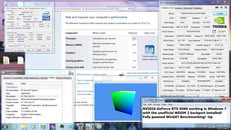
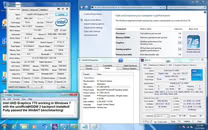
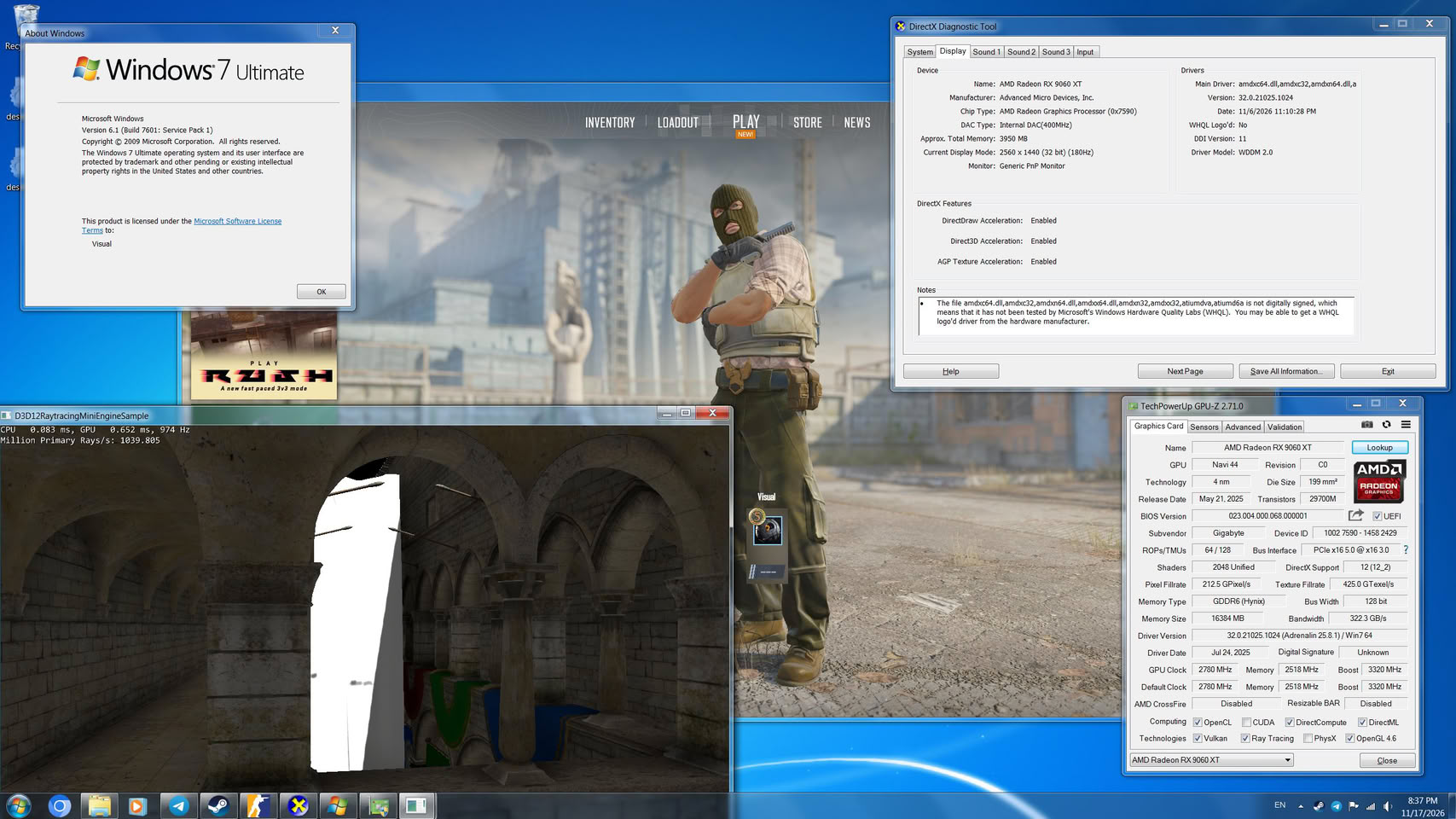
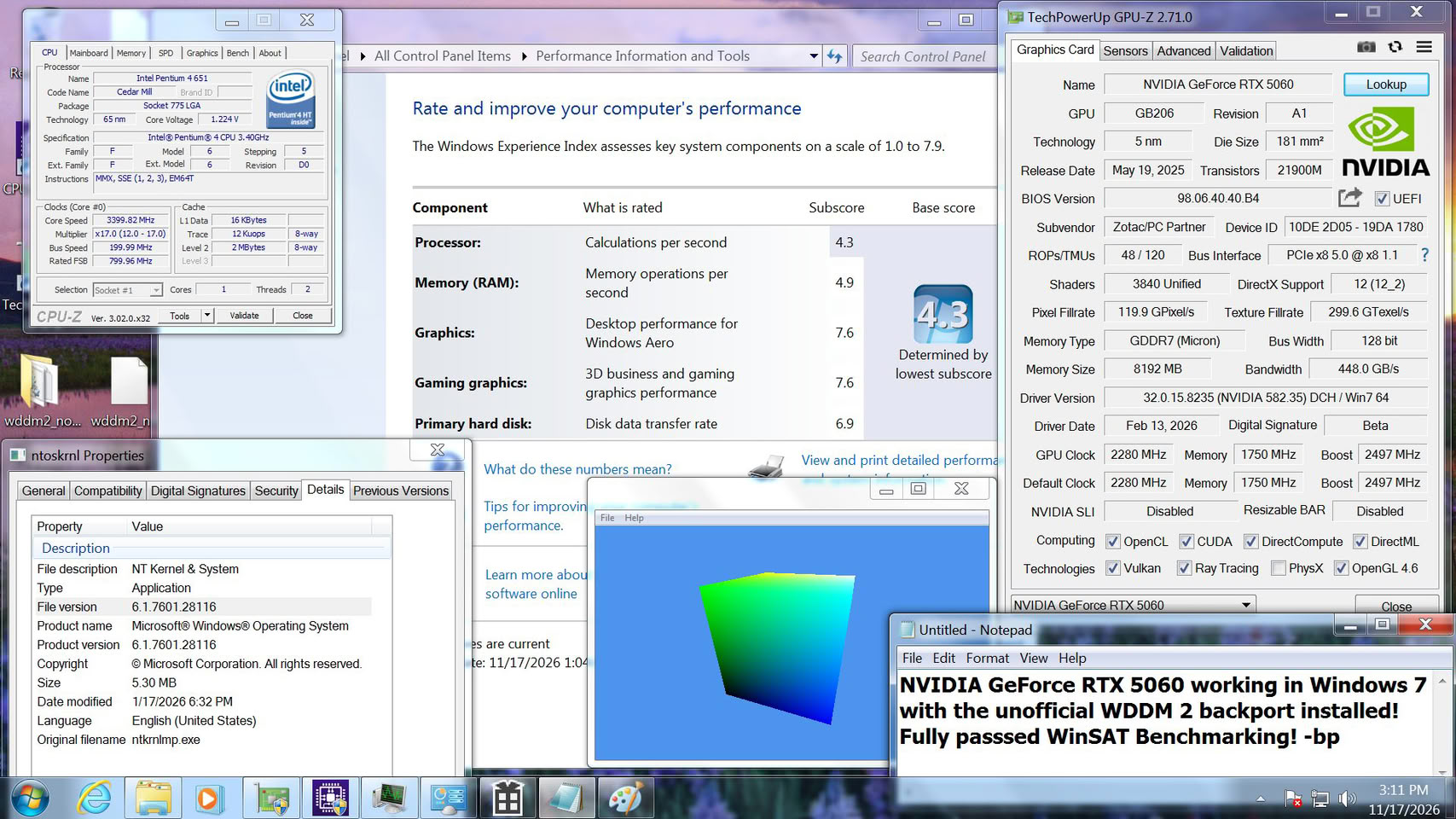
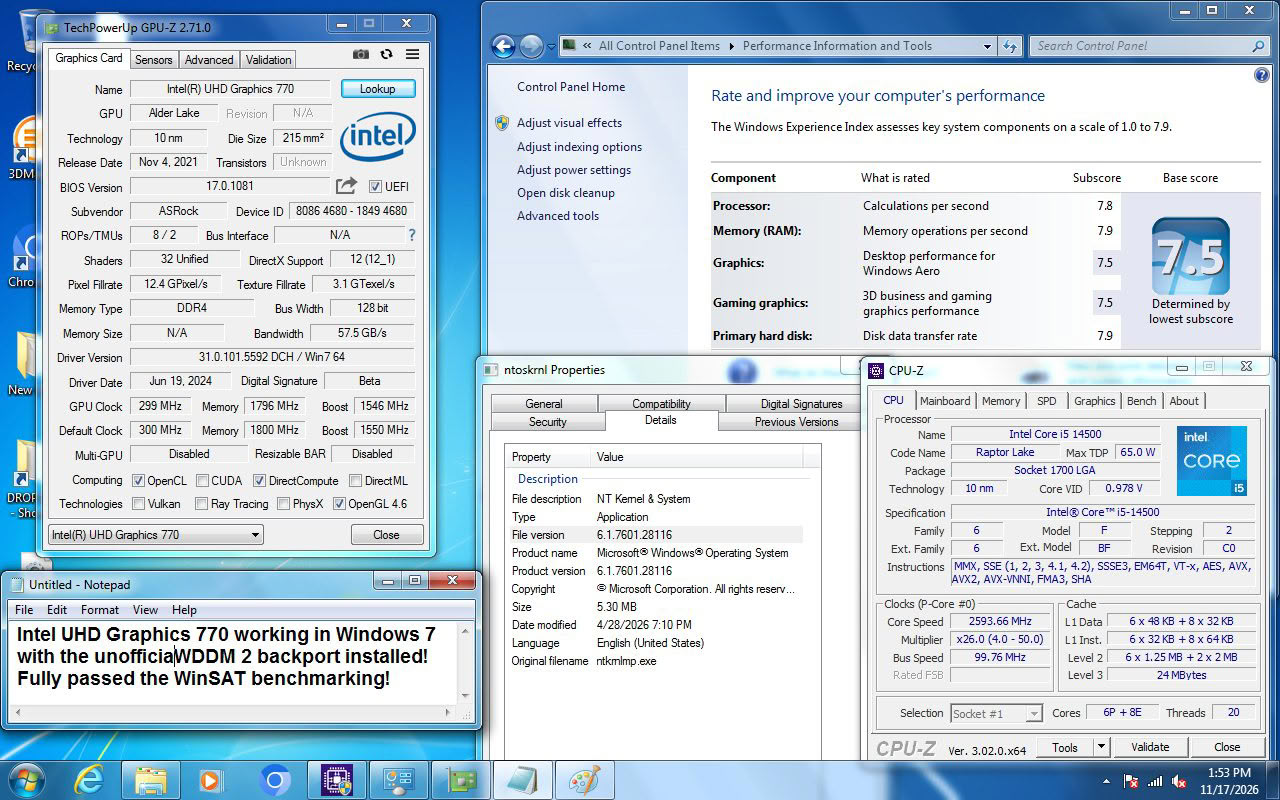
Windows 7 was a beloved operating system for many, and if you're still running a machine with that OS, this release might be for you. Three Windows 7 enthusiasts have managed to get current-generation GPUs and DirectX 12 running on Microsoft's 17-year-old OS. Bob Pony shared the project on X, called WDDM2Win7, an unofficial backport of the Windows Display Driver Model (WDDM) 2. The screenshots show Intel UHD Graphics 770, an NVIDIA GeForce RTX 5060, and an AMD Radeon RX 9060 XT, all detected in TechPowerUp's GPU-Z and running in Windows 7. According to the developer, GeForce RTX 40-series and 50-series cards, as well as Radeon RX 7000 and RX 9000 series cards, work. Intel UHD and Xe graphics are also supported, and DirectX 12 works as well.
Windows 7 originally shipped with WDDM 1.1, while WDDM 2.0 arrived alongside Windows 10 in 2015, bringing DirectX 12 along with it. Microsoft then brought DirectX 12 to Windows 7 in 2019, though only as a user-mode runtime. Individual games like World of Warcraft had to ship it themselves, which limited compatibility. The developers behind this project also backported the Steam client beta to Windows 7 last December after Valve dropped support for the OS in early 2024. As for WDDM2Win7, there is still plenty of testing to be done, but so far there are screenshots showing various GPUs being detected and some DX12 games working. Windows 7 stopped getting free security updates in January 2020, so if you have to try this, make sure it is on a secondary or offline machine.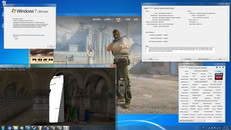
Sources:
WDDM2Win7, Bob Pony on X, via Wccftech
Windows 7 originally shipped with WDDM 1.1, while WDDM 2.0 arrived alongside Windows 10 in 2015, bringing DirectX 12 along with it. Microsoft then brought DirectX 12 to Windows 7 in 2019, though only as a user-mode runtime. Individual games like World of Warcraft had to ship it themselves, which limited compatibility. The developers behind this project also backported the Steam client beta to Windows 7 last December after Valve dropped support for the OS in early 2024. As for WDDM2Win7, there is still plenty of testing to be done, but so far there are screenshots showing various GPUs being detected and some DX12 games working. Windows 7 stopped getting free security updates in January 2020, so if you have to try this, make sure it is on a secondary or offline machine.
26 Comments on Windows 7 Gets Unofficial DirectX 12 Support for Modern GPUs
But I also like 11, its kind of like 7's evil cousin.
Emphasis on evil..
2. I've been doing projects like this and remasters/decomp/recomp for 6-8 months now. I've seen the backlash on full AI and AI assisted projects that then turned into people complaining about too many lone wolf projects for the recent games. I'm not doing it for clout, so I never intended to actually release it outside of my inner circle as it's a passion project.
3. I didn't think many would actually care, but since the scope goes well beyond what these guys have done and even Second System 3.* I myself don't even have my hopes up.
What I have done and tested in VM:
1. Kernel proxy to NT10, which helps with native modern software/driver install. So far tested with recent version of Chrome with full end to end support.
2. TLS1.2+ and surrounding crypto/security implementations including what's required for SMB3 and ADDC sync.
3. SMB3 implementation that's currently running off a helper process, will finalize native after point 4.
4. Modern WDF/WDDM implementations. D3D12, DirectWrite, DirectStorage, etc etc.
5. Native UEFI/GPT install which includes support for NVMe and more modern cards.
Not tested/implemented:
1. Task manager option for modern 10/11 or XP/Vista/7.
2. A native process slowdown making a single core emulate slower less capable hardware for certain physics/fps locked games Pre NT stuff. It's an investigation idea currently since we have recom/decomps and other tools for those games.
3. Physical hardware. UEFI/GPT still being worked on which includes USB3 support in the initial setup environment and allows the use of USB media install.
4. The tested points have helped in a lot of areas, but still working on the terrible XP network stack. Modern NICs and drivers help, but there's still some flub I need to work through.
5. There's a lot more I can't think of off the top of my head, the project scope and markdown is incredibly large lol. I basically woke up one morning and said I want to install XP on my main machine and use it like I would a daily without the modern OS fluff. So when I get burn out I work on this.
Contribute stuff to ReactOS?
The DX10/12 push was only to move people to Windows 10 by hijacking gamers to be forced onto the newer OS.I'd like to see Windows 3.11 run natively with 64 cores, 128GB of memory, and have support for DX12, Vulkan and latest browser tech. xD
all my 3 windows pc are offline with w10 for work/editing/gaming and when the time comes to use w11 because of no support, they will get tiny11 and be offline forever. ms can not be trusted since 10
online linux only.
I tried it won't open, Windows 8.1 still can but need to set compatiblity.
User had control over the OS. You could choose which updates to install and which not and hide them.
OS was fast and actually lightweight. Nice, clear design. No bloatware apps like another layer of Settings.
Samsung NVMe drives were supported through Samsung driver. USB3 support was ... a bit problematic.
Lack of DX12 in Win7 support was a deliberate move by MS. They needed to propagate new product, so that they can milk customers.
Windows 8 was a joke. Stripping out Start menu was disastrous move. Windows 8.1 was meh. Windows 10 was usable but full of telemetry.
Windows 11 is ... There's not really need for comment - just search for all the problems and f*cked up updates that TPU wrote about.
I still can't beat Win7 64 boot-up time (i7-2600K + AHCI SSD + 4GB RAM) by any newer OS, disregarding the hardware used.
It took just 7 seconds after I pushed button on PC case to get to the Win7 login screen.
With Win10, I could not get below 12 seconds even with PCIe NVMe. Linux was about the same.
Those were good times back then ... Win7, incredible Intel CPUs (2600K, 3770K) that could be OCed by 25% without touching voltage ...
The best thing was, performance and power draw scaled linearly. Temps were amazing with Thermalright Silver Arrow cooler.
There's no chance for similar moment to happen again. There will be no such stability and quality of OS or hardware anymore.
Btw my old machine is still fully operational, it's been 14 years at 4.5 GHz.