Thursday, January 14th 2021

AMD Talks Zen 4 and RDNA 3, Promises to Offer Extremely Competitive Products
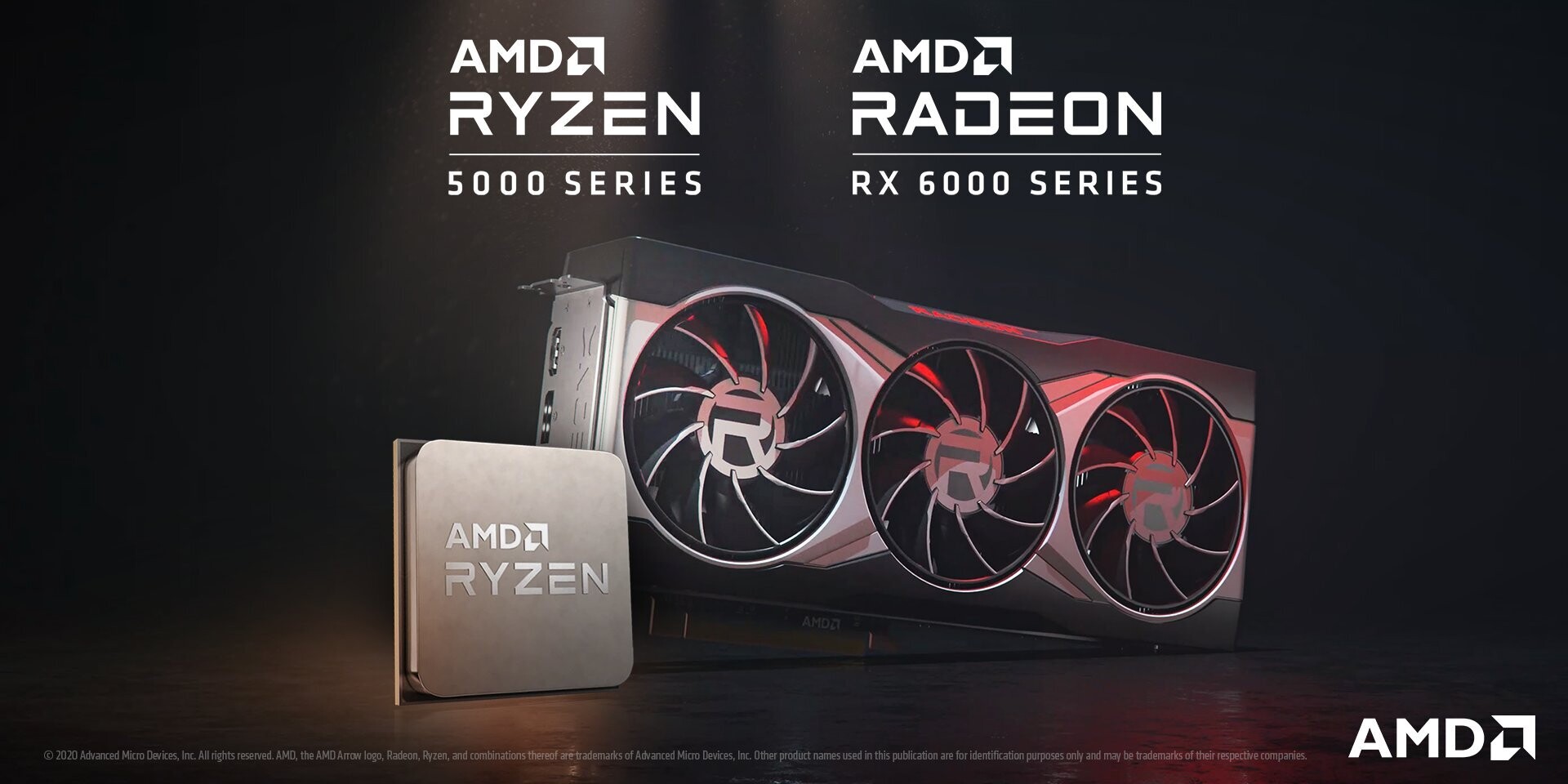
AMD is always in development mode and just when they launch a new product, the company is always gearing up for the next-generation of devices. Just a few months ago, back in November, AMD has launched its Zen 3 core, and today we get to hear about the next steps that the company is taking to stay competitive and grow its product portfolio. In the AnandTech interview with Dr. Lisa Su, and The Street interview with Rick Bergman, the EVP of AMD's Computing and Graphics Business Group, we have gathered information about AMD's plans for Zen 4 core development and RDNA 3 performance target.
Starting with Zen 4, AMD plans to migrate to the AM5 platform, bringing the new DDR5 and USB 4.0 protocols. The current aim of Zen 4 is to be extremely competitive among competing products and to bring many IPC improvements. Just like Zen 3 used many small advances in cache structures, branch prediction, and pipelines, Zen 4 is aiming to achieve a similar thing with its debut. The state of x86 architecture offers little room for improvement, however, when the advancement is done in many places it adds up quite well, as we could see with 19% IPC improvement of Zen 3 over the previous generation Zen 2 core. As the new core will use TSMC's advanced 5 nm process, there is a possibility to have even more cores found inside CCX/CCD complexes. We are expecting to see Zen 4 sometime close to the end of 2021. When it comes to RDNA 3, the company has plans to offer an architecture that has a high performance-per-watt. Just like AMD improved performance-per-watt of RDNA 2, it plans to do the same with RDNA 3, bringing the efficiency of the architecture to the first spot and making it very high-performance for any possible task.
Sources:
AnandTech, The Street, via WCCFTech
Starting with Zen 4, AMD plans to migrate to the AM5 platform, bringing the new DDR5 and USB 4.0 protocols. The current aim of Zen 4 is to be extremely competitive among competing products and to bring many IPC improvements. Just like Zen 3 used many small advances in cache structures, branch prediction, and pipelines, Zen 4 is aiming to achieve a similar thing with its debut. The state of x86 architecture offers little room for improvement, however, when the advancement is done in many places it adds up quite well, as we could see with 19% IPC improvement of Zen 3 over the previous generation Zen 2 core. As the new core will use TSMC's advanced 5 nm process, there is a possibility to have even more cores found inside CCX/CCD complexes. We are expecting to see Zen 4 sometime close to the end of 2021.
62 Comments on AMD Talks Zen 4 and RDNA 3, Promises to Offer Extremely Competitive Products
The point of SMT is to utilize idle clock cycles, mostly due to cache misses, and let another thread utilize it.This is completely untrue.
There isn't a decoding bottleneck on x86 designs, and if there were, adding SMT would only make it worse, as this makes two threads share the same front-end and cache.
RISC is if anything more prone to pipeline stalls, which is actually the reason for Power having 4-way and 8-way SMT.Nonsense.
SMT doesn't improve IPC.
"
AMD Zen microarchitecture has 2-way SMT.
VISC architecture[11][12][13] uses the Virtual Software Layer (translation layer) to dispatch a single thread of instructions to the Global Front End which splits instructions into virtual hardware threadlets which are then dispatched to separate virtual cores. These virtual cores can then send them to the available resources on any of the physical cores. Multiple virtual cores can push threadlets into the reorder buffer of a single physical core, which can split partial instructions and data from multiple threadlets through the execution ports at the same time. Each virtual core keeps track of the position of the relative output. This form of multithreading can increase single threaded performance by allowing a single thread to use all resources of the CPU. The allocation of resources is dynamic on a near-single cycle latency level (1–4 cycles depending on the change in allocation depending on individual application needs. Therefore, if two virtual cores are competing for resources, there are appropriate algorithms in place to determine what resources are to be allocated where."
Taken from the wiki.
But you're right. I'm just poking fun at your phrasing. Seriously though: Bulldozer had exactly the problem you're describing, so its a good realistic example of what you're talking about.
But in practice, most code is single-thread bound, due to Ahmdal's law. Which means the code gets faster when you get +Single thread performance. +Multithread performance is minimized due to the nature of Ahmdal's law.
There are exceptions: 3d Modeling renders are closer to Gustafson's law. That is: people aren't primarily interested in rendering times per se. A 3d Render is "set" at 8-hours or ~72 hours per frame (in the case of Marvel / Pixar movies), which is the largest practical time for their workflow. What 3d modelers want is a better image at the end of those 72 hours, which follows Gustafson's law (you can do more work / more detailed modeling in the same timeframe).
Video games are often multithread-programmed but single-thread bound on the physics thread. AI, Sound, even graphical effects can all complete nearly immediately. But the physics rendering (collision detection. Bullet detection, object-per-object updates) takes the most time, and is often only written in a single thread for maximum consistency. (It is hard to make a multiplayer game all update their physics simultaneously unless you're all doing it in a single-thread in a well defined order and well-defined floating-point rounding)
------
Same game at higher FPS: Ahmdal's law and single-thread bound.
Different game with more effects at the same FPS: Gustafson's law, probably can take advantage of multicore more.
Two different programming styles, two different results. It depends on the game engine, the game programming team and their philosophy with regards to high-performance programming.POWER9 has pipeline stalls because it was designed with lol 2-latency on XOR and Add instructions.
The other "RISC" processors (and I hate that word...): ARM / RISC-V, do not suffer from this behavior. I think IBM intended for POWER9 to be a 4-way or 8-way SMT from the start. When you consider that most business class code (ie: databases) are sitting around waiting for cache-stalls, it makes sense to go higher SMT and higher-latency cores.
The game simulation ("game loop" / "game physics" (not effects simulation)) itself should run at a constant tick rate, and should be decoupled from the rendering. Quite often, this simulation is only parallel on a small scale, but sequential on the larger scale, which makes splitting it over multiple threads difficult without running into synchronization issues. If you have ever seen games where the physics go mad and elements accelerate like crazy, it's probably because of timing issues causing incorrect calculations.
Game rendering itself can use multiple threads, but not like how most people imagine it. Independent render passes can easily be split into separate queues, and particle simulation and asset loading too. But splitting up a single render pass among several threads will in all normal situations cause significant overhead. If your rendering thread is somehow CPU bound, I'm willing to bet that overhead has to do with your way of coding and little do to with lack of multithreading.
So there are limits of how far workloads can be parallelized, no matter how well they are done. It all depends on synchronization and dependencies. This is where Amdahl's law comes in, but since there are many levels of parallelization, the principle has to be applied on multiple levels, like when to use multithreading, SIMD, GPUs, etc…Yes, it seems like Power is dominated by database and Java workloads, which typically are stalled >90% of the time. I don't know if they designed the CPU for these workloads in mind, or if the workloads found the CPU though.
Ryzen Zen 3 core has 3 loads and 2 store units.
Ryzen Zen 2 core has 2 loads and 1 store units.
Modern code, even on x86 and ARM, is designed to run multiple loads/stores per clock tick. CPUs are simply following suite with today's compilers (and vice versa: compilers are compiling code to automatically take advantage of the large number of load/store units on modern CPUs).
I know only Sandybridge had some way of seeing repeating/looping code to get to he answer for it with out doing the work.
With the kind of CPU bugs we've seen exposed over the past few years, SMT seems like less and less of a good idea. It adds a lot of complexity and needs more and more safeguards to prevent timing attacks, data leakage etc. We will soon be approaching a point where these transistors are better spent in other ways.They are, and this is achieved without any superscalar features exposed through the ISAs.
From www.zdnet.com/article/arm-cpus-impacted-by-rare-side-channel-attack/
Arm CPUs impacted by rare side-channel attack
AMD's Zen has a two-way SMT.