Monday, November 24th 2025

Intel W890 Workstation Platform Details Leak Ahead of "Granite Rapids-WS" Launch

Intel's W890 workstation platform, the foundation for its upcoming "Granite Rapids-WS" HEDT workstation Xeon processors, has been leaked. The platform introduces a new Socket E2 design with 4,710 LGA pins built to support CPUs with TDP ratings reaching 350 watts. Intel is taking a two-tier approach with distinct "Expert" and "Mainstream" configurations: Expert-class implementations unlock 112 PCIe lanes (96 PCIe 5.0 lanes plus 16 PCIe 4.0 lanes), while the Mainstream tier delivers 80 PCIe 5.0 lanes. This will support a XCC-based "Granite Rapids-WS" processor with 86 cores and 172 threads, achieving single-core boost speeds near 4.8 GHz with 336 MB of L3 cache.

Memory capabilities mark a significant evolution from previous workstation platforms. The W890 chipset supports registered DDR5 modules, with RDIMMs validated for speeds up to 5,200 MT/s. In a quad-channel configuration with two DIMMs per channel, systems can address up to 2 TB of memory per processor socket. The connectivity suite includes a 2.5 Gigabit Ethernet controller, numerous USB 3.2 and USB 2.0 ports, multiple SATA III interfaces, and dual SlimSAS connectors that each provide PCIe 4.0 x4 bandwidth. Server-grade management infrastructure includes an ASPEED AST2600 BMC and a Nuvoton system supervisor, while power delivery provisions mandate a standard 24-pin ATX connector alongside support for up to four supplementary 8-pin CPU power headers.
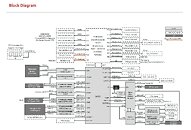
The W890 positions Intel to compete directly with AMD's Threadripper ecosystem in the premium HEDT segment. Although AMD continues to lead in maximum core counts and cache capacity, Intel's refined platform counters with improved memory speeds and a flexible PCIe topology designed to optimize throughput. The W890 represents a significant advancement over the current W790 generation, particularly in memory subsystem performance. All eyes are on CES 2026 when Intel is expected to officially unveil the platform. However, final evaluations will depend on the production processor specifications and motherboard designs.
Sources: @momomo_us, via Wccftech
Add your own comment

47 Comments on Intel W890 Workstation Platform Details Leak Ahead of "Granite Rapids-WS" Launch

#26
ir_cow
Tek-CheckGen5 is not necessary on the chipset. AMD does not use it either. Once they have Gen5 chipset upgrade, they will deploy it.
Not essential, but wanted by me. TB5 would be nice to have onboard and still have bandwidth left over for other things.
Posted on Reply
#27
thestryker6
ir_cowNot essential, but wanted by me. TB5 would be nice to have onboard and still have bandwidth left over for other things.
NVL leaks show Intel moving to PCIe 5.0 for DMI, but dropping back to 4 lanes so it's going to be no bandwidth gain. TB5 off the Intel chipset is already fine since they use 8 lanes instead of 4.
Posted on Reply
#28
Tek-Check
ir_cowNot essential, but wanted by me. TB5 would be nice to have onboard and still have bandwidth left over for other things.
TB5 controller can be easily included on the current chipset. TB5 does not need Gen5 connectivity, as the PCIe standard supported on Barlow Ridge controller is 4.0. Maximum PCIe data bandwidth is 64 Gbps and ~55 Gbps with encoding overhead.
XeonsNOpteronsHey, will get back to you later with actual benchmarks, but to tell you the truth, I have seen those benchmarks and do not really think a majority of those tests performed are good. As you said, 256-cores being beaten by 128-cores… yeah, something is off with the benchmarks, especially when you look at similar generations like Raptor Lake vs Zen 4. I assume a majority of those benchmarks are just how fast the SolidWorks interface works which is really nothing of major importance as long as you are not potato levels of bad.
You can ask Phoronix in an email. He has a standard suite of tests for all classes of CPUs. You can also check each individual test. Make no mistake. Xeons with e cores are even weaker in performance in comparison to their Arm and AMD's c core counterparts. Even Amazon's Graviton4 with 96 cores easily beats Xeon with 144 e cores by 15% on average. This is one of reasons why Intel has not officially released 288 e core SKU 6980E, aka Sierra Forest, although the SKU is available for online renting with some cloud providers, as explained by Wendell from Level1 in his video.


Something if off with Xeons, which has allowed both AMD and Arm chip designers to substantially increase server market share in last 3-4 years. The change has been seismic.
Posted on Reply
#29
igormp
The W890 chipset supports both standard DDR5 DIMMs and registered DDR5 modules, with RDIMMs validated for speeds up to 5,200 MT/s.
This doesn't really make any sense. DDR5 UDIMMs and RDIMMs are not physically compatible, and the block diagram only shows RDIMMs being supported. @AleksandarK, could you confirm where you got the source for this specific piece of info?

Nonetheless, nice to see them officially supporting 2DPC, TR barely has any such option available currently. Hopefully this brings some needed competition to the HEDT market.
Posted on Reply
#30
AleksandarK
News Editor
igormpThis doesn't really make any sense. DDR5 UDIMMs and RDIMMs are not physically compatible, and the block diagram only shows RDIMMs being supported. @AleksandarK, could you confirm where you got the source for this specific piece of info?

Nonetheless, nice to see them officially supporting 2DPC, TR barely has any such option available currently. Hopefully this brings some needed competition to the HEDT market.
wccftech.com/intel-w890-platform-details-leak-granite-rapids-workstation-cpus-350w-tdp-2-tb-quad-channel-ddr5-rdimm-memory/

I assume that mobo makers can choose which one to put, since the platform is felxible
Posted on Reply
#31
thestryker6
AleksandarKwccftech.com/intel-w890-platform-details-leak-granite-rapids-workstation-cpus-350w-tdp-2-tb-quad-channel-ddr5-rdimm-memory/

I assume that mobo makers can choose which one to put, since the platform is felxible
Just because it's written by someone in a leak article doesn't make it accurate. There's no evidence in that link which supports the claim that both UDIMM and RDIMM are supported.

I've seen multiple reports claiming this and none of them cite where that claim comes from. It makes me wonder who wrote it first and if it was a test just to see how many outlets would just arbitrarily copy it despite no supporting evidence. It's probably not that clever and someone just made a mistake, but it's interesting to see either way.
Posted on Reply
#32
igormp
AleksandarKwccftech.com/intel-w890-platform-details-leak-granite-rapids-workstation-cpus-350w-tdp-2-tb-quad-channel-ddr5-rdimm-memory/

I assume that mobo makers can choose which one to put, since the platform is felxible
Their "source" (same tweet as yours) does not list UDIMM support, nor does that other image in their page. Seems like this may be just spreading misinformation.
Again, it'd make no sense since Granite Rapids in servers only supports RDIMMs and there are the physical incompatibilities.
Posted on Reply
#33
AleksandarK
News Editor
igormpTheir "source" (same tweet as yours) does not list UDIMM support, nor does that other image in their page. Seems like this may be just spreading misinformation.
Again, it'd make no sense since Granite Rapids in servers only supports RDIMMs and there are the physical incompatibilities.
You are right, updated!
Posted on Reply
#35
TumbleGeorge
lambdaLooks like RDIMMs :cry:
The back panel makes me nostalgic for the distant past, when the com port was something new and important. And now I just wonder about its presence here. It is still there on some motherboards with H610 and newer, but of the lowest class, which are quite sufficient to serve outdated peripherals. But why here, on a machine that is made for the future and for work and loads that do not at all imply serving devices with a com port?
Posted on Reply
#36
XeonsNOpterons
Tek-CheckTB5 controller can be easily included on the current chipset. TB5 does not need Gen5 connectivity, as the PCIe standard supported on Barlow Ridge controller is 4.0. Maximum PCIe data bandwidth is 64 Gbps and ~55 Gbps with encoding overhead.


You can ask Phoronix in an email. He has a standard suite of tests for all classes of CPUs. You can also check each individual test. Make no mistake. Xeons with e cores are even weaker in performance in comparison to their Arm and AMD's c core counterparts. Even Amazon's Graviton4 with 96 cores easily beats Xeon with 144 e cores by 15% on average. This is one of reasons why Intel has not officially released 288 e core SKU 6980E, aka Sierra Forest, although the SKU is available for online renting with some cloud providers, as explained by Wendell from Level1 in his video.


Something if off with Xeons, which has allowed both AMD and Arm chip designers to substantially increase server market share in last 3-4 years. The change has been seismic.
Hey, it has been a while. Been busy so was not able to compile everything quickly. Been searching for different performance metric sites.
Above are PassMark performance metrics. While PassMark's overall score is not the greatest direct comparison, the sub scores are very good metrics. As you can seen, while Zen 5 has slightly superior single core IPC, Granite Rapids completely dominates in floating point IPC and extended instruction IPC. I have removed data which was incredibly high or low for all the architectures as outliers.

Above are the Cinebench R23 single core scores I pulled from HWBot for various people. Here we see essentially parity between Sapphire Rapids-WS and Zen 5, though a slight edge to Zen 5. I cannot get data from HWBot on Granite Rapids-WS as obviously they are not launched, but other benchmarks show a slight IPC gain of 5-10% over Sapphire Rapids. It is interesting to note the massive IPC advantage Intel had with the launch of Alder Lake with AMD essentially playing catch up for the past three-four years. Only Zen 5 finally caught up, though again PassMark shows great lagging behind Granite Rapids in floating point and extended instructions. It seems Intel takes the strategy of massive IPC jumps for a generation then spend the next three-four years optimizing for clock speeds and power efficiency.


Above is the OpenFOAM run benchmark, for the most accurate large mesh execution time. Obviously not many benchmarks available for CFD solvers lol, but you can see a huge lead between the 2 x Xeon 6980P and the 2 x EPYC 9755. The Xeon 6980P all-core turbos to 3.2GHz while the EPYC 9755 all-core turbos to 4.1GHz and both have 128 cores.

For a major use case of CFD for me, I take this benchmark to show the lead that Intel has. I look at computational benchmarks as that is what tells the true horsepower a CPU has. Software can just be poorly optimized or wrongly written, but you can never make a software perform better than the CPU is physically capable of, hence why I find these important. Hope these help explain my thinking! I have a feeling Diamond Rapids will be that "big IPC leap generation" for server/workstation as that is kind of what Arrow Lake was with its P-cores versus Raptor/Alder Lake.
Posted on Reply
#37
Tek-Check
XeonsNOpteronsFor a major use case of CFD for me, I take this benchmark to show the lead that Intel has. I look at computational benchmarks as that is what tells the true horsepower a CPU has. Software can just be poorly optimized or wrongly written, but you can never make a software perform better than the CPU is physically capable of, hence why I find these important. Hope these help explain my thinking! I have a feeling Diamond Rapids will be that "big IPC leap generation" for server/workstation
You should share your numbers with Phoronix, so that the server community could look at it. There is no doubt that Xeons are faster and more suitable in several workloads, such as machine learning, which is also what he found in several tests.
www.phoronix.com/review/intel-xeon-platinum-8490h/14

However, the overall picture emerging from comprehensive suite of over 100 tests from several computational domains is pretty damning for current Xeons. Intel has hit several serious challenges with Xeons in recent years, from excessive power consumption to not launching 288 e core Siera Forest to cancellation of SP line-up on Diamond Rapids. This is in addition to performance challenges. There's a lot to digest there.
www.phoronix.com/review/amd-epyc-9965-9755-benchmarks/14
Posted on Reply
#38
XeonsNOpterons
Tek-CheckYou should share your numbers with Phoronix, so that the server community could look at it. There is no doubt that Xeons are faster and more suitable in several workloads, such as machine learning, which is also what he found in several tests.
www.phoronix.com/review/intel-xeon-platinum-8490h/14

However, the overall picture emerging from comprehensive suite of over 100 tests from several computational domains is pretty damning for current Xeons. Intel has hit several serious challenges with Xeons in recent years, from excessive power consumption to not launching 288 e core Siera Forest to cancellation of SP line-up on Diamond Rapids. This is in addition to performance challenges. There's a lot to digest there.
www.phoronix.com/review/amd-epyc-9965-9755-benchmarks/14
Very well, I shall check it out and see what I may report to Phoronix! Thank you for being civil and not a troll, unfortunately such discussions can get angry fans from both sides. I do doubt the cancellation of the Diamond Rapids-SP line as that is the most profitable tier of processors since they are not the most expensive. Could be like the wrongly reported UDIMM support for W890. Perhaps Intel has indeed cancelled Diamond Rapids-SP, which would suck. I would suspect it is more to do with yields of 18A, and not the performance of the CPUs. I really hope W890 will not be a single generation chipset, but if Diamond Rapids-SP is indeed canceled then I am not sure what would be the next-gen CPUs for W890. Maybe Coral Rapids-WS? Not sure, skeptical of that because that would likely launch in 2028-2029 at this rate. You are right about the fact that AMD has an overall performance lead on servers, that I generally do not disagree with. They have more cores and can somehow manage to clock them in some cases a whole GHz faster than Intel in all-core workloads. I was mostly speaking to the IPC of Intel which is superior, so in the workstation competition, where the core counts are much closer, Intel has a decent chance. 86-cores for top Intel, 96-cores for top AMD, and the second tier for both are 64-cores.
Posted on Reply
#39
Tek-Check
XeonsNOpteronsVery well, I shall check it out and see what I may report to Phoronix! Thank you for being civil and not a troll, unfortunately such discussions can get angry fans from both sides.
Civility is the only way to have healthy tech discussions online, even if people disagree. All good.
XeonsNOpteronsI do doubt the cancellation of the Diamond Rapids-SP line as that is the most profitable tier of processors since they are not the most expensive. Perhaps Intel has indeed cancelled Diamond Rapids-SP, which would suck. I would suspect it is more to do with yields of 18A, and not the performance of the CPUs. I really hope W890 will not be a single generation chipset, but if Diamond Rapids-SP is indeed canceled then I am not sure what would be the next-gen CPUs for W890. Maybe Coral Rapids-WS? Not sure, skeptical of that because that would likely launch in 2028-2029 at this rate.
Here, Intel spokesman confirmed SP cancellation to Patrick Kennedy. It turns out that 8 memory channels is not profitable anymore and the industry is moving to platforms with lots of RAM bandwidth and capacity.
www.servethehome.com/intel-cancels-its-mainstream-next-gen-xeon-server-processors/

W890 could, indeed, be a single gen socket. We will see. Intel will need to clarify this to potential buyers, so that they are aware of future prospects. If they do not support the socket 4710 for at least two-three generations, they would completely surrender the workstation segment to Threadrippers.

As for Threadrippers, it will be interesting to see how AMD handles longevity, as Zen6 server architecture, which TRs will be derived from, supports PCIe Gen6. This means new motherboards to fully unlock what CPU can do. Will they leave current TRX50 and WRX90 owners in dust? Nobody knows. Leaks suggest that AMD has got both 8-channel IOD and 16-channel IOD for Venice EPYCs (SP7 and SP8 platforms), so it could be possible to use 8-channel IOD on Zen6 Threadrippers. The question here is whether they would be willing to create two sub-segments, one line of CPUs for current socket, and another one for a new socket with PCIe Gen6 support. Anything could happen.
XeonsNOpteronsYou are right about the fact that AMD has an overall performance lead on servers, that I generally do not disagree with. They have more cores and can somehow manage to clock them in some cases a whole GHz faster than Intel in all-core workloads. I was mostly speaking to the IPC of Intel which is superior, so in the workstation competition, where the core counts are much closer, Intel has a decent chance. 86-cores for top Intel, 96-cores for top AMD, and the second tier for both are 64-cores.
We shall see once public benchmarks are available.
Posted on Reply
#40
thestryker6
Tek-CheckW890 could, indeed, be a single gen socket. We will see. Intel will need to clarify this to potential buyers, so that they are aware of future prospects. If they do not support the socket 4710 for at least two-three generations, they would completely surrender the workstation segment to Threadrippers.
Workstation has really gotten the short end already lately from Intel. They've been late delivering architectures and in the case of SPR just got a refresh of binned parts as they did not get EMR like regular Xeons saw. GNR is coming rather late to workstation and there does not appear to be a replacement on the near horizon (in socket or not).

I certainly agree that Intel needs to clarify the future of the smaller socket in general. Should the current AI bubble pop this could prove to be a disastrous move given the volume they currently sell in comparison.
Posted on Reply
#41
XeonsNOpterons
Tek-CheckCivility is the only way to have healthy tech discussions online, even if people disagree. All good.
:toast:
Tek-CheckW890 could, indeed, be a single gen socket. We will see. Intel will need to clarify this to potential buyers, so that they are aware of future prospects. If they do not support the socket 4710 for at least two-three generations, they would completely surrender the workstation segment to Threadrippers.

As for Threadrippers, it will be interesting to see how AMD handles longevity, as Zen6 server architecture, which TRs will be derived from, supports PCIe Gen6. This means new motherboards to fully unlock what CPU can do. Will they leave current TRX50 and WRX90 owners in dust? Nobody knows. Leaks suggest that AMD has got both 8-channel IOD and 16-channel IOD for Venice EPYCs (SP7 and SP8 platforms), so it could be possible to use 8-channel IOD on Zen6 Threadrippers. The question here is whether they would be willing to create two sub-segments, one line of CPUs for current socket, and another one for a new socket with PCIe Gen6 support. Anything could happen.
Bummer, looks like you are very likely right about the cancellation, though perhaps it could still change. I find it odd that the segment of a server family which is normally highly profitable is not for Intel. If they stick to just the 16-channel versions, it is almost guaranteed that LGA4710 will not receive any Diamond Rapids-WS as those would use the absurd LGA9324 socket. Agreed though, Intel needs to clarify this. Granite Rapids-WS is the best chance at Intel getting close to parity with AMD in like three years, so abandoning the space again like they did in 2019 will just make it even more difficult to try and reenter.

As for AMD's future Threadrippers, not sure exactly, not super knowledgeable there. From what I know, PCIe Gen 5 is barely being worked in terms of bandwidth as is for GPUs, so this push from both Intel and AMD to rush to adopt PCIe Gen 6 seems a little absurd. Makes a little more sense for servers, but even there is just no major need until maybe 2027-2028. They may not need a new socket for PCIe Gen 6, just a new chipset.
Tek-CheckWe shall see once public benchmarks are available.
Agreed, will keep my fingers crossed it is decent!
thestryker6Workstation has really gotten the short end already lately from Intel. They've been late delivering architectures and in the case of SPR just got a refresh of binned parts as they did not get EMR like regular Xeons saw. GNR is coming rather late to workstation and there does not appear to be a replacement on the near horizon (in socket or not).

I certainly agree that Intel needs to clarify the future of the smaller socket in general. Should the current AI bubble pop this could prove to be a disastrous move given the volume they currently sell in comparison.
Well, Granite Rapids-WS (if it actually launches at CES 2026 which is most likely), won't be that late. Zen 5 Threadripper launched in July. Sapphire Rapids-WS first launched with the 56-core maximum, but the theoretical maximum was 60-cores which came in the refresh. They could do the same refresh for Granite Rapids-WS as the inital flagship will be 86-cores while the technical maximum is 88-cores for the XCC dies, but that only nets two more cores. Perhaps they can modify a 48-core HCC die to allow putting two in tandem and therfore have 96-cores just like Zen 5 Threadripper. Another option is to bring LGA7529 into the fight and the refresh will be the triple UCC die model. That currently has 128-cores, but the theoretical maximum is 132-cores if they have perfect dies. This is just some speculation, but the larger socket is in theory an option for Granite Rapids-WS refresh. My estimate is that Zen 6 Threadripper will max out at 128-cores, so it could work.
Posted on Reply
#42
thestryker6
XeonsNOpteronsWell, Granite Rapids-WS (if it actually launches at CES 2026 which is most likely), won't be that late.
GNR uses the same CPU core as MTL does, Redwood Cove, that launched in 2023 and is a derivative of Golden Cove. Since then we've seen ARL (Lion Cove) and it won't launch before PTL (Cougar Cove). In Xeon form GNR launched at the end of 2024 and the same socket launched in Q1 2025 so these will be a minimum of a year after.

Xeons in general have been lagging due to Intel's manufacturing struggles, but the workstation versions have definitely been treated as mostly and afterthought.
Posted on Reply
#43
Tek-Check
XeonsNOpteronsBummer, looks like you are very likely right about the cancellation, though perhaps it could still change. I find it odd that the segment of a server family which is normally highly profitable is not for Intel. If they stick to just the 16-channel versions, it is almost guaranteed that LGA4710 will not receive any Diamond Rapids-WS as those would use the absurd LGA9324 socket. Agreed though, Intel needs to clarify this. Granite Rapids-WS is the best chance at Intel getting close to parity with AMD in like three years, so abandoning the space again like they did in 2019 will just make it even more difficult to try and reenter.
The entire industry has moved to GPU-based systems with 1S and 2S socket trays in racks, so there is little space left for traditional quad- and octa-CPU systems. It makes sense.
Intel will have both 12-channel (Clearwater Forest Xeon 6E) and 16-channel systems (Diamond Xeon 7). So, 4710 socket from current SP line adapted for WS will be on life support. They have to cut costs wherever possible, where volume and margins are not well calibrated.
XeonsNOpteronsAs for AMD's future Threadrippers, not sure exactly, not super knowledgeable there. From what I know, PCIe Gen 5 is barely being worked in terms of bandwidth as is for GPUs, so this push from both Intel and AMD to rush to adopt PCIe Gen 6 seems a little absurd. Makes a little more sense for servers, but even there is just no major need until maybe 2027-2028. They may not need a new socket for PCIe Gen 6, just a new chipset.
PCIe Gen6 is already out by other vendors - Nvidia, Google and Amazon, on their platforms, so adoption is moving rather fast, for attaching accelerators, faster NICs and other components that need more bandwidth. Gen6 is not needed in client space before 2030, but it is absolutely needed in data center. Gen7 will be adopted as soon as devices and silicon are ready over there.
Posted on Reply
#44
XeonsNOpterons
thestryker6GNR uses the same CPU core as MTL does, Redwood Cove, that launched in 2023 and is a derivative of Golden Cove. Since then we've seen ARL (Lion Cove) and it won't launch before PTL (Cougar Cove). In Xeon form GNR launched at the end of 2024 and the same socket launched in Q1 2025 so these will be a minimum of a year after.

Xeons in general have been lagging due to Intel's manufacturing struggles, but the workstation versions have definitely been treated as mostly and afterthought.
I mean, I do not see the architecture as the problem, more so the node and the core count. I think my research shows that Intel's architectures are solid, just whatever process they have has them being super inefficient. Zen 5's IPC is barely matching that of Raptor Lake P-cores, but there are more Zen 5 cores and higher clocked.
Tek-CheckThe entire industry has moved to GPU-based systems with 1S and 2S socket trays in racks, so there is little space left for traditional quad- and octa-CPU systems. It makes sense.
Intel will have both 12-channel (Clearwater Forest Xeon 6E) and 16-channel systems (Diamond Xeon 7). So, 4710 socket from current SP line adapted for WS will be on life support. They have to cut costs wherever possible, where volume and margins are not well calibrated.

PCIe Gen6 is already out by other vendors - Nvidia, Google and Amazon, on their platforms, so adoption is moving rather fast, for attaching accelerators, faster NICs and other components that need more bandwidth. Gen6 is not needed in client space before 2030, but it is absolutely needed in data center. Gen7 will be adopted as soon as devices and silicon are ready over there.
Interesting, probably a shift to GPUs just due to the scourge of AI as from what I know CPUs are generally better at double-precision or greater work for large simulations like those used by NASA. Again though, pretty sure the margins are better on the SP lines. Less dies, less cores, higher successful yield. We will see I suppose. I am kind of interested in Clearwater Forest. While the E-cores in Sierra Forest-SP were rather weak, if the Darkont E-cores are anything like Skymont E-cores, it will honestly be impressive. My data from PassMark has Skymont E-cores with 1712 FP/GHz/core, not very far behind Zen 5's 1805 FP/GHz/core. And if Intel can string together 288 of them... not bad for my computational CFD workloads. Of course, I will not be able to afford them though lol.
Posted on Reply
#45
thestryker6
XeonsNOpteronsI mean, I do not see the architecture as the problem, more so the node and the core count. I think my research shows that Intel's architectures are solid, just whatever process they have has them being super inefficient. Zen 5's IPC is barely matching that of Raptor Lake P-cores, but there are more Zen 5 cores and higher clocked.
GNR is on a very similar node to Zen 5 so it's not the node, but rather efficiency of design. Look at how much better the clock scaling on Zen 5 Epyc/TR are over their Zen 4 counterparts which is largely due to design since there isn't much difference between N4 and N5. Intel's cores are big and they're powerful, but that's also a downside because they have to operate in a finite power envelope limiting their clock scaling quite a bit.
Posted on Reply
#46
XeonsNOpterons
thestryker6GNR is on a very similar node to Zen 5 so it's not the node, but rather efficiency of design. Look at how much better the clock scaling on Zen 5 Epyc/TR are over their Zen 4 counterparts which is largely due to design since there isn't much difference between N4 and N5. Intel's cores are big and they're powerful, but that's also a downside because they have to operate in a finite power envelope limiting their clock scaling quite a bit.
Hmm, interesting, the nodes do seem similar just based on dimensions, but there are tons of other details like composition which we do not know (and likely never will). I have been a little skeptical about AMD's godlike efficiencies, but AMD did have a major efficiency lead against Sapphire Rapids. Granite Rapids seems pretty decent though, they bumped the all-core clocks from 3.0GHz to 3.6GHz while dropping power draw from 385W to 350W for Emerald Rapids versus Granite Rapids 64-cores respectively. I think with the right binning for dies, they could bump the all-core clocks to 4.0GHz for the 64-core for the workstation while still being close to 350W, at which point they would be on parity with AMD Zen 5. Will see, Sapphire Rapids-WS was disappointing as the all-core clocks were the same like the server chips unlike previous Intel HEDT. But in all honesty, these chips are meant to overclock, so it really is pointless to buy them for stock performance, just get a sever Xeon instead. While Sapphire Rapids-WS was lackluster stock, that was because of the slightly over 1 GHz lower all core frequency compared to AMD. When overclocked, yes they consumed a ton of power, but they provided superior performance even against similar core-count Zen 4. These are meant to be the most powerful chips you can get on a single socket, so power consumption should not be a major worry for most, especially if your house or office's power is solar. At that point, whichever chip can overclock the highest wins.
Posted on Reply
#47
Tek-Check
XeonsNOpteronsThese are meant to be the most powerful chips you can get on a single socket, so power consumption should not be a major worry for most, especially if your house or office's power is solar. At that point, whichever chip can overclock the highest wins.
No need to even overclock anything. Phoronix has just retested the latest data center flagships in 2P systems in over 200 benchmarks. Out of the box, the same core count EPYC 9755 is whopping 63% faster on average than Xeon 6980P. There is no contest at all. One year later, the gap has actually increased from original reviews. In addition, Xeon was tested with much faster 8800 memory against 6400 on EPYC, and it did not help much in overall score. As I said a few days ago, Xeon is faster in very niche and specific ML workloads benefiting from AMX and companies working primarily with such workloads buy it. Other than that, and with this result, Xeons are literally two generations behind EPYCs in overall performance. The scary thing is that performance gap has been gradually increasing over last 3-4 years. It's going to take Intel a mountain to climb in order to close this gap and Zen6 EPYC has been confirmed by AMD to bring another ~60% uplift per single CPU.

www.phoronix.com/review/xeon-6980p-epyc-9755-2025/9
Posted on Reply
Add your own comment
Nov 20th, 2026 13:57 PST change timezone

New Forum Posts

Popular Reviews

TPU on YouTube

Controversial News Posts