Saturday, December 13th 2025

SK Hynix Forecasts Tight Memory Supply Lasting Through 2028
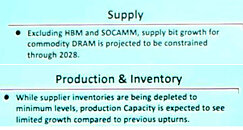
SK Hynix held an internal company meeting, where the company reportedly presented some tough pills to swallow for many gamers. The company now forecasts the tight memory supply to last through 2028 for the commodity DRAM, which includes DDR5/DDR4, GDDR6/GDDR7, and LPDDR5x/LPDDR6. All the aforementioned DRAM variants are essential for PC and console components, making millions of gamers at risk of absorbing a massive price increase as a result. As memory supplier inventories deplete, production capacity will not increase to meet demand as it has in the past. This marks a departure from the usual response by memory manufacturers, who typically ramp up capacity in response to demand.
However, an interesting thing that SK Hynix has noted is that this situation will exclude the company's most advanced memory solutions—HBM and SOCAMM. These products are expected to get an additional capacity expansion, without tight supply impacting this part of the DRAM supply chain. These products are even in high demand as they are mostly consumed in higher volume than the regular commodity DRAM, due to their integration into AI products such as GPUs and servers.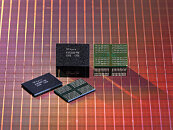
 SK Hynix has recently started installing more EUV machines, which could become operational in the coming quarters. The company reportedly plans to install 20 Low-NA EUV units over the next two years, all intended for HBM memory and advanced storage solutions. As a result, the planned DRAM expansion capacity will not benefit the commodity DRAM group, as all new capacity from SK Hynix will serve its data center customers. However, not all companies are following this path. Some of SK Hynix's competitors, like Samsung, are reportedly reallocating some of their HBM production capacity to regular DRAM to meet demand.
Source:
BullsLab on X
However, an interesting thing that SK Hynix has noted is that this situation will exclude the company's most advanced memory solutions—HBM and SOCAMM. These products are expected to get an additional capacity expansion, without tight supply impacting this part of the DRAM supply chain. These products are even in high demand as they are mostly consumed in higher volume than the regular commodity DRAM, due to their integration into AI products such as GPUs and servers.


122 Comments on SK Hynix Forecasts Tight Memory Supply Lasting Through 2028
I still need to buy a GPU for the other Raptor Lake build i'll be coming up with soon, and a new phone... which, mind you, will increase in price soon. SSDs will also quickly get out of hand, especially as Samsung reportedly is looking at stopping making SATA SSDs...
www.techpowerup.com/344090/samsung-could-stop-sata-ssd-production-amid-nand-flash-shortage
Who buys SATA SSDs when NVMe SSDs are not that much more expensive? I mean, even if you connect an NVMe SSD on a single lane PCIe slot you get better speeds than any SATA SSD. I only buy 256GB cheap SATA SSDs to give away (translation: install and upgrade old HDD systems) at the school I work. Every SSD I bought the last 2-3 years for personal use, was an NVMe SSD. So who cares if Samsung stops SATA SSDs? Probably they have better profit margins from NVMe drives and will give proiority to these SSDs(haven't read the article, so just guessing).
Looking at those video cards in your specs, I doubt you will have a difficulty convinsing yourself to pay 4 digits for that new GPU for the second build.
But, yeah, you better hurry for that smartphone.
For now, this bubble has primarily been fueled by companies and investors, with some very strange investments to boost the market (look into Nvidia, Oracle, MS, etc. if you don't know what I'm talking about). But it may now be shifting more towards heavier government subsidies (or corruption as I call it), and this may continue to fuel the bubble for a good while (remember the 2007-2008 financial crisis? that was fueled by subsidies from ~1993), so there is no way for us to predict when it will "pop".
Neither is it certain that it will "pop" in a spectacular way like the dot-com bubble either, as bubbles doesn't always have to pop. They can also flatten out, or slowly deflate. And unlike 2000, most of these companies are making record profits on everything but AI. (Not counting OpenAI, which is most certainly a house of cards.) So even though it could theoretically "pop" tomorrow, it could easily be 2-3 years or even 10 years. Pretty much all the "experts" making predictions have been more wrong than right in their career, and many of them have predicted doom and gloom almost every year. We also have a massive housing bubble (in most Western countries), a debt bubble, a "zombie company" bubble, and previously unseen consolidation in the stock market, all of which may cause a chain reaction at some point, but such dangers are probably always going to be the case.
And while I absolutely want this AI "scam" to end, do we think that a pop will be harmless for hardware manufacturing? I think that would create an even bigger shortage short-term, so a "controlled" de-escalation would be preferred.Most forget that they have been scaling back production because low prices.They may sound attractive, but Haswell and especially Sandy Bridge is getting too slow for general desktop use now, especially web browsing. Skylake/Cascade Lake is a much better choice, especially those Xeon Ws which can use used server RAM.
But I will generally advice against it, unless it's for fun. These systems are only going to give you a couple of years before they are obsolete anyways, so that long-term value will be terrible (unless you source something very cheap locally).
I would rather buy overpriced memory at 200-300% price than buying something that's already approaching obsolescence.Perhaps to you, but don't spread that idea to others.
And don't think for a second that the big PC vendors are going to give you better deals than building your own in these times, on the contrary, now is the time to be smart.
There are ways to offset some of the cost, especially stop buying OC memory and stick to much cheaper (and better) memory with good JEDEC profiles. There are also many very overpriced motherboards. Most should stop buying AiO coolers, and go for just as good (if not better) tower coolers. You get the point.
Lastly, when times are tough, you should channel that into getting better with your money, instead of complaining or giving up. And I mean this for all of personal finance; as "everyone" around you are complaining, you still have the ability to do something with your situation.Finally something constructive!
Yes, let's push developers to optimize their crap.
I can't say I like the idea of 'fixed platform' but, System HBM does sound tantalizing (even if its the industry's leftover bad binnings)
I forecast cartel price fixing on scale without any ounce of end-consumer protection
I’m more worried about next gen GPUs tbh. Surprisingly my 3080 has been smooth sailing through Battlefield 6, way better than expected, so skipping current Gen upgrades felt somewhat sensible. The memory crunch hasn’t hammered GPU prices yet, at least not in the UK but that could flip real fast.
What do you lot reckon: Next Gen GDDR is too much of a gamble? or while we're skirting around MSRP, more sensible to just grab a current Gen 5070 TI and call it a day (might even accept a mild financial shafting and go 5080). The 9070 XT is clearly an excellent value alternative but my dedicated GSYNC panel says otherwise.
Remember the cryptomining highs? Consumers scrambled for every card that showed up in retail, no matter the price (mostly the amateur home cryptominers, not gamers). Meanwhile enterprise cryptominers were buying the cards by the pallets through business channels that were set up very quickly just for that, for much lower prices than consumers, but with steady orders and payments in advance.
That may be the case here - yes, there is suddenly an increase of RAM purchases for AI servers, and it's not enough for both this and consumer sector - consumer sector might be cut off even when it would pay more than enterprise for memory - but the enterprise buys in bulk, doesn't need expensive network of stores, and usually commits to future orders in advance. So I don't think they saw a quadrupling of memory cost, that's just the price increase of leftover crumbs we're fighting for.
I run any game on my old machine with 16GB of RAM, and never had any issues with any game.
Games that officially recommend 32GB RAM.
Microsoft Flight Simulator 2024
Official recommended RAM: 32GB
Ideal recommends 64GB!
Star Citizen
Official recommendation: 32GB
ARK: Survival Ascended
Recommend is 32GB
Escape from Tarkov
16G is the minimum but this one even recommends 64GB!, so running this game on less than 32GB would be stupid.
Games that are known to benefit from 32GB.
Cities: Skylines II
Total War: Warhammer III
Cyberpunk 2077 (RT / Phantom Liberty)
Hogwarts Legacy
All of these still officially list 16GB, even though real-world usage can exceed it. And you can bet that when GTA 6 is out, it will definitely be demanding 32GB on the PC if you want to run it at 4K with maxed-out settings.
Games are only going to be asking for 32GB more often in the future.
the memory cartel is doing a good job giving this crazy marketplace some restraint. In the end, all I see here is an immense amount of E waste if you scale up production to 'spot demand' every time. And memory companies going under, too.
Farmers overproduce too. The only way that works is with heavy subsidizing from governments, resulting in mountains of grain or milk that just can't go anywhere. We pay half our food cost through indirect taxation and to create excess, which we translate to 'guarantees' that there's food on the table. Do you want that for computer parts? I don't think you do. So, you accept this situation. At the same time, its a free market, and just like how the majority of the world was asleep at the wheel wrt chip packaging and lithography and left it to TSMC while a few other giants started failing, they are asleep at the wheel when it comes to memory production capacity. Everything is reactive for pretty good reasons and this is how markets work.
Also, I don't believe the memory shortage will last until 2028. Its a panic response to a panicky market that is on edge and really, this AI shit on the consumer space is going nowhere whatsoever. Its just like IoT and domotica. You don't need it, its a hassle, its more effort than it returns, and its woefully untrustworthy and a privacy leak. This shit ain't gonna last. There is also a government perspective and social perspective, when it comes to data center power/water usage. I firmly believe people are not going to accept the dystopia.
The "free market" is anything but free while OpenAI is allowed to buy up 40% of the total wafer supply despite them losing billions of dollars.I trust sources like the ram makers themselves, and everyone says the "shortage" will be lasting until at least the end of 2026.
I'm not appreciative of the attempt to try to misframe my argument.We subsidize chip companies as well, so what's the excuse?
They receive federal, state, and local dollars in the forms of direct subsidies, grants, advantaged loans, and tax benefits. Much of those funds was with the explicit purpose of ensuring steady supply. As far as I'm concerned, they absolutely haven't provided that and said funds should be taken back.This statement is grossly incorrect. The US spent 2.58 trillion on food in 2024: www.ers.usda.gov/data-products/chart-gallery/chart-detail?chartId=58364
Meanwhile it spends (or is projected to in 2025) 40.5 billion on farm subsidies: usafacts.org/articles/federal-farm-subsidies-what-data-says/
That works out to roughly 2% of the cost of food. 2% is not a terrible figure considering you get a stable food supply and that's even considering how corrupt the US government is currently and how much more effective you could be with that money if it were to primarily go to small farms / business instead of big agra.
The primary drivers of food cost increases are: 1) Tariffs 2) Increasing input and output costs 3) Labor shortages / increasing wages 4) Supply chain disruptions 5) Extreme weather and disease
A portion of number 2 of which is attributable to heavy consolidation in the agriculture field. Farmers have little power to negotiate against ever increasingly big mega corps.You just said they (farmers) received subsidies, that is inherently not a free market. The US is a mixed market.
"they were asleep at the wheel"? Doesn't adequately explain slowing down planned fabs. They clearly weren't asleep at the wheel, otherwise fab construction would have went ahead as planned. They were wide awake with dollar signs in the brain.Again, this statement contradicts your earlier statement that the agricultural industry over-produces to meet future demand.
Clearly there are markets where you have to proactively produce in order to meet demand. Semi-conductions are considered proactive due to the lead time to production.
The argument isn't over whether memory should be reactive or proactive, it's a fact they are proactive. It's over how proactive they should be.
Given the importance of memory chips in modern life, it's in the best interests of every country to ensure supply is stable. It's why more and more countries subsidize chip production.